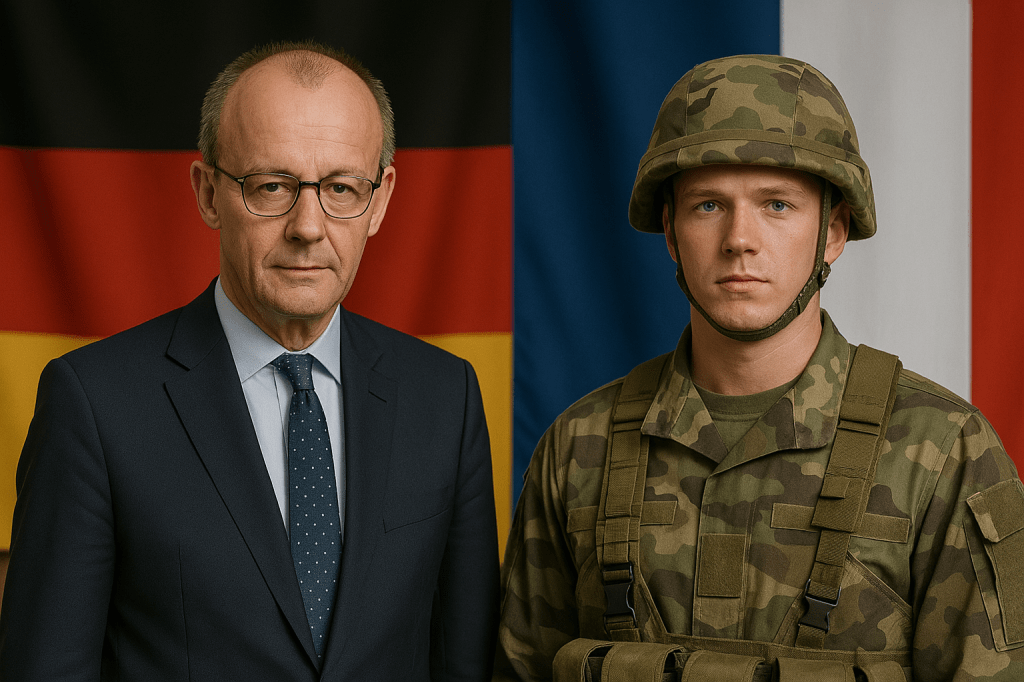
The ongoing conflict between Ukraine and Russia has tested the unity of Europe in ways not seen since World War II. Among European nations, France and Germany—the two major powers of Western Europe—have demonstrated a complex relationship in their response to the war. While they agree on broad European security concerns, such as resisting Russian aggression and maintaining the stability of NATO, their approaches to specific policies reveal deep-seated differences. This divergence reflects more than just modern geopolitical strategies; it aligns with an ancient biblical prophecy found in the book of Daniel.
France: The Bold Interventionist
French President Emmanuel Macron has taken an assertive stance regarding Ukraine, going so far as to suggest that sending Western troops to Ukraine should not be ruled out. His approach is rooted in a historical French doctrine of military interventionism, seen in France’s past engagements in Africa and the Middle East. Macron envisions a strong and independent Europe, capable of acting decisively in world affairs without over-reliance on the United States.
This proactive stance is not just about Ukraine; it is part of a broader strategy to make France the leader of European defense. Macron has been a vocal proponent of European strategic autonomy—an idea that Europe must be able to defend itself without always depending on Washington. His calls for military action reflect this vision, even as many European allies remain hesitant.
Germany: The Cautious Diplomat
On the other side stands Germany, a nation historically bound by a deep-rooted policy of caution in military matters. Chancellor Olaf Scholz has maintained a more reserved position, rejecting the idea of sending troops and focusing instead on arms supplies and economic sanctions. This caution is partially due to Germany’s post-World War II pacifist tendencies and its historical economic cooperation with Russia, particularly in the energy sector.
Even in broader geopolitical movements, Germany’s reaction to recent U.S.-Russia peace negotiations—where European leaders and Ukraine were excluded—highlights its preference for multilateral diplomacy. Germany opposed the idea of such discussions taking place without European participation, emphasizing the need for unity in decision-making. Scholz’s government has aligned with other European nations in resisting unilateral U.S. moves that could impact the region’s security.
Feet of Iron and Clay: A Biblical Parallel
The contrasting positions of France and Germany serve as a modern-day representation of the prophecy in Daniel 2, where King Nebuchadnezzar saw a giant statue in a dream. The feet of this statue were described as being partly of iron and partly of clay, signifying a kingdom that is both strong and brittle, united in broad purpose but divided in execution.
This imagery aptly describes the state of European power today. France and Germany are both essential pillars of the European Union and NATO. They agree on the need for European security, a strong defense against Russian expansion, and the broader principles of maintaining global order. Yet, when it comes to the specifics—how to achieve these goals, whether through military force or diplomatic restraint—they are at odds.
A Future Pattern for the Revived Roman Empire
This divided yet unified nature of Europe is not temporary; it is a prophetic pattern that will persist in the future. The Bible speaks of a coming revived Roman Empire—an end-time European power structure that will hold dominion over global affairs for a brief period before Christ’s return. The prophecy in Daniel indicates that this empire, like the feet of the statue, will be both strong and fragile.
The current disagreements between France and Germany foreshadow the way this future power will operate. While it will be unified in broad goals, such as economic dominance and geopolitical influence, it will struggle with internal divisions on the details of governance, military intervention, and alliances. This ambivalence will characterize the final phase of European dominance before God’s intervention in world affairs.
The war in Ukraine has revealed both the unity and fractures within Europe. France and Germany stand together in principle but diverge sharply in execution. This duality is not merely a quirk of modern politics—it is part of a long-prophesied structure that will culminate in the last days. As world events continue to unfold, students of prophecy should watch Europe closely. The feet of iron and clay are taking shape, and the stage is being set for the final chapter of human history before the Kingdom of God is established. As believers, we must remain vigilant, understanding that what we see today is part of God’s divine plan, moving toward the ultimate fulfillment of His Kingdom.

Leave a comment