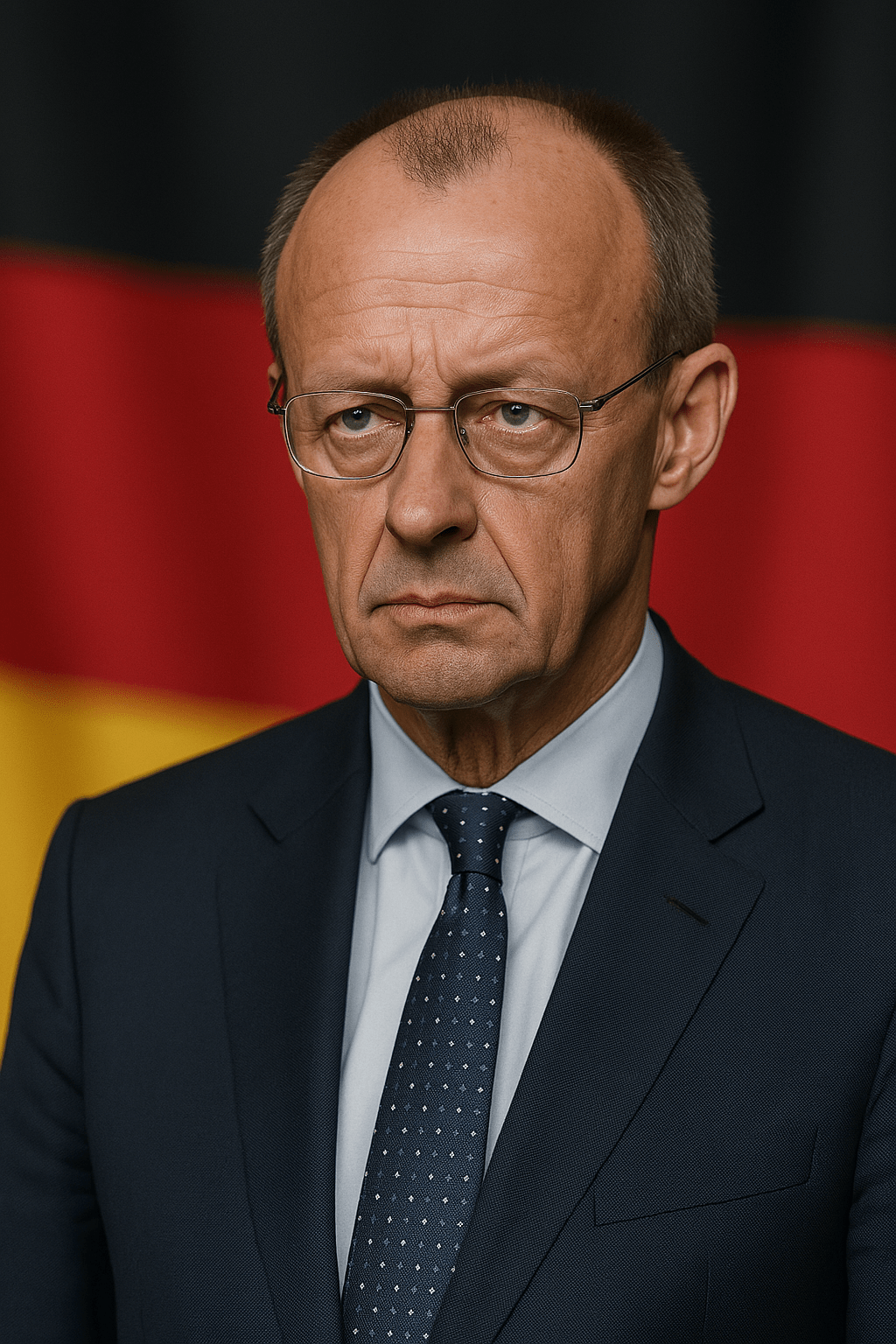
The recent German elections have set the stage for a major geopolitical shift in Europe. With the victory of the Christian Democratic Union (CDU) and its Bavarian sister party, the Christian Social Union (CSU), under the leadership of Friedrich Merz, Germany is now on a path to a more assertive role in continental security. This election result, combined with the declining reliability of U.S. support for Ukraine, signals a turning point: the European Union may no longer depend on the United States for its defense and could even act against Washington’s wishes in shaping its security policies.
A Shifting Political Landscape
Germany’s CDU/CSU has consistently advocated for strong military assistance to Ukraine and has called for European nations to take more responsibility for their own defense. This comes at a time when the United States, under the Trump administration, has signaled a reduced commitment to supporting Ukraine, instead urging Europe to step up. Trump’s foreign policy approach suggests that NATO’s European members must no longer take U.S. protection for granted, a stance that has alarmed European leaders who have long relied on American military backing.
With the rise of a more assertive German leadership, the CDU/CSU’s push for an independent European security framework aligns with the broader ambition of strategic autonomy. The party supports increasing military spending, developing European defense industries, and even exploring the possibility of European nuclear deterrence separate from U.S. oversight. If the European Union continues down this path, it may lead to the formation of a powerful military bloc capable of acting on its own interests, independent of U.S. influence.
Europe’s Break from the U.S. and Its Strategic Implications
The prospect of a self-sufficient Europe raises critical questions about the transatlantic alliance. If the European Union no longer relies on the United States for its defense, it could make decisions that directly contradict Washington’s foreign policy. This divergence has already begun to manifest in Germany’s and France’s discussions about strengthening European security institutions outside of NATO. Leaders such as Emmanuel Macron have repeatedly stated that Europe must prepare for a future where American military support is not guaranteed.
Germany’s shift towards strategic independence, alongside the increasing political clout of the far-right Alternative for Germany (AfD), which has a more nationalistic stance, suggests that the EU’s security policy could soon prioritize European interests over NATO’s broader Western coalition. This is particularly relevant as tensions with Russia continue to shape the region’s defense priorities. The CDU/CSU remains committed to arming Ukraine and countering Russian aggression, but future European security decisions may be made without U.S. consultation or approval.
The Prophetic Fulfillment of a European Superpower
For students of Bible prophecy, this evolving geopolitical landscape is deeply significant. Scripture speaks of a final world-dominating empire that will rise in Europe just before the return of Jesus Christ. The Book of Revelation describes a powerful political and military entity led by ten kings who give their power to a central authority (Revelation 17:12-13). This entity, often referred to as the Beast power, will play a decisive role in end-time events.
The groundwork for such a superstate is being laid before our eyes. As Europe consolidates its military power, distances itself from reliance on the United States, and takes a leading role in global affairs, we see the makings of a formidable political and economic powerhouse. This aligns with the biblical prophecy that foretells a revived Roman Empire—a united Europe that will exert dominance over world affairs.
For decades, analysts have debated whether the European Union could emerge as a true superpower. With Germany at the helm of a strengthened European defense initiative, a future where Europe dictates its own security policies, economic strategies, and geopolitical alignments without U.S. involvement seems increasingly plausible. If this trajectory continues, we could see the formation of a military bloc that not only rivals the United States in influence but also challenges its authority on the world stage.
What Lies Ahead?
The recent German elections seem to mark the beginning of a Europe that is ready to stand on its own. With the United States pulling back from its traditional role as the primary security guarantor, the European Union is stepping up to fill the void. This shift will not only redefine Europe’s military and political future but also lay the foundation for the fulfillment of biblical prophecy.
As history unfolds, we must remain vigilant and watchful. The rise of an independent European military force, capable of asserting its will globally, is a key signpost in the prophetic timeline. The world is rapidly moving toward the final chapters foretold in the Scriptures—an era that will ultimately culminate in the return of Jesus Christ, who will establish His righteous government over all nations. Until that time, we must continue to discern the signs and understand their significance in the grand plan of God. The geopolitical shifts we are witnessing today are not just political trends but pieces of a prophetic puzzle that is coming together. Germany’s election results and the growing autonomy of the European Union appears to mark the beginning of a new era—one in which Europe will assert itself as a dominant power, separate from and potentially opposed to the United States. As this European superpower takes shape, those who understand biblical prophecy will recognize that we are drawing closer to the climactic events leading to Christ’s return. Now more than ever, it is time to watch, pray, and prepare for what lies ahead.

Leave a comment