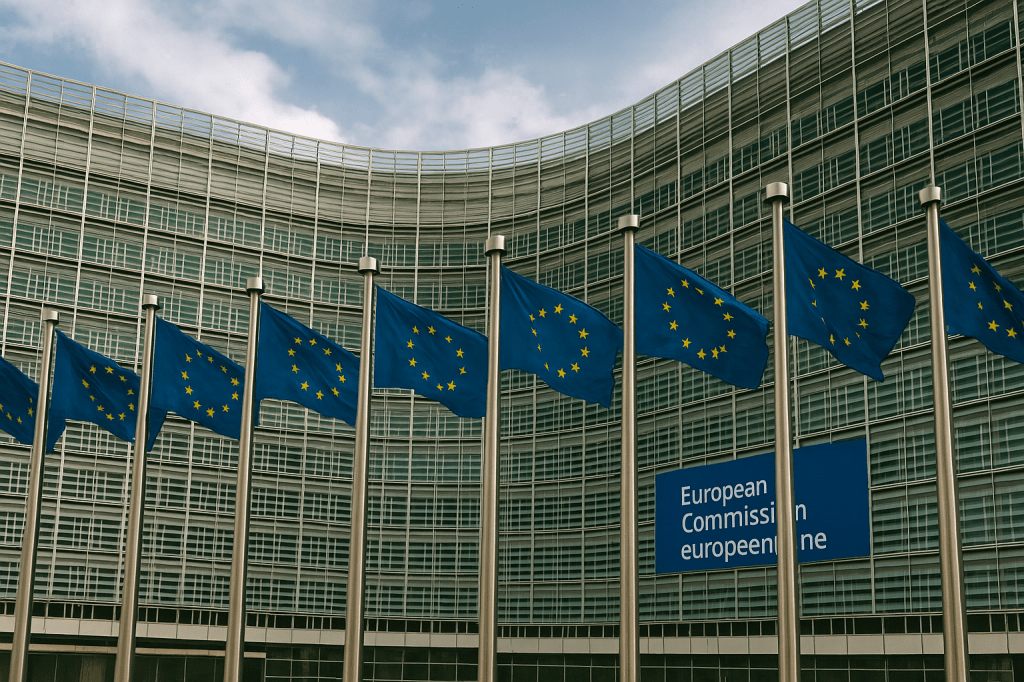
In a rapidly shifting geopolitical landscape, the European Union (EU) is making bold moves to cement its place as an economic superpower. The recent European Council Summit in Brussels may not have made global headlines, but its economic agreements could very well mark a turning point—not just for Europe, but for the entire world order. These decisions, once fully realized, will enhance internal trade, fortify the EU against unpredictable external shocks like U.S. tariffs, and align with a prophetic trajectory long described in the Bible.
A Strategic Shift Toward Internal Strength
At the heart of the summit’s economic agenda was competitiveness—not merely as a buzzword, but as a detailed and actionable commitment. EU leaders emphasized the urgent need to reduce regulatory burdens, fast-track investments in innovation, and ensure that European businesses can scale and trade more freely across the Union.
- Simplifying regulations to make compliance easier and faster
- Cutting red tape to reduce barriers to entrepreneurship
- Boosting strategic sectors like clean tech, digital infrastructure, and defense manufacturing
- Mobilizing private and public investment toward a greener, more resilient economy
- Accelerating the Capital Markets Union to unlock pan-European financing and reduce dependence on U.S. capital
In other words, the EU is building an internal economic engine capable of powering itself—with or without favorable external trade relations.
Shielding Europe from Unpredictable U.S. Trade Policies
This effort to “strengthen the inside” comes at a critical time. The return of a Trump administration has revived protectionist trade policies, including new tariffs on EU steel, aluminum, and potentially automobiles and alcohol. These moves, often executed with little warning or negotiation, have left European exporters scrambling and trade diplomats frustrated.
In contrast, the EU’s approach appears more rules-based, predictable, and business-friendly. Decision-making processes may be slow and consensus-driven, but once adopted, EU economic policies tend to provide long-term stability.
This contrast is growing starker, especially as the United States seems to oscillate between multilateralism and nationalism with each new administration.
By fortifying its internal market and expanding trade partnerships beyond the U.S.—toward Asia, Africa, and Latin America—the EU is buffering itself from the turbulence of American politics and global market shocks. It’s an economic strategy rooted in resilience, self-reliance, and forward-looking collaboration.
A Biblical Powerhouse in the Making
Revelation 17 speaks of a “beast power” rising out of the sea, forged by a union of nations and guided by a dominant political and religious force. Daniel 2 and 7 describe a succession of world empires, culminating in a final kingdom characterized by ten kings (or nations) giving their power to one system. This points to a unified European power—not necessarily the EU in its current form, but something that could easily emerge from it.
When we see the EU laying the economic foundation for such unity—standardizing rules, integrating capital markets, and collectively responding to global threats—we are witnessing a transitional phase in prophetic fulfillment. An economic powerhouse is taking shape, not by accident, but by design—and it aligns strikingly with what the Bible foretells.
More Than Just Economics
The European Council’s latest agreements are not merely about economic growth—they are about sovereignty, identity, and preparation. By streamlining its internal market and lessening dependence on unpredictable allies, the EU is setting the stage for deeper integration—economically, politically, and possibly even militarily.
Compared to the increasingly erratic trade policies of the United States, Europe’s methodical and cooperative approach looks not just appealing—but strategically superior. What we’re seeing is not just the evolution of a trading bloc. We may be witnessing the formation of a prophetic empire whose economic foundation is already being laid.

Leave a comment