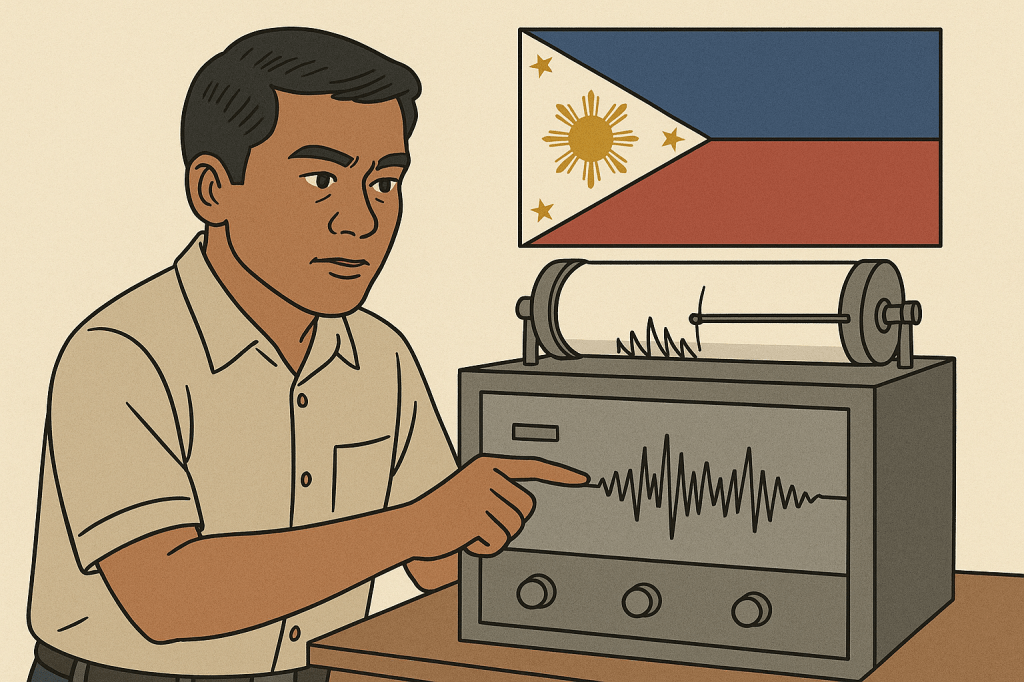
At 3:27 a.m. last October 3, the people of Cebu and neighboring provinces were jolted awake by a powerful magnitude-6.9 earthquake. Buildings shook, walls cracked, and frightened residents poured into the streets. It was one of the strongest tremors to hit the Visayas in over a decade—leaving a trail of damage, dozens of casualties, and a somber reminder that the Philippines, beautiful as it is, rests upon restless ground.
A Nation on Shifting Plates
The earthquake’s epicenter was traced to the Negros-Cebu Tectonic Line, a fault system that runs between the islands of Negros and Cebu. This fault is part of the larger Philippine Fault Zone—an extensive, 1,200-kilometer tear that runs through the spine of the country. The movement along these faults is caused by the ongoing collision of several major tectonic plates: the Philippine Sea Plate, the Eurasian Plate, and smaller micro-plates beneath our archipelago.
In scientific terms, the Philippines lies in the Pacific “Ring of Fire”, a region known for frequent earthquakes and volcanic eruptions. The Philippine Trench, Manila Trench, and Cotabato Trench are among the deep subduction zones that constantly grind and build pressure beneath our islands. Scientists have long warned that strong earthquakes remain an ongoing and unavoidable threat—especially along the West Valley Fault near Metro Manila and other active segments in Mindanao, the Visayas, and northern Luzon.
When Prophecy Meets Reality
For those who study Scripture, these seismic events bring to mind the sobering words of Jesus Christ. In the Olivet Prophecy, He warned:
“There will be famines, pestilences, and earthquakes in various places. All these are the beginning of sorrows.”
— Matthew 24:7–8 (NKJV)
Christ’s statement wasn’t meant to incite fear, but to awaken spiritual awareness. Earthquakes remind us of how fragile life can be—and how uncertain the foundations of human society are when measured against the power of the Creator. Each tremor is both a physical and spiritual wake-up call.
Preparing in Two Ways
The Bible does not tell us to live carelessly in dangerous places or ignore warnings. God gives wisdom so we can act prudently. That means:
- Avoiding known fault zones when possible,
- Building earthquake-resistant homes and facilities,
- Supporting stricter engineering standards and disaster preparedness efforts.
But beyond physical readiness, Scripture emphasizes spiritual preparedness—something far more vital. True safety begins not with stronger concrete but with a right relationship with God. Christ calls on every person to repent of sin, obey His commandments, and live righteously, because no structure can shield us from the spiritual upheavals that will accompany the end times.
“Except the Lord build the house, they labor in vain who build it.”
— Psalm 127:1 (NKJV)
A Wake-Up Call to a Nation
The Cebu earthquake should not be seen merely as a geological event but as a national reminder—that while technology can help us prepare physically, only repentance and obedience can prepare us spiritually. The shaking of the ground may pass, but the shaking of human hearts continues.
God’s people are urged to stand firm, to be alert, and to find their foundation in Him. As the prophet Isaiah wrote:
“He will be the stability of your times, a wealth of salvation, wisdom, and knowledge; the fear of the Lord is His treasure.”
— Isaiah 33:6 (NKJV)

Leave a comment