Category: Australia

  • Storm Over the Shoal: The Philippines, China, and the Future of the West Philippine Sea

    Storm Over the Shoal: The Philippines, China, and the Future of the West Philippine Sea

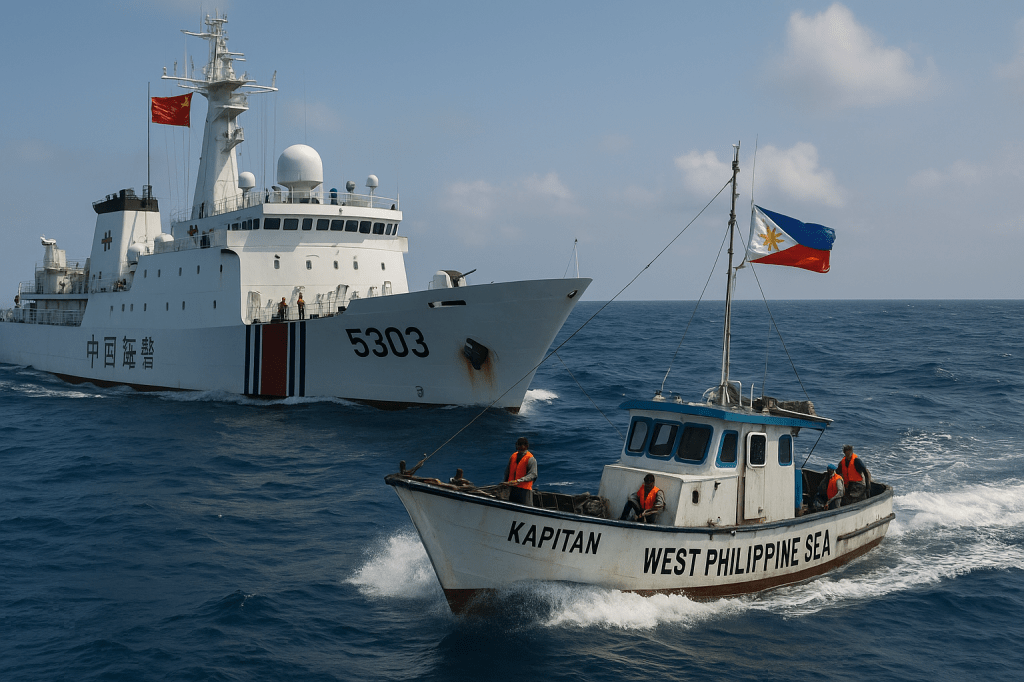
    Tensions flared again in the West Philippine Sea when Philippine and Chinese vessels collided near Scarborough Shoal on September 16, 2025. According to Manila, Chinese coast guard ships used high-powered water cannons against a Philippine resupply vessel, shattering glass on the bridge, damaging critical equipment, and injuring at least one crew member. China, for its part, accused the Philippines of “illegally” entering its waters and even claimed Manila rammed one of its ships—an allegation firmly denied by Philippine officials.

    This confrontation followed China’s unilateral declaration of a “national nature reserve” at Scarborough Shoal just days earlier. Filipino fishermen and government leaders saw this as an attempt to further tighten Beijing’s grip on a vital fishing ground that lies well within the Philippines’ Exclusive Economic Zone under international law and the 2016 Hague tribunal ruling.

    How Nations Responded

    Philippines: Manila lodged a strong diplomatic protest and ramped up patrols in contested waters. At home, protests over corruption added to the sense of urgency in defending national interests.

    China: Beijing justified its moves as “environmental” but in practice deployed coast guard and maritime militia vessels to enforce its claims, warning the Philippines against “provocations.”

    Allies & Partners:

    • The United States reiterated its defense commitments, condemning China’s actions.
    • Australia, Canada, Japan, and the UK voiced concern and pledged continued support for international law.
    • Germany and France are deepening defense ties with Manila. The UK is even exploring a Visiting Forces Agreement to allow closer military cooperation.

    What to Expect in the Next 3–5 Years

    The Philippines is investing heavily in its navy and coast guard, acquiring new frigates, offshore patrol vessels, and long-range missile systems like the BrahMos. It is also strengthening defense partnerships with allies from Asia, North America, and Europe. These steps will improve deterrence, but they cannot fully offset China’s overwhelming naval power.

    The likely trajectory is continued gray-zone conflict: water cannons, rammings, blockades, and the creation of more “facts on the ground” by China. At the same time, broader coalitions—Philippines with the U.S., Japan, Australia, the UK, and even select EU states—will increase naval patrols and exercises. Expect more incidents, more diplomatic protests, and a slow but steady militarization of the West Philippine Sea.

    The Long-Term Outlook: Prophecy and the Coming Clash

    While today the flashpoint is between the Philippines and China, the Bible shows that the stage is being set for something far greater. Prophecy in the book of Revelation describes a time when two great power blocs will dominate the world scene:

    • On one side, a resurrected Roman Empire, a powerful federation that will evolve out of today’s European Union.
    • On the other side, a vast eastern alliance led by powers like China and its allies.

    The South China Sea, a vital artery of global trade and security, could very well be one of the hot spots where these rival blocs collide. Scripture warns that this confrontation will erupt into a catastrophic war threatening the very survival of humanity (Matthew 24:21–22).

    But God has not left humanity without hope. Jesus Christ will intervene to stop world war from annihilating mankind. He will establish the Kingdom of God on earth, bringing true justice, security, and lasting peace—a peace no human power can achieve on its own.

    A Call to Repentance and Preparation

    In the meantime, God is calling individuals to repent, turn from sin, and live in obedience to His laws. The worsening conflicts, corruption, and rivalries we see today are signs of a world cut off from God. Yet for those who listen and respond, these events can serve as a wake-up call—a reminder to prepare for the soon-coming government of God, which will finally bring peace to all nations.

  • Between Giants: Australia’s Delicate Balancing Act in a Fracturing World

    Between Giants: Australia’s Delicate Balancing Act in a Fracturing World

    The 2025 Australian federal elections have delivered a resounding mandate to Prime Minister Anthony Albanese and the Labor Party, marking a significant moment in the country’s political and strategic journey. With an expanded majority in the House of Representatives and the unprecedented defeat of Opposition Leader Peter Dutton, Albanese has not only secured domestic authority but also acquired a stronger hand in steering Australia’s foreign and trade policy at a time of rising global tensions.

    As the world splinters into competing blocs—one centered around China, another adrift under an increasingly inward-looking United States, and a third slowly forming in a reassertive Europe—Australia must now walk a diplomatic tightrope. Its future security and prosperity will depend on how well it navigates this dangerous geopolitical terrain.

    A Mandate for Continuity and Change

    The Labor Party’s election platform emphasized continuity in trade diversification, investment in domestic manufacturing under the “Future Made in Australia” strategy, and a pragmatic approach to foreign affairs. While the domestic issues of cost of living and healthcare drove voter attention, international realities are now dictating Canberra’s broader path.

    Australia’s foreign policy trajectory under the renewed Albanese government will likely focus on:

    • Strengthening trade relations with Southeast Asia, India, and the EU;
    • Preserving (but not blindly following) its defense alliance with the United States;
    • Managing a complex and often fraught relationship with China.

    This approach reflects a delicate dance—an effort to safeguard both Australia’s security and its economic lifeblood.

    Trade: Diversify or Die

    China remains Australia’s largest trading partner, absorbing over 30% of its exports. But recent tensions—from Chinese tariffs on Australian goods to PLA naval drills within Australia’s EEZ—have underscored the perils of overdependence.

    Labor’s strategy is clear: reduce economic vulnerability. The Australia-EU free trade agreement signed in late 2024 opens new doors, while increasing outreach to India, Japan, and ASEAN nations is high on the government’s agenda.

    Still, trade diversification will not happen overnight. Australian iron ore, coal, and LNG are still central to China’s industrial economy, making complete detachment unlikely. At the same time, the U.S.’s renewed protectionism—marked by fresh Trump-era tariffs—makes relying on American markets increasingly uncertain.

    Thus, Australia’s trade policy must not only be bold but also nuanced. Diversification is a goal, but interdependence with China remains a geopolitical fact.

    National Security: Submarines, Missiles, and Cyber Walls

    The Albanese government’s defense policy reflects growing anxiety about the Indo-Pacific. With the AUKUS agreement in full swing, Canberra will continue acquiring nuclear-powered submarines and investing billions in advanced missile systems.

    Meanwhile, cyber threats from state actors—especially China—have spurred a renewed push for digital infrastructure protection. APT31-linked cyberattacks on Australian MPs in 2024 and Chinese military provocations in the Tasman Sea and South China Sea have reinforced a reality that Canberra can no longer ignore: Australia is no longer in a quiet neighborhood.

    Yet, increasing defense spending does not equate to abandoning diplomacy. The Albanese administration seeks to balance hard security with stable regional relationships—a recognition that Australia’s fate is tied to the stability of Asia.

    Australia and China: Uneasy Symbiosis

    Beijing is watching closely. Despite high-level diplomatic resets since 2023, including Premier Li Qiang’s visit and lifted sanctions on wine and barley, strategic distrust persists. Chinese military actions in Australia’s EEZ and aggressive aerial maneuvers near Australian aircraft show that goodwill has limits.

    Australia must now manage this “uneasy symbiosis”—keeping trade open while resisting strategic coercion. Beijing’s vision of a Sinocentric Asia challenges Canberra’s alignment with the West, especially in the South Pacific where Chinese influence is expanding.

    America First, Again

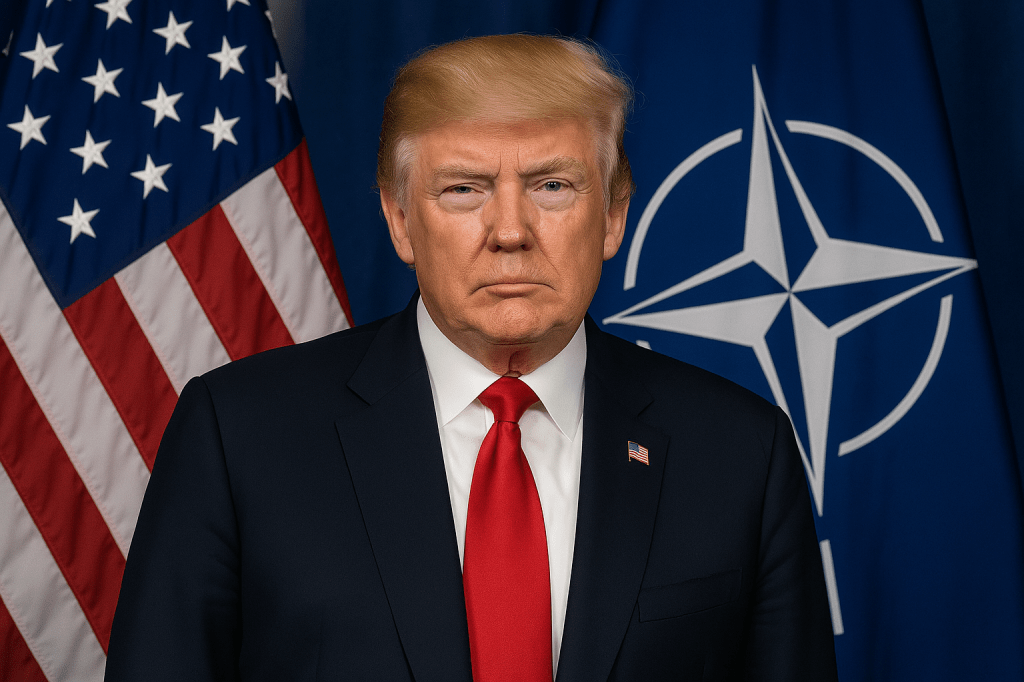
    The return of Donald Trump to the White House in 2025 has brought renewed U.S. isolationism. New tariffs on allies, lukewarm engagement in multilateral forums, and transactional diplomacy have unsettled traditional partners.

    For Australia, this complicates its long-standing reliance on the U.S. alliance. While the security guarantees of ANZUS remain, Canberra must increasingly weigh American unpredictability against its own national interests.

    Rather than follow Washington blindly, Australia is likely to engage with the U.S. on a case-by-case basis—committed to defense ties, cautious on economic entanglements.

    Europe Rising

    At the other end of the globe, Europe is slowly awakening as a strategic actor. The EU’s recent assertiveness in trade, defense integration, and global diplomacy—especially in the Pacific and Indo-Pacific—offers Australia an alternative pole of partnership.

    The Australia-EU FTA marks a pivotal opportunity, not just for economic gain but for geopolitical alignment with a bloc that shares values around democracy, climate responsibility, and multilateralism. However, Europe’s strategic pace remains slower and more fragmented than Asia’s urgency or America’s might.

    A Nation Between Blocs

    Australia today finds itself between three powerful and diverging blocs:

    • An Asian economic behemoth, dominated by China;
    • An unpredictable America, protective of its own interests;
    • An emerging European power, still finding its strategic rhythm.

    Navigating among them will be increasingly difficult. Trade policy will require surgical precision. Security choices may demand hard compromises. The old rules of alliance and economy no longer apply neatly in this age of fragmentation.

    But this also presents an opportunity—for Australia to lead as a middle power, a bridge, and a voice for balance in a divided world. To do that, it must remain anchored in principle, agile in policy, and clear-eyed about where the world is heading.

    In a time when larger powers flex their muscles and redraw the rules, the path for smaller nations like Australia is narrow—but not impossible. It must now learn to walk it with steadiness, resolve, and above all, wisdom (Proverbs 4:7).

  • A Scientific Exodus: A Nation at Risk of Losing Its Edge

    A Scientific Exodus: A Nation at Risk of Losing Its Edge

    In a quiet but consequential shift, some of America’s best and brightest scientists are packing their bags—not because they’ve lost faith in science, but because they’ve lost faith in the system supporting it.

    From physicists and biomedical researchers to climate scientists and engineers, highly trained professionals are now being drawn away from the United States to countries that offer a more stable, respectful, and well-funded environment for their work. The exodus isn’t dramatic, but it is undeniable—and its effects could ripple across generations.

    Why Are Scientists Leaving?

    The ongoing movement of scientists away from the United States has accelerated under policies perceived as hostile to scientific inquiry. Among the key reasons:

    • Funding Cuts: Major research institutions like the National Institutes of Health (NIH), the National Science Foundation (NSF), and the Centers for Disease Control and Prevention (CDC) have seen budgets slashed or frozen. Research grants are becoming harder to secure, especially for long-term or basic research.
    • Political Interference: Decisions that used to be grounded in peer-reviewed science are now being overridden by political agendas. Several high-profile projects were stalled or canceled due to ideological disagreements, eroding the trust scientists place in public institutions.
    • Immigration Restrictions: Many international researchers—who make up a significant portion of the U.S. scientific community—are finding it harder to enter or remain in the country due to tightened visa policies and anti-immigrant rhetoric.
    • Lack of Academic Freedom: There is growing concern over efforts to suppress or discredit science that contradicts prevailing political narratives, especially in areas like climate change, reproductive health, and pandemic preparedness.

    Where Are They Going?

    Countries such as France, Germany, Canada, Australia, and even China have recognized the opportunity. These nations are actively recruiting disillusioned American scientists through dedicated talent-attraction programs:

    • France launched its “Choose France for Science” initiative, which recently received hundreds of applications for just a few dozen positions.
    • Australia’s Global Talent Visa Program has drawn in academics from U.S. institutions who now feel more respected and supported abroad.
    • Germany continues to be a haven for physicists and chemists, especially through institutions like the Max Planck Society.
    • China, despite geopolitical tensions, has successfully attracted ethnic Chinese scientists from U.S. universities to return and lead cutting-edge research in AI, quantum computing, and biotech.

    Areas of Expertise Being Lost

    The scientists leaving are not average academics—they represent the elite of the global research community. Many are:

    • Biomedical researchers in cancer therapy and immunology
    • Artificial intelligence and machine learning experts
    • Environmental and climate scientists
    • Physicists involved in particle research and quantum technologies
    • Engineers specializing in aerospace, robotics, and advanced manufacturing

    These aren’t just brain drains—they are bleeding-edge minds whose work directly affects national security, public health, and global competitiveness.

    Lessons from History: The WWII Parallel

    Ironically, a major reason the United States won World War II was because of the exact opposite trend: brilliant scientists migrated to America, fleeing persecution and ideological tyranny in their own countries.

    Jewish and anti-Nazi scientists from Germany and Austria—including Albert Einstein, Enrico Fermi, and Leo Szilard—brought with them unparalleled expertise. Their contributions were vital to America’s scientific rise, including the success of the Manhattan Project, which led to the development of the atomic bomb.

    America’s post-war technological dominance wasn’t just built on factories—it was built on brains that had found refuge in a country that respected their minds and valued their freedom.

    Now, the tables are turning.

    When God Withholds the Wise

    The Bible presents a sobering parallel. In Isaiah 3:1,3 (NIV), God warned Jerusalem and Judah of judgment:

     “See now, the Lord, the Lord Almighty, is about to take from Jerusalem and Judah both supply and support: all supplies of food and all supplies of water… the judge and the prophet, the diviner and the elder, the captain of fifty and the man of rank, the counselor, skilled craftsman and clever enchanter.”

    When a nation turns its back on God and His laws, He does not merely withhold rain or prosperity—He also removes its human capital: the wise, the skilled, the visionary. Without such leaders and thinkers, a society collapses from within, even if its military and economy still appear strong on the outside.

    What This Means for America

    The loss of scientific talent is not just a brain drain—it’s a judgment of capability. It hinders America’s ability to innovate, compete, and protect its own people. Technologies that could have cured diseases, predicted natural disasters, or strengthened national defense may now be developed under different flags.

    It is a warning, but also a wake-up call.

    Restoring scientific integrity is not just about increasing funding or adjusting immigration quotas. It’s about restoring the moral and spiritual foundation upon which wisdom and truth are welcomed. It’s about America humbling itself as a nation and recognizing that knowledge is a gift from God, not something to be manipulated for political convenience.

    As we watch the pillars of America’s global leadership quietly erode, one is reminded of Proverbs 29:18:

     “Where there is no revelation, the people cast off restraint; but blessed is the one who heeds wisdom’s instruction.”

    Will America once again become a refuge for wisdom and innovation—or will it become the very place from which wisdom flees?

  • China’s West Pacific Ambitions: A Foreshadowing of Prophecy?

    China’s West Pacific Ambitions: A Foreshadowing of Prophecy?

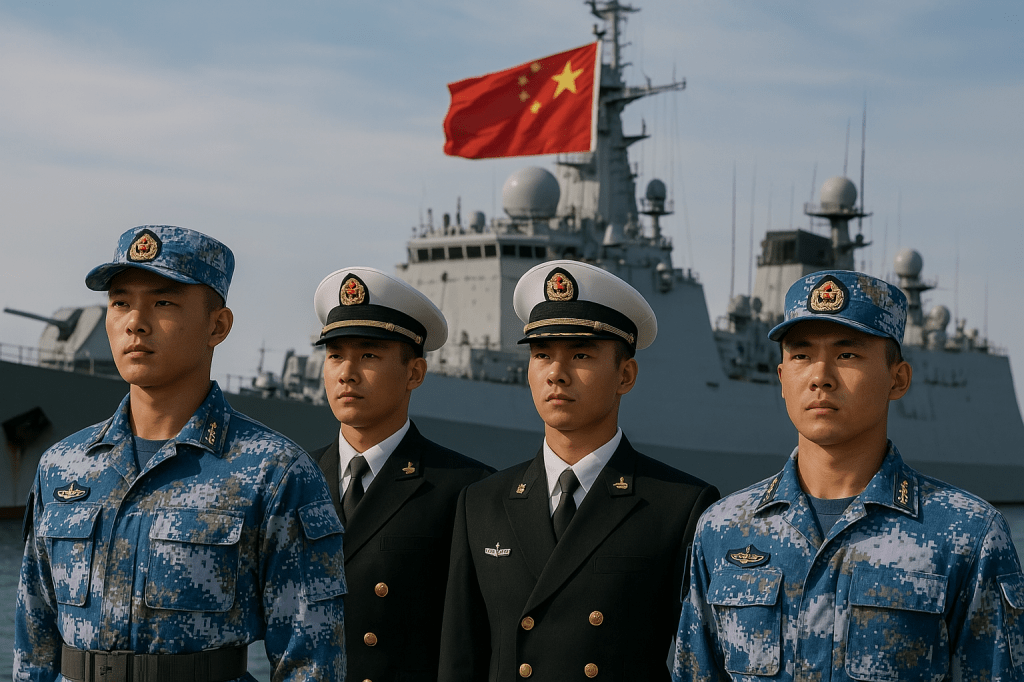
    Tensions in the Western Pacific continue to rise, with the People’s Republic of China making increasingly assertive moves to expand its political and military footprint across the region. These developments have not gone unnoticed. In a recent and widely publicized statement, General Romeo Brawner Jr., Chief of Staff of the Armed Forces of the Philippines, issued a stark warning to Philippine troops, particularly those stationed in Northern Luzon: prepare for a possible Chinese invasion of Taiwan.

    While this statement was quickly downplayed by the Marcos administration as precautionary rather than predictive, there is significant reason to believe that General Brawner’s warning is grounded in reality.

    Concrete Moves on the Ground

    China’s militarization of the South China Sea is no longer speculative. Artificial islands, equipped with runways, radar systems, and missile installations, now dot the once-empty waters of the Spratly and Paracel Islands. These installations give China not just a strategic advantage but also serve as de facto control points over a critical trade route through which about one-third of global maritime commerce passes.

    In addition to these fixed positions, China has recently conducted aggressive military exercises both near Taiwan and, surprisingly, off the coast of Australia. These drills included simulated blockade and amphibious assault operations near Taiwan, and live-fire naval exercises in the Tasman Sea. Such actions send a clear signal: Beijing is testing its ability to project power far beyond its shores, and it wants the world to take notice.

    Why Now?

    Several factors contribute to this renewed assertiveness:

    • China views Taiwan as a breakaway province and is determined to achieve reunification, a core tenet of President Xi Jinping’s long-term national vision.
    • The South China Sea remains vital to China’s energy and trade security.
    • Beijing is signaling strength amidst perceived U.S. retrenchment and the more transactional approach of current President Donald Trump, whose America-first policies have sometimes left allies questioning the reliability of U.S. support.

    Reactions from the Region

    Neighboring nations have not taken these developments lightly. The Philippines has revived and expanded its Enhanced Defense Cooperation Agreement (EDCA) with the United States, allowing for increased American troop presence and access to strategic bases. Japan, Australia, and India have strengthened security cooperation through the Quad alliance, while the AUKUS pact (Australia, the UK, and the U.S.) seeks to counterbalance Chinese naval dominance with advanced military technology sharing.

    Even smaller Pacific nations are becoming geopolitical flashpoints, with countries like the Solomon Islands engaging in military and economic partnerships with Beijing, much to the concern of Canberra and Washington.

    Yet, Limitations Remain

    Despite its aggressive posture, China’s ambitions are tempered by serious internal and external challenges:

    • Its economy is showing signs of strain due to demographic decline, real estate crises, and weakening consumer confidence.
    • Taiwan is not defenseless; it has invested heavily in asymmetric warfare capabilities and enjoys substantial, if unofficial, military backing from the United States.
    • A direct war with Taiwan could still invite U.S. intervention, along with its allies in the region, which Beijing may not yet be ready to face.

    A Prophetic Perspective

    From a biblical point of view, these rising tensions align with what the book of Revelation describes as a future global conflict involving massive armies from the east. Revelation 9:16 speaks of an army numbering 200 million. While China alone cannot field such a force, it is likely to form a future coalition with other eastern powers—most notably Russia and other countries whose current alliances may shift in the future.

    This eastern bloc, referred to in another biblical prophecy as the “kings of the east” (Revelation 16:12), will engage in a climactic war with a future European superpower, a revived Roman Empire in the end times. This prophesied war will occur after the decline of Anglo-American global dominance. By that time, the United States, Britain, and their allies will no longer be military superpowers or influential world players.

    This coming war between a European superpower and Asian nations will be so catastrophic that it would lead to the annihilation of humanity—if not for the divine intervention of Jesus Christ. As Matthew 24:22 says, “And unless those days were shortened, no flesh would be saved; but for the elect’s sake those days will be shortened.”

    The Only Source of True Peace

    The rise of Chinese militarism, the shifting of alliances, and the erosion of trust in old superpowers all point to a volatile world on the brink of unprecedented conflict. While human efforts at peace continually fall short, Bible prophecy assures us that God will intervene. Christ will return to put an end to human misrule and establish the Kingdom of God on earth—a government of true peace, justice, and righteousness (Isaiah 9:6-7).

    Until then, we must remain vigilant observers of global events, guided not by fear, but by faith in the sure word of prophecy and the hope of God’s coming Kingdom.

  • America’s Reliability Crisis: NATO and Global Security Shifts

    America’s Reliability Crisis: NATO and Global Security Shifts

    For decades, the United States has been the linchpin of global security, the backbone of NATO, the chief protector of the Pacific, and the ultimate deterrent against authoritarian expansionism. However, recent developments suggest that America’s role as the world’s guardian is eroding—an erosion driven not just by political decisions, but perhaps by a deeper spiritual message that the nation must heed.

    A Pattern of Unreliability in U.S. Commitments

    The Trump administration’s handling of intelligence sharing with Ukraine has sent shockwaves through allied nations. The sudden suspension of intelligence support to Ukraine, followed by its conditional resumption, has raised concerns about America’s commitment to its allies. While Ukraine’s struggle against Russian aggression continues, the erratic nature of U.S. policy has left NATO nations questioning whether they could face a similar fate.

    European nations, sensing the volatility of U.S. policy, are now exploring alternative security arrangements. The European Union is considering expanding its military intelligence capabilities and reducing its reliance on U.S. intelligence. Countries such as France and Germany are leading discussions on an independent European military force—an idea that was once dismissed as politically infeasible but is now gaining momentum.

    In the Pacific, America’s key allies—South Korea, Taiwan, and the Philippines—are also recalibrating their defense strategies. South Korea is bolstering regional partnerships, particularly with Japan, in anticipation of a less reliable American presence. Taiwan is actively seeking multilateral security cooperation beyond the U.S., participating in joint military exercises with the Philippines and Japan. Meanwhile, the Philippines is modernizing its military and diversifying its defense partnerships, engaging countries like Australia and Canada in military agreements.

    The Breakdown of America’s Global Leadership

    This growing shift away from American reliance signals the waning of U.S. global leadership. Allies who once placed unwavering trust in Washington now see the need to hedge their bets. For decades, the U.S. thrived on the strength of its alliances, but as these alliances weaken, so too does America’s influence in global affairs.

    Historically, great empires did not fall solely due to external threats but because of internal decay. America’s reluctance or inability to maintain stable commitments to its allies mirrors the decline of past world powers. The erosion of trust in U.S. leadership is not just a political problem—it is symptomatic of deeper issues plaguing the nation.

    A Spiritual Message to America

    From a biblical perspective, national greatness is not simply a product of military strength or economic prowess—it is tied to moral and spiritual standing. The United States has long claimed to be a nation under God, but its increasing political instability, social divisions, and unreliable leadership may be signs that it is drifting further from divine favor.

    The Bible warns that nations that forget God will face decline. The book of Proverbs states,

    “Righteousness exalts a nation, but sin is a reproach to any people” (Proverbs 14:34).

    When a nation abandons righteousness, its foundations begin to crumble, and its power wanes.

    Could it be that God is allowing America’s global dominance to wane as a wake-up call? The moral compass of the nation has shifted dramatically, embracing ideologies and practices that directly contradict biblical values. At the same time, political turmoil and international distrust are rising. The weakening of U.S. leadership should not just be seen as a strategic challenge but also as a spiritual warning.

    The Path to Restoration

    If America wishes to maintain its standing as a world power, it must look beyond military alliances and strategic policies. The key to lasting strength is not just in political or economic reforms but in a national return to godly principles.

    Leaders must recognize that power without righteousness is fleeting. The nation must prioritize integrity, justice, and moral leadership if it hopes to remain a stabilizing force in the world. This requires not only changes in governance but also a revival of spiritual commitment among its people.

    America’s allies are preparing for a world where the U.S. is no longer the primary protector. If this trend continues, the United States will find itself increasingly isolated, no longer at the helm of world affairs. This should be a sobering reality for American leaders, but also an opportunity—a moment to turn back to God, to seek His guidance, and to reestablish itself as a force for good in the world.