Category: Canada

  • A Scientific Exodus: A Nation at Risk of Losing Its Edge

    A Scientific Exodus: A Nation at Risk of Losing Its Edge

    In a quiet but consequential shift, some of America’s best and brightest scientists are packing their bags—not because they’ve lost faith in science, but because they’ve lost faith in the system supporting it.

    From physicists and biomedical researchers to climate scientists and engineers, highly trained professionals are now being drawn away from the United States to countries that offer a more stable, respectful, and well-funded environment for their work. The exodus isn’t dramatic, but it is undeniable—and its effects could ripple across generations.

    Why Are Scientists Leaving?

    The ongoing movement of scientists away from the United States has accelerated under policies perceived as hostile to scientific inquiry. Among the key reasons:

    • Funding Cuts: Major research institutions like the National Institutes of Health (NIH), the National Science Foundation (NSF), and the Centers for Disease Control and Prevention (CDC) have seen budgets slashed or frozen. Research grants are becoming harder to secure, especially for long-term or basic research.
    • Political Interference: Decisions that used to be grounded in peer-reviewed science are now being overridden by political agendas. Several high-profile projects were stalled or canceled due to ideological disagreements, eroding the trust scientists place in public institutions.
    • Immigration Restrictions: Many international researchers—who make up a significant portion of the U.S. scientific community—are finding it harder to enter or remain in the country due to tightened visa policies and anti-immigrant rhetoric.
    • Lack of Academic Freedom: There is growing concern over efforts to suppress or discredit science that contradicts prevailing political narratives, especially in areas like climate change, reproductive health, and pandemic preparedness.

    Where Are They Going?

    Countries such as France, Germany, Canada, Australia, and even China have recognized the opportunity. These nations are actively recruiting disillusioned American scientists through dedicated talent-attraction programs:

    • France launched its “Choose France for Science” initiative, which recently received hundreds of applications for just a few dozen positions.
    • Australia’s Global Talent Visa Program has drawn in academics from U.S. institutions who now feel more respected and supported abroad.
    • Germany continues to be a haven for physicists and chemists, especially through institutions like the Max Planck Society.
    • China, despite geopolitical tensions, has successfully attracted ethnic Chinese scientists from U.S. universities to return and lead cutting-edge research in AI, quantum computing, and biotech.

    Areas of Expertise Being Lost

    The scientists leaving are not average academics—they represent the elite of the global research community. Many are:

    • Biomedical researchers in cancer therapy and immunology
    • Artificial intelligence and machine learning experts
    • Environmental and climate scientists
    • Physicists involved in particle research and quantum technologies
    • Engineers specializing in aerospace, robotics, and advanced manufacturing

    These aren’t just brain drains—they are bleeding-edge minds whose work directly affects national security, public health, and global competitiveness.

    Lessons from History: The WWII Parallel

    Ironically, a major reason the United States won World War II was because of the exact opposite trend: brilliant scientists migrated to America, fleeing persecution and ideological tyranny in their own countries.

    Jewish and anti-Nazi scientists from Germany and Austria—including Albert Einstein, Enrico Fermi, and Leo Szilard—brought with them unparalleled expertise. Their contributions were vital to America’s scientific rise, including the success of the Manhattan Project, which led to the development of the atomic bomb.

    America’s post-war technological dominance wasn’t just built on factories—it was built on brains that had found refuge in a country that respected their minds and valued their freedom.

    Now, the tables are turning.

    When God Withholds the Wise

    The Bible presents a sobering parallel. In Isaiah 3:1,3 (NIV), God warned Jerusalem and Judah of judgment:

     “See now, the Lord, the Lord Almighty, is about to take from Jerusalem and Judah both supply and support: all supplies of food and all supplies of water… the judge and the prophet, the diviner and the elder, the captain of fifty and the man of rank, the counselor, skilled craftsman and clever enchanter.”

    When a nation turns its back on God and His laws, He does not merely withhold rain or prosperity—He also removes its human capital: the wise, the skilled, the visionary. Without such leaders and thinkers, a society collapses from within, even if its military and economy still appear strong on the outside.

    What This Means for America

    The loss of scientific talent is not just a brain drain—it’s a judgment of capability. It hinders America’s ability to innovate, compete, and protect its own people. Technologies that could have cured diseases, predicted natural disasters, or strengthened national defense may now be developed under different flags.

    It is a warning, but also a wake-up call.

    Restoring scientific integrity is not just about increasing funding or adjusting immigration quotas. It’s about restoring the moral and spiritual foundation upon which wisdom and truth are welcomed. It’s about America humbling itself as a nation and recognizing that knowledge is a gift from God, not something to be manipulated for political convenience.

    As we watch the pillars of America’s global leadership quietly erode, one is reminded of Proverbs 29:18:

     “Where there is no revelation, the people cast off restraint; but blessed is the one who heeds wisdom’s instruction.”

    Will America once again become a refuge for wisdom and innovation—or will it become the very place from which wisdom flees?
  • America’s Reliability Crisis: NATO and Global Security Shifts

    America’s Reliability Crisis: NATO and Global Security Shifts

    For decades, the United States has been the linchpin of global security, the backbone of NATO, the chief protector of the Pacific, and the ultimate deterrent against authoritarian expansionism. However, recent developments suggest that America’s role as the world’s guardian is eroding—an erosion driven not just by political decisions, but perhaps by a deeper spiritual message that the nation must heed.

    A Pattern of Unreliability in U.S. Commitments

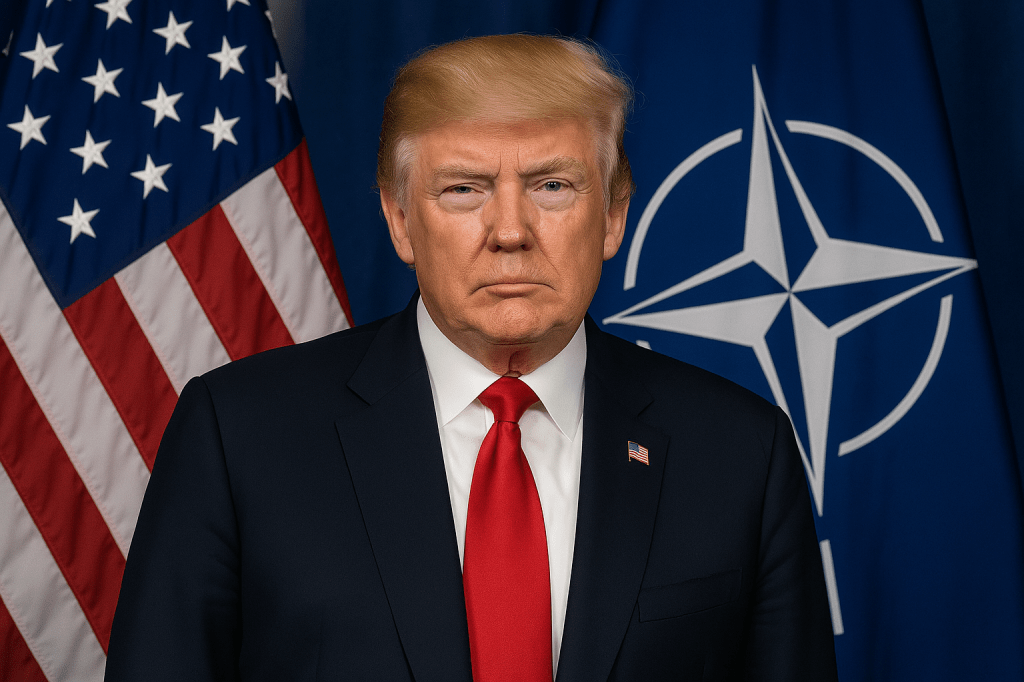
    The Trump administration’s handling of intelligence sharing with Ukraine has sent shockwaves through allied nations. The sudden suspension of intelligence support to Ukraine, followed by its conditional resumption, has raised concerns about America’s commitment to its allies. While Ukraine’s struggle against Russian aggression continues, the erratic nature of U.S. policy has left NATO nations questioning whether they could face a similar fate.

    European nations, sensing the volatility of U.S. policy, are now exploring alternative security arrangements. The European Union is considering expanding its military intelligence capabilities and reducing its reliance on U.S. intelligence. Countries such as France and Germany are leading discussions on an independent European military force—an idea that was once dismissed as politically infeasible but is now gaining momentum.

    In the Pacific, America’s key allies—South Korea, Taiwan, and the Philippines—are also recalibrating their defense strategies. South Korea is bolstering regional partnerships, particularly with Japan, in anticipation of a less reliable American presence. Taiwan is actively seeking multilateral security cooperation beyond the U.S., participating in joint military exercises with the Philippines and Japan. Meanwhile, the Philippines is modernizing its military and diversifying its defense partnerships, engaging countries like Australia and Canada in military agreements.

    The Breakdown of America’s Global Leadership

    This growing shift away from American reliance signals the waning of U.S. global leadership. Allies who once placed unwavering trust in Washington now see the need to hedge their bets. For decades, the U.S. thrived on the strength of its alliances, but as these alliances weaken, so too does America’s influence in global affairs.

    Historically, great empires did not fall solely due to external threats but because of internal decay. America’s reluctance or inability to maintain stable commitments to its allies mirrors the decline of past world powers. The erosion of trust in U.S. leadership is not just a political problem—it is symptomatic of deeper issues plaguing the nation.

    A Spiritual Message to America

    From a biblical perspective, national greatness is not simply a product of military strength or economic prowess—it is tied to moral and spiritual standing. The United States has long claimed to be a nation under God, but its increasing political instability, social divisions, and unreliable leadership may be signs that it is drifting further from divine favor.

    The Bible warns that nations that forget God will face decline. The book of Proverbs states,

    “Righteousness exalts a nation, but sin is a reproach to any people” (Proverbs 14:34).

    When a nation abandons righteousness, its foundations begin to crumble, and its power wanes.

    Could it be that God is allowing America’s global dominance to wane as a wake-up call? The moral compass of the nation has shifted dramatically, embracing ideologies and practices that directly contradict biblical values. At the same time, political turmoil and international distrust are rising. The weakening of U.S. leadership should not just be seen as a strategic challenge but also as a spiritual warning.

    The Path to Restoration

    If America wishes to maintain its standing as a world power, it must look beyond military alliances and strategic policies. The key to lasting strength is not just in political or economic reforms but in a national return to godly principles.

    Leaders must recognize that power without righteousness is fleeting. The nation must prioritize integrity, justice, and moral leadership if it hopes to remain a stabilizing force in the world. This requires not only changes in governance but also a revival of spiritual commitment among its people.

    America’s allies are preparing for a world where the U.S. is no longer the primary protector. If this trend continues, the United States will find itself increasingly isolated, no longer at the helm of world affairs. This should be a sobering reality for American leaders, but also an opportunity—a moment to turn back to God, to seek His guidance, and to reestablish itself as a force for good in the world.

  • Canada’s Trade Pivot: Preparing for the Rise of a European Economic Giant

    Canada’s Trade Pivot: Preparing for the Rise of a European Economic Giant

    In recent years, Canada has been aggressively diversifying its trade relationships, seeking to reduce its economic reliance on the United States. This shift has been prompted by the increasingly unstable and protectionist trade policies emanating from Washington, which have left even long-standing allies questioning the reliability of the U.S. as a trade partner. Amid these uncertainties, Canada has been forging deeper economic ties with countries and entities beyond the U.S.—most notably, the European Union (EU). While this strategy might seem a prudent move in the short term, there are profound prophetic implications that could reshape the global economic landscape in the not-so-distant future. According to biblical prophecy, a powerful European economic empire will rise, eventually transforming these trade partnerships into instruments of subjugation for nations like Canada, Britain, and the United States.

    The EU: A Sleeping Economic Giant Awakens

    Canada’s recent push to strengthen its economic ties with the EU is evident in the Comprehensive Economic and Trade Agreement (CETA), which has significantly boosted bilateral trade since its provisional implementation in 2017. Trade between Canada and the EU has seen robust growth, with Canadian exports to Europe rising sharply. However, this may only be the beginning of a much larger geopolitical shift.

    Prophetic Foundations: The Rise of a European Economic Powerhouse

    The Bible contains several passages that foretell the emergence of a powerful economic and political entity in Europe, often interpreted as a revived Roman Empire. This empire, described symbolically in prophetic books, is expected to dominate global trade and exert substantial influence over the nations, including those descended from ancient Israel, such as the United States, Britain, and Canada.

    Daniel 2 and Daniel 7 provide the foundational prophecies for understanding this future European superpower. In Daniel 2, King Nebuchadnezzar’s dream of a statue with different metal parts symbolizes successive world empires. The legs of iron and feet partly of iron and partly of clay represent the Roman Empire and its eventual revival in a divided form (Daniel 2:40-43). The ten toes signify a coalition of ten kings or nations.

    Similarly, Daniel 7:7-8, 23-24 describes a fourth beast, “dreadful and terrible, exceedingly strong,” with ten horns, symbolizing the same revived Roman Empire.

    Revelation 17 builds on Daniel’s vision, describing a beast with seven heads and ten horns. This beast is supported by a harlot, symbolizing a powerful religious influence allied with the political empire. The ten horns, representing ten kings, “receive authority for one hour as kings with the beast” (Revelation 17:12). This alliance suggests a temporary but powerful coalition that will dominate global trade and politics.

    Additionally, Revelation 18 depicts this future European superpower as an economic giant, a great commercial system symbolized by “Babylon the Great.” It describes a wealthy and influential trading empire whose goods are coveted by merchants worldwide (Revelation 18:11-13). The chapter highlights the immense economic power of this system and its impact on global commerce.

    Trading with the Beast: An Equal Partner Only for a Time

    In the initial stages of this emerging European superpower, Canada will likely benefit from what seems to be a mutually respectful and lucrative trade partnership. Canada’s rich resources—energy, minerals, and agricultural products—will be of great interest to the EU, and both sides will capitalize on these exchanges. This period will offer Canada an opportunity to secure new markets and hedge against U.S. trade uncertainties.

    However, biblical prophecy warns that this phase will be temporary. The Scriptures foretell that this resurrected Roman Empire, symbolically referred to as the Beast, will not remain content with equal partnerships for long. As its power grows, it will subjugate nations, including Canada, Britain, and even the United States. What begins as a promising trade relationship will gradually shift into a scenario where Canada and its allies find themselves economically and politically subdued. Trade agreements will be replaced with mandates, and sovereignty will be compromised.

    The Time of Jacob’s Trouble

    The Bible also speaks of a future period known as the “time of Jacob’s trouble,” a time of great distress and calamity for the modern descendants of ancient Israel, including the United States, Britain, and other English-speaking nations such as Canada.

    Jeremiah 30:4-7 explicitly describes this period:

     “Now these are the words that the Lord spoke concerning Israel and Judah. For thus says the Lord: ‘We have heard a voice of trembling, of fear, and not of peace. Ask now, and see, whether a man is ever in labor with child? So why do I see every man with his hands on his loins like a woman in labor, and all faces turned pale? Alas! For that day is great, so that none is like it; and it is the time of Jacob’s trouble, but he shall be saved out of it.’”

    Hosea 5:5 and Hosea 7:11 also warn of Ephraim (symbolic of Britain and its commonwealth nations, including Canada) seeking alliances with foreign powers, leading to downfall. Canada’s pursuit of new trade relationships is a rational response to current uncertainties, yet it is essential to recognize the broader prophetic context. The rise of a powerful European economic empire is not a distant possibility—it is an imminent reality foretold in biblical prophecy. For Canada, the path forward may offer short-term gains but also significant long-term risks. Understanding these prophetic truths can help us view today’s headlines with clarity and prepare for the dramatic changes that lie ahead.