Category: China

  • Why Europe—not America—is Poised to Become the West’s Hub for Advanced AI Chips

    Why Europe—not America—is Poised to Become the West’s Hub for Advanced AI Chips

    Despite the U.S.–China tech rivalry, the center of gravity for the West’s most advanced compute is drifting toward Europe in the long term. The reasons are practical—policy, supply-chain physics, and industrial base—and, for those of us who read the Bible’s prophecies, they also fit the end-time alignment in which a revived European power rivals a vast Asian coalition while America declines.

    The inflection now: “Sovereign AI” lands in Europe

    In mid-2025, Nvidia’s push for “sovereign AI”—each nation owning its models and compute—found especially fertile ground in Europe. EU leaders publicly embraced the idea and began backing massive, local AI capacity, including a plan for four “AI gigafactories” and a large 18,000-GPU build with French champion Mistral.

    At the same time, Europe is already hosting some of the world’s most capable AI-ready supercomputers under the EuroHPC program:

    • JUPITER (Germany) — built on ~24,000 Nvidia GH200 Grace Hopper superchips; Europe’s fastest system and its first exascale-class machine.
    • MareNostrum 5 (Spain) — Europe’s newest pre-exascale facility, with accelerated partitions used for AI work.
    • Leonardo (Italy) — ~13,824 Nvidia A100 GPUs on a BullSequana platform at CINECA.

    Alongside these deployments, the EU Chips Act commits €43 billion in public investment (with matching private capital) to strengthen Europe’s semiconductor ecosystem and reduce external dependencies.

    Bottom line: Europe is not just buying chips; it is deliberately localizing compute, policy, and industry to anchor AI at home.

    Why the hub is unlikely to remain in America in the long-run

    1. Export controls that fragment allied access – Recent U.S. rules on advanced AI chips and even model weights introduced tiered access inside the EU, granting some member states frictionless imports while forcing others into licensing regimes. That touched a nerve in Brussels and in national capitals because it splits the single market and turns compute into a diplomatic lever. This has already triggered European calls for more autonomous, EU-based capacity.
    2. Europe is the world’s chokepoint for the tools that make cutting-edge chips – ASML (Netherlands) is the sole supplier of EUV lithography, the tool family required to print the most advanced chips. That unique leverage—and the next High-NA EUV generation now shipping—gives Europe structural power in any Western supply-chain redesign.
    3. Manufacturing & packaging are moving onto European soil – While Nvidia remains fabless, its critical suppliers are expanding in Europe:
    • TSMC broke ground on ESMC—a Dresden fab with Bosch, Infineon, and NXP—and is opening a design center in Munich to support European customers.
    • Intel is advancing an assembly & test site in Wrocław, Poland, a key step in building an EU packaging base for advanced devices.
    • Amkor (a major OSAT partner to many chip designers) runs a packaging/test campus in Portugal, part of a broader European push into advanced packaging.

    4. The regulatory superpower effect – From the AI Act to the DMA/DSA, the EU consistently sets rules that global firms end up following. “Sovereign AI” plus European standards naturally pulls high-end compute into Europe so governments and companies can comply, train local-language models, and keep sensitive datasets under EU jurisdiction. (Nvidia is already tailoring offerings to this need.)

    Taken together: the politics (export uncertainty), the tools (ASML), the money (EU Chips Act), and the physical footprint (fabs + packaging + supercomputers) all point to Europe consolidating as the West’s home base for advanced AI infrastructure.

    “What could push this over the line?” — plausible chain of events

    • A supply-shock scare in East Asia (even weeks): Any Taiwan-Strait disruption would amplify the logic of placing more advanced packaging and system-integration in Europe—closer to sovereign AI customers and the EU’s legal/regulatory center. (Europe is already scaling exascale systems and courting multiple suppliers.)
    • Another round of U.S. export policy whiplash: If allied access again becomes conditional or transactional, EU policymakers will double-down on local capacity and procurement rules that require EU-built stacks for state and critical-infrastructure AI.
    • Ecosystem gravity: With JUPITER, MareNostrum 5, and Leonardo already training European models, follow-on clusters, specialist ASIC deployments (e.g., Groq for inference), and EU-only datasets will pull developers, service firms, and venture capital toward Europe’s compute hubs.

    Through the prophetic lens

    Scripture shows that just before Christ’s return, a revived Roman system rises as a dominant power while “kings of the East” form a counter-bloc (Dan. 2; Rev. 13; 17; 16:12). America, the British Commonwealth, and the modern descendants of Judah decline under God’s corrective hand—not annihilation, but discipline leading to repentance (Lev. 26; Hos. 5:5; 11:7; Amos 3:1–2). In that end-time landscape, it is coherent that the world’s decisive technologies—and the economic/administrative muscle that goes with them—shift to Europe (with Asia rivaling it), while the U.S. loses primacy.

    Technology doesn’t save or condemn; it reveals where power concentrates. Today’s movements in compute sovereignty, chip tools, and supply chains match the geopolitical map the Bible sketches for the end of the age.

    What to watch next (practical signposts)

    1. European capacity mandates in public procurement (e.g., “EU-built hardware for sovereign AI contracts”).
    2. HBM & advanced-packaging ramps in the EU (announcements, hiring, MW-scale campuses).
    3. ASML High-NA EUV rollout cadence and who gets priority tools.
    4. EuroHPC upgrades and national AI “gigafactory” awards (Germany/France/Italy/Spain consortia).
    5. U.S. export-control tweaks that re-tier EU access (or replace tiers with bilateral deals).

    Force of Gravity

    Even as U.S.–China rivalry dominates headlines, the Western hub for frontier AI hardware is gravitating toward Europe—by design and by necessity. For policy and industry, this is about sovereignty and resilience. For those of us who study prophecy, it is one more stepping-stone toward the world the Bible describes: a powerful European bloc facing a consolidated Asian power, while America is humbled to repentance—just before Christ returns.
  • The Alaska Summit: Is a ‘Reverse Nixon’ Strategy Realistic?

    The Alaska Summit: Is a ‘Reverse Nixon’ Strategy Realistic?

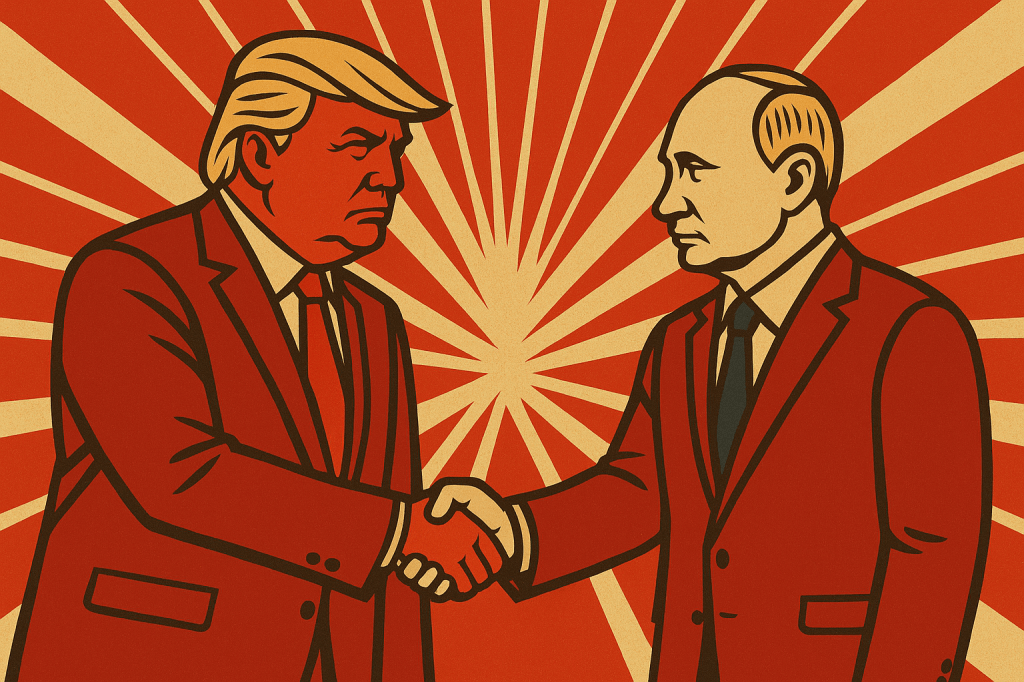
    The highly anticipated Trump–Putin summit in Alaska has now concluded, and its outcome was largely as expected. There was no breakthrough peace deal, no dramatic ceasefire in Ukraine, and certainly no resolution of the war that has scarred Europe for over three years. Instead, as we anticipated, what emerged was a meeting heavy on appearances but light on substance—one that gave Russia space to make demands and allowed President Trump to present the encounter as a step toward peace.

    Yet one surprising narrative surfaced in post-summit commentary: that Russia could somehow be drawn into serving as a counterweight to China. At first glance, this might sound like a clever geopolitical gambit. In reality, if it is really part of Trump’s planned outcome, it is little more than wishful thinking.

    The “Reverse Nixon” Strategy—Revisited

    Some analysts have framed the Trump administration’s approach as a kind of “reverse Nixon.” Just as President Richard Nixon reached out to China in the 1970s to isolate the Soviet Union, so too might Trump try to cultivate Russia to isolate China. Post-summit analysis suggested that Alaska revealed “Washington’s intent to weaken the Sino-Russian partnership, positioning Russia as a potential counterbalance to China” (“Trump–Putin Summit in Alaska: Geopolitical Implications and Strategic Narratives”, Special Eurasia).

    However, it is important to stress that none of the major news outlets covering the Alaska summit—Reuters, AP, The Guardian, The Washington Post, or Wall Street Journal—quoted any U.S. official explicitly declaring this as policy. The focus of official statements remained firmly on Ukraine, ceasefire diplomacy, and territorial questions.

    This means that the “counterweight to China” idea, while attractive to some in Washington and appealing to commentators, remains speculative at best.

    Why Russia Will Not Truly Counter China

    Several factors make the notion of Russia acting as a stable American ally deeply unrealistic:

    1. Deep Cooperation with China (and North Korea):

    China has provided Russia with essential economic lifelines and diplomatic support throughout its war in Ukraine. North Korea has supplied artillery and munitions to Russia, underpinning its battlefield operations. These actions go beyond mere solidarity—they demonstrate an active and ongoing alliance. Moscow is unlikely to betray the countries that enable its war effort.

    2. Entrenched Distrust of the West:

    Under Putin, Russia has shaped its identity in opposition to the West. NATO and the United States are framed as existential threats to sovereignty. A genuine pivot toward Washington would undermine that domestic narrative and threaten regime legitimacy.

    3. Power Imbalance and Strategic Leverage:

    Moscow’s flirtation with Washington is not about alignment—it’s about leverage. Russia is signaling to Beijing that it has alternatives. But with its economy and industrial capacity still dwarfed by China’s, true independence remains elusive.

    4. Historical Precedents of Broken Hopes:

    Past attempts to reset ties with Russia—from the Bush-era friendliness to Obama’s “reset”—ended with disappointment. Today’s overtures are likely to follow that same pattern: brief engagement, followed by a return to opposition.

    The Risks

    This optimistic narrative—that the U.S. and Russia can form a strategic counterbalance to China—is, in reality, not achievable, especially for the long-term. At best, Russia will play along just enough to extract concessions while maintaining its vital ties with Beijing (and Pyongyang). At worst, this illusion will misguide U.S. policy, encouraging miscalculations and weakening alliances.

    The Prophetic Trajectory: Kings of the East

    Biblical prophecy casts a longer, more enduring shadow over these events. Revelation 9:13-16 speaks of armies east of the farthest boundaries of the Roman Empire about to invade it just before the return of Christ. This implies not division among eastern powers, but convergence—especially against the West.

    The idea that Russia is drifting away from China is a surface-level maneuver. Beneath this lies a deeper movement toward alignment, consistent with the prophetic vision of eastern powers uniting. Their eventual hostility will not be directed inward, but outward—against the West.

    Not Realistic

    The Alaska summit unfolded largely as we and some other observers predicted—no peace, continued Russian leverage, and cautious Western response. Yet the notion of Russia becoming a U.S. counterweight to China is not a realistic long-term outcome. Russia’s alliances run too deep, its distrust of the West too entrenched, and the prophetic currents too clear.

    Ultimately, Russia is not turning away from China; it is seeking respect from a powerful partner. And, as Scripture indicates, when the time is right, the eastern powers will move together—not toward peace with the West, but toward confrontation.

  • The Battle for the West Philippine Sea: Why the EU is Stepping Forward

    The Battle for the West Philippine Sea: Why the EU is Stepping Forward

    On July 22, 2025, Philippine President Ferdinand Marcos Jr. met with U.S. President Donald Trump at the White House to reinforce economic and military ties between their two countries. The visit culminated in a high-profile agreement that introduced a 19% U.S. tariff on Philippine exports in exchange for zero tariffs on American vehicles and parts, certain agricultural products and pharmaceuticals entering the Philippines. While some critics argue that the Philippines is getting the shorter end of the stick in this trade arrangement, the reality is more nuanced: the Philippines managed to secure concessions similar to or slightly better than those granted to other Southeast Asian nations such as Vietnam and Indonesia, though it still fell short of the far more favorable terms negotiated by Japan. But beyond the trade negotiations, the more pressing development was the renewed emphasis on joint security. The two leaders committed to expanding the Enhanced Defense Cooperation Agreement (EDCA), establishing new naval repair facilities in Palawan, and reaffirming that any attack on Philippine assets in the West Philippine Sea (WPS) would trigger American support under the Mutual Defense Treaty.

    While these moves project strength, they also expose an emerging geopolitical gap: the long-term sustainability of U.S. leadership in Asia. As Washington becomes increasingly preoccupied with domestic challenges and global overstretch, Europe—especially the European Union—will have to prepare to take a more proactive stance in securing vital global commons, including the WPS.

    Why the West Philippine Sea Matters Globally

    The WPS, part of the broader South China Sea, is not merely a regional concern. It is a critical artery for international trade:

    • Over 30% of the world’s shipping, valued at more than $3 trillion annually, passes through these waters.
    • Key goods—from energy supplies to high-tech components—transit routes that connect East Asia with Europe, the Middle East, and Africa.
    • The seabed is believed to contain vast reserves of oil and natural gas, making it a major energy frontier.

    For the EU, whose economic engine thrives on global commerce, any disruption in the WPS would create devastating ripple effects across its member states. France, Germany, the Netherlands, and Italy all rely on uninterrupted access through these lanes to sustain their export-heavy economies.

    The U.S. as Present Guarantor—But for How Long?

    For now, the U.S. remains the strongest military power in the Indo-Pacific and the principal guarantor of free access to the WPS. American naval operations, such as Freedom of Navigation Operations (FONOPs), continue to challenge China’s expansive claims.

    However, the sustainability of this leadership is in question. Economic strains, political polarization, and the growing appeal of isolationist policies suggest that America’s global commitments may continue to shrink. In a future where Washington withdraws, who ensures that vital sea lanes remain open?

    Why the EU is Preparing to Secure the WPS

    1. Trade Dependence: Nearly 40% of the EU’s external trade moves through the South China Sea. Control or disruption of this route by China would allow it to economically coerce Europe.
    2. Strategic Credibility: If the EU seeks to become a global superpower, it must demonstrate the ability to project power and protect its interests far beyond its borders. Inaction in the WPS would reveal a lack of strategic autonomy.
    3. Legal and Moral Leadership: The EU champions the rules-based international order, especially UNCLOS. Yielding to Chinese hegemony in the WPS would undermine its commitment to international law.
    4. Asian Partnerships: Europe is deepening ties with Indo-Pacific countries, including Japan, India, and ASEAN states. Active involvement in ensuring freedom of navigation in the WPS will solidify its standing in the region.

    Steps the EU Is Taking

    At the recent 2025 EU Summit in Brussels, leaders agreed on a number of critical initiatives:

    • Creation of a Permanent Indo-Pacific Naval Task Group, spearheaded by France, Germany, and Italy, with rotational patrols planned for 2026.
    • Enhanced Military Cooperation with ASEAN nations, including maritime surveillance and joint training exercises.
    • Strategic Investments in Defense Production and Blue-Water Naval Capabilities, to ensure operational reach in the Indo-Pacific.
    • Intelligence-Sharing Agreements with Japan and the Philippines aimed at countering disinformation and tracking Chinese maritime movements.

    These developments represent a significant shift in the EU’s global posture. While not yet capable of replacing the U.S., the EU is beginning to prepare for a world in which it may have to act independently.

    East vs. West and the Philippines in the Middle

    From a biblical standpoint, the rise of a European-centered global power is not unexpected. The Bible foresees a final world superpower described as a “beast” rising out of the sea (Revelation 13:1), a union of nations centered in Europe. As it rises, it will eventually clash with a coalition of eastern powers, including nations historically associated with “the kings of the east” (Revelation 16:12).

    In such a scenario, the Philippines—geographically and strategically situated between China and the Western Pacific—would find itself at the intersection of a great geopolitical conflict. Its alliance with the U.S., and potentially with the EU in the future, makes it a key outpost in a looming confrontation between East and West.

    A Call to Strategic Vigilance

    The recent Marcos-Trump meeting underscores that the Philippines is not blind to the growing tensions in the West Philippine Sea. Yet the sustainability of American guarantees is not forever assured. The EU, slowly but surely, recognizes that its preparations for global leadership hinge on its willingness to secure the global commons.

    The West Philippine Sea is a fulcrum of future power dynamics. The EU will have to ensure it plays a defining role in keeping it free—not only for the sake of trade and legal norms but to attain its goal of becoming a central actor on the world stage. The Philippines, meanwhile, will have to brace for the storms ahead.

  • Trump’s Tariff Blitz on BRICS: Forging Unity Among America’s Adversaries

    Trump’s Tariff Blitz on BRICS: Forging Unity Among America’s Adversaries

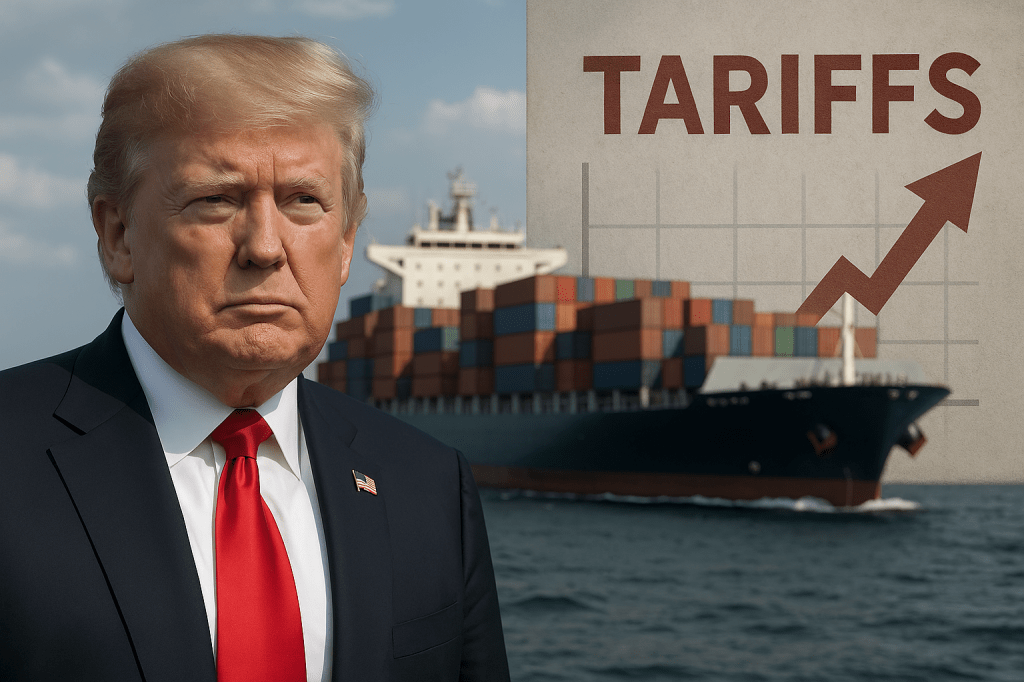
    This week, President Donald Trump announced a sweeping new wave of tariffs targeting BRICS nations—Brazil, Russia, India, China, and South Africa. In a move reminiscent of his first-term trade policies, but now more aggressive and broadly applied, Trump proposed tariffs of up to 50% on imports from nations that do not have free trade agreements with the United States. Since none of the BRICS countries fall under such agreements, the move is widely interpreted as a direct economic strike on the bloc.

    The rationale? According to administration officials, the policy is meant to “protect American industries from unfair foreign competition” and “punish nations that exploit the U.S. market while refusing to reciprocate.” However, behind the veneer of economic nationalism lies a far more dangerous outcome: a widening geopolitical chasm that could transform economic rivals into strategic enemies.

    Tariffs That Unite the Disparate

    The BRICS alliance, though often riddled with internal differences, has always shared one common trait: dissatisfaction with the post-WWII U.S.-led world order. But internal contradictions—between India and China, or Brazil and Russia’s conflicting economic models—have often limited deeper integration. That may now be changing.

    By targeting all BRICS nations simultaneously, the U.S. has given them something they previously lacked: a unifying adversary. These tariffs are not just duties on goods—they are perceived as blows against sovereignty, development, and fair participation in the global system.

    Rather than bringing these nations to heel, the new policy will likely yield the opposite result:

    • China will retaliate economically while accelerating its efforts to establish yuan-based trade systems with BRICS and Global South nations.
    • Russia, already isolated by the West, will use this as further justification to deepen ties with Beijing, New Delhi, and even Brasília.
    • India, long cautious about getting too close to China, may still choose to increase intra-BRICS trade and reassert its role in leading a “non-aligned but assertive” bloc.
    • Brazil, responding to Trump’s tariffs, has announced it will impose reciprocal tariffs beginning August 1, framing them as political retaliation tied to domestic tensions surrounding former President Bolsonaro.
    • South Africa and other African nations will rally around the BRICS cause, framing the U.S. as a self-interested hegemon unwilling to make space for emerging powers.

    A Warning Ignored

    There is a vivid parallel in the Bible that offers a lesson to today’s world leaders. When Rehoboam, son of King Solomon, ascended the throne, he was faced with a divided kingdom. The northern tribes of Israel were already weary of heavy taxation and burdens imposed under Solomon’s rule. The elders wisely counseled him to speak kindly to the people and lighten their load:

    “If you will be a servant to these people today… and speak good words to them, then they will be your servants forever.” (1 Kings 12:7, NKJV)

    But Rehoboam arrogantly rejected their advice. Instead of gentleness, he chose threats:

    “My father made your yoke heavy, but I will add to your yoke; my father chastised you with whips, but I will chastise you with scourges!” (1 Kings 12:14, NKJV)

    The result? The ten northern tribes rebelled and formed their own kingdom, permanently dividing Israel.

    President Trump, like Rehoboam, had a unique opportunity to drive wedges between BRICS nations by offering friendlier trade terms to democratic and more market-oriented members like India, Brazil, and South Africa. That would have deepened the existing ideological and economic divides within the bloc. Instead, his administration has chosen a path of blanket hostility, treating all BRICS members as equally hostile, and thereby giving them reason to unite.

    The Proverbs of Diplomacy

    This is no isolated lesson. The Bible offers enduring insight into the nature of conflict and influence:

    “A soft answer turns away wrath, but a harsh word stirs up anger.” (Proverbs 15:1, NKJV)

    “By long forbearance a ruler is persuaded, and a gentle tongue breaks a bone.” (Proverbs 25:15, NKJV)

    “A man who is kind benefits himself, but a cruel man hurts himself.” (Proverbs 11:17, ESV)

    Aggression rarely wins allies. The harsh and punitive path may feel strong, but it often produces resistance, not respect. In today’s case, it may result in a stronger, more focused BRICS alliance motivated not by shared ideology—but by shared opposition.

    Coercion Over Persuasion

    The United States, by its sheer size and influence, still has the ability to build coalitions or break them apart. But diplomacy—like leadership—requires wisdom. Trump’s tariff policy has chosen coercion over persuasion, and bluntness over nuance. Rather than weakening BRICS, it could very well solidify it.

    Rehoboam’s mistake split a kingdom. If today’s leaders are not careful, similar arrogance could divide the world—and leave America with more rivals, fewer allies, and a weakened voice in shaping the future global order.

  • BRICS in Rio: A Rising Bloc’s Bid to Reshape the World Order

    BRICS in Rio: A Rising Bloc’s Bid to Reshape the World Order

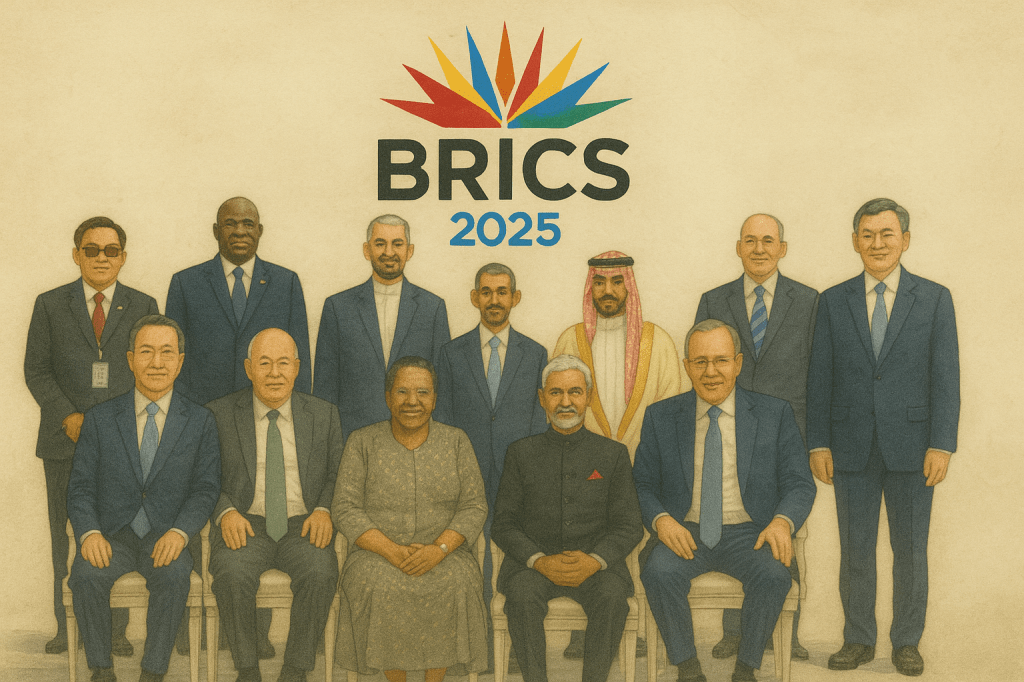
    As the leaders of an expanded BRICS convene in Rio de Janeiro this July 6-7 for the 17th BRICS Summit, the world watches closely. What began in 2009 as an informal coalition of emerging economies is now growing into a geopolitical force, aiming to challenge the dominance of Western institutions like the G7, the IMF, and SWIFT.

    With major issues on the table—including currency de-dollarization, cross-border payment systems, and development finance—the BRICS bloc appears more ambitious than ever.

    The BRICS—originally Brazil, Russia, India, and China—held their first summit in 2009. South Africa joined the following year, completing the initial five-member alliance. Over time, BRICS built real institutional capacity, establishing the New Development Bank (NDB) and Contingent Reserve Arrangement (CRA) to promote development and economic resilience among its members.

    A major expansion took place in 2023, when Egypt, Ethiopia, Iran, and the United Arab Emirates were granted full membership. Indonesia joined in early 2025, bringing the group to eleven. With ongoing interest from countries like Vietnam, Bangladesh, and Argentina, BRICS is quickly turning from a bloc into a movement.

    BRICS’ accomplishments over the last 16 years include:

    • Financial Infrastructure: The NDB has funded more than $30 billion in development projects, while the CRA provides a $100 billion reserve pool to guard against financial crises.
    • Alternative Payment Systems: With growing distrust of Western-dominated platforms like SWIFT, BRICS members have begun developing BRICS Pay, a decentralized payment messaging system allowing trade in local currencies.
    • Strategic Partnerships: Dozens of working groups and institutions now foster cooperation on energy, health, digital governance, and more—advancing what some have called a new “Global South consensus.”

    Despite progress, the Rio 2025 summit reveals fault lines:

    • Leadership Absences: Neither Xi Jinping nor Vladimir Putin is attending in person. Putin faces travel limitations due to international sanctions, and Xi reportedly cited scheduling conflicts. Their absence reflects the bloc’s internal tensions.
    • Ideological Divide: While nations like Iran and Russia advocate a confrontational stance toward the West, others like India, Brazil, and Indonesia prefer a more balanced approach. This divergence hampers consensus on issues like UN reform, Ukraine, and Gaza.
    • Competing Interests: India’s growing ties with Western powers contrast with China’s ambitions, and Brazil, the host nation, has tried to focus this year’s agenda on neutral topics like climate finance, AI governance, and healthcare.

    With 11 member nations representing over 40% of global GDP (PPP) and more than half the world’s population, BRICS is no longer a marginal force. It’s now a serious contender in shaping global governance.

    Key differences with the G7 include:

    • Development Focus: While G7 prioritizes legacy institutions like the IMF and World Bank, BRICS centers its efforts on flexible South-South cooperation.
    • Financial Sovereignty: Tools like BRICS Pay and the NDB enable countries to bypass traditional Western financial systems.
    • Multipolar Vision: BRICS advocates for a more equitable world order, with power shared among emerging and developing nations—not monopolized by the West.

    After Russia’s invasion of Ukraine in 2022, Western sanctions cut off many Russian banks from the SWIFT network. In response, Russia turned to:

    • SPFS: Its own financial messaging system.
    • Bilateral Trade Deals: Using rubles, yuan, and other local currencies with BRICS members.
    • BRICS Pay: A system still in early rollout but with growing support. China, Brazil, and Iran have all agreed to increase usage in 2025.

    Though not yet a global replacement for SWIFT, BRICS Pay offers a real alternative for countries under sanctions—laying the groundwork for a parallel financial system.

    If BRICS can overcome its divisions, the economic integration of Russia, India, and China could mark the emergence of a powerful Eastern economic bloc. With joint development banks, currency swaps, and shared digital platforms, this bloc would rival any Western alliance economically and geopolitically.

    Such a scenario aligns with what many Bible students interpret as an end-time prophecy: an Eastern power—“kings from the East”—rising to challenge a revived Roman Empire (see Revelation 16:12).

    The BRICS summit in Rio showcases both promise and peril. Its expansion, financial innovation, and strategic agenda give it the tools to build a new world order. But internal rivalries, absent leaders, and divergent visions threaten to stall momentum.

    Still, if BRICS succeeds, it won’t just change economics. It could reshape the balance of global power—perhaps even fulfilling ancient biblical prophecies about a world divided between East and West in the final days before Christ’s return.