Category: Economy

  • The Fall from AAA: Understanding America’s Credit Downgrade and the Erosion of Economic Leadership

    The Fall from AAA: Understanding America’s Credit Downgrade and the Erosion of Economic Leadership

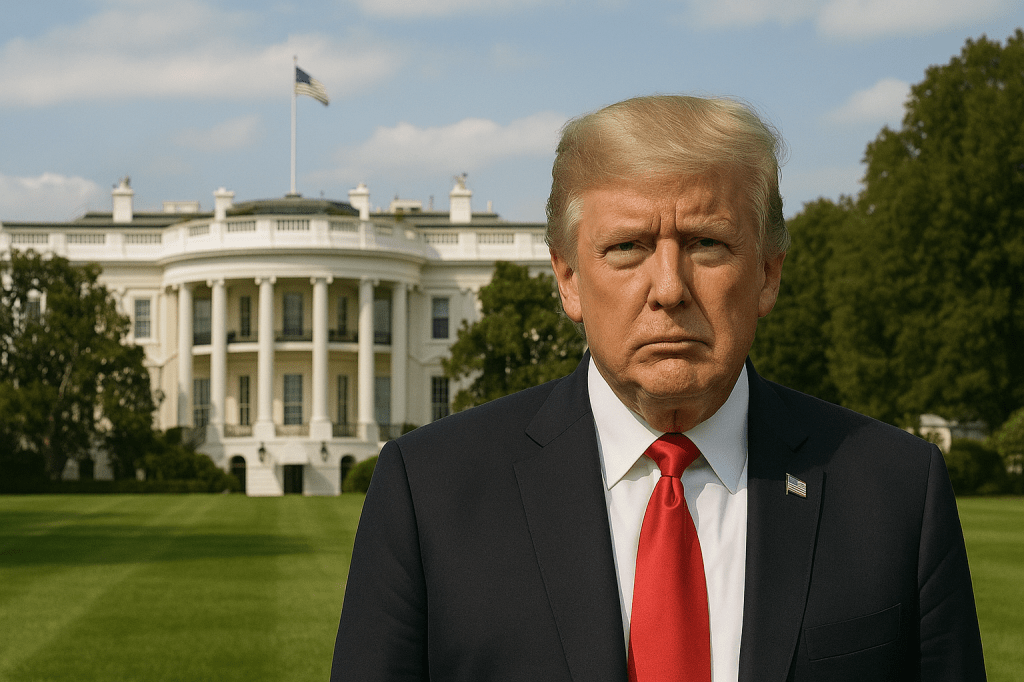
    For the first time in history, all three major credit rating agencies—Moody’s, Fitch, and Standard & Poor’s—have downgraded the United States from their highest credit rating. This development is not merely a technical footnote for economists; it is a flashing warning light on the dashboard of American leadership.

    The downgrade comes amid growing alarm over the United States’ fiscal trajectory, but to lay the blame on a single president or political party would be simplistic and misleading. As experts and analysts agree, the country’s worsening debt burden and erosion of fiscal credibility are the cumulative result of decades of political decisions, missed opportunities, and unsustainable economic strategies across multiple administrations.

    From AAA to AA+: A Timeline of Decline

    • Standard & Poor’s led the way in 2011 by downgrading the U.S. from AAA to AA+, citing political dysfunction during the debt ceiling crisis.
    • Fitch Ratings followed in August 2023, also reducing the U.S. to AA+ due to the continued failure to address rising debt and perceived erosion of governance standards.
    • Most recently, in May 2025, Moody’s cut the U.S. rating from Aaa to Aa1, expressing concern over the unsustainable fiscal path and rising interest burdens.

    All three agencies emphasized two recurring themes: growing federal debt and the inability of political leaders to forge a coherent, long-term fiscal policy.

    Multiple Administrations, Shared Responsibility

    The Obama Administration’s Role:

    • S&P downgraded the U.S. for the first time in 2011, during Obama’s presidency.
    • The downgrade stemmed from a political standoff over the debt ceiling.
    • S&P cited dysfunctional governance and lack of a credible debt-reduction plan.
    • Obama’s administration had implemented stimulus spending after the 2008 crisis.
    • Long-term structural reforms to reduce deficits were not achieved.

    The Biden Administration’s Role:

    • Passed large spending bills: the $1.9 trillion American Rescue Plan and the Inflation Reduction Act.
    • These programs aimed to improve equity, healthcare, and climate resilience.
    • Revenue projections supporting the spending were front-loaded and uncertain.
    • Proposed partial cancellation of federal student debt, further expanding fiscal obligations.
    • Contributed to increased deficits without matching long-term offsets.

    The Trump Administration’s Role:

    • Passed the 2017 Tax Cuts and Jobs Act, reducing corporate and individual taxes.
    • The tax cuts were not offset by spending cuts, adding over $1.9 trillion to deficits.
    • Enacted bipartisan stimulus during the COVID-19 pandemic, expanding short-term spending.
    • Proposed extending tax cuts via the “One Big Beautiful Bill” and adding Medicaid work requirements.
    • The Congressional Budget Office and economists warn these plans could add up to $4 trillion to future deficits.

    In short, the recent administrations made major fiscal decisions—tax cuts, spending increases, and entitlement promises—without long-term structural corrections, worsening the outlook that led to the downgrade.

    What the Downgrades Mean

    Short-Term Effects

    • The U.S. may face higher borrowing costs as investors demand a risk premium.
    • Markets could experience short-term volatility.
    • Institutional investors may shift away from U.S. government debt, depending on their internal credit-rating rules.

    Long-Term Effects

    • Rising interest payments: The U.S. already spends more on interest than on key programs like transportation or education. By 2035, interest could become the single largest budget item.
    • Reduced fiscal flexibility: Less room for future governments to respond to crises.
    • Erosion of dollar dominance: Countries exploring alternative reserve currencies may accelerate diversification.
    • Weakened global influence: Economic instability undercuts America’s ability to lead international alliances and institutions.

    Other Erosions of U.S. Economic Leadership

    The credit downgrades are part of a broader trend of declining American economic dominance:

    • Political dysfunction and polarization, repeatedly bringing the country to the brink of default.
    • Loss of manufacturing leadership to countries like China in sectors such as electronics, clean energy, and rare earth minerals.
    • Chronic underinvestment in infrastructure, education, and workforce development.
    • Overuse of financial sanctions, prompting countries to build alternatives to the U.S.-led financial system.
    • Global retreat from multilateralism, creating a leadership vacuum increasingly filled by China, the EU, and BRICS nations.

    These developments, taken together, indicate a slow erosion of trust in the U.S. model of governance and economic stewardship.

    What the Trump Administration Is Doing Now

    In the face of the challenges, the current Trump administration is attempting a broad economic overhaul:

    • Extending 2017 tax cuts through new legislation while proposing cuts to Medicaid and other programs.
    • Imposing universal tariffs to protect U.S. industries and address trade imbalances.
    • Creating the Department of Government Efficiency (DOGE) to cut federal waste—though early results have been mixed, and some savings have been disputed.
    • Promoting AI and crypto deregulation, positioning the U.S. as a tech leader while scaling back federal oversight.

    Yet these plans face intra-party opposition, legal challenges, and skepticism from economists who fear that supply-side reforms alone won’t close the growing fiscal gap.

    Many experts recommend a more balanced approach that includes raising certain taxes, reforming entitlement programs, investing in workforce development, and enforcing strict fiscal rules to curb excessive deficits. Some also call for bipartisan budget commissions to chart long-term solutions that outlast any single administration.

    The Bigger Picture: National Blessings and Divine Accountability

    The Bible also offers practical wisdom on matters closely tied to national and economic leadership. It highlights the importance of consulting with others before making major decisions (Proverbs 15:22, Proverbs 11:14) and emphasizes planning for the long-term, not just the short-term (Proverbs 21:5, Luke 14:28–30). Jesus emphasized the importance of counting the cost before committing to large undertakings (Luke 14:28–30). Proverbs and Ecclesiastes point to the value of investing in training and education (Proverbs 22:6, Ecclesiastes 7:12, 2 Timothy 2:2). Likewise, several passages stress the need to avoid unnecessary debt and wasteful expenses (Proverbs 21:5, Proverbs 22:7, Romans 13:8).

    Behind these economic and political developments lies a deeper spiritual truth often overlooked in policy analysis: national greatness is not solely a result of policy, productivity, or power—it is a blessing from God.

    The Bible reminds us:

    • “It is He who gives you power to get wealth…” (Deuteronomy 8:18)
    • “The Most High rules in the kingdom of men, and gives it to whomever He will…” (Daniel 4:17)
    • “I will break the pride of your power…” (Leviticus 26:19)

    These downgrades, debt troubles, and geopolitical setbacks may well be a wake-up call—a divine warning to a nation that has forgotten the Source of its blessings. America’s decline is not inevitable. But repentance, righteousness, and justice must once again be woven into its national fabric if restoration is to come.

    A Spiritual Correction

    The downgrade of America’s credit rating is not just a technical correction. It is a warning—financial, political, and spiritual. It reflects the weight of choices made across multiple administrations, the failure of political courage, and the neglect of fiscal prudence. Experts call for reform, accountability, and long-term vision. But ultimately, America’s revival—economic and moral—depends on its willingness to return to God, the true Source of national strength and prosperity.

    As Proverbs 14:34 says, “Righteousness exalts a nation, but sin is a reproach to any people.”
  • When Disruption Falls Short: Elon Musk’s Retreat from Government and the Fallout of DOGE

    When Disruption Falls Short: Elon Musk’s Retreat from Government and the Fallout of DOGE

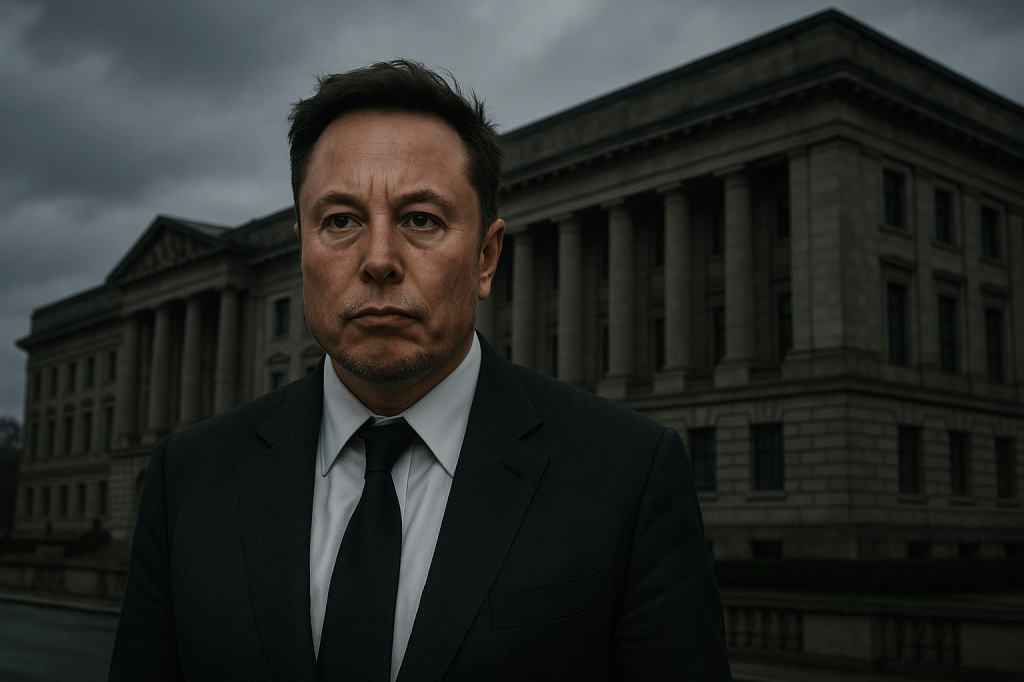
    Elon Musk, the entrepreneurial titan known for reshaping industries from aerospace to electric vehicles, is stepping back from his highly publicized role in the Trump administration’s Department of Government Efficiency (DOGE). Appointed as a special government employee with the ambitious task of slashing government waste and streamlining federal operations, Musk’s tenure began with high expectations and sweeping promises. But just over 100 days into his service, what remains is a trail of disrupted agencies, demoralized employees, and mounting public backlash—both domestic and international. Musk now plans to reduce his involvement to one or two days per week, effectively ceding ground in what was once heralded as a revolutionary approach to governance.

    The Goals of DOGE

    At its inception, DOGE was created with the audacious goal of cutting $2 trillion in federal expenditures—a figure that was quickly revised to $1 trillion, and then again to a more modest $150 billion. Musk envisioned a leaner, tech-driven bureaucracy that operated with Silicon Valley efficiency. He sought to eliminate redundancy, cancel unnecessary contracts, dismantle underperforming agencies, and reallocate resources to higher-priority areas.

    Performance and Outcomes

    While Musk’s team claims to have saved roughly $160 billion through contract eliminations and program shutdowns, these numbers are heavily contested. Critics argue that the long-term costs—ranging from severance packages and legal challenges to the collapse of critical public services—may far outweigh the reported savings. Over 250,000 federal employees were dismissed or forced into early retirement. Agencies like the Veterans Administration, Social Security Administration, and IRS saw drastic reductions in workforce and capacity, leading to service bottlenecks and citizen complaints.

    Public disapproval quickly followed. According to a Washington Post-ABC News poll, 57% of Americans disapproved of Musk’s handling of DOGE, and President Trump’s approval ratings dropped to the lowest 100-day rating in modern history. The backlash wasn’t confined to U.S. borders—global protests erupted under the banner of the “Tesla Takedown” movement, severely damaging Tesla’s brand and sales across Europe and parts of Asia.

    Why DOGE Fell Short

    One of the primary reasons Musk’s DOGE initiatives failed to achieve its objectives was his fundamental misunderstanding of the American bureaucratic system. Much like the man Christ referred to in Luke 14:28 who sought to build a tower but failed to count the cost, Musk launched into federal reform without first grasping the complexity of the system he aimed to dismantle. His private-sector instincts—cut quickly, move fast, disrupt—ran counter to the deliberate, often consensus-driven nature of government operations.

    Moreover, Musk’s top-down approach and lack of consultation with stakeholders proved costly. Programs were cut without warning, and agencies were reorganized without input from those who understood their functions best. As Proverbs 15:22 reminds us, “Without counsel, plans go awry, but in the multitude of counselors they are established.” Musk’s failure to heed this wisdom led to confusion, inefficiency, and widespread resentment.

    Possible Long-Term Effects

    The long-term effects of Musk’s DOGE leadership are still unfolding. While some supporters believe the cuts were a necessary first step toward a more sustainable government, others warn that the damage to institutional trust and public service capacity may take years to repair. Additionally, Musk’s political alignment and policy actions have left a scar on his global business image, potentially diminishing investor confidence and consumer loyalty.

    International markets, especially in Europe, have already responded. Tesla’s sales in France and Denmark have plummeted by over 50%, and the company has seen a 71% drop in profits in the first quarter of 2025. Simply stepping back from the Trump administration may not be enough to undo the reputational damage.

    Bold, Disruptive, Flawed

    Elon Musk’s foray into government reform was bold, disruptive, and ultimately flawed. Despite noble intentions and a few notable savings, his lack of preparedness, disregard for established systems, and failure to engage stakeholders have rendered the DOGE initiative more controversial than transformative. As he retreats to focus once more on his private enterprises, the experience stands as a cautionary tale: even the most brilliant innovators must count the cost—and seek counsel—before attempting to reshape something as complex as a nation’s government.

  • America’s Future at a Crossroads: A Review of Trump’s First 100 Days

    America’s Future at a Crossroads: A Review of Trump’s First 100 Days

    As President Donald Trump’s second administration approaches its first 100 days, it finds itself navigating a challenging landscape both at home and abroad. While bold moves were made to fulfill campaign promises, expert analyses reveal a mixture of accomplishments, non-accomplishments, and rising concerns about America’s economic and geopolitical trajectory.

    Accomplishments and Non-Accomplishments

    Domestically, President Trump has reinstated tough immigration policies and launched efforts to streamline federal government operations. However, the aggressive re-imposition of tariffs on China, Mexico, and Canada has triggered economic repercussions, with inflation expectations soaring to 6.5%, consumer sentiment dropping sharply, and GDP growth forecasted by the International Monetary Fund and the Congressional Budget Office to slow to between 1.8% and 2.3% this year.

    Internationally, Trump’s moves to broker peace between Russia and Ukraine by proposing acceptance of Crimea’s annexation, and renewed indirect talks with Iran, have raised concerns over undermining alliances and stability.

    Experts warn that if current policies persist—particularly tariff strategies, political pressure on the Federal Reserve, and isolationist tendencies—the U.S. economy risks a period of stagflation, rising inequality, and weakened global influence.

    Pathways for Improvement

    Policy recommendations emphasize recalibrating tariffs, encouraging multilateral trade agreements, allowing the Federal Reserve to operate independently, investing in infrastructure, and supporting domestic manufacturing.

    Only by adopting a balanced, cooperative, and forward-looking approach can the Trump administration hope to fulfill its “Make America Great Again” vision.

    A Deeper Lesson: Leadership in God’s Plan

    The Bible teaches that God sometimes allows national leaders to make poor choices—or allows ineffective leaders to rise to power—as part of His call for His people to recognize their need for Him and return to righteousness (see Isaiah 3:4). A nation’s greatness in God’s sight is not based on military strength, wealth, or political dominance (although these are certainly results of His blessings). Rather, it depends on justice, mercy, humility, and obedience to God’s laws (Micah 6:8).

    If America’s leaders and citizens sincerely seek to make their nation truly great, they must prioritize moral integrity, care for the poor and marginalized, and live by the values God esteems. Only through such a return can lasting greatness be achieved.

  • Tariffs Rolled Back: China Sees an Opening, America Risks More Than It Thinks

    Tariffs Rolled Back: China Sees an Opening, America Risks More Than It Thinks

    After months of aggressive tariffs targeting Chinese goods, the U.S. has reversed course—partially rolling back some of the very tariffs it once defended as “necessary pain.” The reason? Mounting economic pressure, international backlash, and rising consumer costs at home.

    Yet this isn’t just about tariffs. It’s about how nations perceive strength, foresight, and credibility.

    China’s Calculated Calm

    Beijing, unsurprisingly, has not celebrated loudly. Instead, it’s using this rollback to present itself—especially to Asia-Pacific nations—as a reliable, stable, and forward-looking economic partner.

    China’s quiet confidence suggests it’s playing a long game: 

    • Let America appear reactive and short-sighted 
    • Fill the vacuum left by U.S. instability 
    • Build loyalty among countries hurt by U.S. tariffs 

    Allies Are Watching—and Worrying

    To many U.S. allies, this isn’t just a course correction—it’s another example of incoherent policy-making. First came the shock tariffs. Now comes the quiet reversal. The message? 

    “America acts first, thinks later.”

    As alliances strain, countries like Japan, South Korea, Vietnam, and even the EU are increasingly looking to China—not the U.S.—for consistency.

    What the Bible Says About Leadership and Judgment

    Isaiah 3:4 is strikingly relevant here:  “I will make mere youths their officials; children will rule over them.”

    God sometimes allows national leaders to act impulsively and without wisdom as a wake-up call for His people. It’s a warning to turn back to God’s principles of justice, truth, and humility.

    Where This Is Headed

    If America continues down this path of erratic policymaking, it risks more than economic losses. It risks becoming a symbol of declining global leadership, fractured alliances, and moral confusion. Meanwhile, China continues to craft its narrative as the stabilizer in a chaotic world order.

  • A World Unraveling – The High Price of Tariffs and a Coming Global Reckoning

    A World Unraveling – The High Price of Tariffs and a Coming Global Reckoning

    When President Donald Trump announced sweeping tariffs against nearly all countries in April 2025—infamously dubbed “Liberation Day”—the move was framed as an act of economic sovereignty. Aimed at defending American workers, correcting trade imbalances, and punishing foreign nations accused of unfair practices, the 10% baseline tariff (and far higher rates for select nations) was meant to be a declaration of independence from a trade system that many believed disadvantaged the United States.

    But what began as an assertion of American self-interest is now reverberating across the globe, triggering economic tremors that few anticipated and many fear may permanently reshape the global order.

    The Intentions: Economic Nationalism Reborn

    Trump’s rationale was not new. Tariffs have historically been used to protect domestic industries, reduce reliance on foreign imports, and pressure trade partners to change their behavior. This round of tariffs was more sweeping than any the U.S. had imposed in over a century. The administration targeted over 180 countries, including allies, emerging economies, and even remote territories that barely trade with the U.S.—a precaution against tariff evasion through transshipment.

    The administration’s messaging was simple but aggressive: it’s time for America to stop being the world’s economic doormat and to rebuild its industrial might from within.

    The Reality: Economic Strain and Fragmentation

    However, history and current evidence tell a more sobering story. Tariffs are blunt instruments. While they may temporarily protect local industries, they often result in higher consumer prices, supply chain disruptions, and retaliatory measures. We’ve seen this before—during the Great Depression with the Smoot-Hawley Tariff Act and more recently during Trump’s first term trade war with China. In both cases, the long-term consequences were damaging.

    In 2025, it’s happening again—on a broader scale:

    • Stock markets have plunged, wiping out trillions in value.
    • Consumer prices are rising as import costs spike.
    • Supply chains are unraveling as companies scramble to redirect sourcing.
    • Global trade flows are shifting away from the U.S., as countries retaliate and seek new partners.

    The U.S. hoped to isolate abusive trading behaviors, but it is increasingly isolating itself.

    The Rise of Economic Blocs

    In response, the world is reorganizing into regional economic blocs. What America has stepped away from, others are now rushing to claim:

    • The European Union, increasingly united in trade and security, is moving to fill the void in global leadership.
    • China, through its Belt and Road Initiative and new trade alliances across Asia, is tightening its grip on emerging markets.
    • India, ASEAN nations, and Latin America are pursuing regional deals to shield themselves from U.S. unpredictability.
    • Africa, through the African Continental Free Trade Area (AfCFTA), is charting a course toward intra-regional trade independence.

    These blocs are forming not just out of economic logic—but out of necessity. The post–World War II era of U.S.-led globalization is ending. In its place, a fragmented, competitive, and increasingly adversarial global economy is emerging.

    The Geopolitical Risks: From Trade War to Real War

    This economic realignment carries with it grave geopolitical risks.

    As trade blocs become more inward-looking and rivalrous, the possibility of military conflict among major powers increases—especially as nuclear-armed states compete for influence, resources, and strategic positioning. The risk of conflict between the U.S. and China, or even among European powers and their neighbors, is no longer hypothetical—it is becoming increasingly likely in a world no longer bound by mutual economic interest.

    Furthermore, the economic instability triggered by tariff wars could prompt a dangerous political shift. History has shown us that during extremely difficult times, people can trade personal freedom for security. With inflation, job losses, and uncertainty mounting, charismatic strongmen often step into the void—offering order, prosperity, and national pride in exchange for civil liberties and democratic safeguards.

    A World on the Edge

    This is precisely the world that the Bible describes will exist just before the return of Jesus Christ.

    The book of Revelation speaks of a final global system—a powerful economic and military confederation—that dominates the world for a short time. This “beast” power promises security and prosperity, and the world, desperate for stability, embraces it. But this system, empowered by human pride and corrupted leadership, ultimately brings humanity to the brink of annihilation (Matthew 24:22).

    We are not there yet—but the signs are unmistakable.

    • The weakening of American influence, once a stabilizing force in the world, is accelerating.
    • The rise of rival blocs, each with its own rules and ambitions, is fracturing the global system.
    • The erosion of freedoms in favor of authoritarian efficiency is gaining traction.

    A Time to Watch and Prepare

    President Trump’s tariffs were intended to make America strong. But by pursuing economic disengagement in a globalized world, the U.S. may have instead triggered the unraveling of the very system that kept major conflicts in check.

    We do not place our hope in presidents, trade policies, or economic systems. We watch these events with a discerning eye—not in panic, but in understanding. The unraveling world system is not the end of the story. It is a prelude to Christ’s return, when the kingdoms of this world will become the kingdoms of our Lord and of His Christ (Revelation 11:15).

    While men pursue security through strength and prosperity through force, true peace will only come through the righteous rule of God’s coming Kingdom.