Category: Economy

  • Germany’s Bond Boom: A Glimpse into the Future of Global Finance

    Germany’s Bond Boom: A Glimpse into the Future of Global Finance

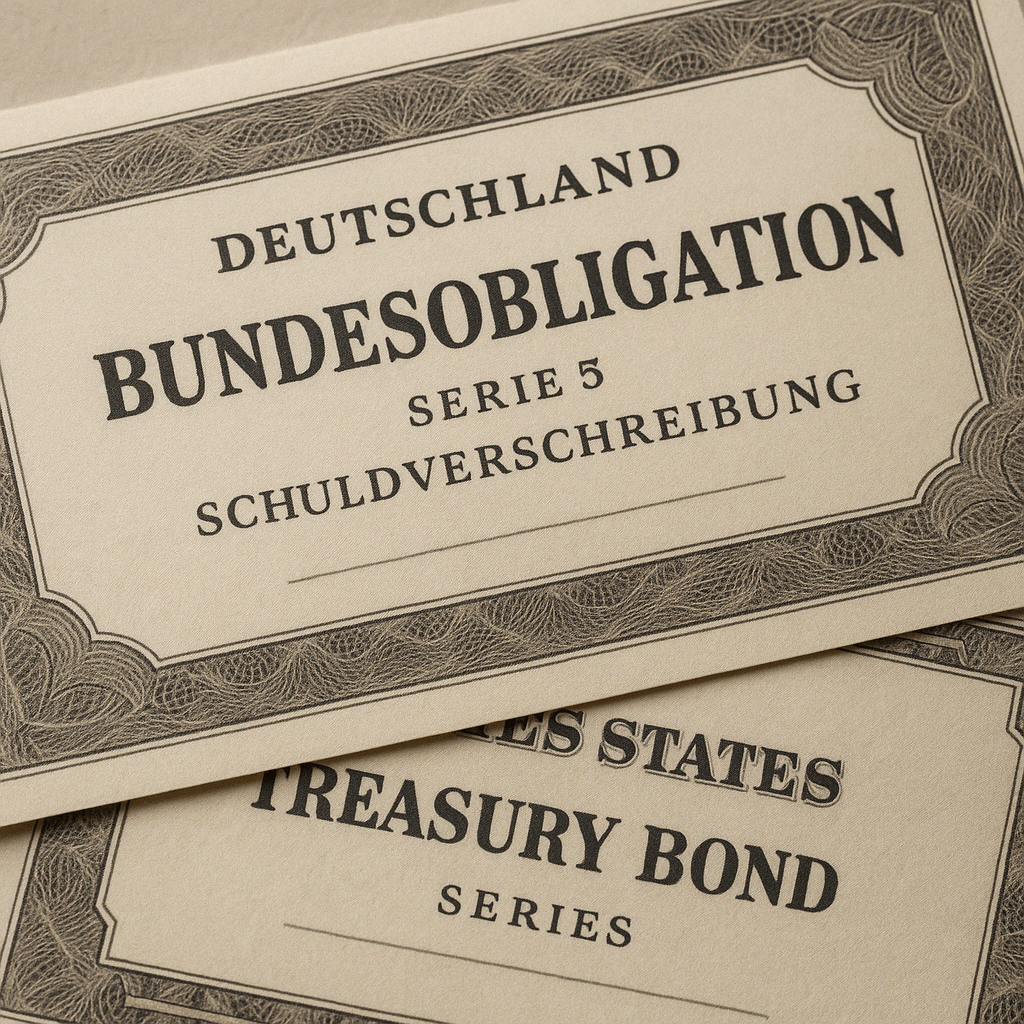
    In a stunning turn of events that highlights the growing volatility of the global economic order, massive investment capital recently flowed into German government bonds (Bunds)—not during a surge in optimism, but ironically while the markets were collapsing. As investors fled from the perceived safety of U.S. Treasury bonds, they sought refuge in what many now regard as a more reliable store of value: German Bunds.

    This development is not merely a market footnote. It is a signal—a telling indicator of where the global economy may be headed and how the world is gradually repositioning itself away from U.S. dominance.

    Where Did the Money Go When the U.S. Markets Fell?

    When the U.S. stock market tumbled and Treasury bonds were unexpectedly sold off—a rare sign of lost confidence—investors redirected their money into various safe-haven assets, including:

    • Gold – A time-tested hedge against inflation and currency instability. While it has universal value, it yields no income and lacks an economic engine like a government bond.
    • Swiss Franc and Swiss Bonds – Switzerland’s neutrality and stable banking sector make it attractive in crises. But the market is small and lacks the influence of a continental economy like the EU.
    • Japanese Government Bonds – Japan’s political stability and economic power still attract investors, though its massive debt levels and shrinking population limit long-term confidence.
    • High-Rated Corporate Bonds – Blue-chip corporate debt offers a balance of risk and return, but it still depends on company-specific performance and is no substitute for sovereign backing.

    Despite these options, the German Bund stood out. Investors were not just seeking safety—they were seeking credibility, discipline, and leadership in a changing financial landscape.

    The Rise of the German Bond

    Why did the German Bund rise above the rest?

    • Stability and Discipline: Germany maintains a low debt-to-GDP ratio and upholds strict fiscal policy. 
    • Economic Strength: It leads Europe in exports, productivity, and industrial capacity. 
    • Institutional Trust: German governance is measured, transparent, and central to the EU framework.

    German bonds provide both safety and structure, tied to real economic output and geopolitical influence.

    A Future European “Super Bond”?

    As the EU continues integrating politically and economically, a unified Eurobond seems inevitable. That bond may simply be modeled after the German Bund or even adopt its structure entirely.

    Such a development would:

    • Strengthen the euro as a global reserve currency
    • Centralize the EU’s financial system
    • Challenge, or even replace, the dominance of the U.S. dollar in world trade

    The Fall of the Anglo-Saxon Economies

    America and Britain have long been pillars of the global economic system. But the Bible warns that the modern descendants of Ephraim (Britain) and Manasseh (U.S.) would be brought low as they forsake God.

    Their decline is now underway:

    • The dollar is declining in global preference
    • U.S. bonds are losing their safe-haven status
    • Internal chaos and international isolation are rising

    As the dollar fades, Europe is rising—and with it, a system that will soon dominate the world.

    The End-Time Economic Empire

    The surge in demand for German bonds—and the push toward a centralized European financial tool—are early signs of what the Bible foretells: a final superpower in Europe that will control global commerce.

    At its heart may be a financial instrument—perhaps resembling the German Bund—that becomes the foundation of world trade. At that time, the dollar will be irrelevant, and U.S. Treasury bonds will no longer matter.

    God gave this warning to Israel through Hosea:

    “When they had pasture, they were filled; they were filled and their heart was exalted; therefore they forgot Me.” — Hosea 13:6

    And Moses had earlier said:

    “Beware that you do not forget the Lord your God… when your herds and flocks multiply, and your silver and your gold are multiplied… and your heart is lifted up, and you forget the Lord your God.” — Deuteronomy 8:11–14

    This is the story of modern Israel: economic pride followed by spiritual amnesia. And as always, pride comes before a fall.

    But God’s goal is not destruction—it is repentance. The coming collapse of the Western financial system will prepare the hearts and minds of peoples descended from ancient Israel and the rest of the world for the return of Jesus Christ, who will establish a righteous economy and government rooted in truth, equity, and lasting peace.
  • Can the U.S. Become a Manufacturing Hub Again?

    Can the U.S. Become a Manufacturing Hub Again?

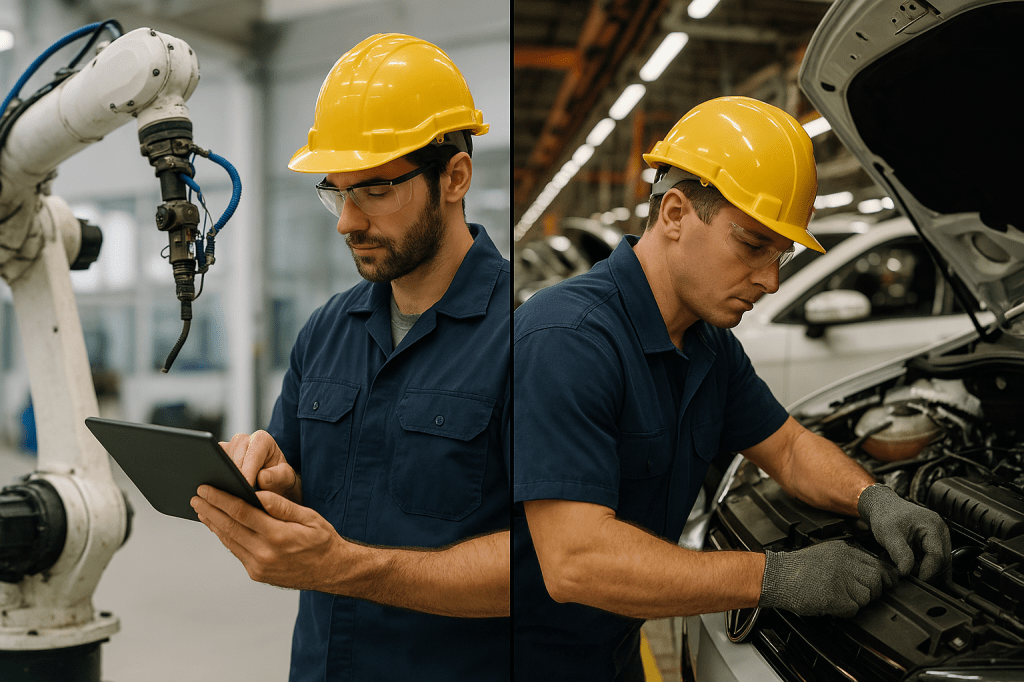
    One of the core objectives behind recent U.S. tariff policies, particularly toward countries like China, is the desire to bring manufacturing back to American soil. Political leaders often frame this goal as reclaiming economic self-sufficiency, protecting jobs, and revitalizing struggling communities. But is this objective truly attainable in today’s global economy? Or has the U.S. economy evolved in such a way that its comparative advantage now lies elsewhere?

    To answer that, we must consider both economic realities and timeless biblical principles that offer valuable insights for any nation seeking prosperity and sustainability.

    The Economic Landscape

    The United States has, over the past several decades, shifted from an industrial economy to one heavily focused on services. Sectors like finance, software development, healthcare, education, and intellectual property have become its global strongholds. This transition didn’t happen by accident—it reflects the U.S.’s natural strengths in innovation, capital markets, and high-skill labor.

    As of March 2025, the U.S. manufacturing sector employed approximately 12.76 million people, a figure that has remained relatively stable over the past year. In contrast, the services sector has continued to dominate the U.S. economy, contributing significantly to GDP growth.

    Tariffs are intended to protect and encourage domestic manufacturing by making foreign goods more expensive. In theory, this should give U.S. companies the space to grow. However, high labor costs, a weakened industrial base, and global supply chain integration pose real challenges. Rebuilding large-scale manufacturing in the U.S. is not impossible, but it will take time, investment, and strategic focus—especially in high-tech or critical industries like semiconductors, defense, and clean energy.

    What Would Be a Realistic Strategy?

    Rather than aiming to become the world’s factory floor again, the U.S. may find greater success focusing on advanced manufacturing and strategic reshoring:

    • Encourage innovation in robotics, AI, and clean energy.
    • Protect national interests by reshoring production of essential goods like pharmaceuticals and microchips.
    • Invest in workforce development and industrial infrastructure.

    This strategy not only leverages America’s existing strengths but also prepares it for the future rather than returning to the past.

    Biblical Principles That Apply

    While economics sets the stage, biblical wisdom provides enduring principles to guide national policy:

    1. Wise Stewardship

    “Be diligent to know the state of your flocks…” (Proverbs 27:23–24)

    Nations, like individuals, must manage their resources wisely. The U.S. must not squander its strengths in services and technology but instead strengthen its vulnerabilities responsibly.

    2. Count the Cost

    “For which of you, intending to build a tower, does not sit down first and count the cost…?” (Luke 14:28)

    Reviving manufacturing requires more than good intentions. It demands sober evaluation, investment, and long-term planning.

    3. Value of Labor

    “The wages of the laborers… which you kept back by fraud, cry out…” (James 5:4)

    Labor must be respected and rewarded fairly. America’s higher wage standards reflect a moral commitment to worker dignity, which should not be undermined for the sake of cheaper goods.

    4. Global Interdependence

    “The eye cannot say to the hand, ‘I have no need of you.’” (1 Corinthians 12:21)

    Although the apostle Paul was primarily talking here about the interrelationship among the various members of the church, the principle applies to the global economy as well. While national resilience is important, total isolation isn’t biblical. Interdependence, when managed justly, is part of God’s design.

    5. Just Weights and Measures

    “Dishonest scales are an abomination…” (Proverbs 11:1)

    Trade policies should be fair, transparent, and just—not manipulative or self-serving.

    6. Preparing for the Future

    “Go to the ant… she prepares her food in the summer…” (Proverbs 6:6–8)

    It is wise to prepare for future economic realities. Investing in high-tech industries, education, and sustainable production aligns with this principle.

    A Balanced Approach

    The U.S. may never return to being the global hub for mass manufacturing, but it doesn’t need to. Its strength lies in services, technology, and high-value production. Tariffs can play a role in protecting national interests, but they should be part of a larger, future-oriented economic strategy.

    Ultimately, scripture reminds us that wise stewardship, fair dealings, and thoughtful planning are essential to national strength. In a world of shifting economic tides, these biblical principles remain an unshakable foundation.

  • A Pause in the Storm: President Trump’s Tariff Reversal and the Wisdom of Many Counselors

    A Pause in the Storm: President Trump’s Tariff Reversal and the Wisdom of Many Counselors

    The global markets held their breath—and then exhaled—when President Donald Trump announced a sudden 90-day pause on the sweeping tariffs he had imposed on virtually all U.S. trading partners. Except for China, whose tariffs were raised sharply to 125%, most nations received a temporary reprieve from what many feared would become a full-scale global trade war.

    But this “pause” has analysts and world leaders wondering: is this merely a temporary detour, or the beginning of a quiet retreat?

    Why the Sudden Shift?

    The official narrative from the Trump administration is that this is a “strategic pause”—a window of time to negotiate bespoke trade arrangements with allies and economic partners. Treasury Secretary Scott Bessent noted that the 90-day halt gives space for talks with countries like Japan, Vietnam, and the European Union.

    Yet beneath this diplomatic language lies a more complex—and revealing—story.

    Internal Dissent

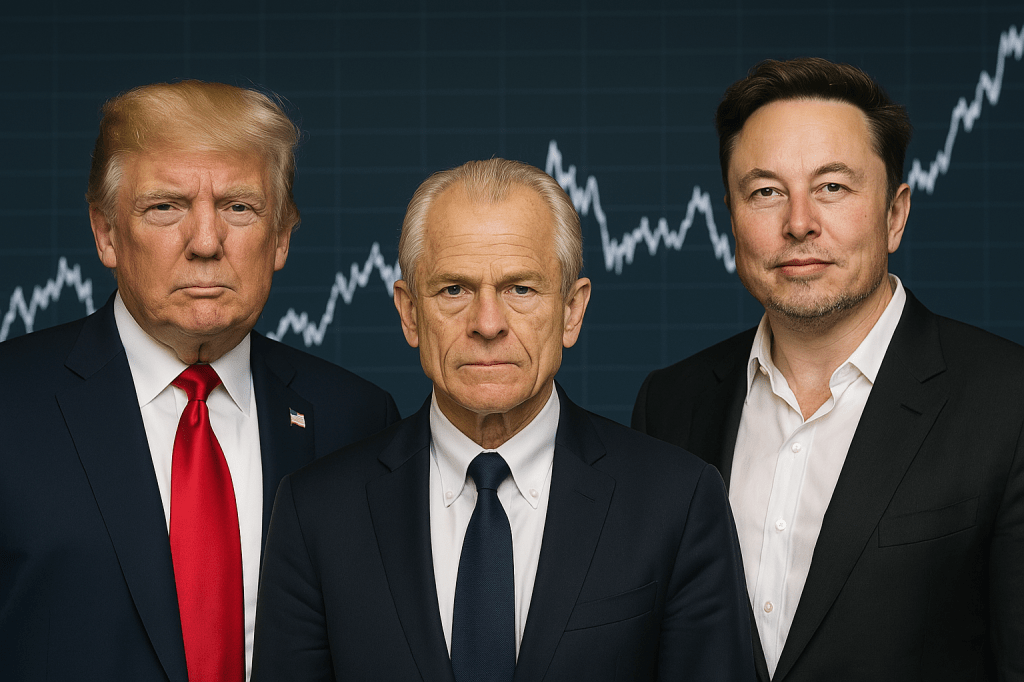
    While some cabinet members like Commerce Secretary Howard Lutnick and trade advisor Peter Navarro pushed aggressively for the tariffs, others sounded the alarm. Treasury Secretary Bessent and National Economic Council Director Kevin Hassett reportedly warned of the dangers of a unilateral tariff policy, urging a more measured and consultative approach.

    Their concerns proved prescient.

    Elon Musk’s Warning

    One of the loudest voices from the private sector was Elon Musk, who called for a zero-tariff environment between Europe and North America and warned that blanket tariffs would disrupt Tesla’s global supply chain. Musk’s businesses depend on internationally sourced components, and the tariffs would significantly raise production costs.

    Predictably, Navarro dismissed Musk’s position as self-serving. But the economic fallout soon made it clear that Musk and others raising red flags were not speaking out of self-interest alone—they were highlighting systemic risks to American consumers, workers, and the broader economy.

    Economic Turbulence and Market Recoil

    The markets responded with a wild swing of emotion.

    At first, optimism over the tariff pause sent the S&P 500 up 9.5% in a single day—one of the largest one-day rallies in its history. But the euphoria didn’t last. Investors quickly realized that no one knows what happens on Day 91. Will the tariffs resume in full force? Will exceptions be granted selectively? The lack of clarity caused a sharp sell-off the next day, with the Dow losing over 2,000 points.

    Businesses across the country remain in limbo. Some are delaying hiring and investments. Others are considering shifting supply chains abroad—ironically, the opposite of the tariffs’ intended effect.

    Why Call It a “Pause” Instead of a Reversal?

    Calling it a “pause” allows the President to preserve political face. It offers flexibility: he can later say he gave America’s partners a chance to negotiate—and if they didn’t, he had no choice but to proceed.

    This language also keeps pressure on foreign governments while maintaining domestic leverage. But make no mistake: if the tariffs are reinstated, the economic whiplash could be far worse the second time around. The credibility of U.S. trade policy is already in question. A re-escalation could deepen inflation, strain key industries, and damage America’s standing in global markets.

    A Lesson in Leadership: The Value of Many Counselors

    Could this turmoil have been avoided? Almost certainly yes.

    Had the administration listened early on—not only to internal critics but also to voices like Elon Musk’s—much of this volatility might have been spared. The issue wasn’t merely policy—it was isolation in decision-making, surrounded by yes-men and ideological hardliners.

    The Bible has long taught the wisdom of diverse counsel:

    “Where there is no counsel, the people fall;
    But in the multitude of counselors there is safety.”
    (Proverbs 11:14)

    “Without counsel, plans go awry,
    But in the multitude of counselors they are established.”
    (Proverbs 15:22)

    Scripture reveals that even great leaders falter when they ignore wise advice. King Rehoboam rejected the seasoned advice of elders in favor of arrogant young men, splitting the kingdom of Israel (1 Kings 12). Moses thrived by heeding Jethro’s advice to delegate (Exodus 18).

    The principle is clear: humility and wise counsel go hand in hand. National leaders who isolate themselves in echo chambers risk decisions harmful to their reputation and their people.

    Adjusting the Course

    President Trump’s tariff pause may signal rethinking—or merely a tactical maneuver. Its lessons should not be missed. Listening only to affirming voices leads to blind spots. Strong leadership isn’t about always being right, but about being wise enough to adjust course when consequences become clear.

    The Bible’s wisdom remains timeless. If only more leaders today took it to heart.

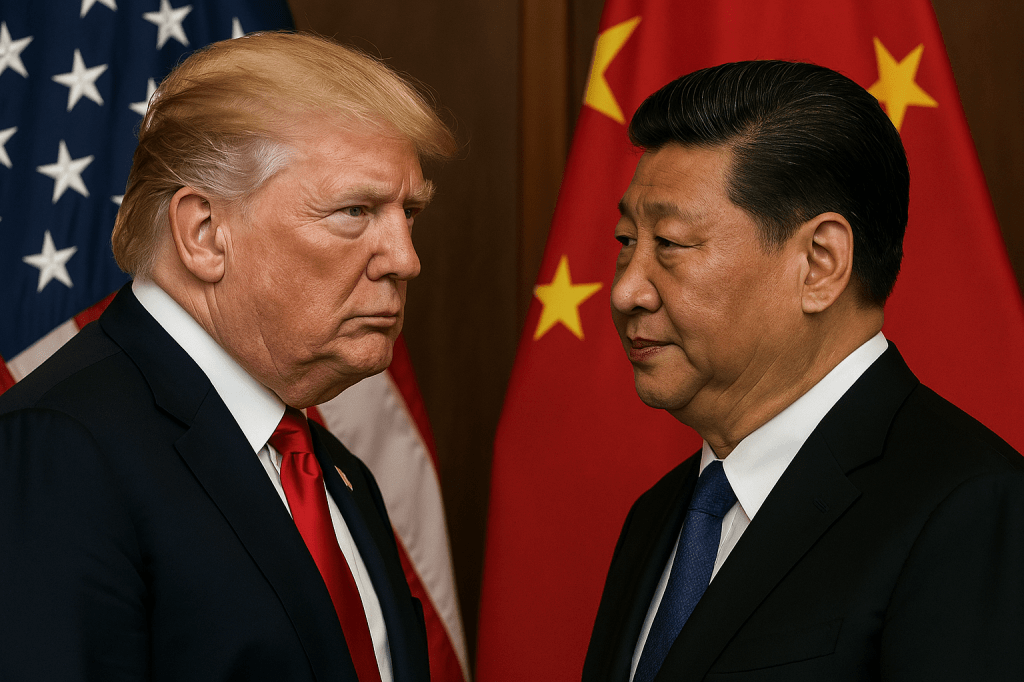
  • When Giants Clash: The Escalating US-China Trade War and Its Global Fallout

    When Giants Clash: The Escalating US-China Trade War and Its Global Fallout

    “Whoever digs a pit will fall into it, and he who rolls a stone will have it roll back on him.” — Proverbs 26:27

    In recent weeks, the global economy has found itself shaken by the reverberations of an intensifying economic conflict between the world’s two largest economies: the United States and China. This escalating trade war, marked by tit-for-tat tariffs and nationalist posturing, is doing more than just strain bilateral relations—it is sending shockwaves across global markets, undermining confidence, disrupting supply chains, and threatening to plunge the world into a deeper economic downturn.

    What began as a bold attempt by the Trump administration to force fairer trade terms has spiraled into an economic quagmire that is now hurting not just China and the United States, but Europe, Asia, and beyond. And as Scripture wisely reminds us in Proverbs 26:27, those who dig pits for others may end up falling into them themselves.

    The Tariff Avalanche

    The current phase of the trade conflict began with President Trump’s aggressive move to raise tariffs on Chinese goods to an astounding 104%. China swiftly retaliated with an 84% tariff on U.S. imports. What was once a calculated political maneuver has turned into an uncontrolled economic wildfire.

    President Trump’s justification for these tariffs—protection of American industries and the reduction of trade imbalances—may sound noble, but the fallout tells a different story. According to Mark Zandi, chief economist at Moody’s Analytics, “Tariffs are simply taxes on American businesses and consumers. They raise costs, disrupt supply chains, and reduce competitiveness—all while failing to achieve long-term economic gains.” Instead of sparking domestic revitalization, these tariffs have stoked inflation, hurt American exporters, and led to panic across the global financial system.

    Markets in Freefall

    The markets have not responded kindly to these developments.

    In the United States, the S&P 500 and Dow Jones Industrial Average plummeted by more than 10% in just two days, wiping out over \$6.4 trillion in market value. Treasury yields surged as bondholders fled in panic. Oil prices dropped by nearly 4% as fears of reduced global demand took hold. Major American corporations like Tesla, Walmart, and Apple have seen their valuations slashed, with some withdrawing earnings guidance entirely due to mounting uncertainty.

    Meanwhile, across the Atlantic, European markets echoed the turmoil. The Stoxx 600 fell by 4%, and investor confidence—already fragile due to geopolitical instability and energy concerns—was further shattered.

    In Asia, major indices tumbled as China’s retaliatory tariffs took effect. The selloff has been widespread, with both manufacturing hubs and emerging economies caught in the crossfire. The Australian Securities Exchange (ASX), heavily reliant on trade with China, experienced some of its sharpest losses in years. Similarly, the Philippine Stock Exchange Index (PSEi) plummeted by 4.3% on Monday, April 7, 2025, closing at 5,822.85—its lowest level since October 2022. This decline was part of a broader regional downturn fueled by escalating trade tensions between the U.S. and China, which intensified fears of a global recession.

    This is not simply a case of market jitters. It is a systemic reaction to misguided policies and reckless escalation.

    The Global Domino Effect

    Why does a trade war between just two countries—albeit powerful ones—affect the whole world?

    The answer lies in the interconnectedness of modern supply chains and global finance. For example, the U.S. semiconductor industry, which relies heavily on specialized manufacturing equipment and rare earth materials sourced from China, has seen project delays and increased costs due to retaliatory export controls. Likewise, the automotive sector has been disrupted as Chinese suppliers face heightened tariffs, making it harder for U.S. carmakers to obtain critical components affordably and on time. These disruptions highlight how deeply entwined international commerce has become—and how easily it can unravel when two economic giants lock horns.  China and the United States together account for more than 40% of global GDP. Countless countries rely on both for imports, exports, and manufacturing inputs. When these two giants fight, their economic pain reverberates through every port, every factory, and every market on the planet.

    Small and developing economies suffer disproportionately. Countries that supply raw materials to China or export agricultural goods to the U.S. face sudden demand shocks. International manufacturers are caught between rising costs and plummeting demand. Even sectors like tourism and education are affected as cross-border tensions rise.

    In this environment, economic nationalism is not strength—it is vulnerability.

    Bad Decisions, Bad Outcomes

    At the heart of this crisis lies a failure of leadership and a misunderstanding of economic principles. Instead of pursuing multilateral reforms or leveraging diplomatic channels, the Trump administration has chosen a unilateral and combative path. The decision to impose sweeping tariffs without an exit strategy or meaningful engagement has backfired spectacularly.

    The consequences are clear. Inflation is rising, markets are crashing, and international relationships are fraying. Even Elon Musk, controversially appointed to head the Department of Government Efficiency (DOGE), has been unable to stem the tide. His appointment has drawn mixed reactions both publicly and politically. Supporters cite his track record in private industry and believe his innovative mindset could bring efficiency to federal operations. However, critics point to his lack of government experience and raise concerns about conflicts of interest, especially given his leadership of companies that hold contracts with the U.S. government. Groups like Oxfam have called his role a sign of rising oligarchic influence in American democracy, while global protests have branded him an ‘unelected billionaire’ with undue influence over public institutions. His drastic cuts to the federal workforce may please some budget hawks, but they have done nothing to stabilize the broader economy.

    As Proverbs 26:27 wisely warns, when you roll a stone with harmful intent, you may find it rolling right back at you.

    Where Do We Go From Here?

    There is still time to change course—but it requires humility, wisdom, and the willingness to admit mistakes. De-escalation must become the priority. Strategic dialogue with China, reinvestment in multilateral institutions, and a clear plan to stabilize markets are essential steps.

    And perhaps more importantly, we must remember that economic policy is not just about numbers on a spreadsheet—it’s about people. Families are losing income. Businesses are closing. Investors are panicking. Behind every tariff is a worker, a farmer, or a retiree trying to survive.

    Self-Inflicted Crisis

    In a world groaning under the weight of wars, pandemics, and moral confusion, the last thing we need is a self-inflicted economic crisis. Yet here we are—watching as the world’s leading economies hurl stones and dig pits, forgetting that they too are standing on the edge.

  • Tariffs and the Coming Global Crunch: What the Bible Says About the Storm Ahead

    Tariffs and the Coming Global Crunch: What the Bible Says About the Storm Ahead

    As the Trump administration pushes forward with an aggressive and persistent tariff regime—aimed especially at China and other trading partners—economists around the world are beginning to sound the alarm. What started as a trade negotiation tool is fast becoming a global economic earthquake, shaking supply chains, disturbing markets, and threatening millions of livelihoods. And if these tariffs continue or escalate through the rest of this administration, the economic outlook becomes increasingly grim.

    The Gathering Clouds of Recession

    Leading financial institutions like JPMorgan, Goldman Sachs, and the International Monetary Fund now warn of a heightened risk of a U.S. and global recession. When the world’s largest economy tightens its grip on global trade through punitive tariffs, ripple effects are inevitable. Export-heavy economies such as Germany, Japan, and South Korea are already feeling the squeeze. Developing nations reliant on trade, remittances, or raw material exports may face even more serious consequences.

    Experts agree that this downturn is largely artificial—not caused by natural market cycles, pandemics, or wars—but by deliberate government policy. In other words, this is a man-made crisis. And if the current policies persist, global growth could stall, pushing millions back into poverty.

    Poverty, Hunger, and Malnutrition: A Humanitarian Time Bomb

    A prolonged economic slowdown will hit the most vulnerable populations the hardest. Here’s what’s likely to happen:

    • Poverty rates will rise, especially in countries with weak social protection systems. As exports decline and local industries falter, millions could lose their jobs or be forced into underemployment.
    • Food prices may soar, particularly in nations that import a large share of their staples. Inflation will reduce purchasing power, leading to food insecurity even in middle-income households.
    • Malnutrition will increase, not because calories are unavailable, but because nutrient-rich food becomes unaffordable. The poorest families often replace meats, vegetables, and fruits with rice, bread, or instant noodles—foods that fill but don’t nourish.
    • Social unrest may erupt, especially in densely populated urban centers where inequality is most visible. We’ve seen this before—economic shocks have triggered uprisings, political collapses, and even wars.

    A New World Order: Re-Aligning Without America

    One likely outcome of a prolonged trade war is the realignment of global economic alliances. Countries may increasingly seek to bypass the U.S. by:

    • Strengthening regional trade pacts such as RCEP in Asia or Mercosur in South America
    • Deepening partnerships between China, the EU, and Africa
    • Conducting trade in currencies other than the U.S. dollar, weakening America’s financial dominance

    This economic decoupling may reduce global cooperation and increase geopolitical tension, making the world less stable and more prone to conflict.

    How Can Countries Respond?

    Some governments are already exploring mitigation measures, such as:

    • Boosting domestic food production and energy self-sufficiency
    • Expanding social safety nets, including cash transfer programs and food subsidies
    • Pursuing currency swaps and trade deals with alternative partners
    • Investing in local manufacturing and infrastructure to stimulate internal demand

    These are practical steps—but they will only go so far.

    A Biblical Perspective: Man’s Way vs. God’s Way

    The Bible long ago foretold these patterns of crisis. The prophet Jeremiah declared, “O Lord, I know the way of man is not in himself; it is not in man who walks to direct his own steps” (Jeremiah 10:23). This isn’t just a poetic statement—it’s a profound truth about the failure of human governance apart from God.

    As long as mankind continues to rule itself without God’s laws, the world will continue to experience bad decisions, ineffective leadership, and policies that lead to suffering. The Bible warns that in the last days, economic hardship, hunger, and widespread poverty will increase:

    “And I heard a voice in the midst of the four living creatures saying, ‘A quart of wheat for a denarius, and three quarts of barley for a denarius…’” (Revelation 6:6)

    This prophetic symbol describes a time when food becomes scarce and expensive—precisely the kind of situation a global recession could bring about.

    But God allows these events not out of cruelty—but as a wake-up call. Mankind must come to realize that we cannot govern ourselves without divine guidance. The increasing crises—economic, environmental, moral—are leading humanity to the brink, pushing us to realize how inept we are at governing ourselves.

    Coping with Crisis: God’s Way

    For us ordinary people facing these challenges, there are a few things we can do. Here are some ways we can respond—in line with God’s commandments:

    1. Live simply and wisely – Get out of or avoid debt, budget carefully, and distinguish between wants and needs (Proverbs 22:7; 21:20).
    2. Help others – God commands us to look after the poor and those in need. Share what you have, especially during times of hardship (Isaiah 58:7-10).
    3. Store a little for the future – Like Joseph did in Egypt, wise preparation can lessen the blow of lean years (Genesis 41).
    4. Seek God’s Kingdom – Focus on spiritual growth and trust in God’s provision (Matthew 6:33).
    5. Stay hopeful – Even as the world faces decline, God promises a coming Kingdom where justice, abundance, and peace will reign (Isaiah 2:4; Revelation 21:4).

    A Spiritual Issue

    The worsening global economic outlook is not just a financial issue—it is a spiritual issue, reflecting the failure of mankind’s systems and the consequences of rejecting God’s guidance. We are called not only to understand the times but to act with wisdom, compassion, and faith. A better world is coming—but until then, we must endure, prepare, and obey.