Category: Economy

  • “Hands Off!” – A Nation Speaks, But Will Its Leaders Listen?

    “Hands Off!” – A Nation Speaks, But Will Its Leaders Listen?

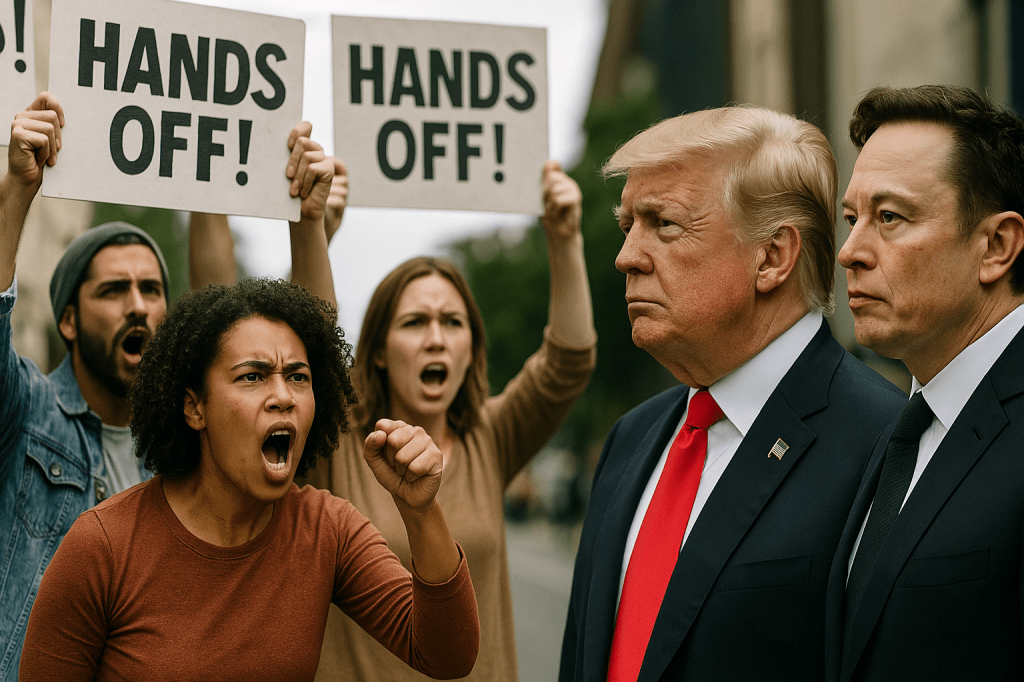
    On April 5, 2025, the United States witnessed a moment of rare unity—not in the halls of Congress, but in the streets, sidewalks, and town squares of all 50 states. From liberal coastal cities to deep-red heartland towns, Americans took part in a powerful and coordinated show of dissent under one rallying cry: “Hands Off!”

    These protests, organized by a coalition of over 150 advocacy groups, were not merely about policy disagreements. They were a response to sweeping structural changes being implemented by President Donald Trump’s administration, particularly under the guidance of Elon Musk, who now leads the Department of Government Efficiency (DOGE).

    The movement represents more than a partisan outcry; it reflects growing concern—even in Republican-dominated states—about the preservation of democracy, the shrinking role of government in people’s lives, and the threats to public institutions many Americans have long depended on.

    The Protest Movement: What’s at Stake?

    The “Hands Off!” movement emerged in response to a radical reimagining of the U.S. government:

    • Massive layoffs across federal departments, affecting millions of workers and citizens who rely on those services.
    • Closure of entire agencies focused on public health, environmental regulation, and civil rights enforcement.
    • Deep cuts to education, healthcare, and welfare, which disproportionately impact low-income and rural communities.
    • Aggressive deportations targeting political activists and immigrant communities.
    • Privatization of public services and a concentration of decision-making power under unelected billionaires.

    These sweeping changes have prompted Americans of every background to speak out—including residents of deeply Republican states such as Texas, Alabama, South Carolina, Oklahoma, and Idaho. In towns where President Trump carried over 60% of the vote in previous elections, people are now marching side-by-side with protestors from traditionally liberal enclaves, driven by shared fears: job insecurity, declining access to education and healthcare, and a growing sense of disenfranchisement.

    Who Is Behind the Movement?

    While key organizers such as MoveOn.org, Indivisible, and the ACLU are often associated with progressive politics, the “Hands Off!” movement has drawn a diverse cross-section of Americans, including:

    • Veterans’ groups concerned about cuts to VA services
    • Educators and students alarmed by attacks on academic freedom and funding
    • Healthcare workers worried about rising patient loads and shrinking support
    • Faith-based communities raising moral objections to government overreach
    • Even conservative voters who supported Trump but now question the consequences of centralized power and widespread job loss

    This diversity is significant. It shows that the unrest is not limited to the usual coastal opposition. It’s spreading across the heartland—where voters now feel that the administration’s promises of “efficiency” are coming at the expense of livelihoods and local autonomy.

    The Trump-Musk Response: Dismissal and Intimidation

    Rather than acknowledge the protesters’ concerns, President Trump doubled down. From his Florida golf resort, he denounced the demonstrations as “illegal gatherings” and issued stark threats:

    • Cuts to federal education funding for institutions that allow or endorse protest activities.
    • Warnings of imprisonment, expulsion, or even deportation for protest participants.

    Elon Musk, meanwhile, brushed off the movement as being driven by “rival billionaires,” while pressing ahead with controversial DOGE reforms aimed at automating and outsourcing government functions.

    In essence, the administration has chosen to meet peaceful protest with ridicule, threats, and silence.

    What Could Force a Policy Shift?

    Despite their current stance, there are several potential forces that could push the administration to reconsider or pause its policies:

    • Internal Republican Pressure: If GOP lawmakers begin to feel electoral heat—especially in midterm races—they may demand a policy recalibration.
    • Economic Fallout: Investor panic, falling markets, or widespread job losses could lead to a strategic freeze to stabilize the economy.
    • Legal Challenges: Federal courts may block some actions as unconstitutional or procedurally flawed.
    • Elite Pushback: Business leaders, retired generals, or influential conservative voices could break ranks and speak out.
    • Strategic Political Calculation: Trump may temporarily halt or water down policies to improve public perception ahead of the 2026 elections.

    The Cost of an Unyielding Government

    If none of these forces succeed and the administration remains unbending, the consequences could be dire:

    • Widening political polarization and deepening national divisions
    • Prolonged unrest and social instability
    • A weakened global image of American democracy
    • Greater hardship for working-class Americans, including many in red states who are now realizing the local effects of national policy shifts

    A Biblical Warning for Our Time

    Scripture provides sobering examples of what happens when leaders harden their hearts and ignore the voice of the people.

    In 1 Kings 12, King Rehoboam ignored the elders’ advice and increased the burdens on his people. His arrogant declaration—“My father chastised you with whips, but I will chastise you with scorpions”—led to the division of Israel into two kingdoms. Rehoboam’s refusal to listen shattered national unity and ushered in prolonged conflict.

    Likewise, Pharaoh’s obstinate defiance in the face of God’s warnings through Moses (Exodus 7–12) brought devastation upon Egypt: economic collapse, natural disasters, and national mourning.

    In both cases, the leaders’ unwillingness to hear the cries of their people led to national ruin. The parallels to today’s moment are striking—and sobering.

    A Moment of Decision

    The “Hands Off!” rallies are not a purely partisan stunt or a passing trend. They are a nationwide alarm bell—ringing from both blue cities and red counties. Americans from all walks of life are demanding transparency, accountability, and a reversal of policies that threaten the social fabric.

    History and Scripture urge us to take such moments seriously. Leaders who rule by force and ignore the governed seldom end well. The people are speaking—not just in Washington or New York, but in Birmingham, Boise, and Amarillo.

    The question now is: will the administration listen?

  • Tariffs, Tumult, and the Tipping Point: Is America’s Economic Might Being Stripped Away?

    Tariffs, Tumult, and the Tipping Point: Is America’s Economic Might Being Stripped Away?

    In recent weeks, the global financial markets have been shaken by a new wave of tariffs imposed by the Trump administration. What was intended as a demonstration of economic strength and negotiation leverage has quickly spiraled into a global warning sign. U.S. markets plunged—Wall Street experienced one of its worst routs since the pandemic. The S&P 500 dropped nearly 6%, the Dow shed over 2,000 points, and volatility spiked across asset classes from commodities to currencies.

    But the tremors aren’t limited to trading floors. They’re being felt in American homes, retirement plans, shopping aisles, and across dinner tables.

    Americans Are Feeling the Strain

    Ordinary citizens, many still recovering from inflation and high interest rates, are again gripped by financial uncertainty. Consumer confidence is at a historic low, with people delaying retirement, rethinking home purchases, and holding off on starting families or businesses. Retirees are calling their financial advisors in panic; young professionals are watching job markets tighten and savings dwindle.

    These are not signs of an economy bouncing back—they are symptoms of a system under pressure.

    International Fallout and Global Rebalancing

    Abroad, the reaction has been swift and severe. China retaliated with its own wave of tariffs and export restrictions. European and Asian markets slumped. Commodity prices tumbled, and investors moved quickly into “safe haven” assets like gold and Bitcoin. The very structure of global trade is being rethought.

    Countries are accelerating efforts to move away from dependency on U.S. trade policies. Nations are exploring regional trade partnerships, building self-reliant supply chains, and realigning with blocs like BRICS and the EU. The assumption that America will always lead global commerce is no longer a given.

    Even if these tariffs are reversed—or paused—by the current administration or a future president, the damage is already done. Trust has been eroded. Supply chains have been rerouted. Business strategies have shifted. It could take years, possibly decades, for confidence to return, and even then, the world will not look the same.

    The Decline of a Nation That Forgot Its Calling

    From a biblical standpoint, this is more than economic miscalculation. This is correction. Scripture shows us that God raises up nations—and brings them low—according to His will and purpose (Daniel 2:21). America was once a beacon of opportunity, stability, and global leadership. But over time, its institutions, leaders, and people have increasingly turned away from God’s laws and values.

    Instead of using its blessings to uphold justice and righteousness, America has often championed greed, moral compromise, and self-interest. Its global influence is now waning not just because of bad policies, but because of a deeper spiritual crisis. As the prophet Hosea warned ancient Israel: “Because you have forgotten the law of your God, I also will forget your children” (Hosea 4:6).

    The economic decline we’re witnessing is not just cyclical—it is prophetic. God is allowing the decline of America’s global dominance because it has failed to lead in accordance with His truth. This is part of a larger pattern of correction and realignment as foretold in Scripture.

    A New World Is Coming

    But this is not the end of the story. The Bible tells us of a coming Kingdom—a government under Jesus Christ—that will rule the nations with justice, equity, and godliness (Isaiah 9:6–7). In that Kingdom, nations will no longer exploit each other. Trade will be fair and safe. There will be no need for trade wars, sanctions or tariffs, because people will live by God’s laws.

    “They shall beat their swords into plowshares, and their spears into pruning hooks; nation shall not lift up sword against nation, neither shall they learn war anymore” (Micah 4:3).

    In that era, commerce will no longer be about power or profit—it will be a means of serving one another. There will be no cheating, no exploitation, no corrupt systems. The economy of the Kingdom of God will reflect the very character of its King—faithful, generous, and just.

    For now, we are watching a fragile global economy tremble under the weight of human misrule. We may see relief rallies and policy reversals, but the long-term trajectory is clear. America is being humbled. Other powers will rise. And the stage is being set for the greatest geopolitical shift in human history—the return of Christ and the establishment of God’s Kingdom on Earth.

  • Trump’s Tariff on the EU: A Trigger for Economic Realignment with Prophetic Implications

    Trump’s Tariff on the EU: A Trigger for Economic Realignment with Prophetic Implications

    In a bold move that is already rippling through the global economy, U.S. President Donald Trump announced the imposition of a 25% tariff on certain products imported from European Union member nations, particularly targeting automobiles and auto parts. Framing the policy as a necessary act of economic defense, Trump cited several reasons: the protection of the U.S. auto industry, the need to correct trade imbalances, and to promote domestic manufacturing.

    The Reasons Behind the Tariffs

    According to the Trump administration, the United States has for too long tolerated unfair trade practices from the EU. European auto manufacturers, buoyed by state subsidies and benefiting from high U.S. market access, have allegedly disadvantaged American producers. Trump also pointed to the persistent trade deficit with Europe as proof that the playing field needs to be leveled. Lastly, in line with his “America First” agenda, Trump aims to bring jobs and factories back to the U.S. heartland.

     “For decades, we allowed foreign nations to take advantage of our workers, our industries, and our markets. Those days are over.” — President Donald Trump

    While these goals may sound patriotic, the method—tariffs—has proven to be a deeply flawed tool for addressing such systemic issues.

    The EU’s Strong but Strategic Response

    European Commission President Ursula von der Leyen responded swiftly and assertively. She called the tariffs unjustified and warned that the European Union would not submit passively.

     “Let me be clear: We did not start this. But we will respond with strength and unity. The European Union will always defend its people and its interests.” — Ursula von der Leyen

    Instead of backing down, the EU announced it would reinstate previously suspended retaliatory tariffs and introduce new duties targeting over €18 billion worth of American goods.

    But von der Leyen didn’t stop there. In a move with far-reaching implications, she declared that the EU would intensify efforts to remove internal trade barriers among member states, strengthening Europe’s economic unity and competitiveness. This is not just a tactical response—it is a strategic redirection that could reshape global economic power dynamics.

    The Problem with Tariffs: A Historical and Economic Perspective

    Historically, tariffs have not proven effective in resolving the very problems the Trump administration seeks to address. Here’s why:

    • Trade Deficits Persist: Tariffs do little to reduce overall trade deficits, which are more influenced by consumption patterns, currency values, and national savings rates than by trade policies alone.
    • Domestic Costs Rise: Tariffs often raise the price of goods for domestic consumers and businesses, resulting in job losses in downstream industries, as happened with steel tariffs in the early 2000s.

    “In an effort to help one industry, tariffs often hurt many others. For every job saved, others are lost in the supply chain.” — Peterson Institute for International Economics

    • Global Supply Chains Are Disrupted: Especially in industries like automobiles, where parts come from multiple countries, tariffs complicate logistics and increase production costs.
    • Retaliation Undermines Gains: Rather than bringing trade partners to heel, tariffs often provoke retaliation—escalating into trade wars that benefit no one.

    In short, the strategy of imposing tariffs often fails to achieve its intended outcomes. Worse, it can spark deeper divisions and strengthen the resolve of other nations to build alternative economic alliances.

    Unintended Consequences: Strengthening an Emerging Economic Giant

    By pushing the EU to become more internally unified and economically autonomous, these tariffs may ultimately accelerate the rise of a formidable economic force centered in Europe. A more integrated and efficient European single market—less dependent on the U.S.—could emerge as a dominant global player.

    In economic terms, this is more than just a response; it’s the birth of a new power structure. And in prophetic terms, it aligns with a picture the Bible has long painted.

    A Prophetic Fulfillment Unfolding

    The Book of Revelation warns of the rise of a powerful system called Babylon the Great, described as a dominant force influencing “all the nations” with its wealth, commerce, and political might:

    “For all the nations have drunk of the wine of the wrath of her fornication, and the kings of the earth have committed fornication with her, and the merchants of the earth have become rich through the abundance of her luxury.” — Revelation 18:3

    Many biblical scholars understand this as a future revival of the Roman Empire, centered in Europe—a union of nations wielding enormous economic and religious influence.

    This entity is prophesied to become the epicenter of global trade and power, even as the United States recedes into economic and geopolitical insignificance. The very actions that Trump hopes will “Make America Great Again” may instead be accelerating the transfer of influence to a new superpower arising out of Europe.

    Provoking Conflict

    The Bible gives practical wisdom on the folly of provocation:

     “As charcoal is to burning coals, and wood to fire, so is a contentious man to kindle strife.”

     — Proverbs 26:21

    Instead of resolving disputes, provoking a quarrel usually escalates the conflict, rarely resulting in the other party’s servile submission. This principle applies powerfully to international relations. Trump’s aggressive trade posture has not cowed the EU—it has galvanized it.

    An Economically Fortified Europe

    In the short term, the 25% tariff may appear to be a strong move to protect American jobs and industries. But in the long run, it may provoke the rise of a unified, economically fortified European power that is not just a rival but, prophetically, a system poised to dominate the world scene before the return of Jesus Christ.

    For those who understand the deeper forces at work—both geopolitical and spiritual—these developments are not random. They are part of a larger plan that is unfolding, exactly as foretold.

  • The “Freeloader” Fallacy and the Unraveling of the World America Built

    The “Freeloader” Fallacy and the Unraveling of the World America Built

    In recent years, voices from within the United States—most prominently in the current administration of President Donald Trump—have labeled America’s European allies as “freeloaders.” This sentiment, recently reinforced by leaked chats from senior U.S. defense officials, suggests that the U.S. is unfairly burdened by its role as the world’s security guarantor, while allies reap the benefits without paying their fair share.

    But this view, while emotionally resonant in a time of rising nationalism and budget pressures, fails to recognize a deeper historical truth: the so-called “freeloading” arrangement was designed by the United States itself after World War II.

    America’s Strategic Design After World War II

    When the dust of WWII settled, the United States stood as the dominant power in a shattered world. Europe lay in ruins. Germany, the nation that had ignited two world wars, was disarmed and divided. The Soviet Union, though an ally during the war, quickly emerged as a global ideological and military threat, expanding its grip over Eastern Europe and seeking to export communism globally.

    To prevent a third world war—and to contain the spread of Soviet communism—the U.S. devised a grand strategy. It would serve as a global security umbrella, deploying its vast military and nuclear power to deter aggression in both Europe and Asia.

    But this security guarantee came with conditions.

    Why the U.S. Took on the Burden

    In Europe, the U.S. created NATO in 1949, a collective defense alliance that essentially declared: “If the Soviets invade, America will respond.” This meant stationing tens of thousands of troops in Germany and elsewhere—not to dominate Europe, but to protect it, while also ensuring that Germany would never again re-arm on its own and potentially start another global war.

    The U.S. didn’t stop in Europe. In Asia, the United States went even further: it wrote Japan’s post-war constitution, explicitly forbidding it from maintaining offensive military forces. In exchange, the U.S. promised to defend Japan from any external threats. This kept the peace in the Pacific and ensured that Japan, once an imperial power, would remain a pacifist state under American protection.

    Aside from maintaining military presence in various points around the globe, this also meant that the U.S. Navy would patrol the world’s oceans and major trade routes, ensuring they remained open and secure for international commerce. This naval presence guaranteed that goods, products, energy supplies, and even people could travel safely across seas and continents, under the protection of a rules-based order that the U.S. enforced. In effect, the United States became the maritime guardian of global trade, allowing the modern economy to flourish.

    The Global Bargain

    What did America get in return?

    Quite a lot.

    These countries, under the U.S. defense umbrella, pledged to:

    • Side with the United States in the ideological and military contest of the Cold War. 
    • Maintain for the most part (or at least at the surface) democratic forms of governance, compatible with American values and institutions. 
    • Participate in a global economic system centered on free trade, the U.S. dollar, and open access to American markets, capital, and technology. 

    This arrangement created decades of global stability, fueled unprecedented economic growth, and cemented America’s leadership role in the world. Allies didn’t have to spend massive portions of their GDP on defense, because America did it for them—intentionally, and as a strategic choice.

    But this system also worked immensely in America’s favor:

    • It helped defeat the former Soviet Union.
    • It generated vast wealth for the United States.
    • It gave America access to the natural resources, talent, savings, and investments of allied nations.
    • It kept the U.S. economy resilient, allowing it to absorb shocks during oil crises, recessions, and financial collapses because the global economy was effectively built around it.

    This wasn’t just charity. It was a mutually beneficial arrangement that secured the U.S. economy and reinforced its global dominance across finance, technology, and military affairs.

    The Trump Doctrine and the Unraveling Order

    Enter the 21st century, and with it, growing discontent. Successive U.S. administrations urged allies to increase defense spending, but President Trump went further—publicly ridiculing NATO partners, questioning America’s commitment to mutual defense, and suggesting that the U.S. might not come to their aid.

    The recent leaks of U.S. defense officials calling allies “freeloaders” is not new rhetoric—it is the continuation of a growing American retrenchment from the very system it built. This shift is not just about burden-sharing; it’s about dismantling a world order that was held together by American security guarantees and economic leadership.

    And the consequences are enormous.

    As America pulls back:

    • Germany is rearming—a move unthinkable just a decade ago.
    • Japan is building new missile capabilities, breaking with its pacifist tradition.
    • France and others are openly discussing European “strategic autonomy,” no longer counting on U.S. support.

    The global system is fragmenting. Old alliances are fraying, and new coalitions may rise—not because of shared values, but based on shared interests, geography, or ethnicity. The future could very well be a world of competing blocs, exclusive clubs, and permanent insecurity.

    A Nation in Decline—By God’s Hand

    It is tempting to see all this purely through the lens of geopolitics. But for those who understand biblical prophecy, something deeper is taking place.

    America’s decline is not merely the result of policy decisions or shifting public opinion—it is a judgment from God.

    “My people are destroyed for lack of knowledge. Because you have rejected knowledge, I also will reject you… I will change their glory into shame.”  (Hosea 4:6–7)

    God blessed America with power, influence, and prosperity—but as the nation increasingly turns from Him, He is taking away its leadership role, allowing other powers to rise in its place. Whether those nations will be friendly or adversarial remains to be seen—but they will not uphold the same values or provide the same guarantees.

    What we are witnessing is not just the collapse of a U.S.-led global system. We are witnessing a divine reshaping of the world order, as foretold in Scripture.

  • Europe’s Economic Momentum: The European Council’s Latest Agreements and the Rise of a Powerhouse

    Europe’s Economic Momentum: The European Council’s Latest Agreements and the Rise of a Powerhouse

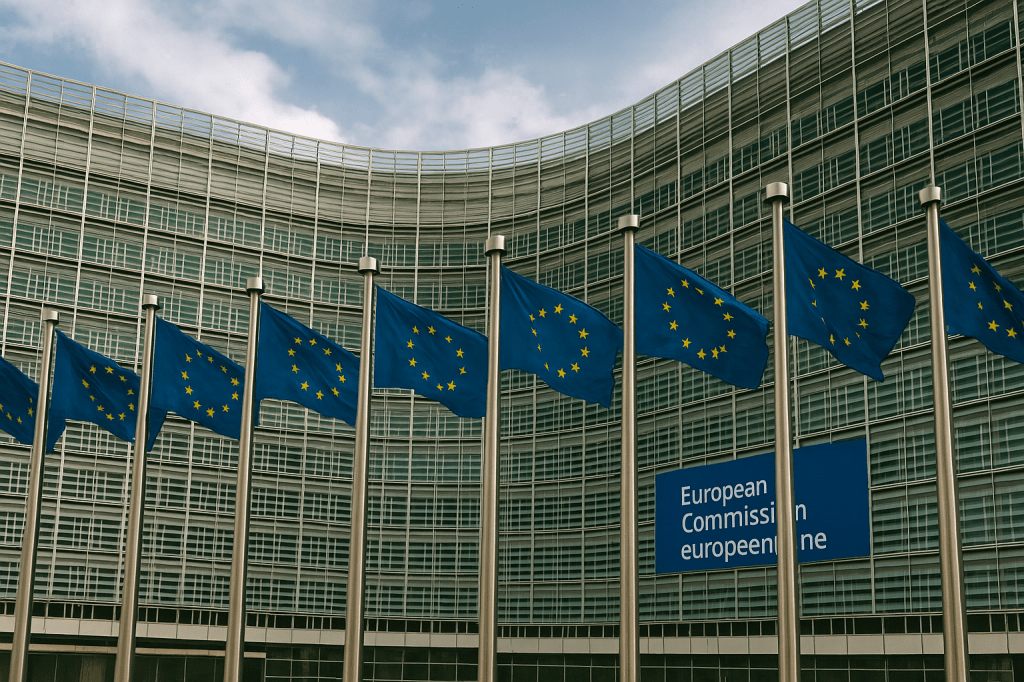
    In a rapidly shifting geopolitical landscape, the European Union (EU) is making bold moves to cement its place as an economic superpower. The recent European Council Summit in Brussels may not have made global headlines, but its economic agreements could very well mark a turning point—not just for Europe, but for the entire world order. These decisions, once fully realized, will enhance internal trade, fortify the EU against unpredictable external shocks like U.S. tariffs, and align with a prophetic trajectory long described in the Bible.

    A Strategic Shift Toward Internal Strength

    At the heart of the summit’s economic agenda was competitiveness—not merely as a buzzword, but as a detailed and actionable commitment. EU leaders emphasized the urgent need to reduce regulatory burdens, fast-track investments in innovation, and ensure that European businesses can scale and trade more freely across the Union.

    • Simplifying regulations to make compliance easier and faster
    • Cutting red tape to reduce barriers to entrepreneurship
    • Boosting strategic sectors like clean tech, digital infrastructure, and defense manufacturing
    • Mobilizing private and public investment toward a greener, more resilient economy
    • Accelerating the Capital Markets Union to unlock pan-European financing and reduce dependence on U.S. capital

    In other words, the EU is building an internal economic engine capable of powering itself—with or without favorable external trade relations.

    Shielding Europe from Unpredictable U.S. Trade Policies

    This effort to “strengthen the inside” comes at a critical time. The return of a Trump administration has revived protectionist trade policies, including new tariffs on EU steel, aluminum, and potentially automobiles and alcohol. These moves, often executed with little warning or negotiation, have left European exporters scrambling and trade diplomats frustrated.

    In contrast, the EU’s approach appears more rules-based, predictable, and business-friendly. Decision-making processes may be slow and consensus-driven, but once adopted, EU economic policies tend to provide long-term stability.

    This contrast is growing starker, especially as the United States seems to oscillate between multilateralism and nationalism with each new administration.

    By fortifying its internal market and expanding trade partnerships beyond the U.S.—toward Asia, Africa, and Latin America—the EU is buffering itself from the turbulence of American politics and global market shocks. It’s an economic strategy rooted in resilience, self-reliance, and forward-looking collaboration.

    A Biblical Powerhouse in the Making

    Revelation 17 speaks of a “beast power” rising out of the sea, forged by a union of nations and guided by a dominant political and religious force. Daniel 2 and 7 describe a succession of world empires, culminating in a final kingdom characterized by ten kings (or nations) giving their power to one system. This points to a unified European power—not necessarily the EU in its current form, but something that could easily emerge from it.

    When we see the EU laying the economic foundation for such unity—standardizing rules, integrating capital markets, and collectively responding to global threats—we are witnessing a transitional phase in prophetic fulfillment. An economic powerhouse is taking shape, not by accident, but by design—and it aligns strikingly with what the Bible foretells.

    More Than Just Economics

    The European Council’s latest agreements are not merely about economic growth—they are about sovereignty, identity, and preparation. By streamlining its internal market and lessening dependence on unpredictable allies, the EU is setting the stage for deeper integration—economically, politically, and possibly even militarily.

    Compared to the increasingly erratic trade policies of the United States, Europe’s methodical and cooperative approach looks not just appealing—but strategically superior. What we’re seeing is not just the evolution of a trading bloc. We may be witnessing the formation of a prophetic empire whose economic foundation is already being laid.