Category: Europe

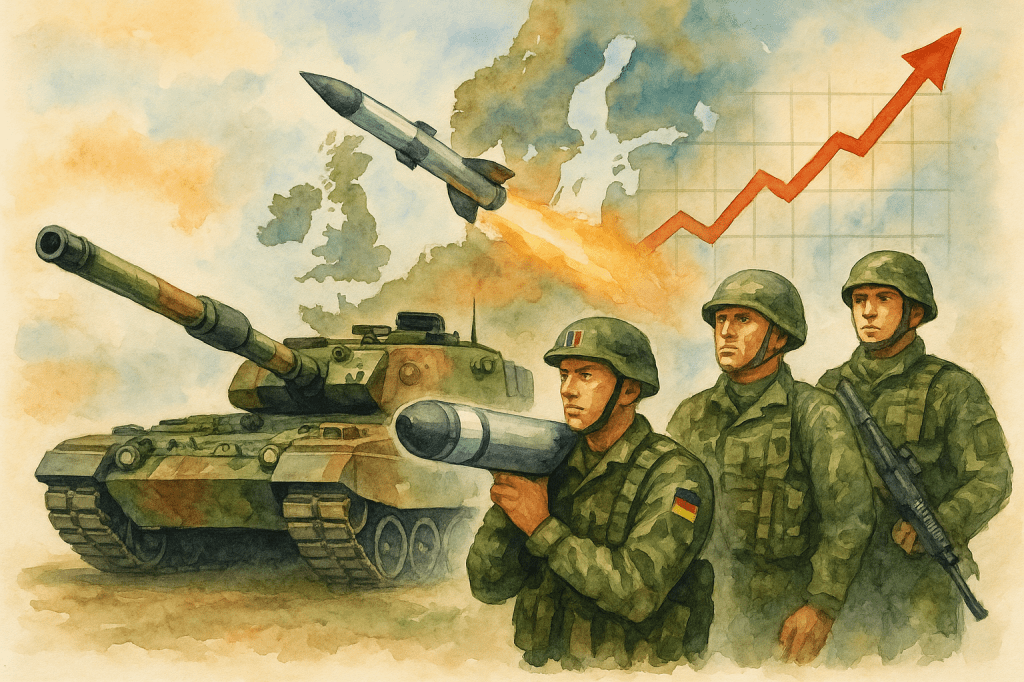
  • Germany and the EU’s Steadfast Commitment to Ukraine: Forging a New Defense Order in Europe

    Germany and the EU’s Steadfast Commitment to Ukraine: Forging a New Defense Order in Europe

    As the war in Ukraine grinds on into its fourth year, one reality has become increasingly clear: Germany and the European Union are in this for the long haul. Despite political volatility in the United States, especially under the second Trump administration, Europe is emerging as a reliable, strategic anchor in supporting Ukraine’s sovereignty and long-term security.

    What began as an urgent crisis response in 2022 has now transformed into a multi-layered defense partnership between Ukraine and the European continent. And in the process, Ukraine is not just receiving weapons—it is becoming an innovator and testing ground for a new kind of warfare. Meanwhile, Russia, through its persistent aggression, may ironically be catalyzing the very defense revolution that could ultimately contain its ambitions for decades to come.

    Germany and the EU: Committed for “As Long as It Takes”

    From Berlin to Brussels, the language is now consistent and resolute: support for Ukraine will continue until victory is achieved—or until a just and lasting peace is secured on Ukrainian terms.

    Chancellor Friedrich Merz of Germany has stepped up the country’s defense leadership in Europe, increasing Germany’s military aid package to €9 billion in 2025 alone. This includes the delivery of advanced Patriot air-defense systems, co-production of long-range missiles, and €2.2 billion worth of IRIS-T batteries. Crucially, Germany is also hosting joint weapons production facilities with Ukraine on European soil, a move that signals long-term industrial cooperation beyond the battlefield.

    The European Union, too, has institutionalized its support. The €50 billion Ukraine Facility, approved for the 2024–2027 period, locks in macro-financial, reconstruction, and defense aid. Meanwhile, the Weimar+ alliance—a defense coalition among key European powers—has pledged to support Ukraine with or without U.S. involvement.

    In fact, a German military official recently affirmed that Europe can sustain Ukraine’s war effort even in the event of a full American withdrawal, so long as European political will remains firm. The EU’s broader Readiness 2030 initiative further underlines this shift by aiming to consolidate a European defense industrial base that reduces dependence on U.S. capabilities.

    Ukraine: From Weapons Recipient to Tactical Innovator

    But Europe is not doing all the heavy lifting. Ukraine itself has evolved into a military innovator, leveraging foreign aid not merely for survival, but for transformation.

    Today, nearly 40% of Ukraine’s frontline weapons are produced domestically. Its booming defense industry employs over 300,000 people and fuels innovations that are reshaping battlefield dynamics. Of particular note is Ukraine’s rapid development of drone warfare, led by its Unmanned Systems Forces (USF), a newly formalized branch dedicated to autonomous and remote operations.

    In just one month (June 2025), Ukraine’s drones were responsible for striking over 19,600 targets, destroying dozens of Russian tanks, MLRS units, and artillery pieces. With drone success rates improving and international funding (such as a $50 million U.S.-German strike kit initiative) pouring in, Ukraine is developing a modular drone strike network that could neutralize traditional Russian advantages in massed armor and artillery.

    Through the BRAVE1 initiative, Ukraine has also created a tech incubator that funnels battlefield feedback directly into the hands of engineers and startups. Development cycles that take years in Western bureaucracies now take weeks in Ukraine—a feat made possible by urgency, ingenuity, and external support.

    Russia’s Unintended Consequence: Strengthening the EU’s Defense Posture

    Ironically, Russia’s aggression is unwittingly sharpening Europe’s strategic edge.

    Prior to the full-scale invasion of Ukraine in 2022, Europe was fragmented and reluctant to commit heavily to defense. But today, EU nations are rearming, integrating, and training together with a clarity and purpose not seen since the Cold War.

    Systems like European SkyShield, NATO’s integrated air-defense initiative, and common procurement strategies are building a continental arsenal designed to counter Russian aggression specifically. Germany’s forward-leaning role in hosting production and coordinating deliveries ensures that Europe is no longer just a donor—it is now a co-builder of deterrence.

    Meanwhile, Ukraine’s battlefield experiences are providing NATO and the EU with real-time intelligence and tactical data about Russian doctrine, drone use, EW tactics, and missile strategy. Each failed Russian assault gives Europe insight into how to optimize its future military posture.

    A Strategic Turning Point

    In the larger scope of history, what we are witnessing is not just a war for Ukraine’s borders. It is a war that is reshaping Europe’s strategic architecture. Germany and the EU are no longer reactive partners—they are becoming security guarantors and innovation accelerators.

    Ukraine, with the help of European and U.S. support, is engineering a defense ecosystem that fuses drones, AI, rapid prototyping, and layered defense systems. Though not yet decisive, these technologies are proving increasingly effective and cost-efficient against one of the world’s largest armies.

    In choosing war, Russia hoped to weaken NATO, divide Europe, and neutralize Ukraine. But in reality, it has accelerated Europe’s military cohesion, boosted Ukrainian resilience, and invited a tactical transformation that may eventually render its conventional military superiority obsolete.

    The Long Game

    Russia’s aggression may drag on, but the long game is becoming clearer: the West is building not just to defend Ukraine, but to render future invasions by authoritarian regimes impractical and self-defeating.

    Ukraine is fighting on the battlefield, but Europe is fortifying the future.

    And perhaps even more significantly, Bible prophecy indicates that a European entity—fully capable of defending itself against Russia—will arise in the future. (Revelation 13:1-4) What we are seeing today may very well be the early formation of that prophesied power, as Europe develops the military will, unity, and capabilities once thought unlikely in our time.

  • The Battle for the West Philippine Sea: Why the EU is Stepping Forward

    The Battle for the West Philippine Sea: Why the EU is Stepping Forward

    On July 22, 2025, Philippine President Ferdinand Marcos Jr. met with U.S. President Donald Trump at the White House to reinforce economic and military ties between their two countries. The visit culminated in a high-profile agreement that introduced a 19% U.S. tariff on Philippine exports in exchange for zero tariffs on American vehicles and parts, certain agricultural products and pharmaceuticals entering the Philippines. While some critics argue that the Philippines is getting the shorter end of the stick in this trade arrangement, the reality is more nuanced: the Philippines managed to secure concessions similar to or slightly better than those granted to other Southeast Asian nations such as Vietnam and Indonesia, though it still fell short of the far more favorable terms negotiated by Japan. But beyond the trade negotiations, the more pressing development was the renewed emphasis on joint security. The two leaders committed to expanding the Enhanced Defense Cooperation Agreement (EDCA), establishing new naval repair facilities in Palawan, and reaffirming that any attack on Philippine assets in the West Philippine Sea (WPS) would trigger American support under the Mutual Defense Treaty.

    While these moves project strength, they also expose an emerging geopolitical gap: the long-term sustainability of U.S. leadership in Asia. As Washington becomes increasingly preoccupied with domestic challenges and global overstretch, Europe—especially the European Union—will have to prepare to take a more proactive stance in securing vital global commons, including the WPS.

    Why the West Philippine Sea Matters Globally

    The WPS, part of the broader South China Sea, is not merely a regional concern. It is a critical artery for international trade:

    • Over 30% of the world’s shipping, valued at more than $3 trillion annually, passes through these waters.
    • Key goods—from energy supplies to high-tech components—transit routes that connect East Asia with Europe, the Middle East, and Africa.
    • The seabed is believed to contain vast reserves of oil and natural gas, making it a major energy frontier.

    For the EU, whose economic engine thrives on global commerce, any disruption in the WPS would create devastating ripple effects across its member states. France, Germany, the Netherlands, and Italy all rely on uninterrupted access through these lanes to sustain their export-heavy economies.

    The U.S. as Present Guarantor—But for How Long?

    For now, the U.S. remains the strongest military power in the Indo-Pacific and the principal guarantor of free access to the WPS. American naval operations, such as Freedom of Navigation Operations (FONOPs), continue to challenge China’s expansive claims.

    However, the sustainability of this leadership is in question. Economic strains, political polarization, and the growing appeal of isolationist policies suggest that America’s global commitments may continue to shrink. In a future where Washington withdraws, who ensures that vital sea lanes remain open?

    Why the EU is Preparing to Secure the WPS

    1. Trade Dependence: Nearly 40% of the EU’s external trade moves through the South China Sea. Control or disruption of this route by China would allow it to economically coerce Europe.
    2. Strategic Credibility: If the EU seeks to become a global superpower, it must demonstrate the ability to project power and protect its interests far beyond its borders. Inaction in the WPS would reveal a lack of strategic autonomy.
    3. Legal and Moral Leadership: The EU champions the rules-based international order, especially UNCLOS. Yielding to Chinese hegemony in the WPS would undermine its commitment to international law.
    4. Asian Partnerships: Europe is deepening ties with Indo-Pacific countries, including Japan, India, and ASEAN states. Active involvement in ensuring freedom of navigation in the WPS will solidify its standing in the region.

    Steps the EU Is Taking

    At the recent 2025 EU Summit in Brussels, leaders agreed on a number of critical initiatives:

    • Creation of a Permanent Indo-Pacific Naval Task Group, spearheaded by France, Germany, and Italy, with rotational patrols planned for 2026.
    • Enhanced Military Cooperation with ASEAN nations, including maritime surveillance and joint training exercises.
    • Strategic Investments in Defense Production and Blue-Water Naval Capabilities, to ensure operational reach in the Indo-Pacific.
    • Intelligence-Sharing Agreements with Japan and the Philippines aimed at countering disinformation and tracking Chinese maritime movements.

    These developments represent a significant shift in the EU’s global posture. While not yet capable of replacing the U.S., the EU is beginning to prepare for a world in which it may have to act independently.

    East vs. West and the Philippines in the Middle

    From a biblical standpoint, the rise of a European-centered global power is not unexpected. The Bible foresees a final world superpower described as a “beast” rising out of the sea (Revelation 13:1), a union of nations centered in Europe. As it rises, it will eventually clash with a coalition of eastern powers, including nations historically associated with “the kings of the east” (Revelation 16:12).

    In such a scenario, the Philippines—geographically and strategically situated between China and the Western Pacific—would find itself at the intersection of a great geopolitical conflict. Its alliance with the U.S., and potentially with the EU in the future, makes it a key outpost in a looming confrontation between East and West.

    A Call to Strategic Vigilance

    The recent Marcos-Trump meeting underscores that the Philippines is not blind to the growing tensions in the West Philippine Sea. Yet the sustainability of American guarantees is not forever assured. The EU, slowly but surely, recognizes that its preparations for global leadership hinge on its willingness to secure the global commons.

    The West Philippine Sea is a fulcrum of future power dynamics. The EU will have to ensure it plays a defining role in keeping it free—not only for the sake of trade and legal norms but to attain its goal of becoming a central actor on the world stage. The Philippines, meanwhile, will have to brace for the storms ahead.

  • The Shifting Ground Beneath NATO: A Europe in Transition

    The Shifting Ground Beneath NATO: A Europe in Transition

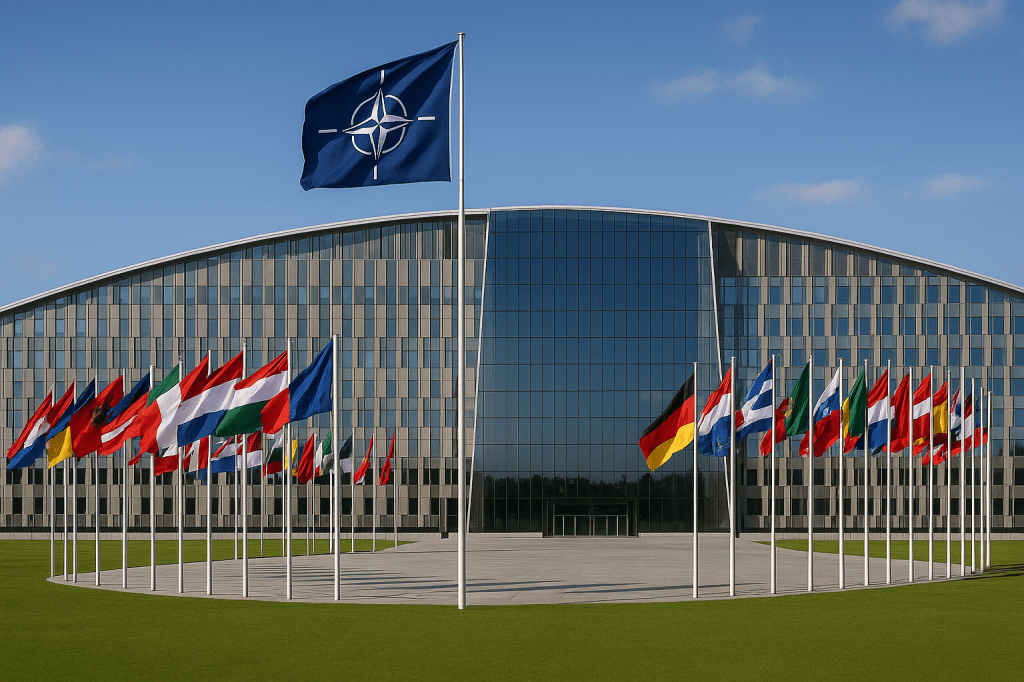
    The recently concluded 2025 NATO Summit in The Hague delivered a bold slate of commitments and strategic recalibrations. Dominated by landmark decisions and cautiously visionary declarations, the alliance appeared to chart a confident path forward. But beneath the surface, the tectonic plates of transatlantic security are beginning to shift—with Europe increasingly preparing for a future where the United States may no longer stand as the guarantor of its defense.

    A Bolder NATO: Spending and Strategy

    Among the most significant developments was the collective agreement to raise defense spending to 5% of GDP by 2035. Of this, 3.5% will go toward core military capabilities, while 1.5% is earmarked for broader security priorities such as infrastructure protection, cybersecurity, and supply chain resilience. This dramatic increase is not just symbolic. It reflects a long-standing frustration within NATO—particularly from Washington—that European members have lagged in their defense obligations. Now, with geopolitical tensions escalating and American leadership less predictable, Europe is stepping up.

    NATO also unveiled its first-ever Commercial Space Strategy, signaling a new frontier in collective defense. This move formalizes plans to integrate private-sector space capabilities—such as satellite surveillance and communication systems—into military operations. An implementation roadmap is set to be approved by NATO defense ministers later this year.

    Meanwhile, the alliance pledged renewed emphasis on cyber defenses, hybrid warfare preparedness, and the protection of critical infrastructure, areas of vulnerability increasingly targeted by state and non-state actors alike. These measures aim to increase the resilience of NATO members not only in wartime scenarios but also in persistent gray-zone conflicts where ambiguity and digital disruption reign.

    Another noteworthy agenda item was NATO’s intent to deepen partnerships with Indo-Pacific allies, particularly Japan, South Korea, and Australia. As China grows bolder and more assertive, NATO is reimagining its role beyond the Euro-Atlantic region. Strategic dialogues, joint exercises, and cooperative defense initiatives are expected to strengthen the global architecture of democratic security.

    In addition to its Indo-Pacific focus, NATO also reaffirmed Ukraine’s right to defend itself against Russian aggression. However, the alliance stopped short of making a formal, organization-wide commitment to provide military aid. Instead, several major NATO members—such as the United Kingdom, Germany, and France—pledged individually to support Ukraine materially. This fragmented approach highlights the alliance’s internal divisions and the geopolitical complexities of coordinating unified action in a time of shifting power dynamics.

    The Elephant in the Room: America’s Unsteady Hand

    But for all the summit’s optimism and resolve, a quiet anxiety lingered: What if the United States steps back?

    President Donald Trump, back in office for a second non-consecutive term, has repeatedly linked American military support to transactional calculations. He has questioned whether U.S. involvement in NATO should persist if other members don’t “pay their fair share.” More alarmingly for Europe, his administration has refused to frame Russian aggression as a fundamental threat unless it directly endangers U.S. security.

    This sentiment is not mere rhetoric. At the summit, Trump reiterated that America’s strategic choices will be tied to whether European crises touch American soil or interests. Such framing has left many European leaders uncertain about Washington’s reliability in a scenario where, say, Russia invades another European country not named Ukraine. The United States offered no significant new commitments to Ukraine at the summit, choosing instead to emphasize that existing aid would continue for the time being. The message was clear: while support is not being withdrawn, future assistance will depend heavily on whether Ukraine’s struggle is perceived to affect core American security interests.

    Europe’s Quiet Fallback Strategy

    In response, Europe is slowly but deliberately laying the groundwork for strategic autonomy. Initiatives such as the European Sky Shield Initiative, Permanent Structured Cooperation (PESCO), and the EU’s Strategic Compass are not duplicating NATO but rather hedging against its potential dysfunction.

    These projects are gradually increasing the EU’s independent capabilities in missile defense, cyber operations, logistics coordination, and rapid deployment. Bilateral agreements are proliferating among European states. Defense industries are being consolidated. Command and control structures are being adapted for interoperability across both NATO and EU frameworks.

    In effect, Europe is designing a plug-and-play security architecture: integrated with NATO when the U.S. remains committed, and seamlessly adaptable to EU leadership should American engagement falter. While legal, logistical, and political hurdles remain, the trajectory is clear.

    The Coming European Power Bloc

    From a biblical prophetic perspective, these developments echo a long-foretold transition. The Bible describes a time when a powerful European entity—”the beast” of Revelation 17 and Daniel 7—will rise as a dominant geopolitical and military force, independent of American support. This power, led by a coalition of ten kings or leaders, will wield economic, military, and moral influence on a global scale.

    The current cracks in NATO and Europe’s accelerating drive toward defense autonomy may well be early signs of this shift. America’s declining reliability is not simply a political story; it is part of a divine pattern that Scripture warns about. The weakening of transatlantic bonds is setting the stage for a new global order, one in which Europe stands alone, assertive, and significant.

    A New Order Taking Shape

    The 2025 NATO Summit may be remembered not only for its bold declarations on spending, space, and cyber readiness, but also for what it quietly signaled: that the ground under NATO is shifting. Europe is awakening to the reality that its long post-war dependence on American might is unsustainable.

    While Europe cannot yet defend itself alone, the groundwork is being laid. And according to biblical prophecy, the time is coming when it will not only be capable but destined to do so. In this light, today’s NATO is not a final structure but a transitional one—a fading vestige of an old world order giving way to a very different and more prophetic future.

  • A Summit Without a Center: How the 2025 NATO Meeting May Signal the End of U.S. Leadership in Europe

    A Summit Without a Center: How the 2025 NATO Meeting May Signal the End of U.S. Leadership in Europe

    The upcoming NATO summit in The Hague this June 24 and 25—meant to showcase unity and resolve—may end up doing the opposite: exposing divisions, achieving little, and revealing a troubling shift. The alliance that once served as the anchor of Western defense now faces an identity crisis, largely influenced by the changing role of the United States under President Donald Trump.

    A President at Odds with the Alliance

    President Trump comes to the NATO summit not as a stabilizing leader but as a disruptor. His position on the Russian invasion of Ukraine sharply differs from that of most European leaders. While many in Europe see Russia’s 2022 attack on Ukraine as unprovoked aggression, Trump has suggested that Ukraine “provoked” Russia—downplaying Moscow’s responsibility and treating both sides as equally culpable.

    This stance is deeply unsettling to countries like Poland, the Baltic states, and Romania. For them, NATO is more than diplomacy—it’s a protective shield. But under Trump’s view, that shield seems uncertain.

    Trump’s view of Vladimir Putin also contrasts sharply with NATO consensus. While European leaders regard Putin as a serious, long-term threat to European stability, Trump has described him in favorable terms—even amid allegations of war crimes. This isn’t just a difference in tone—it reflects a fundamentally different understanding of global threats.

    From Shared Values to Shared Costs

    At its core, Trump treats NATO less like a community of shared democratic values and more like a financial arrangement. His message has been blunt: pay more or risk losing protection. Although calls for higher European defense spending aren’t new, Trump frames the issue as a fee-for-service model—diminishing the alliance’s foundational spirit of mutual defense.

    This year’s summit is expected to focus heavily on Trump’s demand that allies commit 5% of GDP to defense. Some countries like Poland and the UK may support the idea, but many others find it politically and economically unfeasible, even coercive.

    Even more concerning is what won’t be addressed: there will likely be no new pledges to Ukraine or a clear plan to deal with Russia’s ongoing threats. That silence speaks volumes.

    A Shifting Balance of Power

    The summit may produce few policy breakthroughs, but it will make one reality painfully clear: the United States no longer leads NATO as it once did. Without U.S. leadership grounded in shared values, the alliance becomes more fragmented—less a united front, and more a group of nations with diverging priorities.

    Faced with this void, Europe is beginning to respond.

    Europe Steps Forward

    As the summit unfolds, European leaders are moving to create a more independent defense structure. France is taking the lead, with Germany showing increased support. Their goal: prepare for a future where Europe must defend itself—even without, or against, U.S. approval.

    Key elements of this shift include France’s nuclear arsenal, the EU’s Common Security and Defence Policy (CSDP), and joint defense projects through initiatives like PESCO. Once seen as symbolic, these are now gaining strategic importance.

    Eastern Europe is also adapting. Countries like Poland are ramping up defense spending and modernizing their forces. Nordic nations are working more closely together through regional groups like NORDEFCO and the Joint Expeditionary Force.

    A Prophetic Parallel

    This changing defense landscape may have more than political implications—it could carry prophetic weight. The Bible foretells a final resurrection of the Roman Empire, emerging from Europe shortly before the return of Jesus Christ. Scripture describes this end-time empire as a powerful beast—ruthless, dominant, and seemingly unstoppable: “Who is like the beast? Who is able to make war with him?” (Revelation 13:4).

    The weakening of NATO and the decline of U.S. leadership are not just political shifts—they are part of a larger prophetic pattern. A new European-centered power is rising, one that may dominate the global stage with strength and unity, even without—or in defiance of—American leadership.

  • Europe Rearms: The Rise of a Military Superpower in a Time of Global Uncertainty

    Europe Rearms: The Rise of a Military Superpower in a Time of Global Uncertainty

    In recent years, a quiet revolution has been unfolding across the European continent. Long known for its reliance on diplomacy, economic influence, and NATO protection, Europe is now undergoing one of the most dramatic rearmament campaigns in its modern history. From Germany and Poland to Sweden and Denmark, defense budgets are surging, production lines are being reactivated, and leaders are speaking with new urgency about “war readiness.”

    Germany has pledged to raise defense spending to 3.5% of GDP, launching a massive modernization campaign including expanded tank and artillery production, as well as investments in cyber and missile defense.

    Poland is going further, earmarking 4.7% of GDP—now the highest in NATO—for new weapon systems, base upgrades, and troop increases. Meanwhile, Sweden is expanding its armed forces, reintroducing conscription, and ramping up spending to reach 2.6% of GDP by 2028.

    Denmark plans to hit 3% of GDP by 2026, citing Russian aggression and emerging threats as key motivations. The Baltic states—Estonia, Latvia, and Lithuania—are each committing over 3% of GDP and building territorial defense units with citizen-soldier models.

    France is investing in new-generation aircraft and drones, while Italy is streamlining its military-industrial base to boost efficiency.

    Although the UK is not part of the EU, it is also undertaking significant measures to enhance its military readiness. The UK’s Strategic Defence Review outlines plans to increase defense spending to 2.5% of GDP by 2027, with a longer-term goal of reaching 3%. Key initiatives include the construction of up to 12 SSN-AUKUS nuclear-powered submarines, a £15 billion investment in the Astraea nuclear warhead program, and the procurement of 7,000 long-range missiles.

    Additionally, the UK is establishing six new munitions factories to ensure an “always-on” weapons pipeline. On the technological front, the UK is investing in the Global Combat Air Programme (GCAP) to develop a sixth-generation stealth fighter in collaboration with Japan and Italy.

    Efforts are also underway to expand the British Army to 76,000 personnel, create a new home guard, and enhance cyber and electromagnetic capabilities through the establishment of a CyberEM Command.

    Europe as a whole is also pushing technological advancement. The EU’s European Defence Fund is channeling billions into joint R&D for AI, autonomous systems, and space-based surveillance. NATO-aligned nations are jointly developing standardized platforms for faster, interoperable deployment. Recruitment campaigns have been reinvigorated, with new enlistment incentives, reserve force expansions, and revitalized officer academies across the continent.

    All these efforts point toward a continent no longer satisfied with symbolic defense gestures, but one preparing, materially and mentally, for the very real possibility of conventional and hybrid war.

    A Changing World Order

    Several major forces are converging to drive this military resurgence:

    • Russian Aggression: The ongoing conflict in Ukraine has shattered decades-old illusions of peace on the continent. With Russia investing heavily in its military-industrial complex, European nations now see the need to prepare for high-intensity warfare.
    • Uncertainty Over U.S. Support: The return of Donald Trump to the White House and his continuing “America First” posture have deepened concerns about long-term American commitment to Europe’s defense. This is prompting nations to take ownership of their own security.
    • Emerging Global Threats: Rising instability in parts of the Middle East, terrorism, cyberattacks, and the proliferation of drones and artificial intelligence in warfare have added new layers of complexity to Europe’s security landscape.
    • Internal Political Shifts: Public sentiment is shifting, especially in frontline states like Poland and the Baltic nations. Defense is no longer seen as a luxury but a necessity. Even traditionally pacifist countries like Germany and Sweden are rewriting their security doctrines.

    Challenges Along the Way

    Despite this new momentum, Europe’s defense transformation faces serious limitations:

    • Fragmented Military Systems: Europe maintains over a dozen different tank models, more than 30 types of naval vessels, and dozens of aircraft types, each with its own logistics chain, spare parts system, and training regimen. This lack of standardization results in operational inefficiencies, higher maintenance costs, and serious interoperability challenges in joint missions. Similarly, air forces operate multiple jet fighters that are incompatible in terms of armament and electronic systems. During exercises, these disparities often complicate coordination, from communications to battlefield support. The absence of a central procurement body further aggravates the issue, leading to overlapping orders and missed opportunities for bulk purchasing. Unless these fractured systems are consolidated, Europe’s ability to act quickly and cohesively in a large-scale conflict remains compromised.
    • Slow Production Capacity: Unlike Russia, which has moved to a war economy footing, Europe’s peacetime industries are not yet able to produce ammunition, vehicles, and systems at the speed and scale needed for major conflict.
    • Diverging National Priorities: What threatens Estonia may not concern Italy. Differing threat perceptions and strategic cultures across Europe hinder the formation of a unified response strategy. This divergence has also resulted in varying levels of support for Ukraine’s defense against Russia’s invasion. While frontline states like Poland, the Baltic nations, and the Nordic countries have provided robust military aid and training, others such as Hungary have been more reserved, citing internal political considerations or skepticism about provoking further escalation. These inconsistencies underscore the lack of a cohesive continental approach to security threats—even when a major war is unfolding at Europe’s doorstep.
    • Budgetary Constraints: While some nations, like Poland and Germany, are pouring billions into defense, others still struggle with fiscal limits or public resistance to increased military spending.

    A Vision for Unity: The Case for a Common European Government

    To truly overcome these limitations, a more radical solution is being quietly considered in think tanks and political circles: a common European government with a unified defense authority.

    Such a government would:

    • Centralize decision-making on military strategy.
    • Standardize equipment, training, and procurement across nations.
    • Operate a single European military force under one command.
    • Speak with one voice in global affairs, strengthening Europe’s role on the world stage.

    This is not mere idealism. The seeds have already been planted in initiatives like PESCO (Permanent Structured Cooperation), the European Defence Fund, and the “ReArm Europe” plan, which proposes up to €800 billion in defense investments through 2030.

    However, real obstacles remain:

    • National sovereignty concerns.
    • Resistance from nations wary of losing control over their own armed forces.
    • The legal and political complexities of treaty reform.
    • Uncertainty about how such a force would relate to NATO.

    What Could Accelerate This Path?

    History shows that crises often accelerate integration. A large-scale terrorist attack on European soil, or a coordinated threat from a rogue state or coalition in the Middle East for example, could galvanize public support for stronger, centralized defense structures. In moments of deep fear or shock, nations tend to set aside long-standing differences in favor of unified action.

    Should such an event occur, Europe’s path to full military unification could move from decades to just a few years, or even a few months. A single European military superpower would then emerge, capable of acting swiftly, decisively, and globally.

    What Lies Ahead

    Bible prophecy speaks of a coming end-time superpower—a revived Roman Empire—that will rise in Europe, just before the return of Jesus Christ. It will be politically and militarily dominant, led by strongmen and underpinned by ten nations or groups of nations acting in unity (Revelation 17:12–14).

    What we are seeing today may well be the early stages of that development. The unprecedented rise in defense budgets, the move toward centralization, and the willingness to take military matters into Europe’s own hands—all suggest that the groundwork is being laid.

    A Call for Vigilance

    For Christians, these developments are not cause for fear, but for spiritual vigilance and heartfelt prayer.

    We are reminded of Christ’s words: “Blessed are the peacemakers, for they shall be called sons of God” (Matthew 5:9, NKJV). As nations prepare for war, the Bible encourages us to pray all the more fervently for peace—peace in Europe, peace in the Middle East, and peace in our own communities.

    The Bible also encourages to pray for wisdom among leaders, that they may exercise restraint even as they prepare for conflict.

    And above all, Christ encourages us to pray for the coming of God’s kingdom, which will break the cycle of war once and for all. God’s Kingdom will not rely on tanks or missiles, but will be ruled by justice, equity, and righteousness (Isaiah 2:4; Micah 4:3).

    Europe Rising

    Europe is rising—militarily, politically, and prophetically. Whether through slow integration or rapid unification triggered by crisis, the continent is laying the foundation for a future superpower that may dominate the world stage.