Category: Europe

  • The Unintended Consequences of a Failed U.S.-Ukraine Negotiation: A Strengthened European Military Power?

    The Unintended Consequences of a Failed U.S.-Ukraine Negotiation: A Strengthened European Military Power?

    The recent meeting between U.S. President Donald Trump and Ukrainian President Volodymyr Zelenskyy at the White House did not go as planned. Instead of fostering stronger ties and securing further cooperation, the contentious exchange led to a diplomatic fallout. Trump and Vice President J.D. Vance expressed their frustration over what they perceived as Zelenskyy’s lack of gratitude for U.S. military aid, leading to the abrupt cancellation of a press conference and an unsigned minerals agreement. The Ukrainian leader, in response, canceled his remaining engagements in Washington, D.C., and instead directed his thanks to the American people rather than the administration.

    This diplomatic failure, while seemingly an isolated event, may be indicative of a much larger shift in global military and political dynamics—one that aligns with the prophecies of the Bible. The cooling of relations between the United States and its allies is accelerating the push for Europe to take control of its own security. The European Union, already taking steps toward military autonomy, may now be more motivated than ever to strengthen its defense capabilities, independent of American leadership. If this trend continues, the United States could find itself unintentionally helping create a military superpower that will one day rival and even surpass it.

    The Rise of a European Military Power

    For years, the European Union has been discussing the need for strategic autonomy, especially in matters of defense. Frustration with the unpredictability of U.S. foreign policy, coupled with the war in Ukraine, has prompted European leaders to invest more heavily in military preparedness. With the U.S. sending mixed signals regarding its long-term commitment to Ukraine, European nations have begun contemplating a future where they must fend for themselves.

    A unified European military force, backed by the economic and technological power of the EU, could become a formidable entity on the world stage. This would mark a significant departure from the post-World War II era, where Europe relied on NATO and, by extension, the United States for its defense. Instead, Europe is poised to emerge as a military force capable of acting independently, and in some cases, contrary to U.S. interests.

    Bible Prophecy and the Coming Superpower

    While many geopolitical analysts see this shift as merely an evolution of global power structures, students of Bible prophecy recognize a deeper significance. Scripture foretells the emergence of a final world-dominating empire—a resurrected version of the Roman Empire—just before the return of Jesus Christ. This power will not be the United States, but rather a European-led entity that will wield immense economic, political, and military influence.

    The book of Daniel (Daniel 2 and Daniel 7) and the book of Revelation (Revelation 13 and Revelation 17) describe a final beast power, a kingdom that will dominate world affairs for a short time before being overthrown by Christ at His return. This entity will be composed of ten kings or leaders who will give their power to a central authority, forming a confederation unlike anything seen before.

    Isaiah 10:5-7 further sheds light on the purpose of this emerging power: “Woe to Assyria, the rod of My anger and the staff in whose hand is My indignation. I will send him against an ungodly nation, and against the people of My wrath I will give him charge.” God will use this power as an instrument of punishment against sinful nations, including the United States, for their moral and spiritual decline.

    America’s Role in Its Own Decline

    Ironically, by alienating its allies and pushing Europe to strengthen its own military, the United States may be accelerating the rise of this prophesied superpower. If America continues to withdraw from its global commitments and adopt a more transactional approach to diplomacy, Europe will have no choice but to step into the power vacuum. History shows that empires do not fall overnight, but they often contribute to their own decline through short-sighted policies and internal moral decay.

    While the United States remains the dominant superpower for now, Bible prophecy suggests its influence will wane as Europe rises. This shift will have profound consequences, not only geopolitically but also spiritually. The world is heading toward a climactic confrontation, one that will ultimately be resolved only by the return of Jesus Christ to establish His righteous government over all nations.

    As these events unfold, it is crucial for those who understand Bible prophecy to remain vigilant. The signs of the times indicate that world affairs are moving in the direction foretold in Scripture. Rather than placing our hope in human governments and military alliances, we should focus on the coming Kingdom of God—the only true solution to the world’s problems.

    This recent failed U.S.-Ukraine negotiation may seem like just another diplomatic hiccup, but in reality, it is are part of a much larger prophetic puzzle. Europe is rising, the United States is declining, and the world is moving closer to the return of Christ. Those who have eyes to see should take heed and prepare spiritually for what is to come.
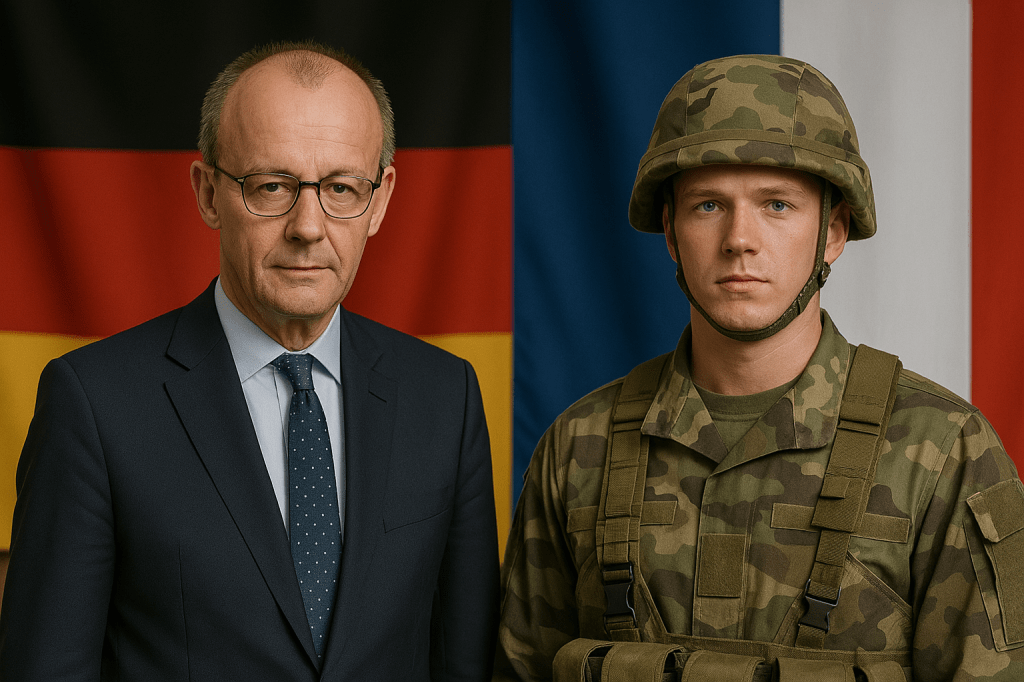
  • Germany’s Election and the Rise of an Independent European Defense

    Germany’s Election and the Rise of an Independent European Defense

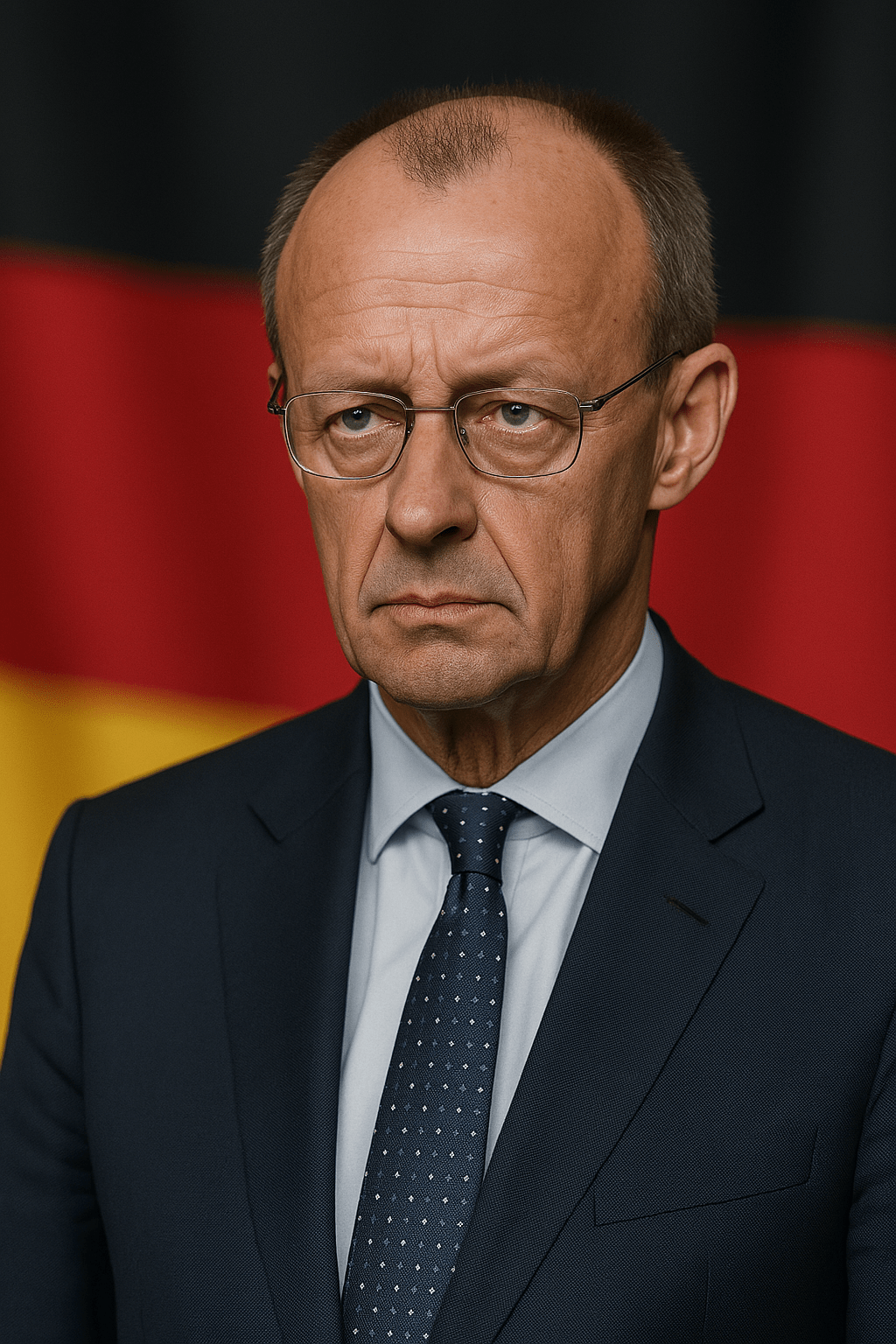
    The recent German elections have set the stage for a major geopolitical shift in Europe. With the victory of the Christian Democratic Union (CDU) and its Bavarian sister party, the Christian Social Union (CSU), under the leadership of Friedrich Merz, Germany is now on a path to a more assertive role in continental security. This election result, combined with the declining reliability of U.S. support for Ukraine, signals a turning point: the European Union may no longer depend on the United States for its defense and could even act against Washington’s wishes in shaping its security policies.

    A Shifting Political Landscape

    Germany’s CDU/CSU has consistently advocated for strong military assistance to Ukraine and has called for European nations to take more responsibility for their own defense. This comes at a time when the United States, under the Trump administration, has signaled a reduced commitment to supporting Ukraine, instead urging Europe to step up. Trump’s foreign policy approach suggests that NATO’s European members must no longer take U.S. protection for granted, a stance that has alarmed European leaders who have long relied on American military backing.

    With the rise of a more assertive German leadership, the CDU/CSU’s push for an independent European security framework aligns with the broader ambition of strategic autonomy. The party supports increasing military spending, developing European defense industries, and even exploring the possibility of European nuclear deterrence separate from U.S. oversight. If the European Union continues down this path, it may lead to the formation of a powerful military bloc capable of acting on its own interests, independent of U.S. influence.

    Europe’s Break from the U.S. and Its Strategic Implications

    The prospect of a self-sufficient Europe raises critical questions about the transatlantic alliance. If the European Union no longer relies on the United States for its defense, it could make decisions that directly contradict Washington’s foreign policy. This divergence has already begun to manifest in Germany’s and France’s discussions about strengthening European security institutions outside of NATO. Leaders such as Emmanuel Macron have repeatedly stated that Europe must prepare for a future where American military support is not guaranteed.

    Germany’s shift towards strategic independence, alongside the increasing political clout of the far-right Alternative for Germany (AfD), which has a more nationalistic stance, suggests that the EU’s security policy could soon prioritize European interests over NATO’s broader Western coalition. This is particularly relevant as tensions with Russia continue to shape the region’s defense priorities. The CDU/CSU remains committed to arming Ukraine and countering Russian aggression, but future European security decisions may be made without U.S. consultation or approval.

    The Prophetic Fulfillment of a European Superpower

    For students of Bible prophecy, this evolving geopolitical landscape is deeply significant. Scripture speaks of a final world-dominating empire that will rise in Europe just before the return of Jesus Christ. The Book of Revelation describes a powerful political and military entity led by ten kings who give their power to a central authority (Revelation 17:12-13). This entity, often referred to as the Beast power, will play a decisive role in end-time events.

    The groundwork for such a superstate is being laid before our eyes. As Europe consolidates its military power, distances itself from reliance on the United States, and takes a leading role in global affairs, we see the makings of a formidable political and economic powerhouse. This aligns with the biblical prophecy that foretells a revived Roman Empire—a united Europe that will exert dominance over world affairs.

    For decades, analysts have debated whether the European Union could emerge as a true superpower. With Germany at the helm of a strengthened European defense initiative, a future where Europe dictates its own security policies, economic strategies, and geopolitical alignments without U.S. involvement seems increasingly plausible. If this trajectory continues, we could see the formation of a military bloc that not only rivals the United States in influence but also challenges its authority on the world stage.

    What Lies Ahead?

    The recent German elections seem to mark the beginning of a Europe that is ready to stand on its own. With the United States pulling back from its traditional role as the primary security guarantor, the European Union is stepping up to fill the void. This shift will not only redefine Europe’s military and political future but also lay the foundation for the fulfillment of biblical prophecy.

    As history unfolds, we must remain vigilant and watchful. The rise of an independent European military force, capable of asserting its will globally, is a key signpost in the prophetic timeline. The world is rapidly moving toward the final chapters foretold in the Scriptures—an era that will ultimately culminate in the return of Jesus Christ, who will establish His righteous government over all nations. Until that time, we must continue to discern the signs and understand their significance in the grand plan of God. The geopolitical shifts we are witnessing today are not just political trends but pieces of a prophetic puzzle that is coming together. Germany’s election results and the growing autonomy of the European Union appears to mark the beginning of a new era—one in which Europe will assert itself as a dominant power, separate from and potentially opposed to the United States. As this European superpower takes shape, those who understand biblical prophecy will recognize that we are drawing closer to the climactic events leading to Christ’s return. Now more than ever, it is time to watch, pray, and prepare for what lies ahead.

  • The Divergent Paths of France and Germany on Ukraine: A Reflection of Prophecy

    The Divergent Paths of France and Germany on Ukraine: A Reflection of Prophecy

    The ongoing conflict between Ukraine and Russia has tested the unity of Europe in ways not seen since World War II. Among European nations, France and Germany—the two major powers of Western Europe—have demonstrated a complex relationship in their response to the war. While they agree on broad European security concerns, such as resisting Russian aggression and maintaining the stability of NATO, their approaches to specific policies reveal deep-seated differences. This divergence reflects more than just modern geopolitical strategies; it aligns with an ancient biblical prophecy found in the book of Daniel.

    France: The Bold Interventionist

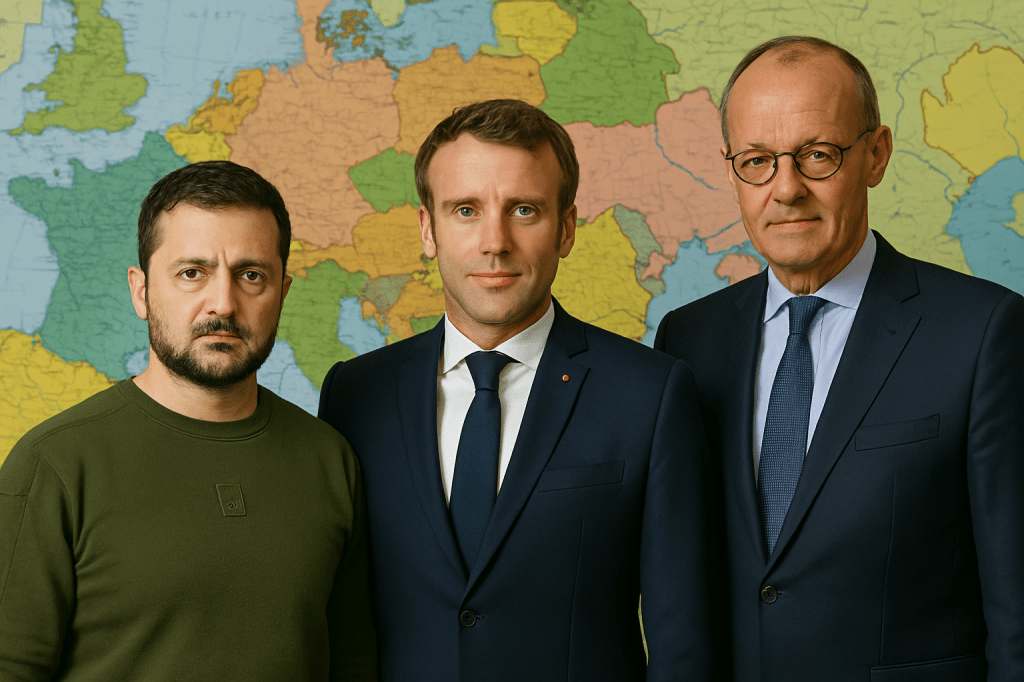
    French President Emmanuel Macron has taken an assertive stance regarding Ukraine, going so far as to suggest that sending Western troops to Ukraine should not be ruled out. His approach is rooted in a historical French doctrine of military interventionism, seen in France’s past engagements in Africa and the Middle East. Macron envisions a strong and independent Europe, capable of acting decisively in world affairs without over-reliance on the United States.

    This proactive stance is not just about Ukraine; it is part of a broader strategy to make France the leader of European defense. Macron has been a vocal proponent of European strategic autonomy—an idea that Europe must be able to defend itself without always depending on Washington. His calls for military action reflect this vision, even as many European allies remain hesitant.

    Germany: The Cautious Diplomat

    On the other side stands Germany, a nation historically bound by a deep-rooted policy of caution in military matters. Chancellor Olaf Scholz has maintained a more reserved position, rejecting the idea of sending troops and focusing instead on arms supplies and economic sanctions. This caution is partially due to Germany’s post-World War II pacifist tendencies and its historical economic cooperation with Russia, particularly in the energy sector.

    Even in broader geopolitical movements, Germany’s reaction to recent U.S.-Russia peace negotiations—where European leaders and Ukraine were excluded—highlights its preference for multilateral diplomacy. Germany opposed the idea of such discussions taking place without European participation, emphasizing the need for unity in decision-making. Scholz’s government has aligned with other European nations in resisting unilateral U.S. moves that could impact the region’s security.

    Feet of Iron and Clay: A Biblical Parallel

    The contrasting positions of France and Germany serve as a modern-day representation of the prophecy in Daniel 2, where King Nebuchadnezzar saw a giant statue in a dream. The feet of this statue were described as being partly of iron and partly of clay, signifying a kingdom that is both strong and brittle, united in broad purpose but divided in execution.

    This imagery aptly describes the state of European power today. France and Germany are both essential pillars of the European Union and NATO. They agree on the need for European security, a strong defense against Russian expansion, and the broader principles of maintaining global order. Yet, when it comes to the specifics—how to achieve these goals, whether through military force or diplomatic restraint—they are at odds.

    A Future Pattern for the Revived Roman Empire

    This divided yet unified nature of Europe is not temporary; it is a prophetic pattern that will persist in the future. The Bible speaks of a coming revived Roman Empire—an end-time European power structure that will hold dominion over global affairs for a brief period before Christ’s return. The prophecy in Daniel indicates that this empire, like the feet of the statue, will be both strong and fragile.

    The current disagreements between France and Germany foreshadow the way this future power will operate. While it will be unified in broad goals, such as economic dominance and geopolitical influence, it will struggle with internal divisions on the details of governance, military intervention, and alliances. This ambivalence will characterize the final phase of European dominance before God’s intervention in world affairs.

    The war in Ukraine has revealed both the unity and fractures within Europe. France and Germany stand together in principle but diverge sharply in execution. This duality is not merely a quirk of modern politics—it is part of a long-prophesied structure that will culminate in the last days. As world events continue to unfold, students of prophecy should watch Europe closely. The feet of iron and clay are taking shape, and the stage is being set for the final chapter of human history before the Kingdom of God is established. As believers, we must remain vigilant, understanding that what we see today is part of God’s divine plan, moving toward the ultimate fulfillment of His Kingdom.

  • The U.S. Bypasses Ukraine: A Turning Point for Europe’s Military Independence?

    The U.S. Bypasses Ukraine: A Turning Point for Europe’s Military Independence?

    The recent decision by the Trump administration to engage in direct negotiations with Russia over the ongoing war in Ukraine—without Ukraine or its European allies at the table—has sent shockwaves across the European Union (EU). This move, seen as an unprecedented sidelining of key stakeholders, is already prompting European nations to reconsider their security dependencies and could accelerate the formation of an independent European military force. In doing so, this shift could also play into the fulfillment of biblical prophecy regarding the emergence of a dominant European superpower just before the return of Christ.

    The U.S. Sidelines Ukraine and Europe

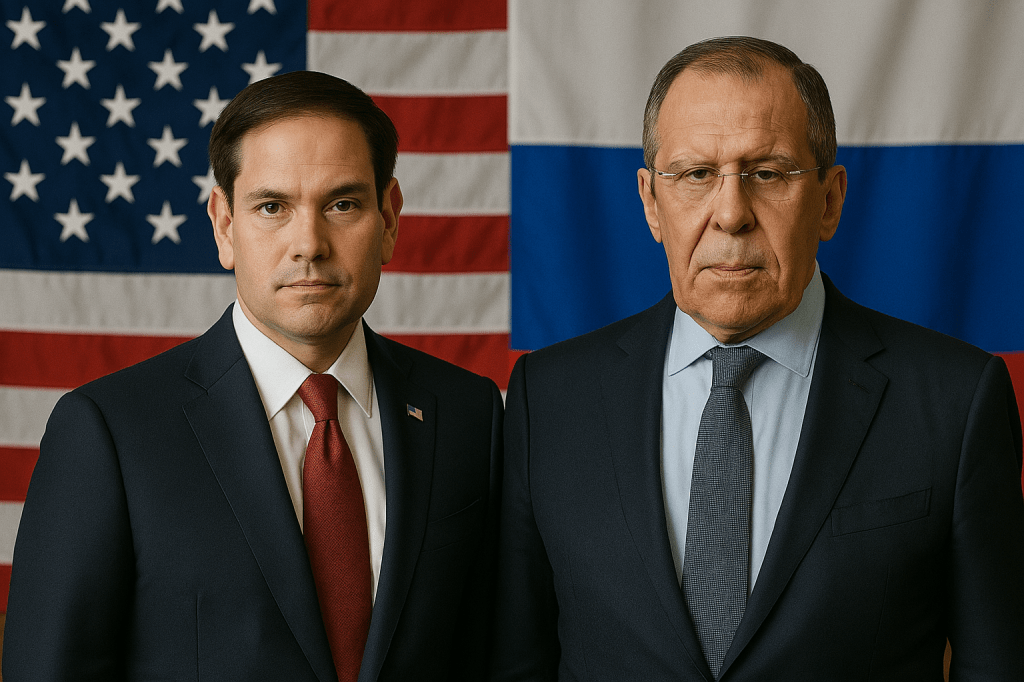
    On February 18, 2025, U.S. Secretary of State Marco Rubio and Russian Foreign Minister Sergey Lavrov met in Riyadh, Saudi Arabia, to discuss a framework for peace between Russia and Ukraine. What raised eyebrows worldwide was not just the meeting itself, but the glaring absence of Ukrainian and European representatives. This unilateral approach by the U.S. has drawn severe criticism, particularly from European leaders who see it as a betrayal of both Ukraine and the transatlantic alliance.

    President Trump’s reasoning for bypassing Ukraine appears to be rooted in three key factors:

    1. Expedited Resolution: The administration believes that direct U.S.-Russia talks might lead to a quicker settlement, without the complications of Ukrainian leadership’s insistence on full territorial restoration.
    2. Perception of Ukrainian Leadership: Trump has suggested that Ukraine mishandled previous opportunities to negotiate peace, implying that their continued presence in talks may be counterproductive.
    3. Strategic Realignment: U.S. officials have signaled a shift in priorities, seeing a return to Ukraine’s pre-2014 borders as “unrealistic” and potentially prolonging the war unnecessarily.

    This shift has been met with alarm in Europe, where leaders argue that such negotiations—if they exclude Ukraine—undermine the country’s sovereignty and the security of the entire continent.

    Europe’s Response: A Push for Military Autonomy

    For decades, Europe has relied heavily on the United States, through NATO, to provide security against Russian aggression. However, this latest move by Washington has reinforced a growing realization: Europe cannot afford to remain dependent on U.S. protection. In response, European nations are taking significant steps toward military independence.

    1. Formation of the ‘Weimar+’ Group: France, Germany, Poland, the United Kingdom, Spain, and Italy have formed a coalition to ensure that European interests are represented in global security matters. This new alliance marks a step toward a more cohesive European military strategy.
    2. Increased Defense Spending: Many European nations, including Germany and France, are ramping up their military budgets, recognizing that they must be prepared for future conflicts without relying on Washington.
    3. Calls for a Unified EU Defense Force: French President Emmanuel Macron has called for an emergency summit to discuss forming a European military structure that is independent of U.S. oversight.

    This growing push for European military self-sufficiency aligns with what some Bible students have long anticipated—a European superpower emerging as a dominant force in world affairs.

    Biblical Prophecy and the Rise of a European Superpower

    The Bible speaks of a powerful end-time empire arising in Europe. In Daniel 2 and 7, as well as Revelation 13 and 17, we see descriptions of a final world power—often understood to be a revived Roman Empire—playing a dominant role before Christ’s return. This power is characterized by strong political, military, and economic influence.

    For decades, many analysts have speculated about how such a European entity could take shape, given the continent’s reliance on the U.S. for defense. However, recent developments suggest that the stage is being set for this prophecy to be fulfilled. If the EU becomes militarily independent, it could emerge as a dominant force in global affairs—one that no longer depends on the U.S. but instead forges its own path in world politics.

    A New Global Order?

    The sidelining of Ukraine and the EU by the Trump administration may prove to be a historic turning point. As European nations realize that they can no longer count on the U.S. for security, they are taking steps to ensure their own military future. This could lead to the formation of a powerful European bloc that asserts itself on the world stage.

    For Bible prophecy watchers, these developments are highly significant. They point to the increasing consolidation of power in Europe, paving the way for a superpower that will play a crucial role in end-time events. As we watch these shifts in geopolitics, it is crucial to remain vigilant and understand how they fit into the broader prophetic picture leading to the return of Jesus Christ.

    The world is changing rapidly, and the U.S.’s new approach to foreign policy is forcing Europe to stand on its own feet. While this may bring new challenges, it also aligns with the prophetic expectation of a European superpower rising to prominence before the Second Coming. As these events unfold, we should be paying close attention to how the balance of power is shifting and what it means for the future of world affairs—and, more importantly, for God’s ultimate plan for humanity.

  • The Rise of a Eurocentric Europe: America’s Protectionism and the Path to Biblical Prophecy

    The Rise of a Eurocentric Europe: America’s Protectionism and the Path to Biblical Prophecy

    Under the new Trump administration, the United States appears to be steadily shifting toward economic protectionism, implementing high tariffs, renegotiating trade agreements, and focusing inward under the banner of “America First.” While this policy seeks to safeguard domestic jobs and industries, its ripple effects extend far beyond America’s borders—particularly in Europe. As America prioritizes its own economic self-sufficiency, European Union (EU) member nations may increasingly turn inward as well, electing leaders who champion a Eurocentric vision over traditional transatlantic ties.

    A New Geopolitical Reality: Europe’s Shift Away from America

    With the U.S. raising tariffs, limiting global trade, and being highly selective in its military engagement abroad, European leaders are being forced to rethink their economic and security strategies. Historically, Europe has leaned heavily on American military power, particularly through NATO, and relied on access to U.S. markets. However, if America continues down a path of economic isolationism, the EU will have little choice but to strengthen its own trade networks, expand internal industrial policies, and reinforce its collective military capabilities.

    Several factors are contributing to this shift:

    1. Economic Self-Sufficiency: EU nations will seek to reduce dependence on American trade by increasing economic ties within Europe and fostering closer relationships with alternative partners like China, India, and Latin America.
    2. Political Realignment: The European electorate may favor leaders who advocate for a more self-reliant and independent Europe, reducing the influence of American foreign policy.
    3. Strategic Autonomy: With growing doubts over America’s long-term commitment to NATO, some European leaders—especially in Germany and France—are calling for a European-led defense initiative.

    This trajectory is not just about trade; it could ultimately lead to a Europe that is militarily and politically self-sufficient, capable of standing on its own without U.S. backing.

    Prophetic Implications: The Revival of a Unified European Power

    For those who study Bible prophecy, these developments are deeply significant. The Scriptures foretell the emergence of a powerful, unified European entity in the last days—a resurrection of the Holy Roman Empire, a superstate led by a strongman figure who will wield both political and military might.

    Daniel 2, Revelation 13 and 17 describe this coming empire as the final resurrection of an ancient system that has risen and fallen throughout history. It will be a union of ten kings (nations or political entities) who will give their power to a central ruler—a leader who will be guided by the moral and spiritual authority of the Roman Catholic Church.

    This prophecy aligns with the trajectory we see unfolding today:

    • A militarily independent Europe – With the U.S. stepping back from global leadership, the EU may accelerate its military integration, paving the way for a central command structure.
    • A politically dominant leader – As EU nations face crises, they may unite under a single, decisive leader who promises stability and strength.
    • The influence of Catholic Christianity – Historically, the Holy Roman Empire functioned with the backing of the Roman Catholic Church, and prophecy indicates that this will happen again in the final days.

     A Future Dominated by a New European Superpower

    With the U.S. retreating from global engagement and the EU becoming increasingly self-reliant, the foundation is being laid for the final configuration of Europe’s prophesied role in world affairs.

    • If the EU consolidates military power, it will no longer need NATO or American protection.
    • If the EU integrates its economy further, it will lessen its dependence on the U.S. dollar and globalized trade with America.
    • If a dominant leader arises, fulfilling the prophetic model, he will have the backing of a powerful religious institution that shapes European moral and social policies.

    The world is witnessing a major realignment of global power structures, and Bible prophecy suggests that this is leading toward the final rise of a dominant European empire.

    What Comes Next?

    America’s growing protectionism is setting in motion a global shift that will not be easily reversed. As the EU continues down the path of economic and military independence, we should watch closely for the emergence of a strong leader who will unite Europe in ways we have not seen before. The coming years may well see the fulfillment of prophecies written thousands of years ago, pointing to the last days before the return of Jesus Christ.

    As history unfolds before our eyes, it is more crucial than ever to understand these trends in light of God’s Word. The Bible warns of a coming global superpower—and the events of today suggest that the groundwork is being laid for that reality.