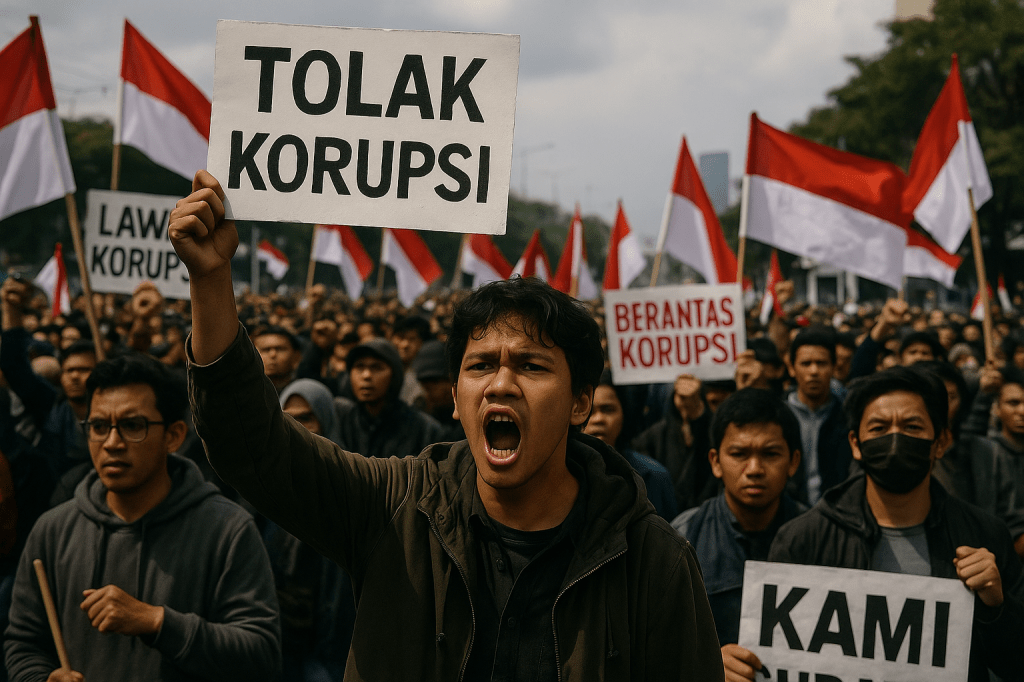
Corruption is more than a scandal—it is a global crisis. From Asia to the West, it is draining economies, crippling politics, and fueling public anger. Citizens are demanding answers, but efforts to curb graft often fall short.
In the Philippines, outrage over billions lost in flood-control projects has led to calls for an independent probe. President Ferdinand Marcos Jr. has promised action, yet questions linger over whether lawmakers themselves will be scrutinized.
In Indonesia, protests have engulfed more than 30 provinces after revelations of lavish perks for lawmakers while ordinary citizens endure austerity. A young delivery driver’s death during demonstrations only deepened the fury. The government has rolled back some benefits but simultaneously unleashed mass arrests and deployed tens of thousands of troops.
In Mongolia, youth-led rallies over a luxury scandal forced the prime minister to resign. In Thailand, Prime Minister Paetongtarn Shinawatra faces suspension amid an anti-graft probe. Even in the United States, President Donald Trump faces allegations his family enriched itself through cryptocurrency ventures and overseas real estate deals tied to his political stature.
The toll is immense. The IMF estimates over $1 trillion in bribes are paid each year, with trillions more lost to embezzlement. Money meant for schools, hospitals, and roads vanishes into private pockets. Economies stall, investors hesitate, and inequality grows. Politically, corruption skews elections, weakens the rule of law, and entrenches ruling elites. It sparks unrest, as seen in Asia’s street protests, and opens the door for populist strongmen who often build new corruption networks of their own.
Governments are not standing still. Independent commissions, anti-graft courts, and international watchdogs have all been established. Technology, from blockchain to open procurement systems, is increasingly used to reduce graft. But progress is slow. Transparency International’s 2024 index shows two-thirds of nations still scoring below 50/100 in integrity.
Why? Because corruption is not only a systems problem—it is a moral problem. At its heart lies greed, pride, and disregard for God’s law. Leaders who enrich themselves break the command, “You shall not steal.” When justice is twisted, truth is trampled.
Without spiritual renewal and adherence to God’s commandments, reforms alone will not succeed. Nations may pass laws, but unless hearts change, corruption will simply find new ways to thrive.
The Bible points to a different future. When Jesus Christ returns, He will establish a government free of graft, ruling with perfect justice and truth. As Isaiah prophesied, Christ will “judge the poor with righteousness, and decide with equity for the meek of the earth” (Isaiah 11:4). Under His reign, nations will finally be able to prosper, free from the drain of corruption, and humanity will experience the fairness and peace it has long desired.
That is the true solution to the world’s crisis: not just better systems, but a coming Kingdom where corruption has no place.
