Category: Philippines

  • America’s Reliability Crisis: NATO and Global Security Shifts

    America’s Reliability Crisis: NATO and Global Security Shifts

    For decades, the United States has been the linchpin of global security, the backbone of NATO, the chief protector of the Pacific, and the ultimate deterrent against authoritarian expansionism. However, recent developments suggest that America’s role as the world’s guardian is eroding—an erosion driven not just by political decisions, but perhaps by a deeper spiritual message that the nation must heed.

    A Pattern of Unreliability in U.S. Commitments

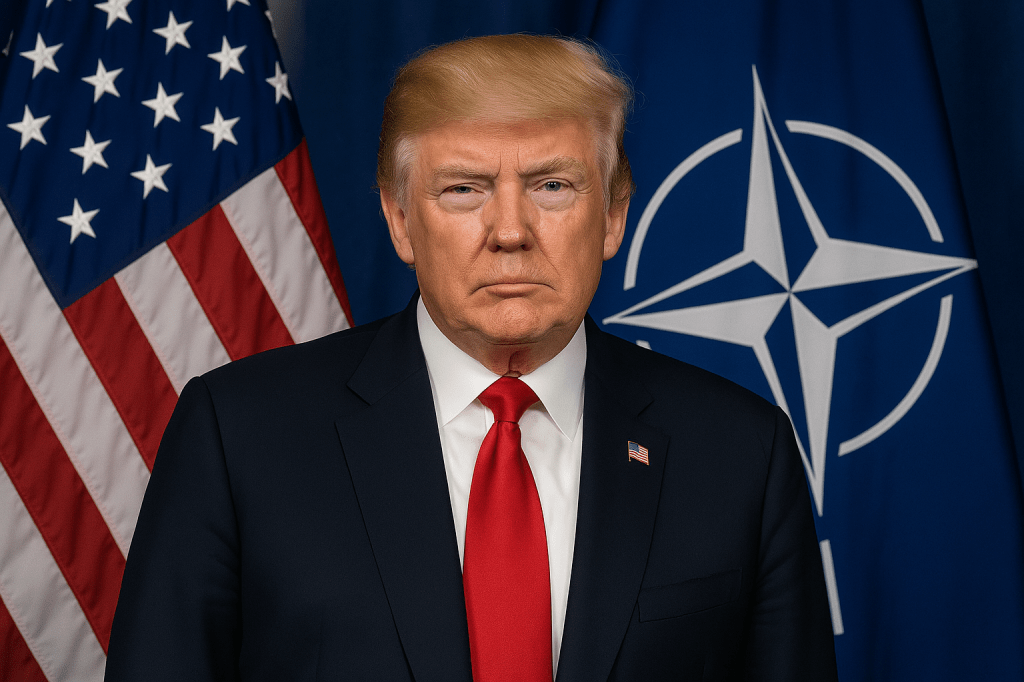
    The Trump administration’s handling of intelligence sharing with Ukraine has sent shockwaves through allied nations. The sudden suspension of intelligence support to Ukraine, followed by its conditional resumption, has raised concerns about America’s commitment to its allies. While Ukraine’s struggle against Russian aggression continues, the erratic nature of U.S. policy has left NATO nations questioning whether they could face a similar fate.

    European nations, sensing the volatility of U.S. policy, are now exploring alternative security arrangements. The European Union is considering expanding its military intelligence capabilities and reducing its reliance on U.S. intelligence. Countries such as France and Germany are leading discussions on an independent European military force—an idea that was once dismissed as politically infeasible but is now gaining momentum.

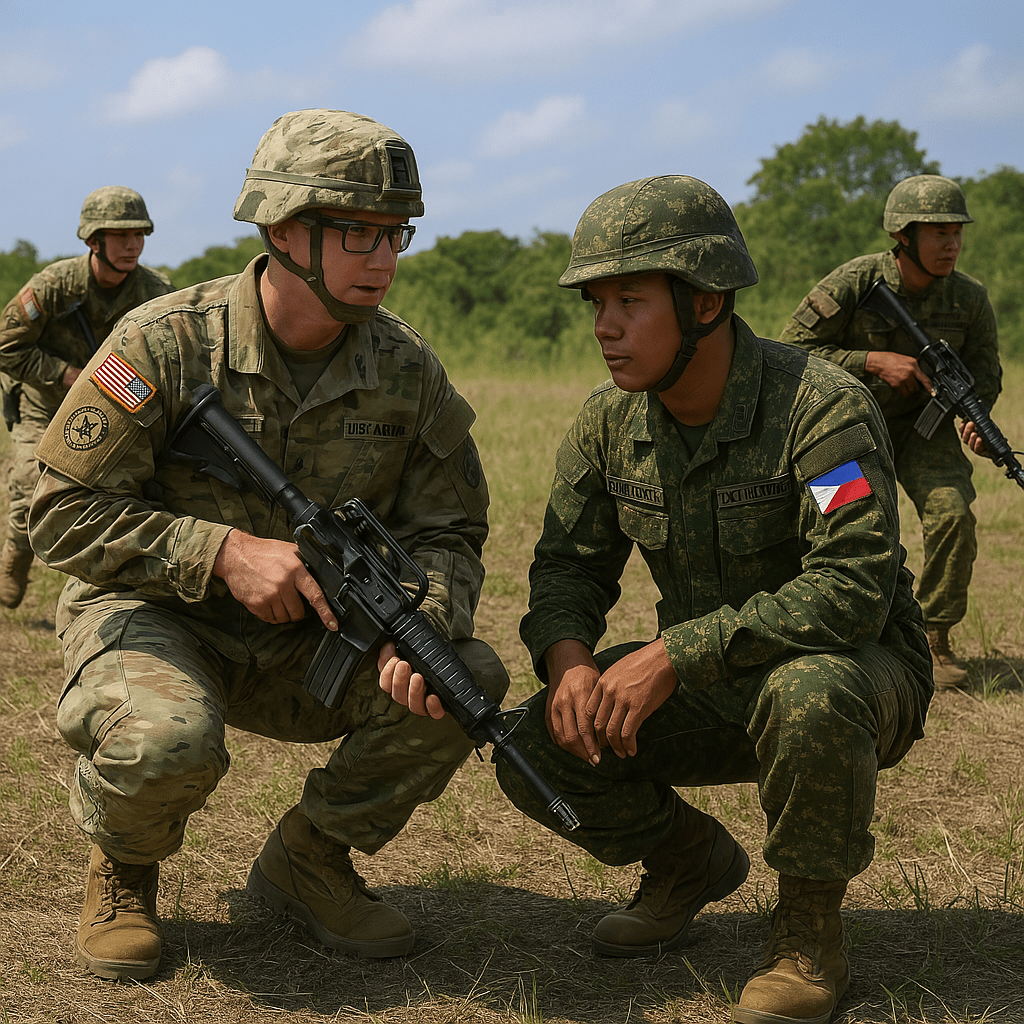
    In the Pacific, America’s key allies—South Korea, Taiwan, and the Philippines—are also recalibrating their defense strategies. South Korea is bolstering regional partnerships, particularly with Japan, in anticipation of a less reliable American presence. Taiwan is actively seeking multilateral security cooperation beyond the U.S., participating in joint military exercises with the Philippines and Japan. Meanwhile, the Philippines is modernizing its military and diversifying its defense partnerships, engaging countries like Australia and Canada in military agreements.

    The Breakdown of America’s Global Leadership

    This growing shift away from American reliance signals the waning of U.S. global leadership. Allies who once placed unwavering trust in Washington now see the need to hedge their bets. For decades, the U.S. thrived on the strength of its alliances, but as these alliances weaken, so too does America’s influence in global affairs.

    Historically, great empires did not fall solely due to external threats but because of internal decay. America’s reluctance or inability to maintain stable commitments to its allies mirrors the decline of past world powers. The erosion of trust in U.S. leadership is not just a political problem—it is symptomatic of deeper issues plaguing the nation.

    A Spiritual Message to America

    From a biblical perspective, national greatness is not simply a product of military strength or economic prowess—it is tied to moral and spiritual standing. The United States has long claimed to be a nation under God, but its increasing political instability, social divisions, and unreliable leadership may be signs that it is drifting further from divine favor.

    The Bible warns that nations that forget God will face decline. The book of Proverbs states,

    “Righteousness exalts a nation, but sin is a reproach to any people” (Proverbs 14:34).

    When a nation abandons righteousness, its foundations begin to crumble, and its power wanes.

    Could it be that God is allowing America’s global dominance to wane as a wake-up call? The moral compass of the nation has shifted dramatically, embracing ideologies and practices that directly contradict biblical values. At the same time, political turmoil and international distrust are rising. The weakening of U.S. leadership should not just be seen as a strategic challenge but also as a spiritual warning.

    The Path to Restoration

    If America wishes to maintain its standing as a world power, it must look beyond military alliances and strategic policies. The key to lasting strength is not just in political or economic reforms but in a national return to godly principles.

    Leaders must recognize that power without righteousness is fleeting. The nation must prioritize integrity, justice, and moral leadership if it hopes to remain a stabilizing force in the world. This requires not only changes in governance but also a revival of spiritual commitment among its people.

    America’s allies are preparing for a world where the U.S. is no longer the primary protector. If this trend continues, the United States will find itself increasingly isolated, no longer at the helm of world affairs. This should be a sobering reality for American leaders, but also an opportunity—a moment to turn back to God, to seek His guidance, and to reestablish itself as a force for good in the world.

  • The Arrest of Former Philippine President Rodrigo Duterte and the Hope of Perfect Justice

    The Arrest of Former Philippine President Rodrigo Duterte and the Hope of Perfect Justice

    The recent arrest of former Philippine President Rodrigo Duterte under a warrant issued by the International Criminal Court (ICC) marks a historic moment in global justice. The case has sparked widespread debate over accountability, sovereignty, and the reach of international law in prosecuting crimes against humanity. Whether Duterte will ultimately face trial, be convicted, or be acquitted remains uncertain, but one thing is undeniable: during his presidency, thousands of Filipinos were killed without due process.

    Why Was Duterte Arrested?

    Duterte’s arrest stems from allegations of crimes against humanity related to his administration’s infamous “war on drugs” (2016–2022). Under this campaign, thousands of suspected drug users and pushers were killed, often in what human rights organizations and independent investigations describe as extrajudicial executions. While Duterte and his administration have long defended the campaign as necessary for national security, critics argue that it led to rampant human rights violations.

    The ICC’s case against Duterte is built on multiple factors:

    • Command Responsibility: Under the Rome Statute, a leader can be held liable if they knew or should have known that subordinates were committing crimes and failed to prevent or punish them.
    • Incitement to Violence: Duterte’s numerous public speeches encouraging law enforcers to kill drug offenders are being cited as evidence of direct incitement to violence.
    • Patterns of Systematic Killings: Reports from the United Nations, Amnesty International, and Human Rights Watch indicate that the killings followed a structured pattern, suggesting a state-sanctioned policy rather than isolated incidents.

    The Legal Process Following Duterte’s Arrest

    Once arrested, Duterte will go through a series of legal proceedings before the ICC:

    1. Transfer to The Hague – If the Philippine government cooperates, Duterte will be extradited to The Hague, Netherlands, where the ICC is based.
    2. First Appearance Before the Pre-Trial Chamber – He will be informed of the charges and given the opportunity to respond.
    3. Confirmation of Charges – The ICC prosecution will present its evidence, and judges will decide if there’s enough basis to proceed to a full trial.
    4. Trial Phase – The trial will feature witness testimonies, forensic evidence, and legal arguments from both the prosecution and defense.
    5. Judgment and Sentencing – If convicted, Duterte could face up to life imprisonment, though the ICC does not impose the death penalty.

    Will Duterte Be Convicted? Examining the ICC’s Track Record

    The ICC’s record on convicting high-profile leaders presents a mixed picture, with some cases leading to harsh sentences while others have resulted in acquittals. Among the notable convictions, Charles Taylor of Liberia was sentenced to 50 years for war crimes, and Bosco Ntaganda of the Democratic Republic of Congo received a 30-year sentence for similar crimes. These cases show that the ICC has successfully prosecuted individuals responsible for large-scale violence.

    However, there have also been significant acquittals. Jean-Pierre Bemba, also from the Democratic Republic of Congo, had his conviction overturned due to insufficient evidence, while Laurent Gbagbo of Ivory Coast was acquitted after the prosecution failed to establish strong enough arguments.

    For Duterte, the chances of conviction largely hinge on the strength of witness testimonies and evidence linking him directly to the extrajudicial killings that took place under his administration. If former police officers or government insiders come forward and testify against him, it would greatly strengthen the prosecution’s case. Additionally, if the ICC can prove that Duterte had direct knowledge and control over the anti-drug operations that led to these deaths, it would increase the likelihood of a conviction. Cooperation from the Philippine government in the trial process would also play a crucial role.

    On the other hand, if key witnesses recant their statements or refuse to testify, it could significantly weaken the case. Duterte’s legal team is expected to argue that his speeches were merely political rhetoric rather than direct orders for extrajudicial killings. If the Philippine government obstructs the legal process or refuses to extradite him, the case could face substantial delays or even collapse altogether.

    Given these factors, the probability of Duterte being convicted remains moderate, estimated between 40-60%. However, if his political allies manage to obstruct legal proceedings effectively, there remains a strong possibility that he may avoid trial entirely.

    Beyond Duterte’s Fate: The Reality of the Drug War Victims

    Regardless of whether Duterte faces trial, gets convicted, or is acquitted, the stark reality remains: thousands of people were killed without due process. Many of them were poor Filipinos, unable to defend themselves in court, denied the presumption of innocence. Families were torn apart, and many still seek justice for their loved ones. No legal outcome can bring back those who perished.

    The Hope of True Justice in the Millennium

    While human courts struggle to deliver justice, the Bible speaks of a future government where perfect justice will reign. Under the rule of Jesus Christ during the Millennium, there will be no wrongful executions, no corruption, and no impunity. Isaiah 9:7 describes this coming era:

    “Of the increase of His government and peace there shall be no end, upon the throne of David, and upon His kingdom, to order it, and to establish it with judgment and with justice from henceforth even forever.”

    Unlike in today’s world, where justice is flawed and selective, the Kingdom of God will establish true righteousness. As Zechariah 14:9 states:

    “And the Lord shall be king over all the earth: in that day shall there be one Lord, and His name one.”

    No innocent person will be unjustly killed, and every crime will be judged fairly.

    Furthermore, those who perished under Duterte’s drug war—many of whom were denied the chance to defend themselves—will not remain forgotten. The Bible promises a resurrection, where they will live again and finally experience true justice under a perfect government. As Revelation 20:12 states, the dead will be raised and judged righteously according to their deeds. In contrast to the flawed justice systems of today, God’s government will provide fairness, mercy, and the opportunity for redemption.

    As we watch the unfolding events surrounding Duterte’s arrest and potential trial, it will help for us remember that ultimate justice belongs to God’s Kingdom, and that is the justice all mankind long for.

  • The West Philippine Sea Conflict: A Biblical Perspective on War, Prophecy, and the Coming Kingdom of God

    The West Philippine Sea Conflict: A Biblical Perspective on War, Prophecy, and the Coming Kingdom of God

    The conflict in the West Philippine Sea continues to escalate as the Philippines strengthens its defense posture in response to China’s growing assertiveness. One of the latest developments is the acquisition of the Typhon missile system from the United States, a powerful deterrent against further incursions into Philippine waters. This move, however, has drawn criticism from China, which claims that the Philippines is escalating tensions. In response, President Ferdinand Marcos Jr. has stated that the missiles will only remain as long as China continues its illegal activities—harassing Filipino fishermen, using military force to assert its claims, and disregarding international law. 

    But beyond geopolitics, the West Philippine Sea dispute is part of a larger pattern: mankind’s long history of war and conflict, rooted in disobedience to God. This ongoing struggle, along with the increasing militarization of the world, aligns with Bible prophecy, which warns of even greater conflicts ahead—culminating in global warfare before Christ’s return. 

    The Typhon Missile System: A Game-Changer in Philippine Defense 

    The Typhon missile system, also known as the Mid-Range Capability (MRC) system, is a mobile land-based launcher capable of firing Tomahawk cruise missiles and SM-6 missiles. These missiles provide: 

    • Long-range precision strikes – The Tomahawk can hit targets1,500+ km away, while the SM6 can engage ships and aircraft at ranges of 370 km. 
    • Antiship and antiair capabilities – This allows the Philippines to counter both naval and aerial threats. 
    • High mobility – The system can be repositioned, making it difficult for adversaries to target. 
    • Strategic deterrence – China will now have to factor in the risk of a retaliatory strike if it engages in aggressive actions against the Philippines. 

    Why the Typhon System Matters in the West Philippine Sea 

    For years, China has harassed Filipino fishermen, ignored the 2016 arbitral ruling that invalidated its sweeping claims, and used military force against Philippine coast guard vessels. The Typhon system gives the Philippines a credible deterrent, making it riskier for China to continue its coercive behavior. 

    President Marcos has made it clear: 

    If China ceases its aggressive actions, he is willing to return the missiles to the U.S. But as long as China refuses to respect Philippine sovereignty, the system remains in place, signaling the country’s commitment to self-defense. 

    However, this development also has broader geopolitical implications. It strengthens the U.S.-Philippines alliance, signaling that Manila is willing to stand firm against Beijing. But it also increases the risk of the Philippines being drawn into a larger regional conflict, as tensions between China and Western-aligned nations continue to rise. 

    From Cain to the West Philippine Sea: The Legacy of Human Conflict 

    The Bible reveals that war has been part of human history since the earliest days of civilization. Cain’s murder of Abel (Genesis 4:8) was driven by pride, jealousy, and disobedience—traits that have fueled conflicts throughout history. Nations, much like individuals, fight over power, resources, and dominance, and the West Philippine Sea dispute is no exception. 

    Jesus Christ warned that the world would be filled with wars before His return: 

    “And you will hear of wars and rumors of wars… For nation will rise against nation, and kingdom against kingdom” (Matthew 24:6-7).

    The current geopolitical landscape, including conflicts in Eastern Europe, the Middle East, and Asia, reflects this prophecy. As tensions grow, the world inches closer to a final, devastating war that will threaten human survival itself. 

    Revelation 9: The Prophesied Asian Horde and the Coming Global War 

    One of the most chilling prophecies about future conflicts is found in Revelation 9:13-19, where a massive army of 200 million soldiers from the East launches an attack on a revived Roman Empire (a future European superpower). This event will be part of the Great Tribulation, a time of unprecedented war and destruction. 

    Given the Philippines’ Western cultural and religious ties, it is likely that the country will be caught in the middle of this massive war. The Philippines maybe overrun by eastern forces as they advance toward Europe, leading to widespread devastation. The Bible warns that one-third of humanity will perish in this global conflict, making it the deadliest war in history. 

    The Brink of Human Extinction—And Christ’s Return 

    Jesus Christ prophesied that if these wars were allowed to continue unchecked, “no flesh would be saved” (Matthew 24:22). Today, with nuclear weapons, biological warfare, and advanced missile systems, human civilization has the capability to wipe itself out. 

    However, just as the world stands on the edge of destruction, Jesus Christ will return to intervene. He will destroy the violent nations, put an end to human war, and establish His righteous government on earth. 

    The Coming Kingdom of God: A Thousand Years of Peace 

    When Christ establishes His Kingdom, the world will finally experience the peace that has eluded it for thousands of years. The prophecy in Micah 4:3-4 will be fulfilled: 

    “They shall beat their swords into plowshares, and their spears into pruning hooks; 

    Nation shall not lift up sword against nation, neither shall they learn war anymore.”

    • No more territorial disputes. 
    • No more military alliances and arms races. 
    • No more wars over power and resources. 

    Instead, all nations—including the Philippines and China—will be ruled under God’s perfect law, where justice and fairness will prevail. 

    Where Should We Place Our Trust? 

    The West Philippine Sea dispute, the acquisition of advanced weapons, and the growing tensions between nations all point to a world spiraling toward greater conflict. While nations invest in weapons and military alliances for protection, these solutions are only temporary and fragile. 

    Jesus Christ tells us where our focus should be: “Seek first the Kingdom of God and His righteousness” (Matthew 6:33). 

    No human government, no military alliance, and no missile system can bring true, lasting peace. Only when Christ returns will wars cease, and mankind will finally live in harmony. Until then, we must prepare not just for physical conflicts, but for the spiritual battle ahead—choosing to align ourselves with God’s coming Kingdom rather than the failing kingdoms of this world.