Category: Russia

  • Europe’s Anxiety Over the East—and What Prophecy Says

    Europe’s Anxiety Over the East—and What Prophecy Says

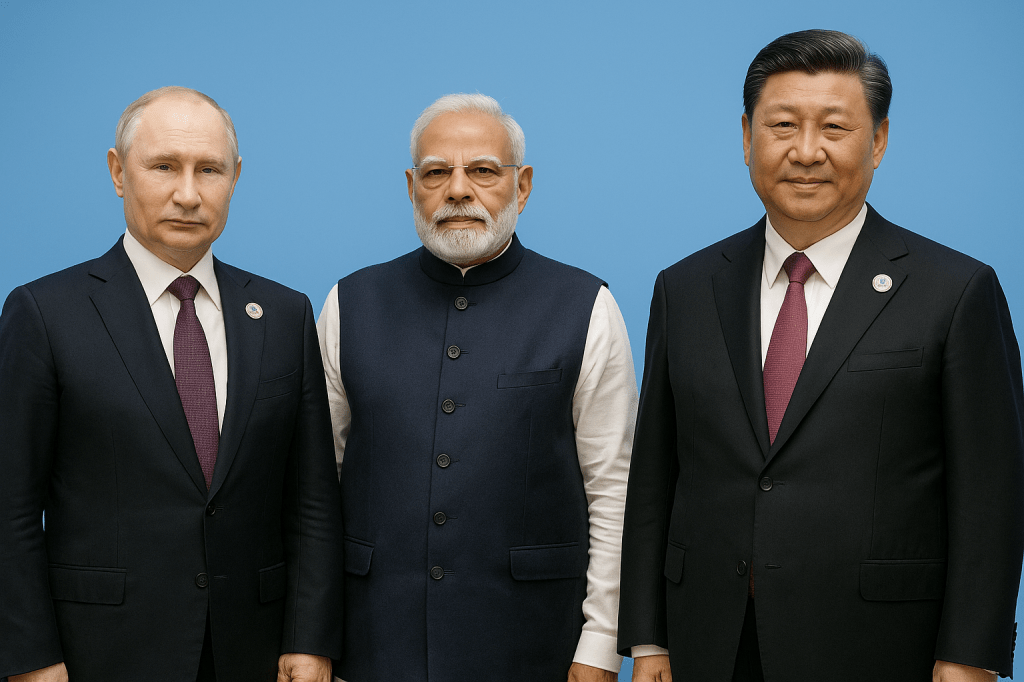
    The European Union is sounding alarms over an alignment taking shape in the East. At recent summits—such as the Shanghai Cooperation Organisation (SCO) meeting in Tianjin and the Beijing summit hosted by President Xi—China, Russia, and India signaled a willingness to deepen cooperation—militarily, economically, and diplomatically. For Brussels, this looks like a rival pole to the West’s influence.

    Brussels Speaks Out

    Commission President Ursula von der Leyen has warned at a summit in Beijing that EU–China ties have reached an “inflection point” because of the growing cooperation between China, India, and Russia (Financial Times, July 2025). High Representative Kaja Kallas has accused Beijing of enabling Russia’s war machine (MERICS report, 2025). Reports highlight India’s purchases of Russian oil and abstentions on UN votes as proof that New Delhi is hedging its bets.

    In short, Europe sees a triangle of Moscow, Beijing, and Delhi chipping away at Western unity—especially as sanctions on Russia leak eastward.

    What the EU Is Doing

    Brussels isn’t sitting idle. It has:

    • De-risked supply chains—passing laws to reduce dependency on Chinese critical materials.
    • Launched trade defenses—raising tariffs on Chinese electric vehicles, probing subsidies in wind turbines, and barring Chinese medical-device suppliers.
    • Strengthened sanctions enforcement—targeting shadow fleets and middlemen moving Russian energy.
    • Rearmed its defense base—through the €800-billion “ReArm Europe” program.
    • Courted India—via trade talks, tech councils, and alternative trade corridors.

    The strategy: blunt the impact of a tightening Moscow–Beijing–Delhi alignment while rebuilding Europe’s own economic and military muscle.

    Prophetic Perspective

    Students of Bible prophecy see in these moves echoes of an ancient forecast. Scripture foretells a revived Roman system in Europe—many see its early form in today’s EU—and an eastern coalition that will one day rise to confront it.

    Revelation 9:13-19 speaks of a war killing a third of humankind through an army “two hundred million” strong. While the Bible does not name today’s nations, the picture of eastern powers uniting and clashing with a European bloc foreshadows the very trends now unfolding.

    God will allow this to happen to call mankind to repentance, as He makes us realize that human governments apart from Him and His way of life cannot bring peace.  Shortly after this, after more severe events occur, Jesus Christ will return to establish God’s kingdom, ruling all nations under righteous rule. (Isaiah 2:1-4)

  • The Alaska Summit: Is a ‘Reverse Nixon’ Strategy Realistic?

    The Alaska Summit: Is a ‘Reverse Nixon’ Strategy Realistic?

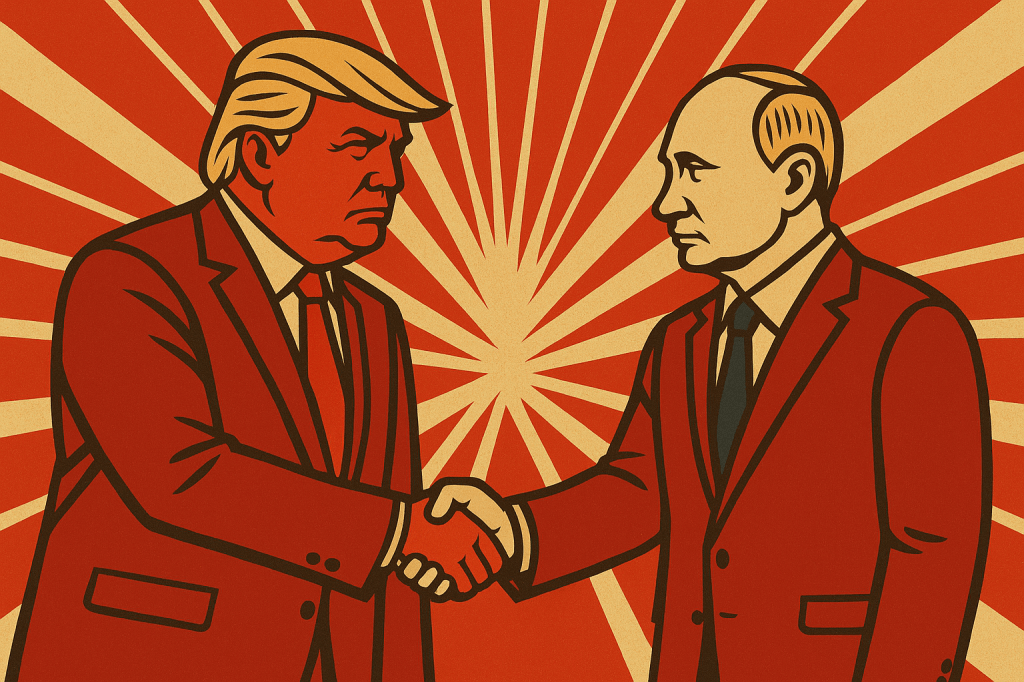
    The highly anticipated Trump–Putin summit in Alaska has now concluded, and its outcome was largely as expected. There was no breakthrough peace deal, no dramatic ceasefire in Ukraine, and certainly no resolution of the war that has scarred Europe for over three years. Instead, as we anticipated, what emerged was a meeting heavy on appearances but light on substance—one that gave Russia space to make demands and allowed President Trump to present the encounter as a step toward peace.

    Yet one surprising narrative surfaced in post-summit commentary: that Russia could somehow be drawn into serving as a counterweight to China. At first glance, this might sound like a clever geopolitical gambit. In reality, if it is really part of Trump’s planned outcome, it is little more than wishful thinking.

    The “Reverse Nixon” Strategy—Revisited

    Some analysts have framed the Trump administration’s approach as a kind of “reverse Nixon.” Just as President Richard Nixon reached out to China in the 1970s to isolate the Soviet Union, so too might Trump try to cultivate Russia to isolate China. Post-summit analysis suggested that Alaska revealed “Washington’s intent to weaken the Sino-Russian partnership, positioning Russia as a potential counterbalance to China” (“Trump–Putin Summit in Alaska: Geopolitical Implications and Strategic Narratives”, Special Eurasia).

    However, it is important to stress that none of the major news outlets covering the Alaska summit—Reuters, AP, The Guardian, The Washington Post, or Wall Street Journal—quoted any U.S. official explicitly declaring this as policy. The focus of official statements remained firmly on Ukraine, ceasefire diplomacy, and territorial questions.

    This means that the “counterweight to China” idea, while attractive to some in Washington and appealing to commentators, remains speculative at best.

    Why Russia Will Not Truly Counter China

    Several factors make the notion of Russia acting as a stable American ally deeply unrealistic:

    1. Deep Cooperation with China (and North Korea):

    China has provided Russia with essential economic lifelines and diplomatic support throughout its war in Ukraine. North Korea has supplied artillery and munitions to Russia, underpinning its battlefield operations. These actions go beyond mere solidarity—they demonstrate an active and ongoing alliance. Moscow is unlikely to betray the countries that enable its war effort.

    2. Entrenched Distrust of the West:

    Under Putin, Russia has shaped its identity in opposition to the West. NATO and the United States are framed as existential threats to sovereignty. A genuine pivot toward Washington would undermine that domestic narrative and threaten regime legitimacy.

    3. Power Imbalance and Strategic Leverage:

    Moscow’s flirtation with Washington is not about alignment—it’s about leverage. Russia is signaling to Beijing that it has alternatives. But with its economy and industrial capacity still dwarfed by China’s, true independence remains elusive.

    4. Historical Precedents of Broken Hopes:

    Past attempts to reset ties with Russia—from the Bush-era friendliness to Obama’s “reset”—ended with disappointment. Today’s overtures are likely to follow that same pattern: brief engagement, followed by a return to opposition.

    The Risks

    This optimistic narrative—that the U.S. and Russia can form a strategic counterbalance to China—is, in reality, not achievable, especially for the long-term. At best, Russia will play along just enough to extract concessions while maintaining its vital ties with Beijing (and Pyongyang). At worst, this illusion will misguide U.S. policy, encouraging miscalculations and weakening alliances.

    The Prophetic Trajectory: Kings of the East

    Biblical prophecy casts a longer, more enduring shadow over these events. Revelation 9:13-16 speaks of armies east of the farthest boundaries of the Roman Empire about to invade it just before the return of Christ. This implies not division among eastern powers, but convergence—especially against the West.

    The idea that Russia is drifting away from China is a surface-level maneuver. Beneath this lies a deeper movement toward alignment, consistent with the prophetic vision of eastern powers uniting. Their eventual hostility will not be directed inward, but outward—against the West.

    Not Realistic

    The Alaska summit unfolded largely as we and some other observers predicted—no peace, continued Russian leverage, and cautious Western response. Yet the notion of Russia becoming a U.S. counterweight to China is not a realistic long-term outcome. Russia’s alliances run too deep, its distrust of the West too entrenched, and the prophetic currents too clear.

    Ultimately, Russia is not turning away from China; it is seeking respect from a powerful partner. And, as Scripture indicates, when the time is right, the eastern powers will move together—not toward peace with the West, but toward confrontation.

  • Trump and Putin in Alaska: A Peace Summit Full of Pitfalls

    Trump and Putin in Alaska: A Peace Summit Full of Pitfalls

    Later this week, in Alaska, U.S. President Donald Trump will meet face-to-face with Russian President Vladimir Putin to discuss one of the most intractable crises of our time — Russia’s ongoing invasion of Ukraine. The announced agenda is ambitious: negotiate a framework for ending the war, possibly as the first step toward a ceasefire.

    The timing and optics are deliberate. Trump wants to present himself as the dealmaker who can succeed where others have failed — the leader who brings “peace through strength” and does it fast. But the devil, as always, is in the details. And those details make this meeting a minefield.

    Trump’s Goal: A Quick Win Through “Realism”

    From Trump’s perspective, the fastest way to stop the bloodshed is to recognize “facts on the ground” — in other words, to accept that Russia retains control of the territory it has already seized, including Crimea and much of eastern Ukraine. In exchange, Putin would agree to halt further offensives, and the West might offer security guarantees and economic relief to Ukraine.

    It’s a high-pressure, “take-it-or-leave-it” model: create a deal between Washington and Moscow first, then present it to Kyiv and Europe as the only viable path forward. The thinking is that Putin would pocket his territorial gains while the West declares a victory for peace.

    The Built-In Problems

    The plan has serious, perhaps fatal, flaws:

    1. Ukraine Isn’t at the Table – By structuring the Alaska talks as a bilateral U.S.–Russia summit, Trump risks sidelining the very country whose sovereignty is at stake. Ukrainian President Volodymyr Zelenskyy has made it clear: *nothing about Ukraine without Ukraine*.
    • Russia’s Track Record – In Georgia (2008), eastern Ukraine (2014–2015), and Syria (2016–2018), Moscow agreed to ceasefires mainly to regroup, rearm, and solidify its gains — not to make lasting peace.
    • Weak Enforcement – If the deal lacks robust monitoring and automatic penalties for violations, Russia can probe and push the limits without meaningful consequences.
    • Western Disunity – Forcing Ukraine to concede territory risks fracturing Western unity. Many European leaders reject any settlement that legitimizes territorial conquest, and public opinion in Ukraine is overwhelmingly against ceding land.

    The Likely Outcome: A Pause, Not a Peace

    Even if an agreement is signed, it’s far more likely to be an armistice in name only than a true resolution. Our analysis suggests that:

    • The most probable outcome is a “frozen conflict” — small-scale fighting, periodic ceasefire breaches, and Russia consolidating its hold on occupied areas.
    • The war’s core dispute — Ukraine’s sovereignty and borders — will remain unresolved.
    • Russia will use any pause to reinforce defenses, rebuild stockpiles, and prepare for future moves.
    • Ukraine, feeling pressured and sidelined, will quietly rearm and strengthen its alliances, waiting for a more favorable moment to push back.

    If Trump’s plan demands territorial concessions, the result will likely be a breathing space for Russia and a bitterly resentful Ukraine — with much of Europe also frustrated at the precedent it sets.

    The Peace the World Really Needs

    The Bible shows us that true peace will not come through deals built on compromise with aggression. Compromises may silence guns for a time, but they do not remove the seeds of future war. Real, lasting peace will only come when a world leader emerges who is stronger than any human power — one who will rule not with political expediency, but with perfect justice.

    That leader will be Jesus Christ at His return. Isaiah prophesied of Him:

    “Of the increase of His government and peace there will be no end… to order it and establish it with judgment and justice from that time forward, even forever” (Isaiah 9:7, NKJV).

    When Christ establishes His Kingdom, peace will not be negotiated on the basis of who holds what territory or who can extract the better deal. It will be enforced worldwide on the basis of God’s law, which ensures fairness, righteousness, and the protection of all peoples.

    Realities on the Ground

    The Trump–Putin meeting in Alaska may produce headlines about “ending the war,” but the realities on the ground — and the terms being floated — make a genuine resolution improbable. At best, the world may see a temporary reduction in hostilities. At worst, it will simply buy time for Russia to regroup and return to the fight.

    Until the day Christ returns to impose peace with justice, the world will keep watching leaders attempt to negotiate their way out of wars — and keep learning, painfully, that human solutions can never match God’s plan for lasting peace.

  • Germany and the EU’s Steadfast Commitment to Ukraine: Forging a New Defense Order in Europe

    Germany and the EU’s Steadfast Commitment to Ukraine: Forging a New Defense Order in Europe

    As the war in Ukraine grinds on into its fourth year, one reality has become increasingly clear: Germany and the European Union are in this for the long haul. Despite political volatility in the United States, especially under the second Trump administration, Europe is emerging as a reliable, strategic anchor in supporting Ukraine’s sovereignty and long-term security.

    What began as an urgent crisis response in 2022 has now transformed into a multi-layered defense partnership between Ukraine and the European continent. And in the process, Ukraine is not just receiving weapons—it is becoming an innovator and testing ground for a new kind of warfare. Meanwhile, Russia, through its persistent aggression, may ironically be catalyzing the very defense revolution that could ultimately contain its ambitions for decades to come.

    Germany and the EU: Committed for “As Long as It Takes”

    From Berlin to Brussels, the language is now consistent and resolute: support for Ukraine will continue until victory is achieved—or until a just and lasting peace is secured on Ukrainian terms.

    Chancellor Friedrich Merz of Germany has stepped up the country’s defense leadership in Europe, increasing Germany’s military aid package to €9 billion in 2025 alone. This includes the delivery of advanced Patriot air-defense systems, co-production of long-range missiles, and €2.2 billion worth of IRIS-T batteries. Crucially, Germany is also hosting joint weapons production facilities with Ukraine on European soil, a move that signals long-term industrial cooperation beyond the battlefield.

    The European Union, too, has institutionalized its support. The €50 billion Ukraine Facility, approved for the 2024–2027 period, locks in macro-financial, reconstruction, and defense aid. Meanwhile, the Weimar+ alliance—a defense coalition among key European powers—has pledged to support Ukraine with or without U.S. involvement.

    In fact, a German military official recently affirmed that Europe can sustain Ukraine’s war effort even in the event of a full American withdrawal, so long as European political will remains firm. The EU’s broader Readiness 2030 initiative further underlines this shift by aiming to consolidate a European defense industrial base that reduces dependence on U.S. capabilities.

    Ukraine: From Weapons Recipient to Tactical Innovator

    But Europe is not doing all the heavy lifting. Ukraine itself has evolved into a military innovator, leveraging foreign aid not merely for survival, but for transformation.

    Today, nearly 40% of Ukraine’s frontline weapons are produced domestically. Its booming defense industry employs over 300,000 people and fuels innovations that are reshaping battlefield dynamics. Of particular note is Ukraine’s rapid development of drone warfare, led by its Unmanned Systems Forces (USF), a newly formalized branch dedicated to autonomous and remote operations.

    In just one month (June 2025), Ukraine’s drones were responsible for striking over 19,600 targets, destroying dozens of Russian tanks, MLRS units, and artillery pieces. With drone success rates improving and international funding (such as a $50 million U.S.-German strike kit initiative) pouring in, Ukraine is developing a modular drone strike network that could neutralize traditional Russian advantages in massed armor and artillery.

    Through the BRAVE1 initiative, Ukraine has also created a tech incubator that funnels battlefield feedback directly into the hands of engineers and startups. Development cycles that take years in Western bureaucracies now take weeks in Ukraine—a feat made possible by urgency, ingenuity, and external support.

    Russia’s Unintended Consequence: Strengthening the EU’s Defense Posture

    Ironically, Russia’s aggression is unwittingly sharpening Europe’s strategic edge.

    Prior to the full-scale invasion of Ukraine in 2022, Europe was fragmented and reluctant to commit heavily to defense. But today, EU nations are rearming, integrating, and training together with a clarity and purpose not seen since the Cold War.

    Systems like European SkyShield, NATO’s integrated air-defense initiative, and common procurement strategies are building a continental arsenal designed to counter Russian aggression specifically. Germany’s forward-leaning role in hosting production and coordinating deliveries ensures that Europe is no longer just a donor—it is now a co-builder of deterrence.

    Meanwhile, Ukraine’s battlefield experiences are providing NATO and the EU with real-time intelligence and tactical data about Russian doctrine, drone use, EW tactics, and missile strategy. Each failed Russian assault gives Europe insight into how to optimize its future military posture.

    A Strategic Turning Point

    In the larger scope of history, what we are witnessing is not just a war for Ukraine’s borders. It is a war that is reshaping Europe’s strategic architecture. Germany and the EU are no longer reactive partners—they are becoming security guarantors and innovation accelerators.

    Ukraine, with the help of European and U.S. support, is engineering a defense ecosystem that fuses drones, AI, rapid prototyping, and layered defense systems. Though not yet decisive, these technologies are proving increasingly effective and cost-efficient against one of the world’s largest armies.

    In choosing war, Russia hoped to weaken NATO, divide Europe, and neutralize Ukraine. But in reality, it has accelerated Europe’s military cohesion, boosted Ukrainian resilience, and invited a tactical transformation that may eventually render its conventional military superiority obsolete.

    The Long Game

    Russia’s aggression may drag on, but the long game is becoming clearer: the West is building not just to defend Ukraine, but to render future invasions by authoritarian regimes impractical and self-defeating.

    Ukraine is fighting on the battlefield, but Europe is fortifying the future.

    And perhaps even more significantly, Bible prophecy indicates that a European entity—fully capable of defending itself against Russia—will arise in the future. (Revelation 13:1-4) What we are seeing today may very well be the early formation of that prophesied power, as Europe develops the military will, unity, and capabilities once thought unlikely in our time.
  • Trump’s Tariff Blitz on BRICS: Forging Unity Among America’s Adversaries

    Trump’s Tariff Blitz on BRICS: Forging Unity Among America’s Adversaries

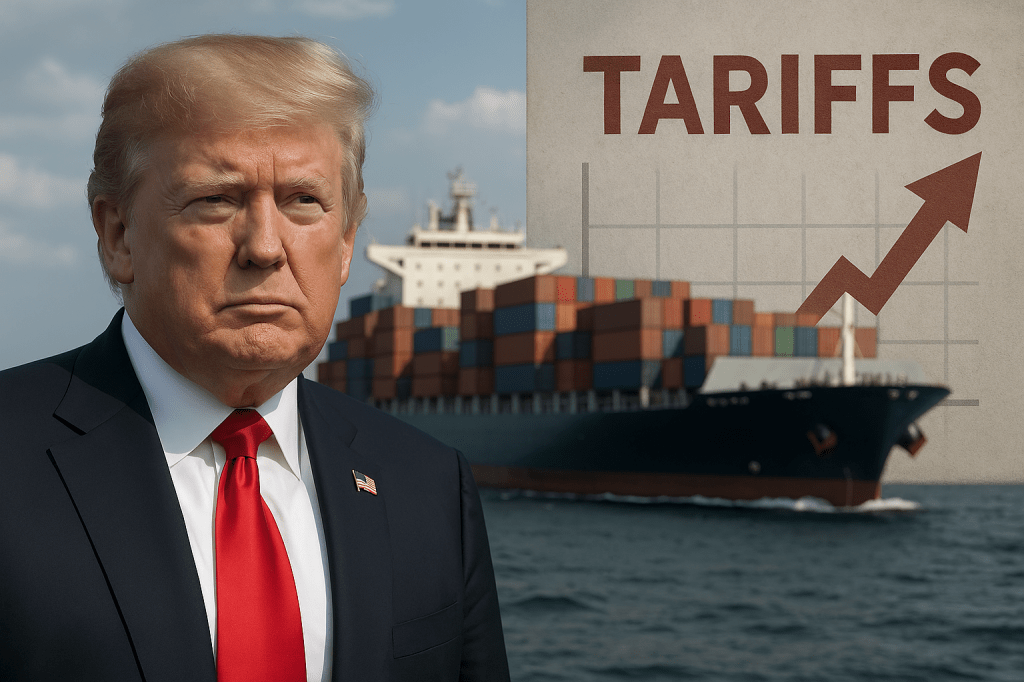
    This week, President Donald Trump announced a sweeping new wave of tariffs targeting BRICS nations—Brazil, Russia, India, China, and South Africa. In a move reminiscent of his first-term trade policies, but now more aggressive and broadly applied, Trump proposed tariffs of up to 50% on imports from nations that do not have free trade agreements with the United States. Since none of the BRICS countries fall under such agreements, the move is widely interpreted as a direct economic strike on the bloc.

    The rationale? According to administration officials, the policy is meant to “protect American industries from unfair foreign competition” and “punish nations that exploit the U.S. market while refusing to reciprocate.” However, behind the veneer of economic nationalism lies a far more dangerous outcome: a widening geopolitical chasm that could transform economic rivals into strategic enemies.

    Tariffs That Unite the Disparate

    The BRICS alliance, though often riddled with internal differences, has always shared one common trait: dissatisfaction with the post-WWII U.S.-led world order. But internal contradictions—between India and China, or Brazil and Russia’s conflicting economic models—have often limited deeper integration. That may now be changing.

    By targeting all BRICS nations simultaneously, the U.S. has given them something they previously lacked: a unifying adversary. These tariffs are not just duties on goods—they are perceived as blows against sovereignty, development, and fair participation in the global system.

    Rather than bringing these nations to heel, the new policy will likely yield the opposite result:

    • China will retaliate economically while accelerating its efforts to establish yuan-based trade systems with BRICS and Global South nations.
    • Russia, already isolated by the West, will use this as further justification to deepen ties with Beijing, New Delhi, and even Brasília.
    • India, long cautious about getting too close to China, may still choose to increase intra-BRICS trade and reassert its role in leading a “non-aligned but assertive” bloc.
    • Brazil, responding to Trump’s tariffs, has announced it will impose reciprocal tariffs beginning August 1, framing them as political retaliation tied to domestic tensions surrounding former President Bolsonaro.
    • South Africa and other African nations will rally around the BRICS cause, framing the U.S. as a self-interested hegemon unwilling to make space for emerging powers.

    A Warning Ignored

    There is a vivid parallel in the Bible that offers a lesson to today’s world leaders. When Rehoboam, son of King Solomon, ascended the throne, he was faced with a divided kingdom. The northern tribes of Israel were already weary of heavy taxation and burdens imposed under Solomon’s rule. The elders wisely counseled him to speak kindly to the people and lighten their load:

    “If you will be a servant to these people today… and speak good words to them, then they will be your servants forever.” (1 Kings 12:7, NKJV)

    But Rehoboam arrogantly rejected their advice. Instead of gentleness, he chose threats:

    “My father made your yoke heavy, but I will add to your yoke; my father chastised you with whips, but I will chastise you with scourges!” (1 Kings 12:14, NKJV)

    The result? The ten northern tribes rebelled and formed their own kingdom, permanently dividing Israel.

    President Trump, like Rehoboam, had a unique opportunity to drive wedges between BRICS nations by offering friendlier trade terms to democratic and more market-oriented members like India, Brazil, and South Africa. That would have deepened the existing ideological and economic divides within the bloc. Instead, his administration has chosen a path of blanket hostility, treating all BRICS members as equally hostile, and thereby giving them reason to unite.

    The Proverbs of Diplomacy

    This is no isolated lesson. The Bible offers enduring insight into the nature of conflict and influence:

    “A soft answer turns away wrath, but a harsh word stirs up anger.” (Proverbs 15:1, NKJV)

    “By long forbearance a ruler is persuaded, and a gentle tongue breaks a bone.” (Proverbs 25:15, NKJV)

    “A man who is kind benefits himself, but a cruel man hurts himself.” (Proverbs 11:17, ESV)

    Aggression rarely wins allies. The harsh and punitive path may feel strong, but it often produces resistance, not respect. In today’s case, it may result in a stronger, more focused BRICS alliance motivated not by shared ideology—but by shared opposition.

    Coercion Over Persuasion

    The United States, by its sheer size and influence, still has the ability to build coalitions or break them apart. But diplomacy—like leadership—requires wisdom. Trump’s tariff policy has chosen coercion over persuasion, and bluntness over nuance. Rather than weakening BRICS, it could very well solidify it.

    Rehoboam’s mistake split a kingdom. If today’s leaders are not careful, similar arrogance could divide the world—and leave America with more rivals, fewer allies, and a weakened voice in shaping the future global order.