Category: Russia

  • A World on Its Own: How U.S. Isolationism Could Ignite Nuclear Proliferation

    A World on Its Own: How U.S. Isolationism Could Ignite Nuclear Proliferation

    In the decades following World War II, the United States took on the role of global guarantor—projecting power, maintaining trade routes, and most crucially, protecting smaller and less powerful democratic nations from aggression. But what happens if America turns inward, choosing isolation over engagement?

    This question is no longer hypothetical.

    In recent years, a shift in American foreign policy—highlighted most strongly during the Trump administration—has signaled to allies that the era of unconditional security guarantees may be waning. And if these trends continue, we could see a more dangerous world unfold, one where countries feel forced to go nuclear.

    And according to the Bible, this dangerous trajectory is no surprise.

    The Domino Effect: When Trust in U.S. Security Wanes

    For decades, countries like Japan, South Korea, and Germany chose not to develop nuclear weapons—not because they couldn’t, but because they didn’t need to. America’s military umbrella offered them credible protection from hostile neighbors.

    But that trust has eroded.

    Donald Trump’s “America First” stance—and his questioning of NATO, U.S.-Korea defense cost-sharing, and alliances in Asia—sent shockwaves through the post-war security order. In a world where nations are expected to defend themselves, nuclear weapons are seen as the ultimate equalizer: cost-effective, fearsome, and a powerful deterrent.

    Here’s a look at the nations most likely to reconsider their nuclear stance:

    Countries Most Likely to Pursue Nuclear Weapons

     South Korea:

    • Stage: Actively debating nuclear options; majority public support for it.
    • Why: North Korea already has nukes. Trust in U.S. intervention is weakening.
    • Risk: Moderate to high. A South Korean bomb could spark a Northeast Asian arms race with Japan and possibly Taiwan.

     Japan:

    • Stage: Technically capable, politically restrained.
    • Why: China’s aggression and North Korea’s missile tests. Historical trauma from Hiroshima and Nagasaki still casts a long shadow.
    • Risk: Low for now, but a shift in public sentiment could change that rapidly if U.S. protection falters.

    Saudi Arabia:

    • Stage: Publicly stated it will go nuclear if Iran does. Working on enrichment capabilities.
    • Why: Regional rivalry with Iran, and increasing skepticism about U.S. staying power in the Gulf.
    • Risk: High. A Saudi nuclear weapon could spark proliferation across the Middle East—Egypt, Turkey, and even the UAE may follow.

    Taiwan:

    • Stage: Highly sensitive; has considered it historically.
    • Why: Threatened daily by China. Lacks formal U.S. defense treaty.
    • Risk: Very high. If Taiwan were to go nuclear, China could strike preemptively.

    Germany and NATO Europe:

    • Stage: Low, but not unthinkable. Some discussion of a “Eurodeterrent.”
    • Why: Russian aggression and fading U.S. leadership in NATO.
    • Risk: Moderate in the long term, especially if U.S. military presence in Europe is significantly reduced.

     The Dangers of a Nuclear Multipolar World

    Unlike the Cold War—with its terrifying but stable balance between the U.S. and the USSR—a multipolar nuclear world is inherently unstable. Here’s why:

    • More fingers on the trigger means more room for miscalculation, miscommunication, or panic during crises.
    • New nuclear states may lack the command and control systems to prevent accidental launches or rogue actions.
    • The temptation to strike first becomes stronger if countries fear a decapitating attack on their limited nuclear arsenals.
    • No central authority or treaty structure is strong enough today to manage so many nuclear actors.

    If the U.S. fully retreats from its role as the “security balancer,” the world may rapidly become a far more volatile and unpredictable place.

    A Prophetic Warning from Scripture

    What’s even more sobering is that the Bible foresaw a world like this—filled with fear, destruction, and the looming shadow of annihilation.

    Jesus Christ Himself gave a dire warning for the last days:

    “For then there will be great tribulation, such as has not been since the beginning of the world until this time, no, nor ever shall be. 

    And unless those days were shortened, no flesh would be saved; but for the elect’s sake those days will be shortened.”  Matthew 24:21–22 (NKJV)

    “No flesh would be saved.” Before the 20th century, that verse was almost poetic. But since the dawn of the nuclear age, it has become terrifyingly literal. Only in our modern era do we have the capacity to wipe out all life on Earth—something that aligns chillingly with Christ’s words.

    Hope Beyond the Chaos

    But this prophecy is not without hope. Christ said that for the elect’s sake, those days will be shortened. That means God will intervene before humanity completely destroys itself. His intervention will usher in the Kingdom of God—a time of peace, true justice, and righteous rule.

    The current chaos we see—the rising threat of nuclear war, the unraveling of international alliances, and the collapse of man-made peace—is not the end of the story. It is the beginning of the end of this world’s broken system.

    A new world is coming. And that’s the good news of the Kingdom of God.
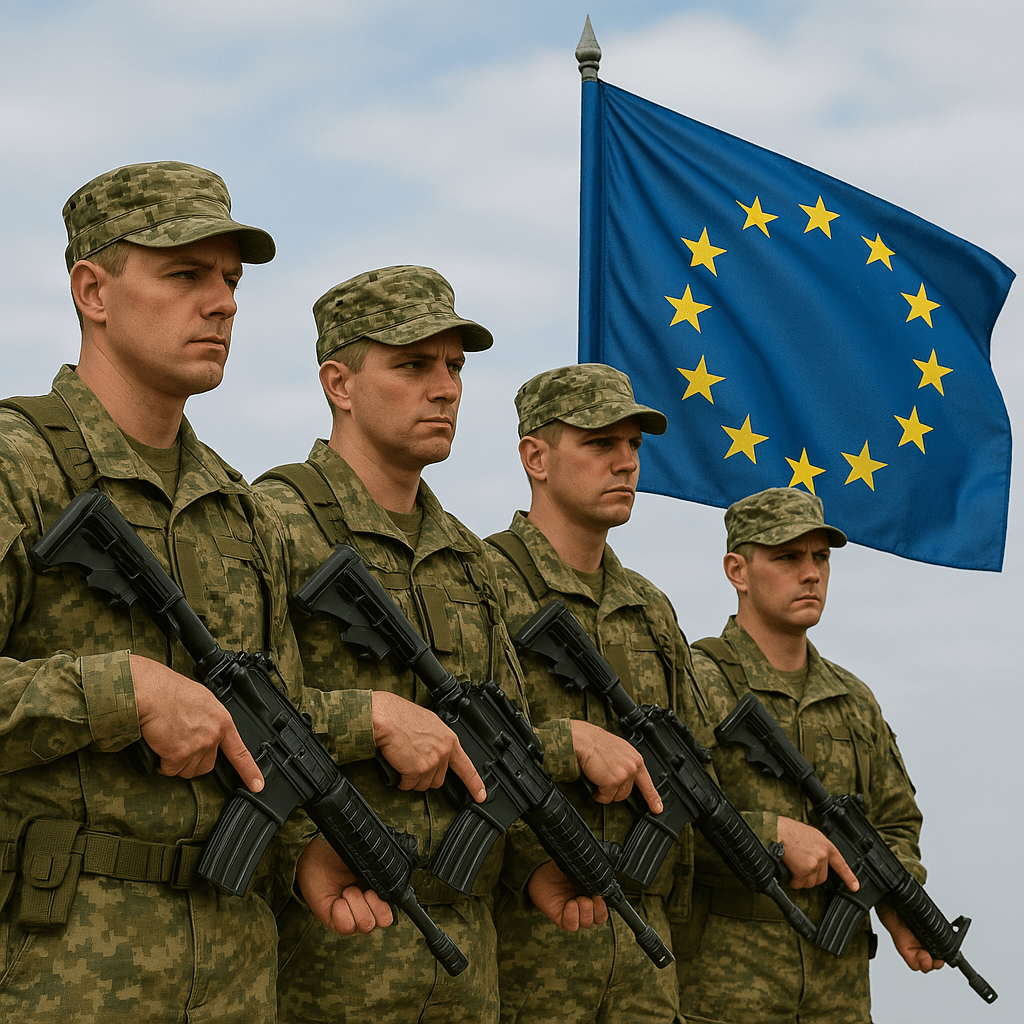
  • Europe’s March to Military Dominance: The Path to a Unified Superpower

    Europe’s March to Military Dominance: The Path to a Unified Superpower

    For decades, European security has been anchored in the transatlantic alliance with the United States through NATO. However, shifting geopolitical realities—Russia’s continued aggression, the growing uncertainty of U.S. commitment to Europe, and the increasing calls for strategic autonomy—have compelled European Union (EU) nations to take matters into their own hands. The result is a dramatic transformation of Europe’s military capabilities, with nations working together to forge an independent defense structure outside of NATO.

    While the process is still in its early stages, the momentum is undeniable. What we are witnessing is the slow but steady rise of a militarily unified Europe—one that, in time, will surpass all nations in power and might. Remarkably, this aligns with an ancient biblical prophecy that foretells the emergence of a final world superpower, a militaristic empire so dominant that no nation—not even the United States—will be able to challenge it.

    The Blueprint for European Military Autonomy

    The EU is rapidly expanding its military cooperation through a series of frameworks designed to reduce its reliance on the U.S. and NATO. Some of the most significant initiatives include:

    1. The Strategic Compass for Security and Defence

    Adopted in 2022, the Strategic Compass is a roadmap to strengthen the EU’s military capabilities, with a goal of creating a fully operational EU Rapid Deployment Capacity by 2030. This will allow Europe to swiftly mobilize 5,000 troops for crisis response without relying on NATO.

    2. Permanent Structured Cooperation (PESCO)

    PESCO is a legally binding framework that enables EU members to cooperate on military projects, including joint weapons development, intelligence sharing, and coordinated rapid response forces.

    3. The European Intervention Initiative (EI2)

    Spearheaded by France, EI2 is an elite military coalition that enhances Europe’s ability to conduct military operations independently of NATO, preparing for potential conflicts outside the EU’s borders.

    4. The Main Ground Combat System (MGCS)

    France and Germany are leading this project to develop the next-generation battle tank, replacing older models and providing European forces with superior land warfare capabilities.

    5. Military Mobility (“Military Schengen”)

    To ensure rapid deployment of forces, the EU is working on a military mobility project that removes logistical and bureaucratic barriers, making it easier for troops and equipment to move across European borders.

    6. The European Defence Fund (EDF)

    With a growing budget, the EDF is financing advanced defense research and weapons development to rival the military technology of the U.S., China, and Russia.

    The Road to European Military Superiority

    At present, Europe is still dependent on U.S. support, particularly in intelligence, nuclear deterrence, and strategic airlift capabilities. However, history has shown that necessity drives innovation. The war in Ukraine has forced European leaders to rethink their reliance on NATO and to fast-track their own military build-up.

    As European defense spending rises, and as these military initiatives become fully operational, the EU will eventually achieve self-sufficiency. What once seemed unthinkable—a Europe capable of waging war independently of the U.S.—is now becoming a reality. This military unification is not just a political shift; it is a prophecy in motion.

    Prophecy Foretells the Rise of a European Superpower

    The Bible prophesies the emergence of a final world empire—described as “the Beast” in the book of Revelation—a powerful, militaristic union that no nation will dare oppose.

    “Who is like the Beast? Who is able to make war with him?” (Revelation 13:4)

    This prophecy describes a world-dominating power, led by a strong ruler, that will command absolute military supremacy. Historically, many have understood this prophecy to point toward a revived European empire, one that will rise after a period of political and military consolidation.

    Though today’s EU is still fragmented in its military structures, the building blocks of a unified European army are already being laid. As economic, political, and military pressures increase, these disparate elements will eventually merge into a powerful, centralized force.

    A Future Where Europe Stands Unchallenged

    For now, Europe still requires U.S. support to counter Russian aggression. But this will not always be the case. Over time, the EU’s defense initiatives will evolve into a fully integrated war machine—one that surpasses Russia, China, and even the United States.

    The world is watching as history unfolds. What seems like a slow and bureaucratic process today will, in due time, lead to a new global reality—one where Europe, not America, dictates the terms of world security. And when that day comes, no nation will dare to challenge it.

  • The Unintended Consequences of a Failed U.S.-Ukraine Negotiation: A Strengthened European Military Power?

    The Unintended Consequences of a Failed U.S.-Ukraine Negotiation: A Strengthened European Military Power?

    The recent meeting between U.S. President Donald Trump and Ukrainian President Volodymyr Zelenskyy at the White House did not go as planned. Instead of fostering stronger ties and securing further cooperation, the contentious exchange led to a diplomatic fallout. Trump and Vice President J.D. Vance expressed their frustration over what they perceived as Zelenskyy’s lack of gratitude for U.S. military aid, leading to the abrupt cancellation of a press conference and an unsigned minerals agreement. The Ukrainian leader, in response, canceled his remaining engagements in Washington, D.C., and instead directed his thanks to the American people rather than the administration.

    This diplomatic failure, while seemingly an isolated event, may be indicative of a much larger shift in global military and political dynamics—one that aligns with the prophecies of the Bible. The cooling of relations between the United States and its allies is accelerating the push for Europe to take control of its own security. The European Union, already taking steps toward military autonomy, may now be more motivated than ever to strengthen its defense capabilities, independent of American leadership. If this trend continues, the United States could find itself unintentionally helping create a military superpower that will one day rival and even surpass it.

    The Rise of a European Military Power

    For years, the European Union has been discussing the need for strategic autonomy, especially in matters of defense. Frustration with the unpredictability of U.S. foreign policy, coupled with the war in Ukraine, has prompted European leaders to invest more heavily in military preparedness. With the U.S. sending mixed signals regarding its long-term commitment to Ukraine, European nations have begun contemplating a future where they must fend for themselves.

    A unified European military force, backed by the economic and technological power of the EU, could become a formidable entity on the world stage. This would mark a significant departure from the post-World War II era, where Europe relied on NATO and, by extension, the United States for its defense. Instead, Europe is poised to emerge as a military force capable of acting independently, and in some cases, contrary to U.S. interests.

    Bible Prophecy and the Coming Superpower

    While many geopolitical analysts see this shift as merely an evolution of global power structures, students of Bible prophecy recognize a deeper significance. Scripture foretells the emergence of a final world-dominating empire—a resurrected version of the Roman Empire—just before the return of Jesus Christ. This power will not be the United States, but rather a European-led entity that will wield immense economic, political, and military influence.

    The book of Daniel (Daniel 2 and Daniel 7) and the book of Revelation (Revelation 13 and Revelation 17) describe a final beast power, a kingdom that will dominate world affairs for a short time before being overthrown by Christ at His return. This entity will be composed of ten kings or leaders who will give their power to a central authority, forming a confederation unlike anything seen before.

    Isaiah 10:5-7 further sheds light on the purpose of this emerging power: “Woe to Assyria, the rod of My anger and the staff in whose hand is My indignation. I will send him against an ungodly nation, and against the people of My wrath I will give him charge.” God will use this power as an instrument of punishment against sinful nations, including the United States, for their moral and spiritual decline.

    America’s Role in Its Own Decline

    Ironically, by alienating its allies and pushing Europe to strengthen its own military, the United States may be accelerating the rise of this prophesied superpower. If America continues to withdraw from its global commitments and adopt a more transactional approach to diplomacy, Europe will have no choice but to step into the power vacuum. History shows that empires do not fall overnight, but they often contribute to their own decline through short-sighted policies and internal moral decay.

    While the United States remains the dominant superpower for now, Bible prophecy suggests its influence will wane as Europe rises. This shift will have profound consequences, not only geopolitically but also spiritually. The world is heading toward a climactic confrontation, one that will ultimately be resolved only by the return of Jesus Christ to establish His righteous government over all nations.

    As these events unfold, it is crucial for those who understand Bible prophecy to remain vigilant. The signs of the times indicate that world affairs are moving in the direction foretold in Scripture. Rather than placing our hope in human governments and military alliances, we should focus on the coming Kingdom of God—the only true solution to the world’s problems.

    This recent failed U.S.-Ukraine negotiation may seem like just another diplomatic hiccup, but in reality, it is are part of a much larger prophetic puzzle. Europe is rising, the United States is declining, and the world is moving closer to the return of Christ. Those who have eyes to see should take heed and prepare spiritually for what is to come.

  • Germany’s Election and the Rise of an Independent European Defense

    Germany’s Election and the Rise of an Independent European Defense

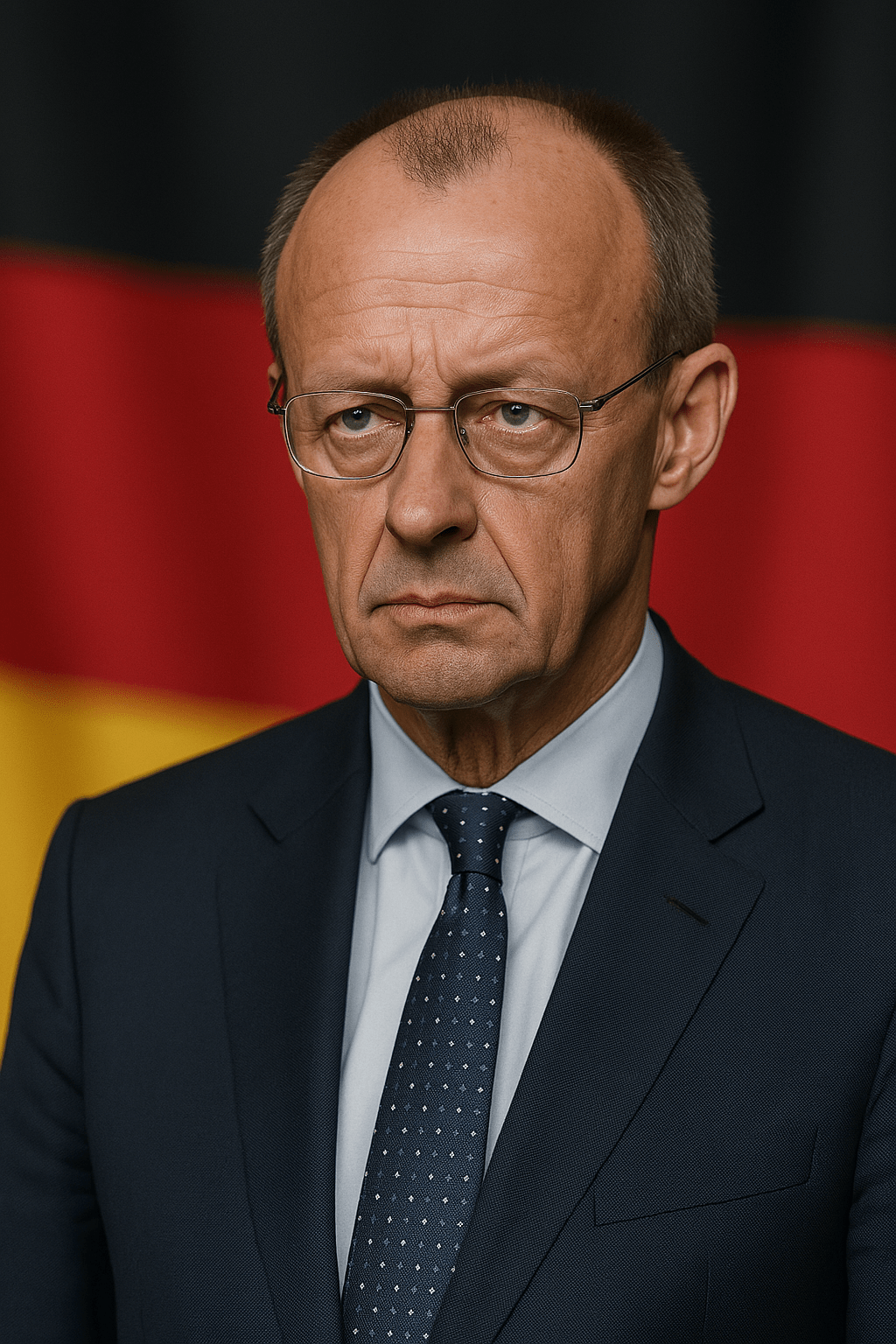
    The recent German elections have set the stage for a major geopolitical shift in Europe. With the victory of the Christian Democratic Union (CDU) and its Bavarian sister party, the Christian Social Union (CSU), under the leadership of Friedrich Merz, Germany is now on a path to a more assertive role in continental security. This election result, combined with the declining reliability of U.S. support for Ukraine, signals a turning point: the European Union may no longer depend on the United States for its defense and could even act against Washington’s wishes in shaping its security policies.

    A Shifting Political Landscape

    Germany’s CDU/CSU has consistently advocated for strong military assistance to Ukraine and has called for European nations to take more responsibility for their own defense. This comes at a time when the United States, under the Trump administration, has signaled a reduced commitment to supporting Ukraine, instead urging Europe to step up. Trump’s foreign policy approach suggests that NATO’s European members must no longer take U.S. protection for granted, a stance that has alarmed European leaders who have long relied on American military backing.

    With the rise of a more assertive German leadership, the CDU/CSU’s push for an independent European security framework aligns with the broader ambition of strategic autonomy. The party supports increasing military spending, developing European defense industries, and even exploring the possibility of European nuclear deterrence separate from U.S. oversight. If the European Union continues down this path, it may lead to the formation of a powerful military bloc capable of acting on its own interests, independent of U.S. influence.

    Europe’s Break from the U.S. and Its Strategic Implications

    The prospect of a self-sufficient Europe raises critical questions about the transatlantic alliance. If the European Union no longer relies on the United States for its defense, it could make decisions that directly contradict Washington’s foreign policy. This divergence has already begun to manifest in Germany’s and France’s discussions about strengthening European security institutions outside of NATO. Leaders such as Emmanuel Macron have repeatedly stated that Europe must prepare for a future where American military support is not guaranteed.

    Germany’s shift towards strategic independence, alongside the increasing political clout of the far-right Alternative for Germany (AfD), which has a more nationalistic stance, suggests that the EU’s security policy could soon prioritize European interests over NATO’s broader Western coalition. This is particularly relevant as tensions with Russia continue to shape the region’s defense priorities. The CDU/CSU remains committed to arming Ukraine and countering Russian aggression, but future European security decisions may be made without U.S. consultation or approval.

    The Prophetic Fulfillment of a European Superpower

    For students of Bible prophecy, this evolving geopolitical landscape is deeply significant. Scripture speaks of a final world-dominating empire that will rise in Europe just before the return of Jesus Christ. The Book of Revelation describes a powerful political and military entity led by ten kings who give their power to a central authority (Revelation 17:12-13). This entity, often referred to as the Beast power, will play a decisive role in end-time events.

    The groundwork for such a superstate is being laid before our eyes. As Europe consolidates its military power, distances itself from reliance on the United States, and takes a leading role in global affairs, we see the makings of a formidable political and economic powerhouse. This aligns with the biblical prophecy that foretells a revived Roman Empire—a united Europe that will exert dominance over world affairs.

    For decades, analysts have debated whether the European Union could emerge as a true superpower. With Germany at the helm of a strengthened European defense initiative, a future where Europe dictates its own security policies, economic strategies, and geopolitical alignments without U.S. involvement seems increasingly plausible. If this trajectory continues, we could see the formation of a military bloc that not only rivals the United States in influence but also challenges its authority on the world stage.

    What Lies Ahead?

    The recent German elections seem to mark the beginning of a Europe that is ready to stand on its own. With the United States pulling back from its traditional role as the primary security guarantor, the European Union is stepping up to fill the void. This shift will not only redefine Europe’s military and political future but also lay the foundation for the fulfillment of biblical prophecy.

    As history unfolds, we must remain vigilant and watchful. The rise of an independent European military force, capable of asserting its will globally, is a key signpost in the prophetic timeline. The world is rapidly moving toward the final chapters foretold in the Scriptures—an era that will ultimately culminate in the return of Jesus Christ, who will establish His righteous government over all nations. Until that time, we must continue to discern the signs and understand their significance in the grand plan of God. The geopolitical shifts we are witnessing today are not just political trends but pieces of a prophetic puzzle that is coming together. Germany’s election results and the growing autonomy of the European Union appears to mark the beginning of a new era—one in which Europe will assert itself as a dominant power, separate from and potentially opposed to the United States. As this European superpower takes shape, those who understand biblical prophecy will recognize that we are drawing closer to the climactic events leading to Christ’s return. Now more than ever, it is time to watch, pray, and prepare for what lies ahead.

  • The U.S. Bypasses Ukraine: A Turning Point for Europe’s Military Independence?

    The U.S. Bypasses Ukraine: A Turning Point for Europe’s Military Independence?

    The recent decision by the Trump administration to engage in direct negotiations with Russia over the ongoing war in Ukraine—without Ukraine or its European allies at the table—has sent shockwaves across the European Union (EU). This move, seen as an unprecedented sidelining of key stakeholders, is already prompting European nations to reconsider their security dependencies and could accelerate the formation of an independent European military force. In doing so, this shift could also play into the fulfillment of biblical prophecy regarding the emergence of a dominant European superpower just before the return of Christ.

    The U.S. Sidelines Ukraine and Europe

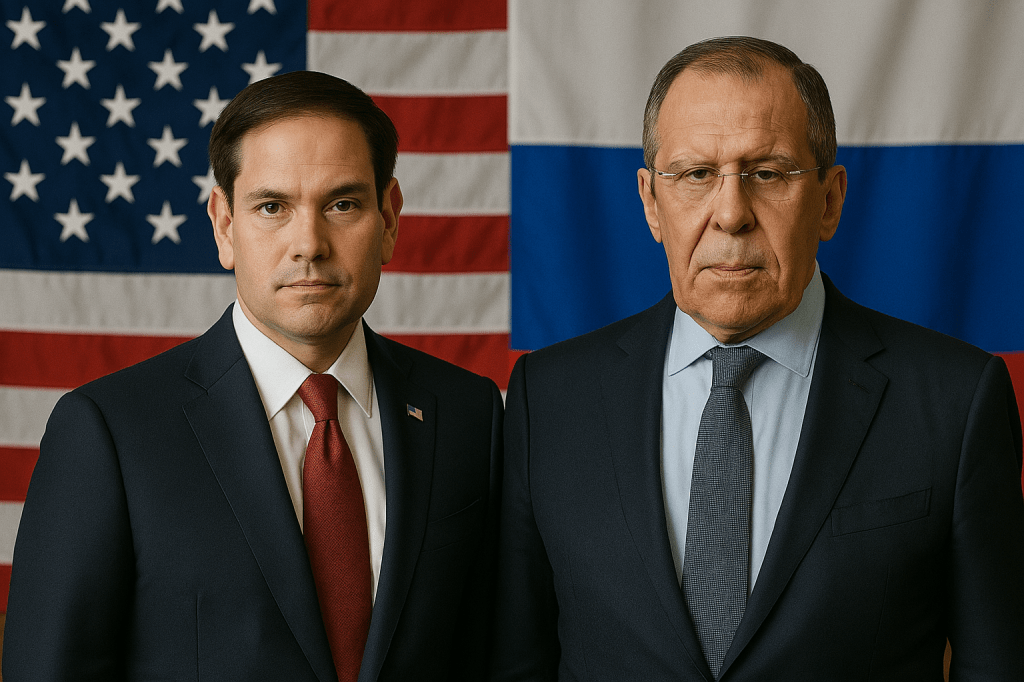
    On February 18, 2025, U.S. Secretary of State Marco Rubio and Russian Foreign Minister Sergey Lavrov met in Riyadh, Saudi Arabia, to discuss a framework for peace between Russia and Ukraine. What raised eyebrows worldwide was not just the meeting itself, but the glaring absence of Ukrainian and European representatives. This unilateral approach by the U.S. has drawn severe criticism, particularly from European leaders who see it as a betrayal of both Ukraine and the transatlantic alliance.

    President Trump’s reasoning for bypassing Ukraine appears to be rooted in three key factors:

    1. Expedited Resolution: The administration believes that direct U.S.-Russia talks might lead to a quicker settlement, without the complications of Ukrainian leadership’s insistence on full territorial restoration.
    2. Perception of Ukrainian Leadership: Trump has suggested that Ukraine mishandled previous opportunities to negotiate peace, implying that their continued presence in talks may be counterproductive.
    3. Strategic Realignment: U.S. officials have signaled a shift in priorities, seeing a return to Ukraine’s pre-2014 borders as “unrealistic” and potentially prolonging the war unnecessarily.

    This shift has been met with alarm in Europe, where leaders argue that such negotiations—if they exclude Ukraine—undermine the country’s sovereignty and the security of the entire continent.

    Europe’s Response: A Push for Military Autonomy

    For decades, Europe has relied heavily on the United States, through NATO, to provide security against Russian aggression. However, this latest move by Washington has reinforced a growing realization: Europe cannot afford to remain dependent on U.S. protection. In response, European nations are taking significant steps toward military independence.

    1. Formation of the ‘Weimar+’ Group: France, Germany, Poland, the United Kingdom, Spain, and Italy have formed a coalition to ensure that European interests are represented in global security matters. This new alliance marks a step toward a more cohesive European military strategy.
    2. Increased Defense Spending: Many European nations, including Germany and France, are ramping up their military budgets, recognizing that they must be prepared for future conflicts without relying on Washington.
    3. Calls for a Unified EU Defense Force: French President Emmanuel Macron has called for an emergency summit to discuss forming a European military structure that is independent of U.S. oversight.

    This growing push for European military self-sufficiency aligns with what some Bible students have long anticipated—a European superpower emerging as a dominant force in world affairs.

    Biblical Prophecy and the Rise of a European Superpower

    The Bible speaks of a powerful end-time empire arising in Europe. In Daniel 2 and 7, as well as Revelation 13 and 17, we see descriptions of a final world power—often understood to be a revived Roman Empire—playing a dominant role before Christ’s return. This power is characterized by strong political, military, and economic influence.

    For decades, many analysts have speculated about how such a European entity could take shape, given the continent’s reliance on the U.S. for defense. However, recent developments suggest that the stage is being set for this prophecy to be fulfilled. If the EU becomes militarily independent, it could emerge as a dominant force in global affairs—one that no longer depends on the U.S. but instead forges its own path in world politics.

    A New Global Order?

    The sidelining of Ukraine and the EU by the Trump administration may prove to be a historic turning point. As European nations realize that they can no longer count on the U.S. for security, they are taking steps to ensure their own military future. This could lead to the formation of a powerful European bloc that asserts itself on the world stage.

    For Bible prophecy watchers, these developments are highly significant. They point to the increasing consolidation of power in Europe, paving the way for a superpower that will play a crucial role in end-time events. As we watch these shifts in geopolitics, it is crucial to remain vigilant and understand how they fit into the broader prophetic picture leading to the return of Jesus Christ.

    The world is changing rapidly, and the U.S.’s new approach to foreign policy is forcing Europe to stand on its own feet. While this may bring new challenges, it also aligns with the prophetic expectation of a European superpower rising to prominence before the Second Coming. As these events unfold, we should be paying close attention to how the balance of power is shifting and what it means for the future of world affairs—and, more importantly, for God’s ultimate plan for humanity.