Category: South Africa

  • Trump’s Tariff Blitz on BRICS: Forging Unity Among America’s Adversaries

    Trump’s Tariff Blitz on BRICS: Forging Unity Among America’s Adversaries

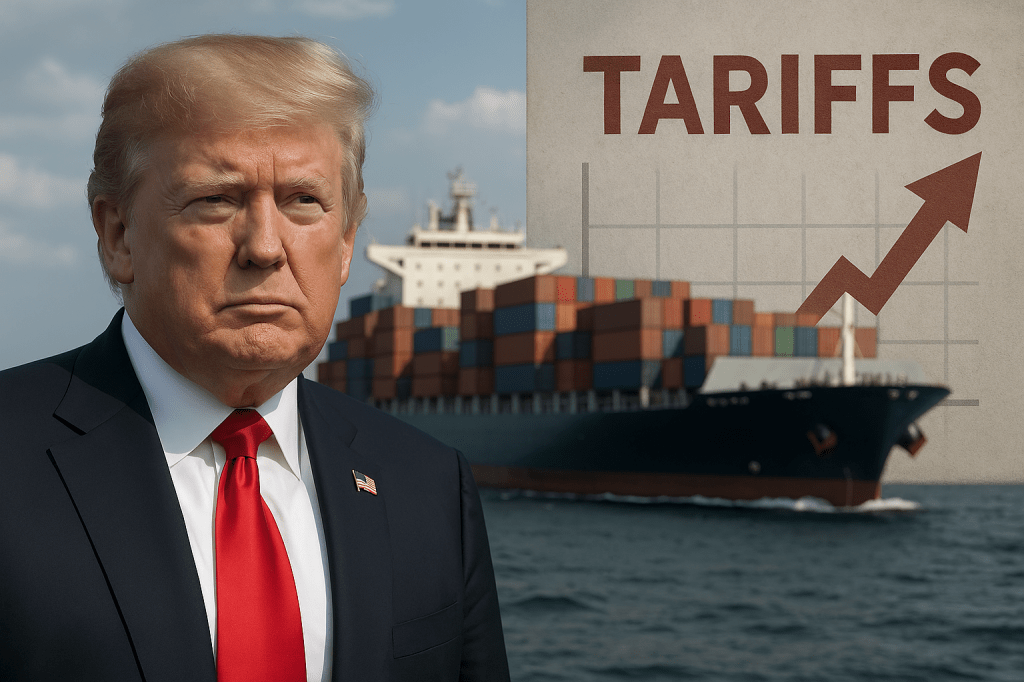
    This week, President Donald Trump announced a sweeping new wave of tariffs targeting BRICS nations—Brazil, Russia, India, China, and South Africa. In a move reminiscent of his first-term trade policies, but now more aggressive and broadly applied, Trump proposed tariffs of up to 50% on imports from nations that do not have free trade agreements with the United States. Since none of the BRICS countries fall under such agreements, the move is widely interpreted as a direct economic strike on the bloc.

    The rationale? According to administration officials, the policy is meant to “protect American industries from unfair foreign competition” and “punish nations that exploit the U.S. market while refusing to reciprocate.” However, behind the veneer of economic nationalism lies a far more dangerous outcome: a widening geopolitical chasm that could transform economic rivals into strategic enemies.

    Tariffs That Unite the Disparate

    The BRICS alliance, though often riddled with internal differences, has always shared one common trait: dissatisfaction with the post-WWII U.S.-led world order. But internal contradictions—between India and China, or Brazil and Russia’s conflicting economic models—have often limited deeper integration. That may now be changing.

    By targeting all BRICS nations simultaneously, the U.S. has given them something they previously lacked: a unifying adversary. These tariffs are not just duties on goods—they are perceived as blows against sovereignty, development, and fair participation in the global system.

    Rather than bringing these nations to heel, the new policy will likely yield the opposite result:

    • China will retaliate economically while accelerating its efforts to establish yuan-based trade systems with BRICS and Global South nations.
    • Russia, already isolated by the West, will use this as further justification to deepen ties with Beijing, New Delhi, and even Brasília.
    • India, long cautious about getting too close to China, may still choose to increase intra-BRICS trade and reassert its role in leading a “non-aligned but assertive” bloc.
    • Brazil, responding to Trump’s tariffs, has announced it will impose reciprocal tariffs beginning August 1, framing them as political retaliation tied to domestic tensions surrounding former President Bolsonaro.
    • South Africa and other African nations will rally around the BRICS cause, framing the U.S. as a self-interested hegemon unwilling to make space for emerging powers.

    A Warning Ignored

    There is a vivid parallel in the Bible that offers a lesson to today’s world leaders. When Rehoboam, son of King Solomon, ascended the throne, he was faced with a divided kingdom. The northern tribes of Israel were already weary of heavy taxation and burdens imposed under Solomon’s rule. The elders wisely counseled him to speak kindly to the people and lighten their load:

    “If you will be a servant to these people today… and speak good words to them, then they will be your servants forever.” (1 Kings 12:7, NKJV)

    But Rehoboam arrogantly rejected their advice. Instead of gentleness, he chose threats:

    “My father made your yoke heavy, but I will add to your yoke; my father chastised you with whips, but I will chastise you with scourges!” (1 Kings 12:14, NKJV)

    The result? The ten northern tribes rebelled and formed their own kingdom, permanently dividing Israel.

    President Trump, like Rehoboam, had a unique opportunity to drive wedges between BRICS nations by offering friendlier trade terms to democratic and more market-oriented members like India, Brazil, and South Africa. That would have deepened the existing ideological and economic divides within the bloc. Instead, his administration has chosen a path of blanket hostility, treating all BRICS members as equally hostile, and thereby giving them reason to unite.

    The Proverbs of Diplomacy

    This is no isolated lesson. The Bible offers enduring insight into the nature of conflict and influence:

    “A soft answer turns away wrath, but a harsh word stirs up anger.” (Proverbs 15:1, NKJV)

    “By long forbearance a ruler is persuaded, and a gentle tongue breaks a bone.” (Proverbs 25:15, NKJV)

    “A man who is kind benefits himself, but a cruel man hurts himself.” (Proverbs 11:17, ESV)

    Aggression rarely wins allies. The harsh and punitive path may feel strong, but it often produces resistance, not respect. In today’s case, it may result in a stronger, more focused BRICS alliance motivated not by shared ideology—but by shared opposition.

    Coercion Over Persuasion

    The United States, by its sheer size and influence, still has the ability to build coalitions or break them apart. But diplomacy—like leadership—requires wisdom. Trump’s tariff policy has chosen coercion over persuasion, and bluntness over nuance. Rather than weakening BRICS, it could very well solidify it.

    Rehoboam’s mistake split a kingdom. If today’s leaders are not careful, similar arrogance could divide the world—and leave America with more rivals, fewer allies, and a weakened voice in shaping the future global order.
  • Echoes of Error: When World Leaders Believe Falsehoods—And What It Means for Nations Today

    Echoes of Error: When World Leaders Believe Falsehoods—And What It Means for Nations Today

    In a world flooded with information, the ability to discern truth from fiction has become one of the most critical leadership traits. Yet even the most powerful leaders, with access to the world’s top intelligence, can fall prey to misinformation—and the consequences are often felt not just in diplomatic circles but in the lives of ordinary citizens.

    One recent and striking example is U.S. President Donald Trump’s repeated engagement with false or unverified information, including during high-level meetings with other national leaders. But this phenomenon is not new, nor unique to him. Throughout history, leaders have believed—or chosen to act upon—falsehoods. Sometimes, according to Scripture, this is allowed by God as part of divine judgment on nations. In such times, the people must turn to God, seek wisdom in leadership, and commit to lives of prayer and peace.

    President Trump and the Echo Chamber of Misinformation

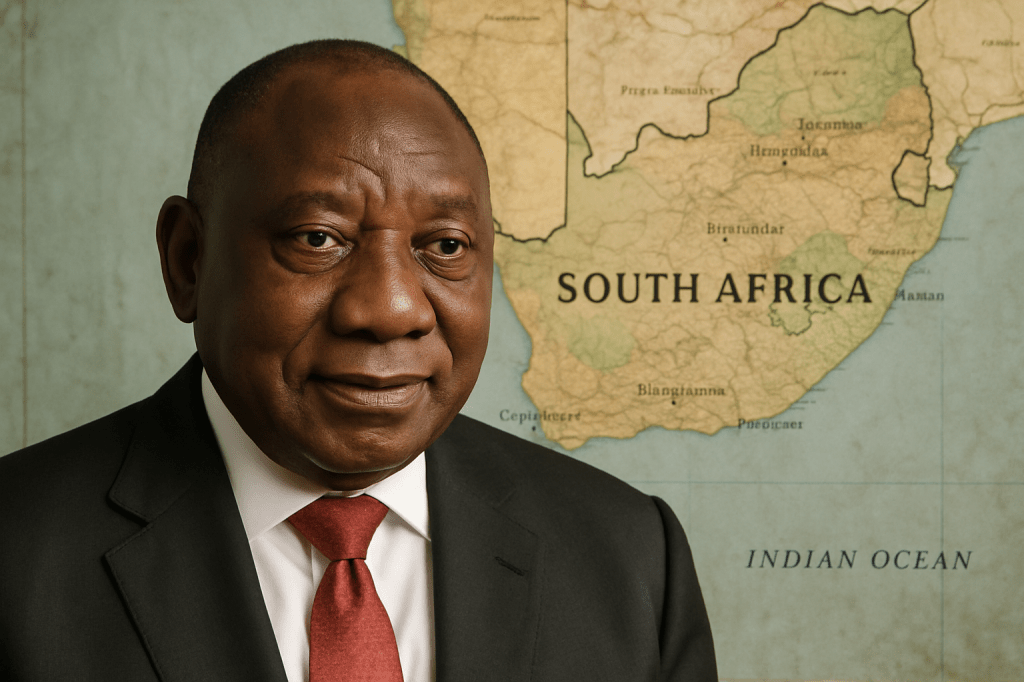
    President Donald Trump has shown a recurring tendency to promote narratives that are either misleading or entirely false, particularly when these narratives align with his political worldview. This was most recently demonstrated in his May 2025 Oval Office meeting with South African President Cyril Ramaphosa. Trump confronted Ramaphosa with false claims that white farmers in South Africa were victims of genocide—a claim long debunked by journalists, researchers, and the South African government itself.

    The evidence Trump presented included a Reuters video taken not in South Africa, but in the Democratic Republic of Congo. President Ramaphosa clarified that while violent crime is a serious issue in South Africa, it affects all races, and there is no campaign of racial extermination against white citizens. Nonetheless, Trump’s views remained unchanged, and he even moved forward with policies offering refugee resettlement to white South African farmers based on those claims.

    This was not an isolated incident. Trump has also:

    • Repeated Kremlin-aligned narratives to Ukrainian President Volodymyr Zelenskyy, claiming Ukraine provoked Russia’s war.
    • Alleged that Japan could not handle large-scale immigration and made racially charged comments to Prime Minister Shinzo Abe.
    • Publicly contradicted U.S. intelligence assessments in front of Russian President Vladimir Putin, casting doubt on the conclusion that Russia interfered in the 2016 election.

    Why Do Leaders Believe Falsehoods?

    Several factors contribute to this pattern of misinformation at the highest levels:

    • Confirmation bias: Leaders, like anyone else, are inclined to believe what supports their views.
    • Distrust in institutions: Trump often expressed suspicion of the U.S. intelligence community, viewing it as part of a “deep state” conspiracy.
    • Political strategy: Misinformation can be a tool for mobilizing political bases.
    • Echo chambers: When advisers and media consumption reinforce a narrow viewpoint, dissenting facts are filtered out.

    Not Just Trump: Historical Echoes

    History provides numerous examples of leaders acting on false information—with devastating effects:

    • President George W. Bush launched the Iraq War on the false belief that Saddam Hussein had weapons of mass destruction.
    • British Prime Minister Neville Chamberlain trusted Hitler’s promise of peace after annexing the Sudetenland, only for WWII to erupt shortly after.
    • Vladimir Putin believed Ukraine would fall swiftly to Russian military pressure in 2022—a grave miscalculation that led to a protracted war.
    • Jair Bolsonaro, former president of Brazil, downplayed the COVID-19 pandemic as a mild flu, leading to preventable deaths.

    In each case, the causes included flawed intelligence, political calculations, or misjudgments. The effects ranged from war to global health crises, and from loss of life to long-term damage to a nation’s credibility and stability.

    A Form of Judgment

    From a biblical standpoint, when leaders believe lies or are given over to deception, it is sometimes a sign of divine judgment—not just on the leaders themselves but on the nations they lead. Scripture reveals this dynamic in stories like:

    • Ahab and the lying spirit (1 Kings 22): God allowed a deceiving spirit to speak through prophets to mislead King Ahab to his downfall.
    • Rehoboam’s pride (2 Chronicles 10): He ignored wise counsel, believing what pleased him, and the kingdom was divided.
    • Romans 1:28 speaks of people being given over to a “debased mind” when they reject God.

    When leaders reject truth and act on falsehoods, it often reflects a moral condition not just in the palace but in the people. It is a wake-up call for national repentance.

    What Can Citizens Do?

    In such times, people are not powerless. Scripture urges believers to:

    • Return to God (Zechariah 1:3): National healing begins with personal repentance.
    • Pray for leaders (1 Timothy 2:1-2): Even when they err, our prayers can influence their decisions and preserve peace.
    • Seek God’s guidance when choosing leaders (Proverbs 3:5-6): Wise governance begins with divine direction.
    • Live in peace (Romans 12:18): Christians grow through obedience, even in times of national turmoil.

    Truth, Leadership, and the Call to Wisdom

    The pattern of world leaders falling for false information is not new—but it is dangerous. Whether it results in war, oppression, or decay, the consequences ripple across generations. But God does not leave His people without a response. He calls on them to be discerning, prayerful, and faithful. Ultimately, peace and wisdom are not found in politicians but in obedience to God’s truth.