Category: South Korea

  • The Asian Pivot: China’s Long-Term Strategy to Thrive Beyond the American System

    The Asian Pivot: China’s Long-Term Strategy to Thrive Beyond the American System

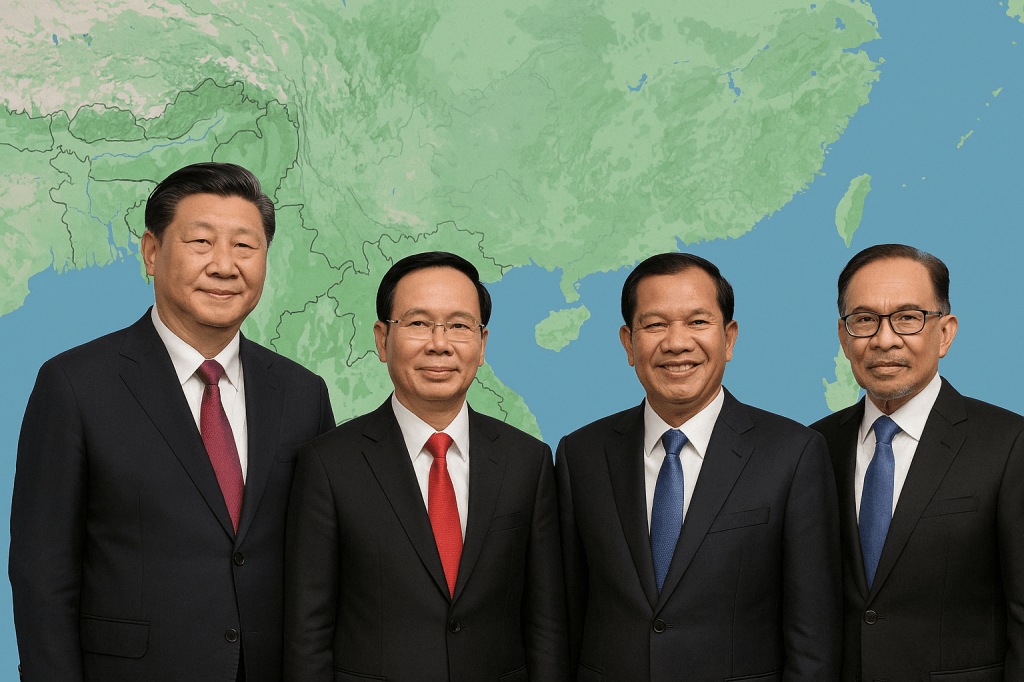
    As tensions between the United States and China continue to escalate—particularly in the realm of trade and technology—Beijing is quietly laying the groundwork for a long-term economic strategy that could reshape the power dynamics of Asia. At the center of this push is President Xi Jinping’s ongoing tour of Southeast Asia, visiting Vietnam, Malaysia, and Cambodia—a move that signals China’s growing focus on emerging Asian markets and a future less dependent on the U.S.-led global economy.

    Xi Jinping’s Southeast Asia Tour: A Strategic Reconnection

    This week, Xi Jinping undertakes his first overseas diplomatic trip of 2025, traveling to:

    • Vietnam (April 14–15) 
    • Malaysia (April 15–17) 
    • Cambodia (April 17–18)

    These visits are not merely ceremonial. They are a calculated move to strengthen China’s economic and political influence in its immediate neighborhood, particularly at a time when the United States is entangled in its own domestic political volatility and global alliances are being tested by tariff wars and foreign policy shifts.

    In Vietnam, Xi is engaging in high-level talks to promote infrastructure development and defense cooperation—areas that are traditionally seen as sensitive due to Vietnam’s balancing act between China and the West. In Malaysia, discussions center on bolstering trade and increasing Chinese investment in manufacturing and digital technology sectors. And in Cambodia, where China already enjoys significant influence, the visit is expected to deepen long-standing ties and further integrate the two economies.

    The Next Stops: Indonesia and Central Asia?

    Beyond this week’s tour, there are strong indicators that Indonesia may soon be on Xi’s diplomatic radar. A recent phone call between Xi and Indonesian President Prabowo Subianto reaffirmed both nations’ commitment to expanding their strategic partnership, particularly in light of the 75th anniversary of diplomatic ties.

    Likewise, Central Asia—including Kazakhstan, Kyrgyzstan, Tajikistan, Turkmenistan, and Uzbekistan—remains a critical focus area. China is set to host the next China–Central Asia Summit, following a successful inaugural meeting in Xi’an in 2023. These engagements are part of a broader effort to secure alternative supply chains, new energy corridors, and infrastructure links under the Belt and Road Initiative (BRI).

    The Bigger Picture: Preparing for a Post-American Trade Order

    While the immediate economic benefits of these engagements may not yet be dramatic, their geopolitical implications are far-reaching. China is methodically building a regional trade network that is resilient and increasingly self-sufficient. This will become critically important as the American economic system continues to display signs of instability, especially as economic policy in the US increasingly sways with every change in presidential administration.

    As the US imposes erratic tariffs, wavers on global commitments, and faces rising internal polarization, China is presenting itself to its neighbors as a stable, long-term economic partner—offering infrastructure, financing, and market access.

    A Prophetic Pattern: Toward a Unified Eastern Bloc

    What we are witnessing could be the early stages of economic and political unification across Asia, aligning China, Russia, and eventually other major Asian economies such as Japan and South Korea. Although Japan and South Korea remain closely aligned with the United States for now, the erosion of American credibility and consistency may eventually drive them to seek more reliable trade partnerships within the region.

    This shift is not only geopolitical—it also fits a prophetic pattern long observed in Bible prophecy. Scripture describes the rise of Eastern powers—”kings from the east” (Revelation 16:12)—who will play a pivotal role in end-time events. The Bible also indicates that the dominant economic force of the end times will not be the Anglo-American system but a revived European power bloc. As the United States and its allies fade in influence—whether by internal collapse or external exclusion—the stage is being set for an economically unified Asia, possibly in loose collaboration with or in tension against a dominant European superstructure.

    The World Is Rebalancing

    Xi Jinping’s current diplomatic maneuvers are not isolated events—they are the latest in a strategic chess game, one that aims to secure China’s leadership role in a post-American, multi-polar global economy. These new alliances and trade relations, especially with Asia’s emerging markets, serve as a foundation for resilience and independence in a world where U.S. leadership is no longer guaranteed.

    The world is rebalancing. For those watching closely—and for students of both geopolitics and prophecy—these developments underscore a profound truth: nations rise and fall according to a divine timetable, and the shifts we are seeing today may well be part of a larger unfolding narrative foretold long ago.

  • Asia’s New Trade Bloc: A Quiet Divorce from U.S. Economic Leadership

    Asia’s New Trade Bloc: A Quiet Divorce from U.S. Economic Leadership

    The resumption of Free Trade Agreement (FTA) negotiations among Japan, South Korea, and China is more than just another trade pact in the making—it marks a seismic shift in global economic alignment. This initiative—long delayed by political differences and historical wounds—is now being revived, and this time with a clearer, bolder purpose: to insulate Asia’s three largest economies from the mood swings of Washington and to lay the groundwork for a trading bloc that functions independently of the United States.

    The implications are profound. The world’s economic tectonic plates are moving, and America’s position as the central hub of global trade may soon be a relic of the past.

    Why Now? Timing Is Everything

    Although discussions on the Japan–South Korea–China FTA began more than a decade ago, the effort is being urgently revived amid the reimposition of U.S. tariffs, a resurgence of “America First” protectionism, and the growing perception that the U.S. is no longer a reliable partner in global economic stability.

    All three countries—despite competing interests and past grievances—now share a strategic concern: dependence on the U.S. economic system is risky. Their response? Build their own system.

    This new round of negotiations is not just about lowering tariffs. It is a deliberate, preemptive move to:

    • Diversify supply chains,
    • Reduce economic exposure to U.S. policies,
    • And prepare for a world where Asia leads its own economic future.

    What Will the FTA Look Like?

    The Japan–South Korea–China FTA, while not as politically integrated as the European Union, will likely cover:

    • Trade liberalization in goods and services,
    • Regulatory harmonization in digital trade, green tech, and finance,
    • Joint industrial strategies, especially in semiconductors and electric vehicles.

    If completed, this agreement would create the largest trilateral trade zone in Asia, covering over 20% of global GDP and home to some of the most advanced manufacturing ecosystems in the world.

    How Does It Compare to the European Union?

    Unlike the EU, which operates with a single market, shared currency (for many), and supranational governance, the trilateral FTA will be more flexible and state-centered. However, its logic is the same: to create a unified economic space, reduce dependency on external powers, and enhance regional self-reliance.

    Both the EU and the Asia FTA are examples of regional consolidation—the world is moving from globalism to bloc-ism, where major regions trade and grow within insulated economic frameworks.

    But there’s one big loser in this trend: the United States.

    The Isolation of the American Economy

    In the 1990s and early 2000s, the U.S. was the uncontested center of the global trading system. Today, with the rise of:

    • RCEP (led by China),
    • A reinvigorated EU internal market,
    • And now a potential Japan–Korea–China bloc,

    America is slowly but surely being economically encircled—not by enemies, but by former friends who are hedging their bets.

    The irony is striking: these are U.S. allies. Yet they are preparing quietly for a world where the U.S. is no longer the anchor—and perhaps even the adversary, should political winds turn.

    When a Nation Forgets Its God

    The Bible reminds us in Proverbs 16:7: 

    “When a man’s ways please the Lord, He makes even his enemies to be at peace with him.”

    But the opposite is also true: when a nation forgets its Creator, even its friends begin to drift away.

    The U.S. once stood as a beacon of moral leadership, prosperity, and justice—attributes that, whether acknowledged or not, were the fruit of a people who broadly honored biblical values. But as the moral compass of the nation shifts further from God, we are now witnessing a slow unraveling—not by sudden collapse, but by isolation.

    Trade is not just about economics; it reflects trust, alignment, and shared destiny. When even close allies like Japan, South Korea, and the EU begin forming trade structures without America, they are signaling a future where the U.S. is optional—perhaps even expendable.

    A Wake-Up Call for America

    The question is not whether the FTA among Japan, South Korea, and China will succeed. Even in limited form, it is already succeeding—simply by existing. The real question is whether America will heed the warning that these developments present.

    This is not just about trade. It is a spiritual signal.

    God is allowing America to experience the slow, strategic withdrawal of international favor—not out of vengeance, but out of love. Just as He warned ancient Israel, so He now warns modern nations: return to Me, and live.

    As economic alliances form, as former allies build insurance policies against U.S. unpredictability, and as new blocs rise with quiet determination, we must ask:

    • Will America recognize the signs? 
    • Will it return to the values that once made it a stabilizing force in the world?

    Or will it continue down the road of isolation—militarily powerful, economically large, but increasingly alone?

  • A World on Its Own: How U.S. Isolationism Could Ignite Nuclear Proliferation

    A World on Its Own: How U.S. Isolationism Could Ignite Nuclear Proliferation

    In the decades following World War II, the United States took on the role of global guarantor—projecting power, maintaining trade routes, and most crucially, protecting smaller and less powerful democratic nations from aggression. But what happens if America turns inward, choosing isolation over engagement?

    This question is no longer hypothetical.

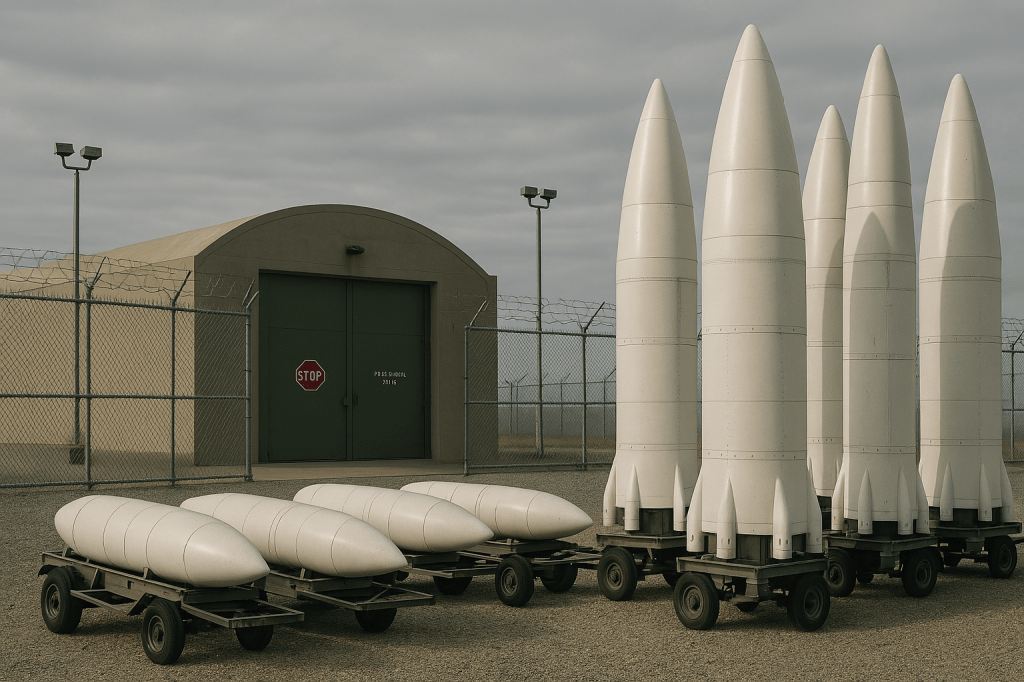
    In recent years, a shift in American foreign policy—highlighted most strongly during the Trump administration—has signaled to allies that the era of unconditional security guarantees may be waning. And if these trends continue, we could see a more dangerous world unfold, one where countries feel forced to go nuclear.

    And according to the Bible, this dangerous trajectory is no surprise.

    The Domino Effect: When Trust in U.S. Security Wanes

    For decades, countries like Japan, South Korea, and Germany chose not to develop nuclear weapons—not because they couldn’t, but because they didn’t need to. America’s military umbrella offered them credible protection from hostile neighbors.

    But that trust has eroded.

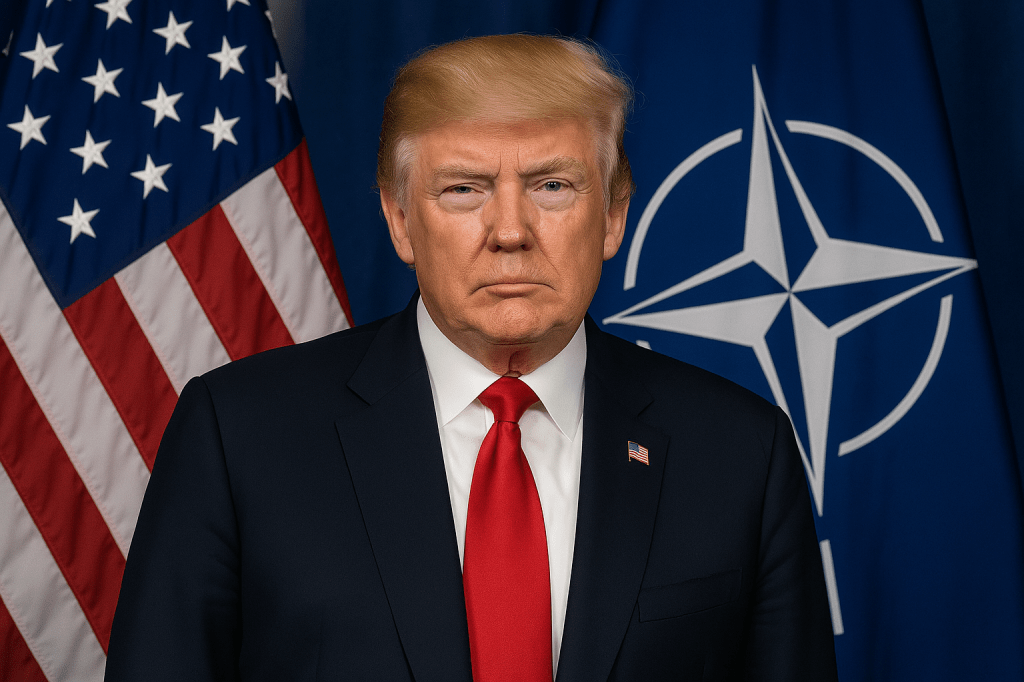
    Donald Trump’s “America First” stance—and his questioning of NATO, U.S.-Korea defense cost-sharing, and alliances in Asia—sent shockwaves through the post-war security order. In a world where nations are expected to defend themselves, nuclear weapons are seen as the ultimate equalizer: cost-effective, fearsome, and a powerful deterrent.

    Here’s a look at the nations most likely to reconsider their nuclear stance:

    Countries Most Likely to Pursue Nuclear Weapons

     South Korea:

    • Stage: Actively debating nuclear options; majority public support for it.
    • Why: North Korea already has nukes. Trust in U.S. intervention is weakening.
    • Risk: Moderate to high. A South Korean bomb could spark a Northeast Asian arms race with Japan and possibly Taiwan.

     Japan:

    • Stage: Technically capable, politically restrained.
    • Why: China’s aggression and North Korea’s missile tests. Historical trauma from Hiroshima and Nagasaki still casts a long shadow.
    • Risk: Low for now, but a shift in public sentiment could change that rapidly if U.S. protection falters.

    Saudi Arabia:

    • Stage: Publicly stated it will go nuclear if Iran does. Working on enrichment capabilities.
    • Why: Regional rivalry with Iran, and increasing skepticism about U.S. staying power in the Gulf.
    • Risk: High. A Saudi nuclear weapon could spark proliferation across the Middle East—Egypt, Turkey, and even the UAE may follow.

    Taiwan:

    • Stage: Highly sensitive; has considered it historically.
    • Why: Threatened daily by China. Lacks formal U.S. defense treaty.
    • Risk: Very high. If Taiwan were to go nuclear, China could strike preemptively.

    Germany and NATO Europe:

    • Stage: Low, but not unthinkable. Some discussion of a “Eurodeterrent.”
    • Why: Russian aggression and fading U.S. leadership in NATO.
    • Risk: Moderate in the long term, especially if U.S. military presence in Europe is significantly reduced.

     The Dangers of a Nuclear Multipolar World

    Unlike the Cold War—with its terrifying but stable balance between the U.S. and the USSR—a multipolar nuclear world is inherently unstable. Here’s why:

    • More fingers on the trigger means more room for miscalculation, miscommunication, or panic during crises.
    • New nuclear states may lack the command and control systems to prevent accidental launches or rogue actions.
    • The temptation to strike first becomes stronger if countries fear a decapitating attack on their limited nuclear arsenals.
    • No central authority or treaty structure is strong enough today to manage so many nuclear actors.

    If the U.S. fully retreats from its role as the “security balancer,” the world may rapidly become a far more volatile and unpredictable place.

    A Prophetic Warning from Scripture

    What’s even more sobering is that the Bible foresaw a world like this—filled with fear, destruction, and the looming shadow of annihilation.

    Jesus Christ Himself gave a dire warning for the last days:

    “For then there will be great tribulation, such as has not been since the beginning of the world until this time, no, nor ever shall be. 

    And unless those days were shortened, no flesh would be saved; but for the elect’s sake those days will be shortened.”  Matthew 24:21–22 (NKJV)

    “No flesh would be saved.” Before the 20th century, that verse was almost poetic. But since the dawn of the nuclear age, it has become terrifyingly literal. Only in our modern era do we have the capacity to wipe out all life on Earth—something that aligns chillingly with Christ’s words.

    Hope Beyond the Chaos

    But this prophecy is not without hope. Christ said that for the elect’s sake, those days will be shortened. That means God will intervene before humanity completely destroys itself. His intervention will usher in the Kingdom of God—a time of peace, true justice, and righteous rule.

    The current chaos we see—the rising threat of nuclear war, the unraveling of international alliances, and the collapse of man-made peace—is not the end of the story. It is the beginning of the end of this world’s broken system.

    A new world is coming. And that’s the good news of the Kingdom of God.

  • America’s Reliability Crisis: NATO and Global Security Shifts

    America’s Reliability Crisis: NATO and Global Security Shifts

    For decades, the United States has been the linchpin of global security, the backbone of NATO, the chief protector of the Pacific, and the ultimate deterrent against authoritarian expansionism. However, recent developments suggest that America’s role as the world’s guardian is eroding—an erosion driven not just by political decisions, but perhaps by a deeper spiritual message that the nation must heed.

    A Pattern of Unreliability in U.S. Commitments

    The Trump administration’s handling of intelligence sharing with Ukraine has sent shockwaves through allied nations. The sudden suspension of intelligence support to Ukraine, followed by its conditional resumption, has raised concerns about America’s commitment to its allies. While Ukraine’s struggle against Russian aggression continues, the erratic nature of U.S. policy has left NATO nations questioning whether they could face a similar fate.

    European nations, sensing the volatility of U.S. policy, are now exploring alternative security arrangements. The European Union is considering expanding its military intelligence capabilities and reducing its reliance on U.S. intelligence. Countries such as France and Germany are leading discussions on an independent European military force—an idea that was once dismissed as politically infeasible but is now gaining momentum.

    In the Pacific, America’s key allies—South Korea, Taiwan, and the Philippines—are also recalibrating their defense strategies. South Korea is bolstering regional partnerships, particularly with Japan, in anticipation of a less reliable American presence. Taiwan is actively seeking multilateral security cooperation beyond the U.S., participating in joint military exercises with the Philippines and Japan. Meanwhile, the Philippines is modernizing its military and diversifying its defense partnerships, engaging countries like Australia and Canada in military agreements.

    The Breakdown of America’s Global Leadership

    This growing shift away from American reliance signals the waning of U.S. global leadership. Allies who once placed unwavering trust in Washington now see the need to hedge their bets. For decades, the U.S. thrived on the strength of its alliances, but as these alliances weaken, so too does America’s influence in global affairs.

    Historically, great empires did not fall solely due to external threats but because of internal decay. America’s reluctance or inability to maintain stable commitments to its allies mirrors the decline of past world powers. The erosion of trust in U.S. leadership is not just a political problem—it is symptomatic of deeper issues plaguing the nation.

    A Spiritual Message to America

    From a biblical perspective, national greatness is not simply a product of military strength or economic prowess—it is tied to moral and spiritual standing. The United States has long claimed to be a nation under God, but its increasing political instability, social divisions, and unreliable leadership may be signs that it is drifting further from divine favor.

    The Bible warns that nations that forget God will face decline. The book of Proverbs states,

    “Righteousness exalts a nation, but sin is a reproach to any people” (Proverbs 14:34).

    When a nation abandons righteousness, its foundations begin to crumble, and its power wanes.

    Could it be that God is allowing America’s global dominance to wane as a wake-up call? The moral compass of the nation has shifted dramatically, embracing ideologies and practices that directly contradict biblical values. At the same time, political turmoil and international distrust are rising. The weakening of U.S. leadership should not just be seen as a strategic challenge but also as a spiritual warning.

    The Path to Restoration

    If America wishes to maintain its standing as a world power, it must look beyond military alliances and strategic policies. The key to lasting strength is not just in political or economic reforms but in a national return to godly principles.

    Leaders must recognize that power without righteousness is fleeting. The nation must prioritize integrity, justice, and moral leadership if it hopes to remain a stabilizing force in the world. This requires not only changes in governance but also a revival of spiritual commitment among its people.

    America’s allies are preparing for a world where the U.S. is no longer the primary protector. If this trend continues, the United States will find itself increasingly isolated, no longer at the helm of world affairs. This should be a sobering reality for American leaders, but also an opportunity—a moment to turn back to God, to seek His guidance, and to reestablish itself as a force for good in the world.