Category: Ukraine

  • Leadership, War, and the Hand of God: What Ukraine and Russia Are Teaching Europe

    Leadership, War, and the Hand of God: What Ukraine and Russia Are Teaching Europe

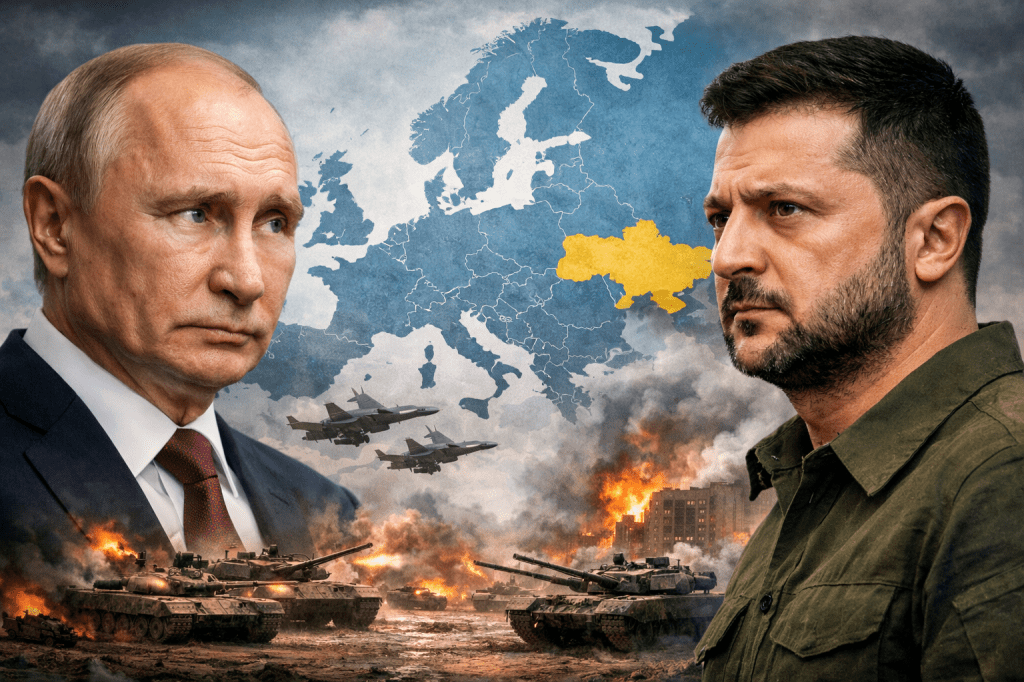
    History rarely turns on a single battle. More often, it turns on leadership—how power is exercised, how truth is handled, and how people are motivated when the cost becomes unbearable. The ongoing war between Russia and Ukraine is a vivid example. While weapons, manpower, and alliances matter greatly, the leadership styles of the two presidents involved are shaping the direction of this conflict in ways that may reach far beyond Eastern Europe.

    This is not merely a geopolitical struggle. It is a reminder that God rules in the affairs of men (Daniel 4:17), raising up leaders—wise or foolish, strong or weak—to accomplish His purposes.

    Two leaders, two radically different approaches

    On one side stands Vladimir Putin, a leader who governs through centralization, control, and fear. Power flows upward. Information flows downward—filtered, curated, and often softened to avoid displeasing the top. Loyalty is prized more than candor. This style has served Putin well in consolidating political power over decades.

    On the other side is Volodymyr Zelensky, whose leadership has evolved dramatically under fire. His approach is more distributed. He relies heavily on professional military advice, encourages honest feedback, and communicates openly with both his people and Ukraine’s allies. His authority rests less on fear and more on legitimacy and shared purpose.

    These differences do not determine who will “win” the war—but they strongly influence how the war unfolds.

    Leadership shapes direction, not destiny

    Wars are not decided by leadership style alone. Geography, industrial capacity, alliances, and sheer numbers still matter. Russia has greater manpower and resources, and it remains possible—even likely—that it will emerge from this war with some territorial gains.

    Yet leadership influences critical factors that accumulate over time:

    • Learning speed: Systems that punish bad news adapt slowly. Systems that tolerate honesty adjust faster.
    • Morale and endurance: Fear can compel obedience, but meaning sustains sacrifice.
    • Alliance management: Transparency builds trust; opacity erodes it.

    Ukraine’s resilience—its refusal to collapse under pressure—has surprised much of the world. That resilience is not accidental. It flows from a leadership style that rewards initiative, accepts responsibility, and shares risk with the population.

    Russia, by contrast, has relied on coercion and narrative control. That approach can sustain effort—but it struggles to correct mistakes quickly. Over long wars, such rigidity becomes costly.

    God’s hand over national leadership

    Scripture reminds us that God both appoints and removes leaders:

    “He changes times and seasons; He removes kings and raises up kings” (Daniel 2:21).

    This applies not only to righteous rulers, but also to flawed and even oppressive ones. God used Pharaoh, Nebuchadnezzar, Cyrus, and others—each very different in character—to accomplish His will.

    The contrast between Putin and Zelensky should not be viewed merely as democracy versus authoritarianism, or good versus evil in simplistic terms. Rather, it is another reminder that God allows leadership styles to expose national strengths and weaknesses, often preparing the stage for larger events yet to come.

    Ukraine’s influence on Europe’s future

    Regardless of how the war ends territorially, Ukraine has already changed Europe.

    Its steadfastness has:

    • Ended decades of European complacency
    • Reawakened military preparedness
    • Hardened attitudes toward coercion and appeasement

    Europe is moving—slowly but unmistakably—toward a more unified and force-ready posture. This matters prophetically.

    Bible prophecy indicates that a powerful leader will arise in Europe, one who will dominate the world scene for a short but intense period (Daniel 11; Revelation 13). This leader will not be timid. He will act decisively, militarily, and without the restraint that has characterized post–World War II Europe.

    Ukraine’s resistance may well shape the environment that produces such a leader—one forged in a Europe that has learned, painfully, that peace cannot rest on wishful thinking alone.

    A sobering prophetic possibility

    It is striking that biblical prophecy suggests a future European power that will not fear confrontation with Russia, even to the point of invasion when it serves his purposes (Daniel 11:44). While Scripture does not give all details, it does show that geopolitical power shifts dramatically at the end of this age.

    The current war does not fulfill these prophecies outright—but it conditions minds and institutions. It teaches Europe to think in terms of force, resolve, and preemptive action. Leadership styles matter here. Ukraine’s example reinforces the idea that survival favors decisiveness, unity, and readiness to act.

    Trajectory

    Leadership does not decide wars by itself—but it sets their trajectory. Putin’s style has produced endurance through control. Zelensky’s has produced resilience through shared purpose. Both are being used—knowingly or unknowingly—within God’s greater plan.

    For students of prophecy, this war is not just about borders. It is about preparation—of nations, leaders, and peoples—for events that Scripture tells us are coming.

    As Christ Himself warned, “See that you are not troubled; for all these things must come to pass” (Matthew 24:6).

    The task of God’s people is not fear, but understanding—and faith in the One who truly governs the nations.

  • The Trump-Zelensky Meeting: A Pause or a Prolongation?

    The Trump-Zelensky Meeting: A Pause or a Prolongation?

    On October 17, 2025, U.S. President Donald J. Trump hosted Ukrainian President Volodymyr Zelenskyy in Florida, following a phone call between Zelenskyy and Russian President Vladimir Putin. The meeting drew wide attention—especially Trump’s call for both Russia and Ukraine to “stop where they are” and his caution about supplying Tomahawk missiles to Ukraine. (“Face to Face With Zelensky, Trump Waffles on Providing Tomahawk Missiles”, http://www.time.com, October 18, 2025)

    That phrase—“stop where you are”—sounds like a ceasefire appeal. Trump wants a negotiated peace, not a sweeping Ukrainian military advance. He signaled reluctance to commit to delivering Tomahawk cruise missiles to Ukraine, warning that doing so could be a “dangerous escalation” and might deplete U.S. stockpiles. (ibid.)

    From a strategic standpoint, these positions carry profound implications for Ukraine’s ability to reclaim territory and check Russia’s offensive capability.

    The Military Dilemma: Risks, Opportunity, or Deadlock?

    1. Ukrainian counteroffensive depends on advanced capability

    Ukraine’s recovery of territory occupied by Russia relies not only on courage and manpower, but on force projection, intelligence, airpower, and deep-strike capability. Tomahawk missiles (with ranges up to ~2,500 km) would allow Ukraine to target Russian logistic hubs, ammunition depots, and command nodes far behind the front lines—imposing cost and pressure. (“Trump may approve Tomahawks for Ukraine if Russia continues war”, http://www.reuters.com, October 13, 2025)

    Without such long-range tools, Ukraine is often limited to tactical counterattacks, artillery duels, drones, or missile strikes of more limited reach. The risk: Russian forces retain sanctuary, rear logistics, and the ability to mobilize for future offensives.

    2. “Stop where you are” risks freezing Russian gains

    A cease-at-current-front-lines deals with “who holds what now” as a status quo. That potentially cements Russian control over occupied areas and undermines momentum for further Ukrainian advances. It may even embolden Russian forces to fortify, entrench and prepare further campaigns, knowing that any future shift in the balance would require much greater effort by Ukraine (and its backers).

    3. Escalation fears versus strategic deterrence

    Trump’s argument is risk-averse: supplying Tomahawks to Ukraine might trigger escalation, risk U.S. involvement, or cross red lines. Critics counter: inaction or under-arming Ukraine may ultimately prolong the war more than escalation would. Deterrence is stronger when backed by credible threat, not passive restraint.

    Thus, the meeting’s tone—calling for a halt and hesitating on high-end systems—implicitly leans toward a diplomatic pause rather than decisive battlefield advantage.

    Prolongation, Paradox, and European Responsibility

    While diplomacy is always a desirable goal, when military advantage is declining, peace talks at the wrong moment tend to prolong wars rather than conclude them. A war without clarity of leverage becomes a war of attrition. Ukraine, under less-than-optimal capabilities, risks being squeezed over time.

    This dynamic suggests a strategic inflection for Europe. If the United States—with Trump as president—hesitates to provide the most potent tools, Europe must not remain a passive bystander. Instead, the European Union and individual European nations should accelerate development of independent defense capability, reducing overreliance on U.S. arms and policy swings. If Europe can field credible deterrent power—air, long-range strike, resilient logistics, intelligence networks—it can shape the strategic balance, protect its eastern flank, and avoid being dragged into conflicts by external alliances.

    In short: Ukraine’s fate, and Europe’s independence, may hinge not on American generosity but on European resolve.

    Biblical Insight: False Prophets, Stale Remedies, and the Beast of Europe

    Throughout Scripture, God denounces spiritual mediocrity and false peace. In Jeremiah 6:14 we read:

    “They have healed the wound of my people lightly, saying, ‘Peace, peace,’ when there is no peace.” (NKJV)

    That is a prophetic warning against superficial, half-hearted solutions—peace declared before the root problem is addressed. When world leaders demand “peace now” without removing the forces of evil or ensuring justice, they risk masking deeper wounds rather than healing them.

    From a prophetic lens, the New Testament presents a future global power often called “the beast” (Revelation 13). Students of Bible prophecy understand this beast as a military-political force emerging in Europe—a revived “king of the North” power, leading a confederation of nations that exerts influence across the earth.

    If Europe were rising into military unity and dominance, that could align with the prophetic pattern. The reluctance of the U.S. (and perhaps the echoing call for restraint in Ukraine) may indirectly clear space for a European superpower to emerge. That is not speculation but caution: when world powers waver, the stage shifts—and biblical prophecy warns that a European beast with military might will arise before Christ’s return.

    Thus, trusting only in ceasefires or superpower mediation invites that prophetic shift. God calls His people to watch, to discern, and to remain rooted in His Kingdom—not in the vain illusions of human “peace” schemes.

    Call to Discernment

    The Trump–Zelensky meeting marks a critical crossroads. It could serve as a step toward peace—but more likely, given its posture, it may lock in a long stalemate that gradually advantages the aggressor. Unless Ukraine (and Europe) can muster sufficient clout, “stop where you are” becomes a perpetual cage.

    From God’s perspective, a peace that ignores justice is a faux peace. Jeremiah’s indictment of “peace, peace when there is none” reminds us that real healing demands confronting evil, not succumbing to superficial ceasefires. And Christian prophecy urges vigilance: as one power (the U.S.) hesitates, another (Europe) may arise—and that very beast may seek global dominance.

    Watch world events with biblical eyes, recognize that human schemes often fall short, and root your hope not in any earthly power, but in the return of Christ and the establishment of God’s Kingdom. In the meantime, let Europe—and the free world—awake: if we delay building real strength for justice, the prophetic pieces may fall faster than we expect.

  • Trump and Putin in Alaska: A Peace Summit Full of Pitfalls

    Trump and Putin in Alaska: A Peace Summit Full of Pitfalls

    Later this week, in Alaska, U.S. President Donald Trump will meet face-to-face with Russian President Vladimir Putin to discuss one of the most intractable crises of our time — Russia’s ongoing invasion of Ukraine. The announced agenda is ambitious: negotiate a framework for ending the war, possibly as the first step toward a ceasefire.

    The timing and optics are deliberate. Trump wants to present himself as the dealmaker who can succeed where others have failed — the leader who brings “peace through strength” and does it fast. But the devil, as always, is in the details. And those details make this meeting a minefield.

    Trump’s Goal: A Quick Win Through “Realism”

    From Trump’s perspective, the fastest way to stop the bloodshed is to recognize “facts on the ground” — in other words, to accept that Russia retains control of the territory it has already seized, including Crimea and much of eastern Ukraine. In exchange, Putin would agree to halt further offensives, and the West might offer security guarantees and economic relief to Ukraine.

    It’s a high-pressure, “take-it-or-leave-it” model: create a deal between Washington and Moscow first, then present it to Kyiv and Europe as the only viable path forward. The thinking is that Putin would pocket his territorial gains while the West declares a victory for peace.

    The Built-In Problems

    The plan has serious, perhaps fatal, flaws:

    1. Ukraine Isn’t at the Table – By structuring the Alaska talks as a bilateral U.S.–Russia summit, Trump risks sidelining the very country whose sovereignty is at stake. Ukrainian President Volodymyr Zelenskyy has made it clear: *nothing about Ukraine without Ukraine*.
    • Russia’s Track Record – In Georgia (2008), eastern Ukraine (2014–2015), and Syria (2016–2018), Moscow agreed to ceasefires mainly to regroup, rearm, and solidify its gains — not to make lasting peace.
    • Weak Enforcement – If the deal lacks robust monitoring and automatic penalties for violations, Russia can probe and push the limits without meaningful consequences.
    • Western Disunity – Forcing Ukraine to concede territory risks fracturing Western unity. Many European leaders reject any settlement that legitimizes territorial conquest, and public opinion in Ukraine is overwhelmingly against ceding land.

    The Likely Outcome: A Pause, Not a Peace

    Even if an agreement is signed, it’s far more likely to be an armistice in name only than a true resolution. Our analysis suggests that:

    • The most probable outcome is a “frozen conflict” — small-scale fighting, periodic ceasefire breaches, and Russia consolidating its hold on occupied areas.
    • The war’s core dispute — Ukraine’s sovereignty and borders — will remain unresolved.
    • Russia will use any pause to reinforce defenses, rebuild stockpiles, and prepare for future moves.
    • Ukraine, feeling pressured and sidelined, will quietly rearm and strengthen its alliances, waiting for a more favorable moment to push back.

    If Trump’s plan demands territorial concessions, the result will likely be a breathing space for Russia and a bitterly resentful Ukraine — with much of Europe also frustrated at the precedent it sets.

    The Peace the World Really Needs

    The Bible shows us that true peace will not come through deals built on compromise with aggression. Compromises may silence guns for a time, but they do not remove the seeds of future war. Real, lasting peace will only come when a world leader emerges who is stronger than any human power — one who will rule not with political expediency, but with perfect justice.

    That leader will be Jesus Christ at His return. Isaiah prophesied of Him:

    “Of the increase of His government and peace there will be no end… to order it and establish it with judgment and justice from that time forward, even forever” (Isaiah 9:7, NKJV).

    When Christ establishes His Kingdom, peace will not be negotiated on the basis of who holds what territory or who can extract the better deal. It will be enforced worldwide on the basis of God’s law, which ensures fairness, righteousness, and the protection of all peoples.

    Realities on the Ground

    The Trump–Putin meeting in Alaska may produce headlines about “ending the war,” but the realities on the ground — and the terms being floated — make a genuine resolution improbable. At best, the world may see a temporary reduction in hostilities. At worst, it will simply buy time for Russia to regroup and return to the fight.

    Until the day Christ returns to impose peace with justice, the world will keep watching leaders attempt to negotiate their way out of wars — and keep learning, painfully, that human solutions can never match God’s plan for lasting peace.

  • Germany and the EU’s Steadfast Commitment to Ukraine: Forging a New Defense Order in Europe

    Germany and the EU’s Steadfast Commitment to Ukraine: Forging a New Defense Order in Europe

    As the war in Ukraine grinds on into its fourth year, one reality has become increasingly clear: Germany and the European Union are in this for the long haul. Despite political volatility in the United States, especially under the second Trump administration, Europe is emerging as a reliable, strategic anchor in supporting Ukraine’s sovereignty and long-term security.

    What began as an urgent crisis response in 2022 has now transformed into a multi-layered defense partnership between Ukraine and the European continent. And in the process, Ukraine is not just receiving weapons—it is becoming an innovator and testing ground for a new kind of warfare. Meanwhile, Russia, through its persistent aggression, may ironically be catalyzing the very defense revolution that could ultimately contain its ambitions for decades to come.

    Germany and the EU: Committed for “As Long as It Takes”

    From Berlin to Brussels, the language is now consistent and resolute: support for Ukraine will continue until victory is achieved—or until a just and lasting peace is secured on Ukrainian terms.

    Chancellor Friedrich Merz of Germany has stepped up the country’s defense leadership in Europe, increasing Germany’s military aid package to €9 billion in 2025 alone. This includes the delivery of advanced Patriot air-defense systems, co-production of long-range missiles, and €2.2 billion worth of IRIS-T batteries. Crucially, Germany is also hosting joint weapons production facilities with Ukraine on European soil, a move that signals long-term industrial cooperation beyond the battlefield.

    The European Union, too, has institutionalized its support. The €50 billion Ukraine Facility, approved for the 2024–2027 period, locks in macro-financial, reconstruction, and defense aid. Meanwhile, the Weimar+ alliance—a defense coalition among key European powers—has pledged to support Ukraine with or without U.S. involvement.

    In fact, a German military official recently affirmed that Europe can sustain Ukraine’s war effort even in the event of a full American withdrawal, so long as European political will remains firm. The EU’s broader Readiness 2030 initiative further underlines this shift by aiming to consolidate a European defense industrial base that reduces dependence on U.S. capabilities.

    Ukraine: From Weapons Recipient to Tactical Innovator

    But Europe is not doing all the heavy lifting. Ukraine itself has evolved into a military innovator, leveraging foreign aid not merely for survival, but for transformation.

    Today, nearly 40% of Ukraine’s frontline weapons are produced domestically. Its booming defense industry employs over 300,000 people and fuels innovations that are reshaping battlefield dynamics. Of particular note is Ukraine’s rapid development of drone warfare, led by its Unmanned Systems Forces (USF), a newly formalized branch dedicated to autonomous and remote operations.

    In just one month (June 2025), Ukraine’s drones were responsible for striking over 19,600 targets, destroying dozens of Russian tanks, MLRS units, and artillery pieces. With drone success rates improving and international funding (such as a $50 million U.S.-German strike kit initiative) pouring in, Ukraine is developing a modular drone strike network that could neutralize traditional Russian advantages in massed armor and artillery.

    Through the BRAVE1 initiative, Ukraine has also created a tech incubator that funnels battlefield feedback directly into the hands of engineers and startups. Development cycles that take years in Western bureaucracies now take weeks in Ukraine—a feat made possible by urgency, ingenuity, and external support.

    Russia’s Unintended Consequence: Strengthening the EU’s Defense Posture

    Ironically, Russia’s aggression is unwittingly sharpening Europe’s strategic edge.

    Prior to the full-scale invasion of Ukraine in 2022, Europe was fragmented and reluctant to commit heavily to defense. But today, EU nations are rearming, integrating, and training together with a clarity and purpose not seen since the Cold War.

    Systems like European SkyShield, NATO’s integrated air-defense initiative, and common procurement strategies are building a continental arsenal designed to counter Russian aggression specifically. Germany’s forward-leaning role in hosting production and coordinating deliveries ensures that Europe is no longer just a donor—it is now a co-builder of deterrence.

    Meanwhile, Ukraine’s battlefield experiences are providing NATO and the EU with real-time intelligence and tactical data about Russian doctrine, drone use, EW tactics, and missile strategy. Each failed Russian assault gives Europe insight into how to optimize its future military posture.

    A Strategic Turning Point

    In the larger scope of history, what we are witnessing is not just a war for Ukraine’s borders. It is a war that is reshaping Europe’s strategic architecture. Germany and the EU are no longer reactive partners—they are becoming security guarantors and innovation accelerators.

    Ukraine, with the help of European and U.S. support, is engineering a defense ecosystem that fuses drones, AI, rapid prototyping, and layered defense systems. Though not yet decisive, these technologies are proving increasingly effective and cost-efficient against one of the world’s largest armies.

    In choosing war, Russia hoped to weaken NATO, divide Europe, and neutralize Ukraine. But in reality, it has accelerated Europe’s military cohesion, boosted Ukrainian resilience, and invited a tactical transformation that may eventually render its conventional military superiority obsolete.

    The Long Game

    Russia’s aggression may drag on, but the long game is becoming clearer: the West is building not just to defend Ukraine, but to render future invasions by authoritarian regimes impractical and self-defeating.

    Ukraine is fighting on the battlefield, but Europe is fortifying the future.

    And perhaps even more significantly, Bible prophecy indicates that a European entity—fully capable of defending itself against Russia—will arise in the future. (Revelation 13:1-4) What we are seeing today may very well be the early formation of that prophesied power, as Europe develops the military will, unity, and capabilities once thought unlikely in our time.

  • The Shifting Ground Beneath NATO: A Europe in Transition

    The Shifting Ground Beneath NATO: A Europe in Transition

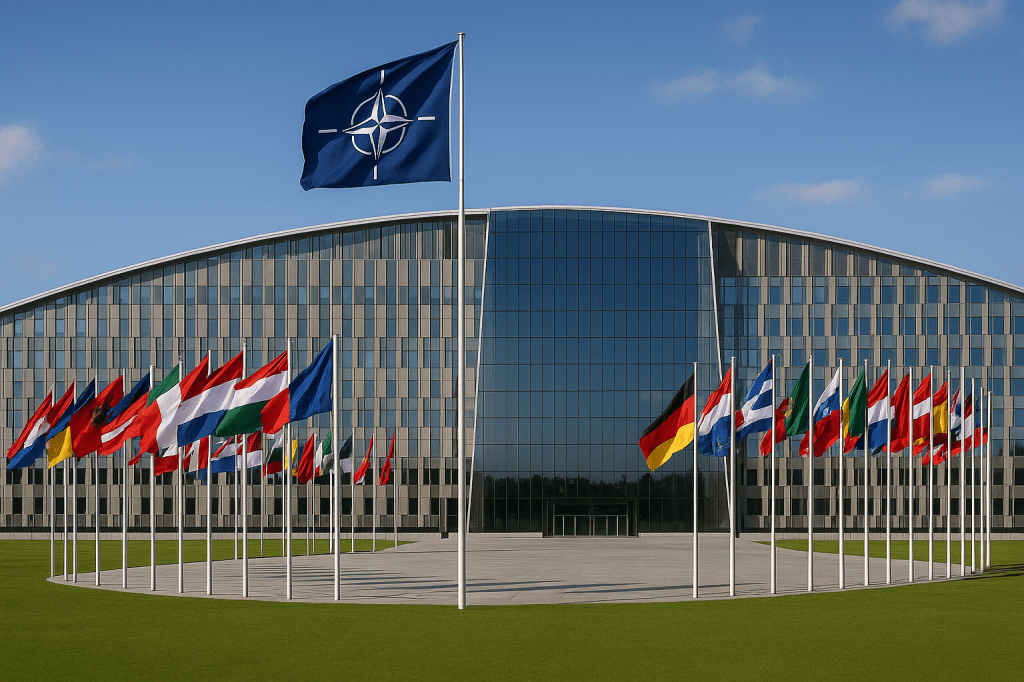
    The recently concluded 2025 NATO Summit in The Hague delivered a bold slate of commitments and strategic recalibrations. Dominated by landmark decisions and cautiously visionary declarations, the alliance appeared to chart a confident path forward. But beneath the surface, the tectonic plates of transatlantic security are beginning to shift—with Europe increasingly preparing for a future where the United States may no longer stand as the guarantor of its defense.

    A Bolder NATO: Spending and Strategy

    Among the most significant developments was the collective agreement to raise defense spending to 5% of GDP by 2035. Of this, 3.5% will go toward core military capabilities, while 1.5% is earmarked for broader security priorities such as infrastructure protection, cybersecurity, and supply chain resilience. This dramatic increase is not just symbolic. It reflects a long-standing frustration within NATO—particularly from Washington—that European members have lagged in their defense obligations. Now, with geopolitical tensions escalating and American leadership less predictable, Europe is stepping up.

    NATO also unveiled its first-ever Commercial Space Strategy, signaling a new frontier in collective defense. This move formalizes plans to integrate private-sector space capabilities—such as satellite surveillance and communication systems—into military operations. An implementation roadmap is set to be approved by NATO defense ministers later this year.

    Meanwhile, the alliance pledged renewed emphasis on cyber defenses, hybrid warfare preparedness, and the protection of critical infrastructure, areas of vulnerability increasingly targeted by state and non-state actors alike. These measures aim to increase the resilience of NATO members not only in wartime scenarios but also in persistent gray-zone conflicts where ambiguity and digital disruption reign.

    Another noteworthy agenda item was NATO’s intent to deepen partnerships with Indo-Pacific allies, particularly Japan, South Korea, and Australia. As China grows bolder and more assertive, NATO is reimagining its role beyond the Euro-Atlantic region. Strategic dialogues, joint exercises, and cooperative defense initiatives are expected to strengthen the global architecture of democratic security.

    In addition to its Indo-Pacific focus, NATO also reaffirmed Ukraine’s right to defend itself against Russian aggression. However, the alliance stopped short of making a formal, organization-wide commitment to provide military aid. Instead, several major NATO members—such as the United Kingdom, Germany, and France—pledged individually to support Ukraine materially. This fragmented approach highlights the alliance’s internal divisions and the geopolitical complexities of coordinating unified action in a time of shifting power dynamics.

    The Elephant in the Room: America’s Unsteady Hand

    But for all the summit’s optimism and resolve, a quiet anxiety lingered: What if the United States steps back?

    President Donald Trump, back in office for a second non-consecutive term, has repeatedly linked American military support to transactional calculations. He has questioned whether U.S. involvement in NATO should persist if other members don’t “pay their fair share.” More alarmingly for Europe, his administration has refused to frame Russian aggression as a fundamental threat unless it directly endangers U.S. security.

    This sentiment is not mere rhetoric. At the summit, Trump reiterated that America’s strategic choices will be tied to whether European crises touch American soil or interests. Such framing has left many European leaders uncertain about Washington’s reliability in a scenario where, say, Russia invades another European country not named Ukraine. The United States offered no significant new commitments to Ukraine at the summit, choosing instead to emphasize that existing aid would continue for the time being. The message was clear: while support is not being withdrawn, future assistance will depend heavily on whether Ukraine’s struggle is perceived to affect core American security interests.

    Europe’s Quiet Fallback Strategy

    In response, Europe is slowly but deliberately laying the groundwork for strategic autonomy. Initiatives such as the European Sky Shield Initiative, Permanent Structured Cooperation (PESCO), and the EU’s Strategic Compass are not duplicating NATO but rather hedging against its potential dysfunction.

    These projects are gradually increasing the EU’s independent capabilities in missile defense, cyber operations, logistics coordination, and rapid deployment. Bilateral agreements are proliferating among European states. Defense industries are being consolidated. Command and control structures are being adapted for interoperability across both NATO and EU frameworks.

    In effect, Europe is designing a plug-and-play security architecture: integrated with NATO when the U.S. remains committed, and seamlessly adaptable to EU leadership should American engagement falter. While legal, logistical, and political hurdles remain, the trajectory is clear.

    The Coming European Power Bloc

    From a biblical prophetic perspective, these developments echo a long-foretold transition. The Bible describes a time when a powerful European entity—”the beast” of Revelation 17 and Daniel 7—will rise as a dominant geopolitical and military force, independent of American support. This power, led by a coalition of ten kings or leaders, will wield economic, military, and moral influence on a global scale.

    The current cracks in NATO and Europe’s accelerating drive toward defense autonomy may well be early signs of this shift. America’s declining reliability is not simply a political story; it is part of a divine pattern that Scripture warns about. The weakening of transatlantic bonds is setting the stage for a new global order, one in which Europe stands alone, assertive, and significant.

    A New Order Taking Shape

    The 2025 NATO Summit may be remembered not only for its bold declarations on spending, space, and cyber readiness, but also for what it quietly signaled: that the ground under NATO is shifting. Europe is awakening to the reality that its long post-war dependence on American might is unsustainable.

    While Europe cannot yet defend itself alone, the groundwork is being laid. And according to biblical prophecy, the time is coming when it will not only be capable but destined to do so. In this light, today’s NATO is not a final structure but a transitional one—a fading vestige of an old world order giving way to a very different and more prophetic future.