As the war in Ukraine grinds on, U.S. President Donald Trump has unveiled a controversial peace proposal aimed at ending the conflict. His plan includes recognition of Russia’s annexation of Crimea, acceptance of Russian control over other occupied Ukrainian territories, a permanent block on Ukraine joining NATO, and the lifting of Western sanctions on Russia. The goal, Trump argues, is to “stop the killing” and restore stability.
But peace at this price is proving unacceptable—not just to Ukraine, but to much of Europe.
Why Ukraine Won’t Accept It
Ukrainian President Volodymyr Zelensky has remained firm: Crimea and the occupied territories are sovereign Ukrainian land. To accept this deal would violate Ukraine’s constitution, dishonor the memory of its fallen defenders, and reward aggression. As Zelensky bluntly put it, “This is our territory, the territory of the people of Ukraine.” No peace can be built on a foundation of surrender and injustice.
Why Europe Is Alarmed
European leaders are also rejecting the Trump plan. To them, it’s not peace—it’s appeasement. Recognizing territorial conquest sets a dangerous precedent in a continent scarred by war. EU officials warn that such a deal could “kill EU unity,” weaken NATO, and embolden future acts of aggression. By sidelining European voices and values, the proposal risks fracturing the Western alliance.
A World Without Shared Values
Trump’s plan, if implemented, will not produce peace. It will shift global dynamics. Europe is already moving toward greater strategic autonomy—asserting itself more forcefully in defense and diplomacy. The U.S., meanwhile, is at risk of forfeiting its global leadership—not due to a lack of military power, but from a growing disconnect with the moral compass of its democratic allies.
The Bible reminds us, “Can two walk together unless they are agreed?” (Amos 3:3). True peace, like true partnership, requires shared values—not just shared interests. Trump’s peace deal fails that test. And the world is watching.
The war in Ukraine is reshaping global alliances, military capabilities, and geopolitical expectations—but perhaps nowhere more profoundly than in Europe. While the United States continues to play an important role in Ukraine’s defense, its support under the Trump administration has become more measured, transactional, and at times uncertain. Into this vacuum has stepped a more assertive, rapidly maturing European military framework—one that is not just reacting to Russia, but preparing to stand on its own.
From Steadfast Ally to Strategic Partner: The U.S. Shifts Gear
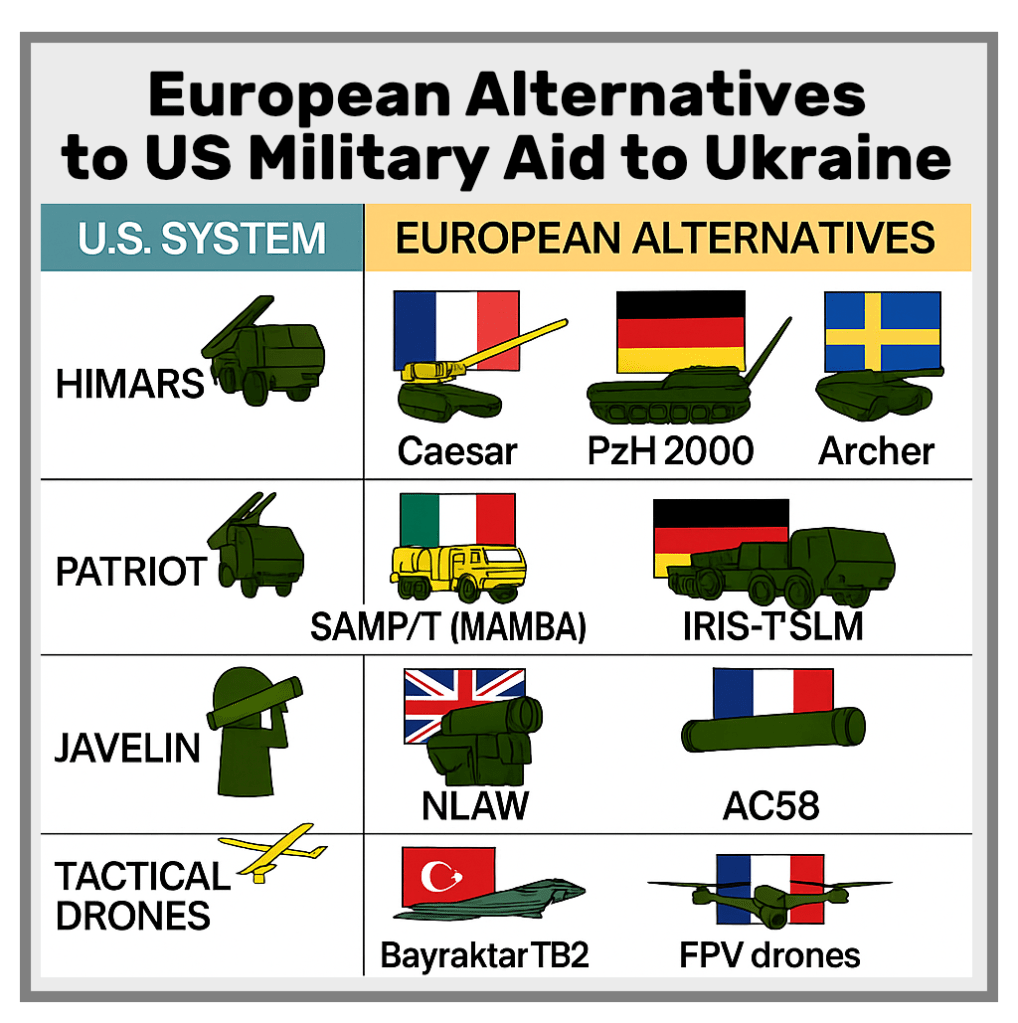
Since 2022, the United States has supplied Ukraine with a formidable array of weapons, intelligence, and training. Systems like the HIMARS rocket launchers—short for High Mobility Artillery Rocket System, a highly mobile and precise long-range rocket artillery platform—Patriot missile defense batteries, Javelin anti-tank missiles, and real-time satellite surveillance have been game-changers on the battlefield. But since 2024, U.S. support has become increasingly conditional and strategically leveraged, with aid packages paused or tied to diplomatic objectives—such as ceasefire compliance or debt repayment proposals.
This has caused anxiety in Kyiv and among NATO allies, highlighting the risks of over-reliance on a single, politically dynamic superpower. In response, Europe has not just filled the gap—it has transformed the challenge into an opportunity.
Europe’s Arsenal Awakens: Compatible Yet Competitive
European nations are rolling out a new generation of weapons systems—interoperable with NATO standards, but increasingly independent of U.S. designs.
In the field of long-range precision artillery and rockets, Europe is deploying systems like the German PzH 2000, the French Caesar, the Swedish Archer, and a European variant of the Multiple Launch Rocket System (MLRS). These alternatives offer firepower and accuracy that rival the U.S. HIMARS, with rapid deployment capabilities and growing battlefield efficiency.
In air defense, the European SAMP/T (Mamba)—short for Sol-Air Moyenne Portée/Terrestre, a medium-range surface-to-air missile system developed by France and Italy—Germany’s IRIS-T SLM—InfraRed Imaging System Tail/Surface Launched Medium-range, a cutting-edge ground-based air defense system—and the UK’s Sky Sabre are all emerging as powerful complements—and in some cases, future replacements—for the U.S. Patriot systems. These European systems are improving in range, reliability, and interoperability, proving effective in live combat scenarios.
Anti-tank warfare is another area of parity. The British NLAW—short for Next generation Light Anti-tank Weapon, a shoulder-fired, disposable missile system designed for use by infantry against armored vehicles—and French Eryx are proving to be cost-effective, easily deployed, and tactically agile alternatives to the U.S. Javelin. Though Javelin still leads in range and target-lock capabilities, European systems are preferred in close-quarter operations.
On the drone front, while the U.S. dominates with Switchblade and Phoenix Ghost drones, Europe—along with Türkiye—is catching up. The Bayraktar TB2—a medium-altitude, long-endurance unmanned combat aerial vehicle (UCAV) developed by Türkiye for reconnaissance and precision strikes—supplemented by rapid innovation in FPV (first-person view) drones—small, manually piloted drones equipped with cameras and often used as loitering munitions—along with loitering drone tech from Poland and Ukraine, shows Europe’s ability to adapt and mass-produce effective UAV solutions.
Europe is also developing its own surveillance and battlefield coordination systems. France’s CERES—short for Capacité de Renseignement Électromagnétique Spatiale, a constellation of French military satellites for electronic intelligence—and the EU Satellite Centre are improving regional intelligence capabilities, although still not at par with U.S. global intelligence networks. Meanwhile, European C4I (Command, Control, Communications, Computers, and Intelligence) systems are being refined for NATO compatibility and AI-assisted command structures.
These tools are not just theoretical—they are being live-tested on Ukrainian soil, under the harshest real-world conditions. Field results are feeding directly into Europe’s growing defense research, industrial production, and doctrine refinement.
Learning the Russian Way of War: A Crash Course in Deterrence
Beyond hardware, European forces are gaining unprecedented insight into Russian military doctrine and operational behavior:
Strengths: Effective use of artillery saturation, trench warfare, and electronic warfare (EW); increasing drone adaptability.
European observers and trainers embedded with Ukrainian units have seen these dynamics up close, allowing them to adapt faster than in any traditional training scenario. In effect, the war has become a real-time strategic classroom.
And this learning is being added on top of decades of exposure to U.S. military technology, tactics, and interoperability standards. The result is a fusion: a uniquely European doctrine that integrates NATO compatibility with localized resilience, battlefield adaptability, and self-reliance.
A New European Military Order Emerges
Europe is no longer merely a supporting actor in NATO—it is becoming a strategic force in its own right. This is evident in:
The €800 billion “ReArm Europe” initiative, pooling defense investment across the continent.
The Coalition of the Willing, a group of 30+ nations ready to back Ukraine with military and peacekeeping forces, regardless of Washington’s direction.
The EU Strategic Compass and PESCO (Permanent Structured Cooperation, a framework for EU member states to collaborate more closely on defense projects and initiatives) provide the backbone for long-term continental defense planning., providing the backbone for long-term continental defense planning.
More significantly, these steps represent a strategic pivot: from transatlantic dependence to continental autonomy, with the potential to stand alone—not just against Russia, but any global threat.
Europe as a Global Power
From a biblical and prophetic standpoint, this development is particularly striking. The Bible speaks of a final world power rising out of Europe, described in the book of Daniel and the Revelation as a “beast” system of immense influence—politically, economically, and militarily.
In that light, the consolidation of Europe’s military might—sparked by Russia’s war, accelerated by U.S. disengagement, and refined by real-world learning—takes on profound significance. What we are witnessing may well be the emergence of the military dimension of that prophesied power.
A military that was once fractured, slow, and dependent is now becoming agile, well-informed, technically sophisticated, and integrated—not only in doctrine and equipment but in strategic vision.
The Furnace That Forges
As U.S. assistance to Ukraine becomes more measured and transactional, Europe has not only risen to meet the challenge—it is turning the war in Ukraine into the forge of a new military identity. What began as a stopgap has become a transformation.
Europe is no longer just learning from the U.S.—it is learning from the enemy, innovating from within, and evolving into a deterrent force that could, one day, rival any military on Earth.
The fire of war is forging Europe’s future—and with it, the world’s direction.
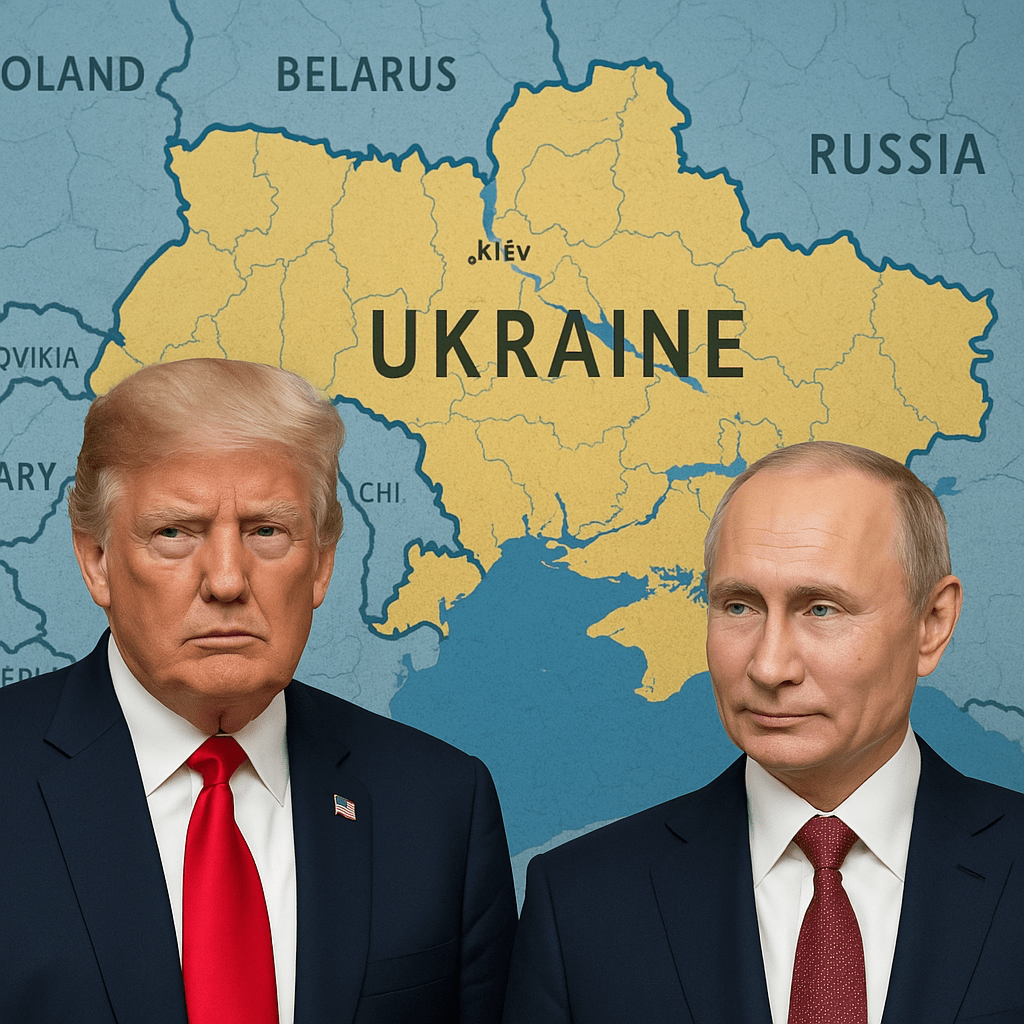
The world watched closely as U.S. President Donald Trump and Russian President Vladimir Putin announced a series of agreements aimed at de-escalating the ongoing war in Ukraine. These agreements, however, appear to be stopgap measures rather than a genuine step toward lasting peace. While the immediate effect includes a 30-day halt to attacks on energy infrastructure and a prisoner exchange, there is little to suggest that these deals will prevent further bloodshed in the long run.
A Ceasefire, But Not a Resolution
Among the key points agreed upon in the Trump-Putin discussions were:
A 30-day ceasefire specifically focused on stopping strikes against Ukraine’s energy infrastructure.
A prisoner exchange, with both sides agreeing to release a set number of captives, including injured Ukrainian soldiers.
Technical discussions regarding a maritime ceasefire in the Black Sea and potential future negotiations to settle the broader conflict.
Notably, Ukraine was not invited to participate in these negotiations. By excluding Ukraine from talks about its own future, Putin and Trump reinforced a troubling narrative: that Ukraine is merely a pawn in a larger ideological and geopolitical struggle between Russia and the West. This exclusion sends a dangerous message—that the future of sovereign nations can be determined by the world’s superpowers without their input or consent.
A Temporary Reprieve Before the Next Assault?
Russia has already demonstrated a pattern of using ceasefires to regroup and prepare for further military actions. The fact that Putin declined a broader ceasefire proposal suggests that his commitment to peace is, at best, conditional. History shows us that Russian military strategy often involves lulls in fighting to reorganize and strengthen its forces.
For Ukraine, this means that while a brief respite from targeted infrastructure attacks may provide some relief, the fundamental threat remains unchanged. Without its direct involvement in the negotiations, Ukraine has no guarantee that the war will not intensify once this temporary agreement expires.
Man’s Illusion of Peace
As history has repeatedly shown, mankind is incapable of achieving real and lasting peace apart from God. The fragile agreements between Trump and Putin are a testament to this reality. The Bible warns us of this in Isaiah 59:8, which states,
“The way of peace they do not know; there is no justice in their paths.”
Time and again, leaders have sought to craft peace through negotiations, ceasefires, and treaties—only for those agreements to collapse under the weight of human ambition, deception, and self-interest.
This pattern has played out throughout history:
The Treaty of Versailles ended World War I, only for World War II to erupt two decades later.
The Cold War ended with the collapse of the Soviet Union, yet conflicts between Russia and the West continue in various forms.
The Abraham Accords promised stability in the Middle East, yet war still persists between Israel and its adversaries.
The so-called “peace” of this world is nothing more than a pause before the next war. Human history is a testament to the inability of man to secure true peace through diplomacy alone. The apostle Paul warned of this when he wrote in 1 Thessalonians 5:3,
“For when they say, ‘Peace and safety!’ then sudden destruction comes upon them.”
This verse perfectly describes the situation unfolding in Ukraine—leaders proclaiming peace while the storm clouds of war still loom on the horizon.
The True Path to Lasting Peace
The Bible makes it clear that genuine peace will only come with the return of Jesus Christ. Isaiah 2:4 tells us of a future time when Christ will establish true peace:
“He shall judge between the nations, and shall rebuke many people; they shall beat their swords into plowshares, and their spears into pruning hooks; nation shall not lift up sword against nation, neither shall they learn war anymore.”
This vision stands in stark contrast to the fleeting and fragile agreements of world leaders today. The peace of this world is temporary, riddled with compromises that fail to address the root causes of conflict. True peace will not come through human agreements but through the reign of Jesus Christ, who will establish righteousness, justice, and lasting harmony among nations.
A World Awaiting True Peace
The Trump-Putin agreements are yet another example of mankind’s inability to secure enduring peace. While they may provide temporary relief, they do not address the deeper issues fueling the conflict. As long as nations continue to rely on their own wisdom rather than seeking the guidance of God, wars and conflicts will persist.
The world yearns for peace, but it will not find it through diplomatic maneuvering, fragile treaties, or political posturing. It will only come when the Prince of Peace establishes His Kingdom. Until then, mankind will continue to produce nothing more than temporary pauses before the next war.
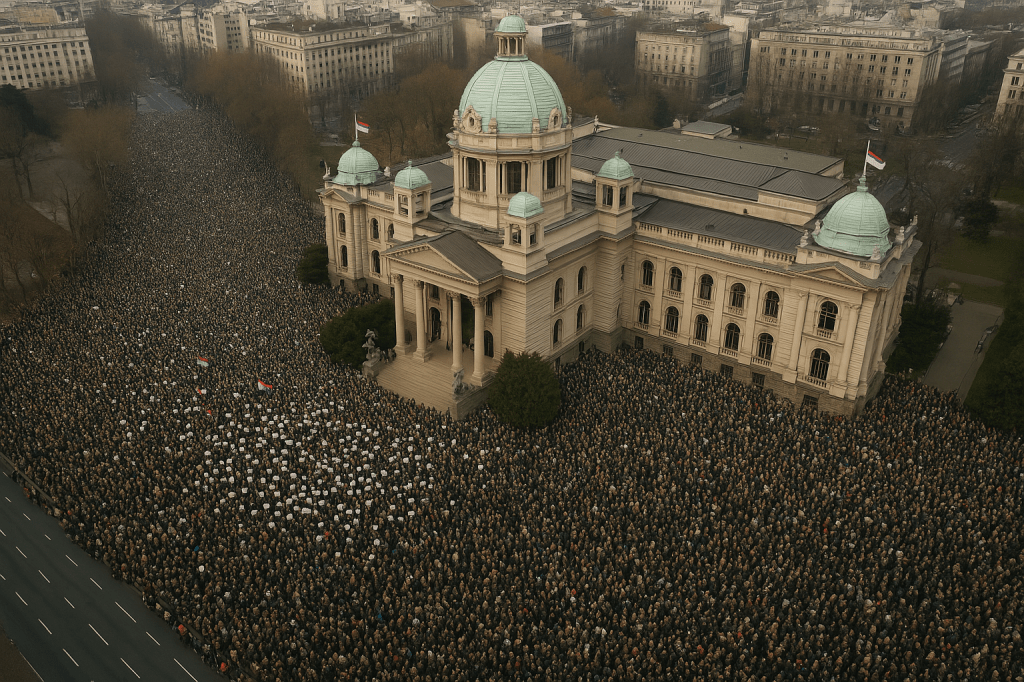
The streets of Bratislava, Belgrade, Budapest, and Bucharest are alive with the voices of tens of thousands demanding a shift in their nations’ political trajectories. Across Slovakia, Serbia, Hungary, and Romania, citizens are rejecting the pro-Russian policies of their governments and calling for a stronger alignment with the European Union. This movement—growing in intensity—highlights a reality that runs counter to Vladimir Putin’s ambitions: rather than regaining dominance over Eastern Europe, Russia’s invasion of Ukraine has accelerated the ideological and political realignment of these nations toward Western Europe.
The Backfiring of Putin’s Strategy
When Russia launched its full-scale invasion of Ukraine in 2022, Putin envisioned a swift conquest that would solidify Russia’s sphere of influence and deter former Soviet and Warsaw Pact nations from deepening their ties with the EU and NATO. However, the opposite has occurred. Ukraine, once balancing between East and West, is now firmly committed to European integration. Finland and Sweden have abandoned neutrality and joined NATO, while Poland and the Baltic states have ramped up their defenses against potential Russian aggression.
Now, the aftershocks of Russia’s aggression are manifesting in countries that were not initially on the frontlines. The recent protests in Slovakia erupted over Prime Minister Robert Fico’s overtures to Moscow. In Serbia, young demonstrators are rallying against government corruption and Russia’s influence over President Aleksandar Vučić. Romania has seen protests amid political maneuvering linked to Russian interference in its elections. Hungary, under Viktor Orbán, remains the Kremlin’s closest EU ally, yet anti-government demonstrations indicate a growing discontent with Budapest’s pro-Russian policies. These movements suggest a broader continental shift, as nations that once sat on the geopolitical fence are now tilting decisively toward Brussels and away from Moscow.
The Historical Parallels: The Two Legs of Europe
Interestingly, these very nations were once part of or influenced by either the Holy Roman Empire or the Byzantine Empire—two great pillars of European civilization that emerged from the division of the old Roman Empire. Slovakia and Hungary were historically connected to the Holy Roman Empire, while Serbia and Romania had ties to the Byzantine Empire.
This historical context is striking. Europe today appears to be reconfiguring itself in ways reminiscent of its old self that is divided between the Holy Roman Empire in the west, and the Byzantine Empire in the east. These two regions have also long been shaped by the spiritual morals of the Catholic Church and Orthodox Christianity—two branches of the same faith that split centuries ago. This shared Christian heritage continues to influence their cultural and political identities, even as they navigate contemporary geopolitical shifts.
Setting the Stage for Prophetic Fulfillment
While these protests may not immediately result in Slovakia, Serbia, Hungary, or Romania officially pivoting toward the EU, they appear to be setting the trajectory toward a greater geopolitical realignment—one that aligns with biblical prophecy. Scripture foretells the re-emergence of a powerful entity rooted in the traditions of the Roman Empire. The Book of Daniel describes a final kingdom that will arise in the last days:
“And the fourth kingdom shall be as strong as iron, inasmuch as iron breaks in pieces and shatters everything; and like iron that crushes, that kingdom will break in pieces and crush all the others. Whereas you saw the feet and toes, partly of potter’s clay and partly of iron, the kingdom shall be divided; yet the strength of the iron shall be in it, just as you saw the iron mixed with ceramic clay” (Daniel 2:40-41, NKJV).
This divided kingdom, depicted in Nebuchadnezzar’s vision, symbolizes the final phase of the Roman system—comprising strong and weak elements, yet unified in a form of revived imperial authority. The protests across Eastern Europe, calling for closer ties to the EU, indicate that these nations are being pulled toward what could eventually form the prophesied final configuration of the Roman Empire.
A Europe in Transition
Russia’s war in Ukraine was intended to reassert Moscow’s dominance, but instead, it is accelerating Europe’s realignment along historical lines. The protests in Eastern Europe are not merely political events; they are part of a broader transformation that echoes the division of the old Roman world. Whether today’s movements will result in immediate policy shifts remains uncertain, but the trajectory is clear: countries in Eastern Europe that used to be part of, under the influence of, or had a close relationship with the old Roman Empire are moving away from Russian influence and gravitating toward a European-centered future.
For those who understand biblical prophecy, these events provide yet another piece of the puzzle. The geopolitical restructuring we are witnessing today may well be part of the unfolding of God’s plan, leading to the re-emergence of the Roman system that will play a pivotal role in the end times.
For decades, the United States has been the linchpin of global security, the backbone of NATO, the chief protector of the Pacific, and the ultimate deterrent against authoritarian expansionism. However, recent developments suggest that America’s role as the world’s guardian is eroding—an erosion driven not just by political decisions, but perhaps by a deeper spiritual message that the nation must heed.
A Pattern of Unreliability in U.S. Commitments
The Trump administration’s handling of intelligence sharing with Ukraine has sent shockwaves through allied nations. The sudden suspension of intelligence support to Ukraine, followed by its conditional resumption, has raised concerns about America’s commitment to its allies. While Ukraine’s struggle against Russian aggression continues, the erratic nature of U.S. policy has left NATO nations questioning whether they could face a similar fate.
European nations, sensing the volatility of U.S. policy, are now exploring alternative security arrangements. The European Union is considering expanding its military intelligence capabilities and reducing its reliance on U.S. intelligence. Countries such as France and Germany are leading discussions on an independent European military force—an idea that was once dismissed as politically infeasible but is now gaining momentum.
In the Pacific, America’s key allies—South Korea, Taiwan, and the Philippines—are also recalibrating their defense strategies. South Korea is bolstering regional partnerships, particularly with Japan, in anticipation of a less reliable American presence. Taiwan is actively seeking multilateral security cooperation beyond the U.S., participating in joint military exercises with the Philippines and Japan. Meanwhile, the Philippines is modernizing its military and diversifying its defense partnerships, engaging countries like Australia and Canada in military agreements.
The Breakdown of America’s Global Leadership
This growing shift away from American reliance signals the waning of U.S. global leadership. Allies who once placed unwavering trust in Washington now see the need to hedge their bets. For decades, the U.S. thrived on the strength of its alliances, but as these alliances weaken, so too does America’s influence in global affairs.
Historically, great empires did not fall solely due to external threats but because of internal decay. America’s reluctance or inability to maintain stable commitments to its allies mirrors the decline of past world powers. The erosion of trust in U.S. leadership is not just a political problem—it is symptomatic of deeper issues plaguing the nation.
A Spiritual Message to America
From a biblical perspective, national greatness is not simply a product of military strength or economic prowess—it is tied to moral and spiritual standing. The United States has long claimed to be a nation under God, but its increasing political instability, social divisions, and unreliable leadership may be signs that it is drifting further from divine favor.
The Bible warns that nations that forget God will face decline. The book of Proverbs states,
“Righteousness exalts a nation, but sin is a reproach to any people” (Proverbs 14:34).
When a nation abandons righteousness, its foundations begin to crumble, and its power wanes.
Could it be that God is allowing America’s global dominance to wane as a wake-up call? The moral compass of the nation has shifted dramatically, embracing ideologies and practices that directly contradict biblical values. At the same time, political turmoil and international distrust are rising. The weakening of U.S. leadership should not just be seen as a strategic challenge but also as a spiritual warning.
The Path to Restoration
If America wishes to maintain its standing as a world power, it must look beyond military alliances and strategic policies. The key to lasting strength is not just in political or economic reforms but in a national return to godly principles.
Leaders must recognize that power without righteousness is fleeting. The nation must prioritize integrity, justice, and moral leadership if it hopes to remain a stabilizing force in the world. This requires not only changes in governance but also a revival of spiritual commitment among its people.
America’s allies are preparing for a world where the U.S. is no longer the primary protector. If this trend continues, the United States will find itself increasingly isolated, no longer at the helm of world affairs. This should be a sobering reality for American leaders, but also an opportunity—a moment to turn back to God, to seek His guidance, and to reestablish itself as a force for good in the world.