Category: Uncategorized

  • EU’s Proposal on Ukraine’s Critical Minerals: A Shift Toward European Integration?

    EU’s Proposal on Ukraine’s Critical Minerals: A Shift Toward European Integration?

    In recent months, Ukraine has found itself at the center of global competition over critical minerals, with both the United States and the European Union seeking agreements to secure access to these valuable resources. However, as negotiations with the U.S. have stalled, the EU has stepped forward with a proposal that could shift the geopolitical balance in Europe.

    The EU’s Approach: A “Win-Win” Partnership

    Unlike the U.S. proposal, which was heavily transactional and tied to security aid, the EU’s offer has been framed as a strategic, long-term partnership rather than a mere exchange of resources for financial assistance. European Commissioner for Industrial Strategy, Stéphane Séjourné, recently emphasized that Ukraine could supply 21 of the 30 critical minerals the EU requires, making it an ideal partner in Europe’s push for greater resource independence.

    This proposal is in line with the EU’s broader strategy of reducing reliance on Chinese and Russian supplies and securing long-term energy and industrial resilience. It aims to integrate Ukraine into the EU’s industrial supply chains, offering not only investment in Ukraine’s mining sector but also technology transfers and regulatory alignment that could pave the way for a closer economic and political relationship with Europe.

    How the EU’s Offer Differs from the U.S. Proposal

    1. Strategic Integration vs. Short-Term Gains 

    • The EU’s proposal aligns Ukraine with European industrial and security frameworks, bringing it closer to potential EU membership. 
    • The U.S. approach was more transactional, seeking raw material access in return for security guarantees without long-term industrial integration.

    2. Regulatory and Economic Support 

    • The EU aims to invest in Ukraine’s critical mineral infrastructure, including sustainable mining practices, refining capabilities, and workforce development. 
    • The U.S., by contrast, sought direct supply chain access but did not outline a comprehensive plan to help Ukraine develop its domestic capabilities. 

    3. Security Implications 

    • While the U.S. focused on mineral access in exchange for military aid, the EU’s proposal suggests that economic stability and industrial cooperation could serve as a stronger foundation for Ukraine’s security.
    • This approach could reduce Ukraine’s reliance on the U.S. for defense aid by giving it stronger economic ties within Europe.

    What This Means for Ukraine’s Future

    Despite the collapse of U.S.-Ukraine negotiations, Ukraine has signaled that it remains open to working with the U.S. on a minerals deal, provided the terms are more favorable. However, if Ukraine proceeds with the EU’s proposal first, it could enter an agreement that better respects its sovereignty and ensures that its mineral wealth is used to strengthen its own economy rather than merely supplying foreign industries.

    A Stronger EU: The Potential Consequences for Transatlantic Relations

    If Ukraine prioritizes the EU’s deal over the U.S. proposal, this could have major geopolitical consequences.

    1. EU’s Rise as an Alternative to U.S. Power in Europe 

    • By securing Ukraine’s critical minerals, the EU would take a significant step toward becoming an independent power bloc, reducing its reliance on the U.S. for both economic and security needs.
    • This would empower European nations bordering Russia, allowing them to develop stronger defense and economic resilience without relying solely on NATO and U.S. support.

    2. Ukraine Drawn Closer to the EU 

    • A minerals agreement with the EU would naturally lead to closer political and economic alignment with Europe, accelerating Ukraine’s eventual integration into the EU’s single market and security architecture.
    • If Ukraine sees greater benefits from working with the EU, it could distance itself from U.S. foreign policy priorities, weakening Washington’s influence in Eastern Europe.

    3. The Birth of a European Security Alternative 

    • With Ukraine and the EU working together on resource security, Europe could begin to develop its own security mechanisms, reducing dependence on U.S. military aid and NATO commitments.
    • This could lay the groundwork for a stronger European defense alliance, providing greater security guarantees to nations like Poland, the Baltic States, and Romania—countries that sit on the frontlines of tensions with Russia.

    The EU’s Play for Strategic Autonomy

    The EU’s proposal to Ukraine represents more than just a minerals agreement—it is a strategic move to reshape Europe’s geopolitical landscape. If Ukraine accepts the EU’s offer under favorable terms, it could find greater stability, economic development, and integration into the European system.

    At the same time, such a move would strengthen the EU’s position as a global player, providing an alternative to U.S. dominance in the region and offering border nations a new security framework that is more rooted in economic interdependence than military aid.

    As negotiations continue, Ukraine stands at a crossroads: align more closely with Europe for long-term stability, or continue balancing its options with the U.S. Either way, the outcome will shape the future of European and transatlantic relations for years to come.
  • The West Philippine Sea Conflict: A Biblical Perspective on War, Prophecy, and the Coming Kingdom of God

    The West Philippine Sea Conflict: A Biblical Perspective on War, Prophecy, and the Coming Kingdom of God

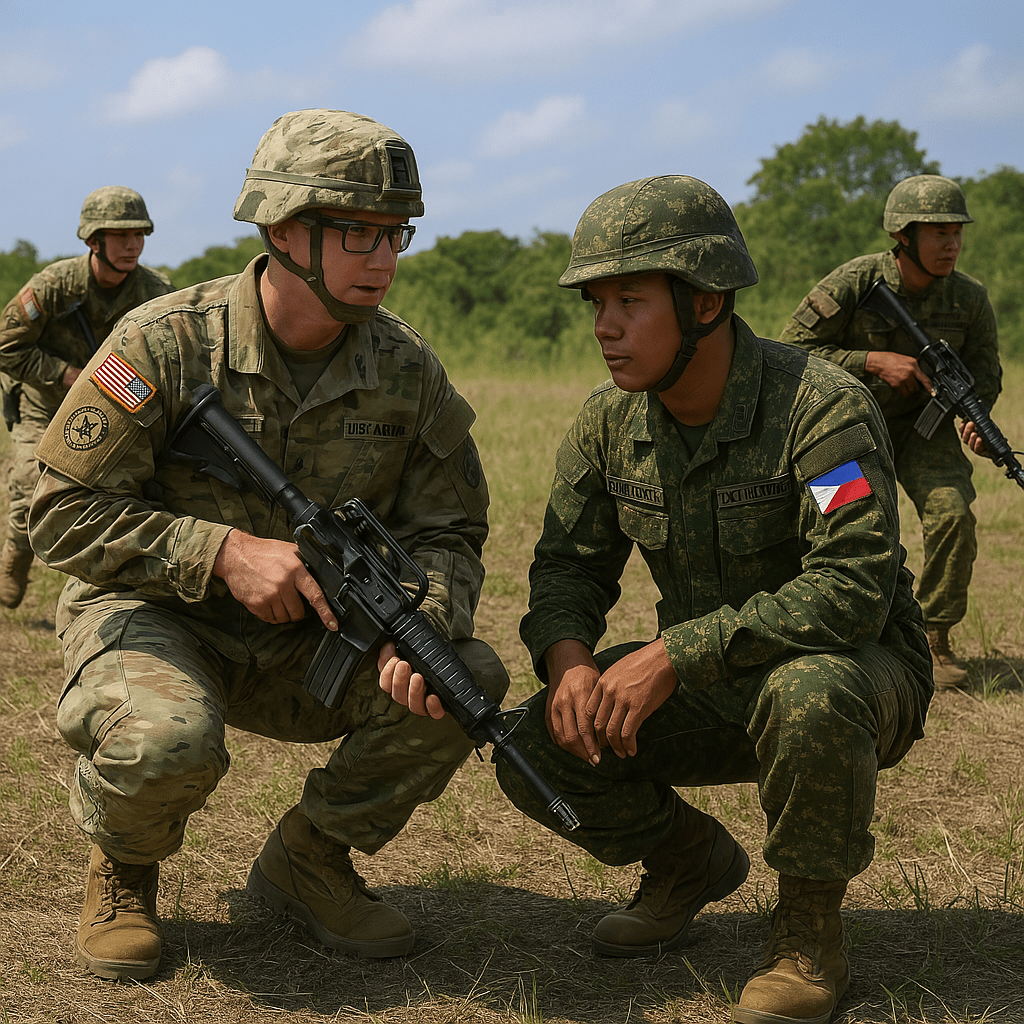
    The conflict in the West Philippine Sea continues to escalate as the Philippines strengthens its defense posture in response to China’s growing assertiveness. One of the latest developments is the acquisition of the Typhon missile system from the United States, a powerful deterrent against further incursions into Philippine waters. This move, however, has drawn criticism from China, which claims that the Philippines is escalating tensions. In response, President Ferdinand Marcos Jr. has stated that the missiles will only remain as long as China continues its illegal activities—harassing Filipino fishermen, using military force to assert its claims, and disregarding international law. 

    But beyond geopolitics, the West Philippine Sea dispute is part of a larger pattern: mankind’s long history of war and conflict, rooted in disobedience to God. This ongoing struggle, along with the increasing militarization of the world, aligns with Bible prophecy, which warns of even greater conflicts ahead—culminating in global warfare before Christ’s return. 

    The Typhon Missile System: A Game-Changer in Philippine Defense 

    The Typhon missile system, also known as the Mid-Range Capability (MRC) system, is a mobile land-based launcher capable of firing Tomahawk cruise missiles and SM-6 missiles. These missiles provide: 

    • Long-range precision strikes – The Tomahawk can hit targets1,500+ km away, while the SM6 can engage ships and aircraft at ranges of 370 km. 
    • Antiship and antiair capabilities – This allows the Philippines to counter both naval and aerial threats. 
    • High mobility – The system can be repositioned, making it difficult for adversaries to target. 
    • Strategic deterrence – China will now have to factor in the risk of a retaliatory strike if it engages in aggressive actions against the Philippines. 

    Why the Typhon System Matters in the West Philippine Sea 

    For years, China has harassed Filipino fishermen, ignored the 2016 arbitral ruling that invalidated its sweeping claims, and used military force against Philippine coast guard vessels. The Typhon system gives the Philippines a credible deterrent, making it riskier for China to continue its coercive behavior. 

    President Marcos has made it clear: 

    If China ceases its aggressive actions, he is willing to return the missiles to the U.S. But as long as China refuses to respect Philippine sovereignty, the system remains in place, signaling the country’s commitment to self-defense. 

    However, this development also has broader geopolitical implications. It strengthens the U.S.-Philippines alliance, signaling that Manila is willing to stand firm against Beijing. But it also increases the risk of the Philippines being drawn into a larger regional conflict, as tensions between China and Western-aligned nations continue to rise. 

    From Cain to the West Philippine Sea: The Legacy of Human Conflict 

    The Bible reveals that war has been part of human history since the earliest days of civilization. Cain’s murder of Abel (Genesis 4:8) was driven by pride, jealousy, and disobedience—traits that have fueled conflicts throughout history. Nations, much like individuals, fight over power, resources, and dominance, and the West Philippine Sea dispute is no exception. 

    Jesus Christ warned that the world would be filled with wars before His return: 

    “And you will hear of wars and rumors of wars… For nation will rise against nation, and kingdom against kingdom” (Matthew 24:6-7).

    The current geopolitical landscape, including conflicts in Eastern Europe, the Middle East, and Asia, reflects this prophecy. As tensions grow, the world inches closer to a final, devastating war that will threaten human survival itself. 

    Revelation 9: The Prophesied Asian Horde and the Coming Global War 

    One of the most chilling prophecies about future conflicts is found in Revelation 9:13-19, where a massive army of 200 million soldiers from the East launches an attack on a revived Roman Empire (a future European superpower). This event will be part of the Great Tribulation, a time of unprecedented war and destruction. 

    Given the Philippines’ Western cultural and religious ties, it is likely that the country will be caught in the middle of this massive war. The Philippines maybe overrun by eastern forces as they advance toward Europe, leading to widespread devastation. The Bible warns that one-third of humanity will perish in this global conflict, making it the deadliest war in history. 

    The Brink of Human Extinction—And Christ’s Return 

    Jesus Christ prophesied that if these wars were allowed to continue unchecked, “no flesh would be saved” (Matthew 24:22). Today, with nuclear weapons, biological warfare, and advanced missile systems, human civilization has the capability to wipe itself out. 

    However, just as the world stands on the edge of destruction, Jesus Christ will return to intervene. He will destroy the violent nations, put an end to human war, and establish His righteous government on earth. 

    The Coming Kingdom of God: A Thousand Years of Peace 

    When Christ establishes His Kingdom, the world will finally experience the peace that has eluded it for thousands of years. The prophecy in Micah 4:3-4 will be fulfilled: 

    “They shall beat their swords into plowshares, and their spears into pruning hooks; 

    Nation shall not lift up sword against nation, neither shall they learn war anymore.”

    • No more territorial disputes. 
    • No more military alliances and arms races. 
    • No more wars over power and resources. 

    Instead, all nations—including the Philippines and China—will be ruled under God’s perfect law, where justice and fairness will prevail. 

    Where Should We Place Our Trust? 

    The West Philippine Sea dispute, the acquisition of advanced weapons, and the growing tensions between nations all point to a world spiraling toward greater conflict. While nations invest in weapons and military alliances for protection, these solutions are only temporary and fragile. 

    Jesus Christ tells us where our focus should be: “Seek first the Kingdom of God and His righteousness” (Matthew 6:33). 

    No human government, no military alliance, and no missile system can bring true, lasting peace. Only when Christ returns will wars cease, and mankind will finally live in harmony. Until then, we must prepare not just for physical conflicts, but for the spiritual battle ahead—choosing to align ourselves with God’s coming Kingdom rather than the failing kingdoms of this world. 

  • The Israel-Hamas Ceasefire Agreement: A Fragile Pause in a Deep-Rooted Conflict

    On January 15, 2025, a ceasefire agreement was reached between Israel and Hamas, marking a temporary halt to months of intense conflict that had ravaged Gaza and strained international relations. The deal, mediated by Egypt, Qatar, and the United States, was celebrated as a diplomatic victory, yet its fragile nature raises significant concerns about the future stability of the region.

    The Events Leading to the Ceasefire

    The most recent escalation between Israel and Hamas began in late 2024, following a series of violent incidents, including rocket attacks from Gaza and retaliatory airstrikes from Israel. Tensions were further exacerbated by clashes at the Al-Aqsa Mosque, Israeli military operations in the West Bank, and ongoing disputes over settlements and land rights. The humanitarian crisis in Gaza, with widespread destruction and casualties, prompted urgent calls for intervention from the international community. The ceasefire was the result of extensive negotiations, with mediators pushing for an immediate cessation of hostilities and the release of hostages.

    Major Points of the Agreement

    The ceasefire agreement includes several key provisions:

    • Cessation of Hostilities: Both sides agreed to halt military operations, including rocket launches from Gaza and Israeli airstrikes.
    • Humanitarian Aid: Increased access for humanitarian aid into Gaza, with the UN and other agencies facilitating relief efforts.
    • Prisoner Exchange: Hamas agreed to release Israeli hostages in exchange for Palestinian prisoners held in Israeli jails.
    • Easing of Blockade: Israel committed to allowing more goods and construction materials into Gaza, provided Hamas complies with security conditions.
    • Continued Diplomatic Talks: A roadmap for further negotiations aimed at preventing future escalations.

    Potential Future Problems

    While the ceasefire provides a temporary reprieve, several unresolved issues threaten its longevity:

    • Lack of Permanent Resolution: The agreement does not address the fundamental disputes over land, sovereignty, and national identity.
    • Factional Divisions: Internal divisions within Hamas and Israeli politics may undermine commitments to the ceasefire.
    • Regional Instability: Involvement of Iran, Hezbollah, and other regional actors could reignite conflict.
    • Public Sentiments: Distrust among civilians on both sides remains high, making long-term peace difficult to achieve.

    The Ancient Roots of the Conflict

    The hostilities between Israel and its Arab neighbors are deeply rooted in history, extending beyond modern politics to the very origins of the Abrahamic faiths. The conflict between some of the descendants of Abraham—those of Ishmael and his allies on one hand, and the descendants of Isaac and Jacob on the other—has fueled tensions for millennia. The descendants of Ishmael, traditionally associated with the Arab nations, and those of Isaac and Jacob, from whom the Israelites descend, have had a history of strife dating back to the biblical era. This ancient animosity has manifested in territorial disputes, religious tensions, and geopolitical struggles that persist to this day.

    An Imperfect Agreement with Uncertain Outcomes

    Any agreement reached in the present age remains imperfect, and history has shown that ceasefires often serve as mere pauses before renewed violence. The temporary peace achieved through diplomatic means may only lead to deeper conflicts in the future, as each side re-arms and prepares for the next confrontation. With the world becoming increasingly wicked and lawless, the conflicts in the Middle East will likely continue to intensify, fulfilling biblical prophecies of turmoil in the region before the end of this age.

    The Only Lasting Solution: The Kingdom of God

    While human efforts at peacemaking may provide short-term relief, they cannot bring about true and lasting peace. The only real solution to the Middle East conflict—and to all conflicts worldwide—lies in the coming Kingdom of God under Christ. As prophesied in the Bible, Jesus Christ will return to establish a righteous government that will rule both Jews and Arabs, as well as all nations. Under His rule, justice will prevail, and the hostilities that have plagued the descendants of Abraham will finally come to an end.

    The day will come when swords will be beaten into plowshares, and nations will no longer lift up swords against one another (Isaiah 2:4). Until then, the world will continue to witness conflicts like those between Israel and Hamas, and temporary ceasefires will serve as fleeting glimpses of peace in a world still dominated by human strife. But for those who believe in God’s promises, there is hope in the coming Kingdom—a kingdom that will bring true peace, not only to the Middle East but to all of humanity.

  • Modern Slavery: A Global Crisis and the Prophetic Future

    In today’s world, slavery continues to be a harsh reality for millions of people, despite its formal abolition in many countries over a century ago. While the image of chains and plantation fields may no longer be the dominant symbol of slavery, its modern-day manifestations are no less horrific. Millions of men, women, and children around the globe still suffer under slavery-like conditions, trapped in exploitative labor, forced servitude, or trafficking networks. This modern slavery, while more hidden, is widespread, and its presence underscores the deeply entrenched injustices that persist in the world today.

    Different Forms of Modern-Day Slavery

    Modern slavery takes on various forms, each with its unique characteristics but all rooted in exploitation and a denial of human dignity. These include:

    • Human Trafficking – This is one of the most recognized forms of modern slavery, where individuals are forcibly or fraudulently recruited, transported, and exploited for purposes such as sexual exploitation, forced labor, or even organ harvesting.
    • Forced Labor – Many people work under coercive conditions where they are compelled to work for little or no pay, often under threat of violence or legal reprisal. This includes industries like agriculture, manufacturing, and construction, where workers are often invisible and denied basic rights.
    • Child Labor – Millions of children across the globe are subjected to labor under conditions of exploitation, working long hours in hazardous environments instead of going to school and enjoying their childhood. The worst cases involve children being trafficked for sexual exploitation or used as soldiers in conflict zones.
    • Debt Bondage – This occurs when people are forced to work to repay a debt, but the debt is manipulated or inflated so they are never able to pay it off, thus being trapped in perpetual servitude.
    • Sexual Exploitation – This form of slavery involves individuals being coerced or forced into the sex trade, often through trafficking. Victims are subjected to extreme violence, manipulation, and exploitation, with little to no escape.
    • Domestic Servitude – People, often women and children, are forced to work as domestic servants in homes where they face physical and emotional abuse, isolation, and extremely low wages.

    Global Statistics on Modern-Day Slavery

    Despite efforts to combat slavery through international legislation, advocacy, and public awareness, the numbers are staggering:

    • 40.3 million people are estimated to be trapped in modern-day slavery worldwide.
    • Of these, 24.9 million are in forced labor, and 15.4 million are in forced marriages.
    • One in every 200 people globally is estimated to be living in modern slavery.
    • The countries most affected by modern-day slavery include India, China, Pakistan, North Korea, and Nigeria. However, no nation is completely free from the issue, as slavery-like conditions persist even in developed nations, often hidden within supply chains or domestic servitude.

    The Future: The Role of Babylon the Great and the Beast

    The Bible provides a prophetic perspective on the future of human societies. In the book of Revelation, we see a symbolic entity called “Babylon the Great,” which represents a global system of economic and political control that exploits humanity. This system is said to lead nations into greater oppression and immorality, much like how slavery and human trafficking continue to thrive in our world today.

    Revelation 18:11–13 (NKJV) paints a grim picture of the economic exploitation and the suffering of the people in Babylon:

    “And the merchants of the earth will weep and mourn over her, for no one buys their merchandise anymore: merchandise of gold and silver, precious stones and pearls, fine linen and purple, silk and scarlet, every kind of citron wood, every kind of object of ivory, every kind of object of most precious wood, bronze, iron and marble; and cinnamon and incense, fragrant oil and frankincense, wine and oil, fine flour and wheat, cattle and sheep, horses and chariots, and bodies and souls of men.” (emphasis added)

    This passage emphasizes that in the future, this “Babylon the Great” will be responsible for exploiting human lives, especially in the form of human trafficking. The phrase “bodies and souls of men” is particularly poignant, indicating that the victims of this system will be treated as commodities, stripped of their dignity and worth.

    Alongside this, Revelation 13 speaks of a revived Roman Empire, symbolized as “the Beast,” which will consolidate global power. This empire will control the world’s economy and politics, and through its systems, the conditions for modern slavery will only worsen.

    Revelation 13:7 (NKJV) says:

    “It was granted to him to make war with the saints and to overcome them. And authority was given him over every tribe, tongue, and nation.”

    This political and economic system will bring about conditions where the powerful oppress the weak, and injustice, including slavery, will intensify. The world will seem increasingly inescapable for those trapped in these systems.

    God’s Intervention: The End of Slavery and the Dawn of the Millennium

    The good news, however, is that God, in His mercy, will intervene in human history to put an end to all forms of slavery and exploitation. According to Scripture, there will be a divine reckoning for Babylon the Great and the Beast system, leading to their ultimate destruction.

    Revelation 18:21 (NKJV) declares:

    “Then a mighty angel took up a stone like a great millstone and threw it into the sea, saying, ‘Thus with violence the great city Babylon shall be thrown down, and shall not be found anymore.’”

    The end of this oppressive global system will make way for the establishment of God’s Kingdom on Earth. This Kingdom, led by Jesus Christ during the Millennium, will bring about a time of justice, peace, and freedom for all mankind. In the coming Kingdom of God, the suffering caused by slavery, trafficking, and all forms of exploitation will be eradicated. Humanity will live in peace and dignity, and there will be no more oppression or exploitation.

    A Call for Action

    While the statistics on modern-day slavery are dire, and the prophetic scriptures point to a worsening of conditions as Babylon the Great and the Beast system rise to power, we can take heart in knowing that God has a plan to intervene. As individuals, we are called to act against injustice in the world today, to raise awareness, support anti-slavery organizations, and pray for the swift arrival of God’s Kingdom.

    Ultimately, in God’s time, He will bring an end to the cruelty of human trafficking and slavery, and the world will experience the peace and dignity that comes with the rule of Christ in the Millennium. Until then, we remain vigilant, hopeful, and faithful, trusting in God’s promises and His ultimate plan to restore justice and freedom for all.

  • Welcome to the Weekly Telescope

    In a world of rapid change and constant information, making sense of events, trends, and issues that shape our lives and communities can be challenging. The Weekly Telescope aims to bridge the gap by offering a biblically centered analysis of current events and social developments. Grounded in the conviction that the Bible is both inerrant in its teachings and prophetic insights, this blog provides a unique lens through which to view the unfolding of world history.

    While The Weekly Telescope holds firmly to the Bible’s authority, it also acknowledges that understanding its message is an ongoing journey. The Bible is without error, but human interpretation is not. The insights shared here are the personal reflections of the blogger and are not official doctrines of any church or organization. From time to time, interpretations and analyses might be speculative, as the complexities of prophecy and historical trends make it difficult to claim definitive answers.

    Most of the articles you’ll find on The Weekly Telescope are AI-assisted, but each has been carefully reviewed and edited by me to ensure clarity and accuracy. Our goal is to encourage thoughtful engagement with the events of our time, guided by the timeless wisdom of Scripture. The Weekly Telescope invites you to explore, question, and reflect on today’s world with a biblical perspective as our guide.