
Category: United States

  • The Unintended Consequences of a Failed U.S.-Ukraine Negotiation: A Strengthened European Military Power?

    The Unintended Consequences of a Failed U.S.-Ukraine Negotiation: A Strengthened European Military Power?

    The recent meeting between U.S. President Donald Trump and Ukrainian President Volodymyr Zelenskyy at the White House did not go as planned. Instead of fostering stronger ties and securing further cooperation, the contentious exchange led to a diplomatic fallout. Trump and Vice President J.D. Vance expressed their frustration over what they perceived as Zelenskyy’s lack of gratitude for U.S. military aid, leading to the abrupt cancellation of a press conference and an unsigned minerals agreement. The Ukrainian leader, in response, canceled his remaining engagements in Washington, D.C., and instead directed his thanks to the American people rather than the administration.

    This diplomatic failure, while seemingly an isolated event, may be indicative of a much larger shift in global military and political dynamics—one that aligns with the prophecies of the Bible. The cooling of relations between the United States and its allies is accelerating the push for Europe to take control of its own security. The European Union, already taking steps toward military autonomy, may now be more motivated than ever to strengthen its defense capabilities, independent of American leadership. If this trend continues, the United States could find itself unintentionally helping create a military superpower that will one day rival and even surpass it.

    The Rise of a European Military Power

    For years, the European Union has been discussing the need for strategic autonomy, especially in matters of defense. Frustration with the unpredictability of U.S. foreign policy, coupled with the war in Ukraine, has prompted European leaders to invest more heavily in military preparedness. With the U.S. sending mixed signals regarding its long-term commitment to Ukraine, European nations have begun contemplating a future where they must fend for themselves.

    A unified European military force, backed by the economic and technological power of the EU, could become a formidable entity on the world stage. This would mark a significant departure from the post-World War II era, where Europe relied on NATO and, by extension, the United States for its defense. Instead, Europe is poised to emerge as a military force capable of acting independently, and in some cases, contrary to U.S. interests.

    Bible Prophecy and the Coming Superpower

    While many geopolitical analysts see this shift as merely an evolution of global power structures, students of Bible prophecy recognize a deeper significance. Scripture foretells the emergence of a final world-dominating empire—a resurrected version of the Roman Empire—just before the return of Jesus Christ. This power will not be the United States, but rather a European-led entity that will wield immense economic, political, and military influence.

    The book of Daniel (Daniel 2 and Daniel 7) and the book of Revelation (Revelation 13 and Revelation 17) describe a final beast power, a kingdom that will dominate world affairs for a short time before being overthrown by Christ at His return. This entity will be composed of ten kings or leaders who will give their power to a central authority, forming a confederation unlike anything seen before.

    Isaiah 10:5-7 further sheds light on the purpose of this emerging power: “Woe to Assyria, the rod of My anger and the staff in whose hand is My indignation. I will send him against an ungodly nation, and against the people of My wrath I will give him charge.” God will use this power as an instrument of punishment against sinful nations, including the United States, for their moral and spiritual decline.

    America’s Role in Its Own Decline

    Ironically, by alienating its allies and pushing Europe to strengthen its own military, the United States may be accelerating the rise of this prophesied superpower. If America continues to withdraw from its global commitments and adopt a more transactional approach to diplomacy, Europe will have no choice but to step into the power vacuum. History shows that empires do not fall overnight, but they often contribute to their own decline through short-sighted policies and internal moral decay.

    While the United States remains the dominant superpower for now, Bible prophecy suggests its influence will wane as Europe rises. This shift will have profound consequences, not only geopolitically but also spiritually. The world is heading toward a climactic confrontation, one that will ultimately be resolved only by the return of Jesus Christ to establish His righteous government over all nations.

    As these events unfold, it is crucial for those who understand Bible prophecy to remain vigilant. The signs of the times indicate that world affairs are moving in the direction foretold in Scripture. Rather than placing our hope in human governments and military alliances, we should focus on the coming Kingdom of God—the only true solution to the world’s problems.

    This recent failed U.S.-Ukraine negotiation may seem like just another diplomatic hiccup, but in reality, it is are part of a much larger prophetic puzzle. Europe is rising, the United States is declining, and the world is moving closer to the return of Christ. Those who have eyes to see should take heed and prepare spiritually for what is to come.
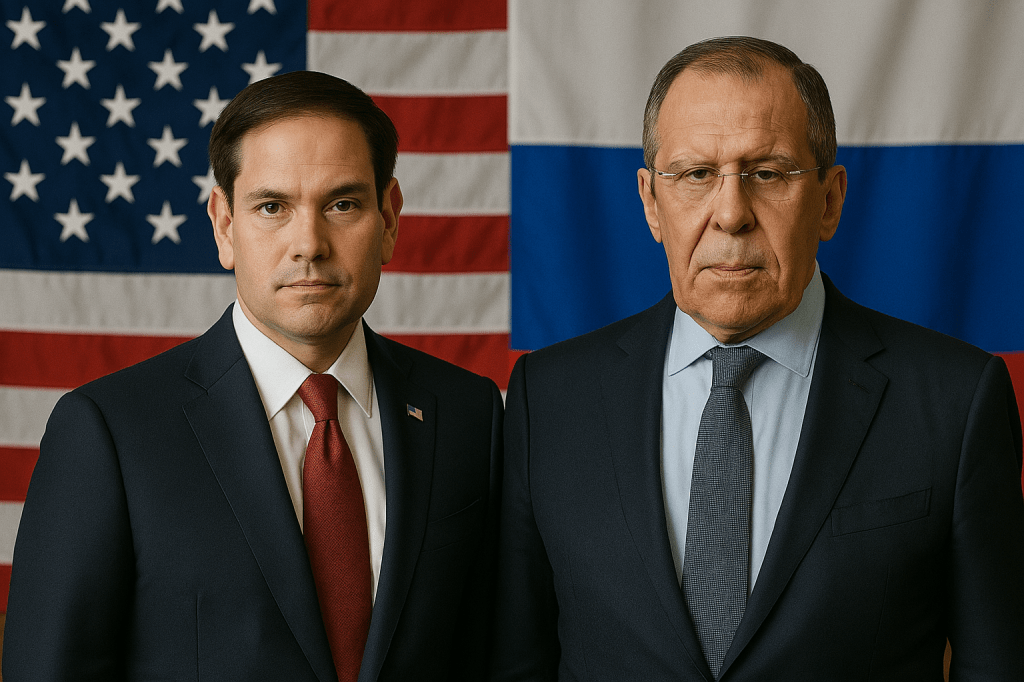
  • The U.S. Bypasses Ukraine: A Turning Point for Europe’s Military Independence?

    The U.S. Bypasses Ukraine: A Turning Point for Europe’s Military Independence?

    The recent decision by the Trump administration to engage in direct negotiations with Russia over the ongoing war in Ukraine—without Ukraine or its European allies at the table—has sent shockwaves across the European Union (EU). This move, seen as an unprecedented sidelining of key stakeholders, is already prompting European nations to reconsider their security dependencies and could accelerate the formation of an independent European military force. In doing so, this shift could also play into the fulfillment of biblical prophecy regarding the emergence of a dominant European superpower just before the return of Christ.

    The U.S. Sidelines Ukraine and Europe

    On February 18, 2025, U.S. Secretary of State Marco Rubio and Russian Foreign Minister Sergey Lavrov met in Riyadh, Saudi Arabia, to discuss a framework for peace between Russia and Ukraine. What raised eyebrows worldwide was not just the meeting itself, but the glaring absence of Ukrainian and European representatives. This unilateral approach by the U.S. has drawn severe criticism, particularly from European leaders who see it as a betrayal of both Ukraine and the transatlantic alliance.

    President Trump’s reasoning for bypassing Ukraine appears to be rooted in three key factors:

    1. Expedited Resolution: The administration believes that direct U.S.-Russia talks might lead to a quicker settlement, without the complications of Ukrainian leadership’s insistence on full territorial restoration.
    2. Perception of Ukrainian Leadership: Trump has suggested that Ukraine mishandled previous opportunities to negotiate peace, implying that their continued presence in talks may be counterproductive.
    3. Strategic Realignment: U.S. officials have signaled a shift in priorities, seeing a return to Ukraine’s pre-2014 borders as “unrealistic” and potentially prolonging the war unnecessarily.

    This shift has been met with alarm in Europe, where leaders argue that such negotiations—if they exclude Ukraine—undermine the country’s sovereignty and the security of the entire continent.

    Europe’s Response: A Push for Military Autonomy

    For decades, Europe has relied heavily on the United States, through NATO, to provide security against Russian aggression. However, this latest move by Washington has reinforced a growing realization: Europe cannot afford to remain dependent on U.S. protection. In response, European nations are taking significant steps toward military independence.

    1. Formation of the ‘Weimar+’ Group: France, Germany, Poland, the United Kingdom, Spain, and Italy have formed a coalition to ensure that European interests are represented in global security matters. This new alliance marks a step toward a more cohesive European military strategy.
    2. Increased Defense Spending: Many European nations, including Germany and France, are ramping up their military budgets, recognizing that they must be prepared for future conflicts without relying on Washington.
    3. Calls for a Unified EU Defense Force: French President Emmanuel Macron has called for an emergency summit to discuss forming a European military structure that is independent of U.S. oversight.

    This growing push for European military self-sufficiency aligns with what some Bible students have long anticipated—a European superpower emerging as a dominant force in world affairs.

    Biblical Prophecy and the Rise of a European Superpower

    The Bible speaks of a powerful end-time empire arising in Europe. In Daniel 2 and 7, as well as Revelation 13 and 17, we see descriptions of a final world power—often understood to be a revived Roman Empire—playing a dominant role before Christ’s return. This power is characterized by strong political, military, and economic influence.

    For decades, many analysts have speculated about how such a European entity could take shape, given the continent’s reliance on the U.S. for defense. However, recent developments suggest that the stage is being set for this prophecy to be fulfilled. If the EU becomes militarily independent, it could emerge as a dominant force in global affairs—one that no longer depends on the U.S. but instead forges its own path in world politics.

    A New Global Order?

    The sidelining of Ukraine and the EU by the Trump administration may prove to be a historic turning point. As European nations realize that they can no longer count on the U.S. for security, they are taking steps to ensure their own military future. This could lead to the formation of a powerful European bloc that asserts itself on the world stage.

    For Bible prophecy watchers, these developments are highly significant. They point to the increasing consolidation of power in Europe, paving the way for a superpower that will play a crucial role in end-time events. As we watch these shifts in geopolitics, it is crucial to remain vigilant and understand how they fit into the broader prophetic picture leading to the return of Jesus Christ.

    The world is changing rapidly, and the U.S.’s new approach to foreign policy is forcing Europe to stand on its own feet. While this may bring new challenges, it also aligns with the prophetic expectation of a European superpower rising to prominence before the Second Coming. As these events unfold, we should be paying close attention to how the balance of power is shifting and what it means for the future of world affairs—and, more importantly, for God’s ultimate plan for humanity.

  • Trump’s Proposal for a U.S. Takeover of Gaza: A Bold Move or a Risky Gamble?

    Trump’s Proposal for a U.S. Takeover of Gaza: A Bold Move or a Risky Gamble?

    President Donald Trump has never been one to shy away from bold, unconventional proposals. His latest idea—suggesting that the United States take control of Gaza—has sparked intense debate across the international community. Framing it as a part of his broader vision for Middle East peace, Trump envisions transforming the war-torn region into a prosperous economic hub. However, the reactions from U.S. allies, Middle Eastern nations, and global organizations indicate that this proposal faces significant hurdles. Even if a modified version of the plan emerges, history has shown that true and lasting peace in the Middle East will not be achieved by human efforts but only by the return of Jesus Christ.

    The Motivation Behind the Proposal

    Trump’s rationale for proposing a U.S. takeover of Gaza seems to be rooted in both security and economic ambitions. He argues that a stable and economically vibrant Gaza would reduce regional tensions, eliminate Hamas’ control, and provide a pathway for long-term peace. He has even described the vision of a transformed Gaza as the “Riviera of the Middle East,” suggesting that with the right investments, the region could become a thriving center of commerce and tourism.

    The plan also aligns with Trump’s broader Middle East strategy of using economic incentives to drive political stability. His previous policies, including the Abraham Accords, relied on economic cooperation between Israel and Arab states as a stepping stone toward peace. By taking direct control of Gaza, Trump likely hopes to fast-track reconstruction efforts and create an environment where extremist groups can no longer operate.

    Reactions from America’s Allies and the Middle East

    Despite Trump’s ambitions, his proposal has been met with swift opposition from U.S. allies and key players in the Middle East.

    • Middle Eastern Nations: Countries like Egypt, Jordan, and Saudi Arabia have firmly rejected the idea of relocating Palestinians as part of the plan, calling it a violation of Palestinian sovereignty. These nations, which have historically played a role in mediating between Israel and the Palestinians, are wary of any initiative that could lead to long-term instability.
    • International Community: The United Nations and European Union have also raised concerns, warning that any forced relocation of Palestinians could constitute ethnic cleansing. Additionally, there are fears that a U.S. military presence in Gaza would escalate tensions with Iran and its proxies, including Hezbollah.
    • American Political Landscape: Even within the U.S., the idea of assuming direct control over Gaza is deeply controversial. Many lawmakers, including both Democrats and some Republicans, argue that such a move could entangle the U.S. in another prolonged conflict with no clear exit strategy.

    A Modified Version of the Proposal?

    Given the fierce opposition, it is possible that Trump will push for a modified version of his proposal rather than a direct U.S. takeover. Some potential adjustments might include:

    1. An International Coalition for Gaza’s Reconstruction – Instead of direct U.S. control, Trump could propose a coalition of nations, including Arab states and European allies, to oversee Gaza’s rebuilding process.
    2. Temporary UN-Led Administration – A transitional governing body under UN oversight could administer Gaza while infrastructure and economic development take place.
    3. Economic Investment Zones – Trump could shift the narrative from a political takeover to an economic revitalization plan, similar to his previous “Peace to Prosperity” initiative.
    4. Security Cooperation Without Full Control – The U.S. might establish security zones in partnership with Israel and moderate Palestinian factions to ensure that Hamas and other militant groups do not re-emerge.

    While these modifications may make the plan more feasible, deep-rooted conflicts in the region make any man-made solution inherently unstable.

    The Only True and Lasting Peace

    The Middle East has long been the focus of peace initiatives, negotiations, and diplomatic deals, yet true and lasting peace remains elusive. Whether through the Camp David Accords, the Oslo Accords, or the Abraham Accords, every effort to resolve the conflict has eventually encountered significant obstacles. Even if Trump or any other leader were to implement a successful political or economic framework, it would still be subject to the volatility of human nature and geopolitical struggles.

    The Bible makes it clear that true peace will only come when Jesus Christ returns to establish His Kingdom. Isaiah 9:6-7 speaks of Christ as the “Prince of Peace,” whose government will bring justice and righteousness that will never end. Zechariah 14 describes how Christ will return to Jerusalem and establish a reign of peace that will finally unify the nations.

    While leaders like Trump may have grand visions for peace in the Middle East, history has shown that human efforts are limited. The only perfect and permanent solution will come when Christ returns to rule from Jerusalem, bringing true justice, prosperity, and reconciliation to all people.

    President Trump’s proposal to take over Gaza is yet another ambitious attempt to reshape the Middle East, but it faces significant opposition and practical challenges. Even if a modified version emerges, history suggests that human solutions will always fall short of bringing lasting peace to this troubled region. The ultimate resolution to the Middle East conflict—and indeed, to all conflicts—will come when Jesus Christ establishes His righteous government. Until then, world leaders will continue to try and fail, proving once again that true peace is something only God can bring.

  • Trump’s New Tariffs and the Coming Economic Storm

    Trump’s New Tariffs and the Coming Economic Storm

    On February 1, 2025, U.S. President Donald Trump announced sweeping new tariffs on imports from Canada, Mexico, and China. These tariffs—25% on Canadian and Mexican goods and 10% on Chinese imports—have already set off a wave of concern about rising prices, supply chain disruptions, and potential retaliation from America’s largest trading partners.

    The official reasons for these tariffs range from protecting American jobs to addressing illegal immigration and trade imbalances. However, as Bible-believing Christians, we recognize that these economic tensions are not just political maneuvers—they are signs of the times.

    A World Moving Toward Conflict

    Bible prophecy warns that in the last days, nations will be at conflict with one another (Matthew 24:7). This includes conflict among nations that descended from the tribes of Israel such as the United States and Canada (Isaiah 9:21).  What we are witnessing now is an increase in economic warfare—where countries use trade and tariffs as weapons instead of military force.

    These new tariffs are not just about numbers on a trade balance sheet. They will affect everyday people—not just in America, but across the world.

    • Canada, Mexico, and China are some of America’s biggest trading partners. If they retaliate with their own tariffs, it could make American exports more expensive, hurting U.S. industries.
    • The cost of goods will rise. The U.S. relies on these three countries for cars, oil, electronics, food, and raw materials. Higher tariffs will increase prices for consumers and businesses alike.
    • The stock market may become volatile, leading to economic uncertainty and potential job losses.

    This is exactly what Bible prophecy describes—a world where nations struggle economically, and conflict escalates. Revelation 6:5-6 describes a time when basic necessities become extremely expensive, saying:

    “A quart of wheat for a denarius, and three quarts of barley for a denarius, and do not harm the oil and the wine.”

    This verse points to economic hardships, inflation, and scarcity—things we are beginning to experience today.

    How Should We Respond?

    If we know these things must come to pass, what should we do? How can we prepare, not just physically but spiritually?

    1. Be Thankful for What We Have

    We often take stable prices and economic security for granted. But as food, fuel, and everyday goods become more expensive, we should be reminded that every blessing we have comes from God.

    • 1 Thessalonians 5:18 says, “In everything give thanks; for this is the will of God in Christ Jesus for you.”
    • Instead of complaining about higher costs, let us cultivate a spirit of gratitude for the provisions we still enjoy.

    2. Rely on God for Our Needs

    The Bible reminds us that our true security is in God—not in the economy, governments, or world leaders.

    • Philippians 4:19 assures us: “And my God shall supply all your needs according to His riches in glory by Christ Jesus.”
    • No matter how expensive things become, God promises to care for His people.

    This does not mean we should be careless with our resources, but it does mean we should not live in fear and anxiety over economic hardships.

    3. Live Within Our Means

    As costs rise, wise financial stewardship is more important than ever.

    • Proverbs 22:7 warns us: “The rich rules over the poor, and the borrower is servant to the lender.”
    • Now is the time to cut unnecessary expenses, avoid debt, and prioritize needs over wants.
    • The principle of living simply and avoiding materialism will help us navigate these economic storms.

    4. Be More Productive in Our Work

    When economies face downturns, those who are diligent, skilled, and hardworking will fare better. The Bible encourages us to be industrious and proactive:

    • Proverbs 10:4 says, “He who has a slack hand becomes poor, but the hand of the diligent makes rich.”
    • Instead of worrying about economic shifts, we should focus on increasing our skills, working hard, and being resourceful.

    5. Help Those in Need

    Economic crises hit the most vulnerable people the hardest. As Christians, we have a duty to support those in need.

    • Proverbs 19:17 says, “He who has pity on the poor lends to the Lord, and He will pay back what he has given.”
    • If we are in a position to help others—whether by donating, offering jobs, or sharing resources—we should do so with a generous heart.

    Preparing for the Future

    The world is shifting into a period of great economic uncertainty. The escalation of trade wars and rising costs of living are just the beginning of greater global upheavals that Bible prophecy has foretold.

    But as followers of Christ, we do not need to fear. Instead, we must:

    • Be thankful for what we have
    • Trust God for our needs
    • Live wisely and within our means
    • Work hard and remain diligent
    • Help those in need

    Though the world is moving toward economic crisis and division among nations, we look forward to the Kingdom of God, where there will be true prosperity, fairness, and peace for all. Until then, let us stay faithful, be wise stewards, and continue to trust in God’s provision.

  • The US Border Crisis: A Biblical Perspective on Foreign Influence and National Obedience

    The US Border Crisis: A Biblical Perspective on Foreign Influence and National Obedience

    The ongoing border crisis in the United States continues to be a pressing issue, especially as the Trump administration takes new measures to curb illegal immigration. With strengthened border security, deportation initiatives, and policy reversals, the government is attempting to regain control of an increasingly chaotic situation. However, beyond the political and legal aspects of immigration, there is a deeper spiritual lesson that history—both biblical and modern—teaches us: the presence of foreigners in a land is often a reflection of a nation’s relationship with God.

     The Biblical Pattern: Foreigners as a Blessing or Judgment

    Throughout Scripture, God made it clear that a nation’s faithfulness to Him determines whether foreign influence will be beneficial or harmful. Israel’s history serves as a prime example. When Israel obeyed God’s commandments, foreigners came in peace, often contributing to the prosperity of the nation. When Israel turned away from God, however, foreign nations became instruments of oppression, plundering their land and subjugating their people.

     1. Foreigners as a Judgment for Disobedience

    One of the most direct warnings God gave to Israel was in Deuteronomy 28, where He outlined blessings for obedience and curses for rebellion. Among the consequences of national disobedience was the increasing dominance of foreign nations:

    • “The foreigner who resides among you will rise higher and higher above you, but you will sink lower and lower. He will lend to you, but you will not lend to him; he will be the head, and you will be the tail.” (Deuteronomy 28:43-44)
    • “The LORD will bring a nation against you from far away, from the ends of the earth, like an eagle swooping down, a nation whose language you will not understand, a fierce-looking nation without respect for the old or pity for the young.” (Deuteronomy 28:49-50)
    • “A nation you have not known will eat the fruit of your land and the labor of your toil, and you will suffer oppression and harsh treatment continually.” (Deuteronomy 28:33)

    Israel’s history proves the truth of these warnings. When they forsook God’s laws, the Assyrians, Babylonians, and later the Romans overran their land, bringing devastation and exile.

     2. Foreigners as a Blessing for Obedience

    However, when Israel walked in obedience, foreigners could play a positive role. The Bible provides examples of righteous foreigners who contributed to Israel’s success:

    • Ruth the Moabite: A foreigner who became part of Israel’s history through faithfulness and was an ancestor of King David and Jesus Christ.
    • Rahab of Jericho: A Canaanite woman who aligned herself with God’s people and became part of the lineage of Christ.
    • The Queen of Sheba: She visited King Solomon, acknowledging God’s wisdom in him and bringing wealth to Israel (1 Kings 10).

    When a nation is aligned with God’s principles, foreigners can bring prosperity, wisdom, and cultural enrichment rather than destruction.

     America’s Border Crisis: A Spiritual Warning?

    The United States is at a crossroads. The immigration crisis is not just a political issue—it may very well be a spiritual one. The rise in illegal immigration, the strain on resources, and the increasing lawlessness can serve as a warning sign, much like what happened to ancient Israel. When a nation disregards God’s moral and ethical laws, it becomes vulnerable to external pressures, both politically and socially.

    Could it be that the current crisis is a symptom of America’s spiritual decline? As laws become more permissive toward immorality, as faith is removed from the public sphere, and as corruption increases, it is no surprise that disorder follows. If a nation rejects God’s authority, He may allow instability as a wake-up call for repentance.

     The Role of Leaders in Guiding a Nation Back to God

    Throughout the Bible, national leaders played crucial roles in determining whether their country experienced divine blessing or judgment. Righteous kings such as Hezekiah and Josiah led Israel back to God’s laws and saw peace restored. Meanwhile, leaders who embraced idolatry and injustice saw their nations fall into chaos and conquest.

    In modern times, leaders must also recognize that national security is not just about policies and enforcement—it is about righteousness. If America hopes to resolve its border crisis effectively, it must also consider its spiritual state. No amount of walls, policies, or military enforcement can secure a nation that has lost its moral foundation.

     What Can We Do?

    • Return to God’s Laws – A nation that honors biblical principles in its justice system, economy, and culture will find stability and peace.
    • Pray for Leadership – The Bible instructs believers to pray for their leaders so that they may govern wisely (1 Timothy 2:1-2).
    • Practice Righteousness in Our Communities – Whether as individuals, families, or churches, the values we uphold at a grassroots level shape the direction of a nation.
    • Seek God’s Wisdom in Policy-Making – Leaders should seek guidance in creating policies that uphold justice, compassion, and national security in a way that aligns with biblical principles.

    A Nation’s Fate Lies in Its Faithfulness

    The U.S. border crisis is more than a political problem—it is a spiritual barometer of where the nation stands before God. History and Scripture reveal that when a nation strays from God’s commandments, foreign pressures increase as a form of divine correction. However, when a nation seeks righteousness, foreigners can become allies, contributors, and even part of God’s redemptive plan.

    As America grapples with this crisis, the real question is not just about border security—it is about national obedience to God. The solution to national stability lies not merely in policy, but in turning back to the God who establishes and sustains nations (Proverbs 14:34: “Righteousness exalts a nation, but sin is a reproach to any people.”