Category: United States

  • The Shifting Ground Beneath NATO: A Europe in Transition

    The Shifting Ground Beneath NATO: A Europe in Transition

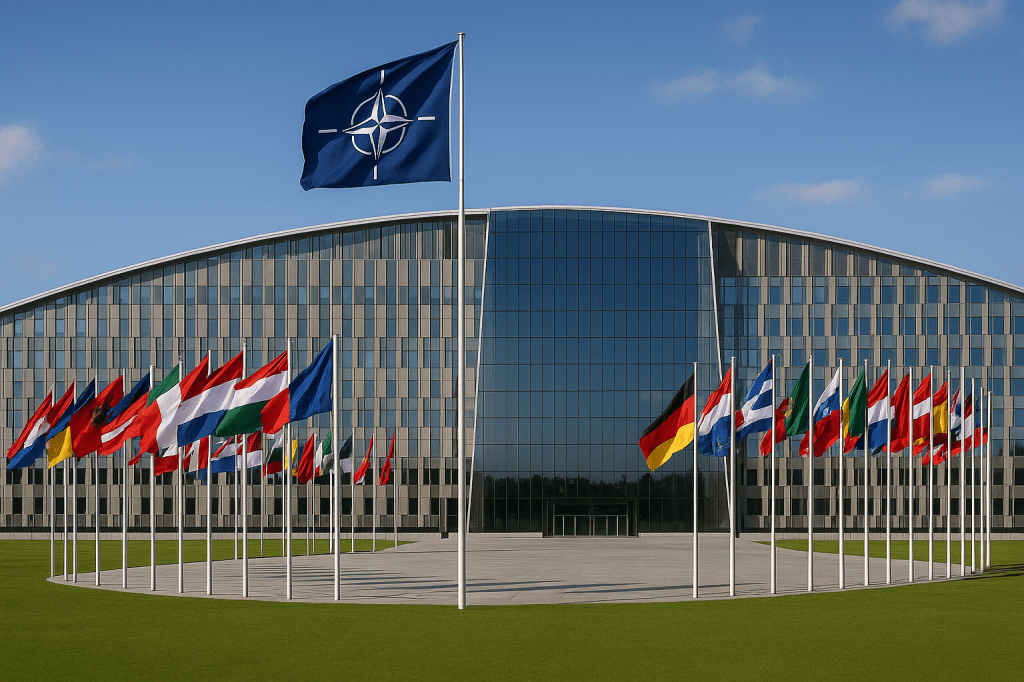
    The recently concluded 2025 NATO Summit in The Hague delivered a bold slate of commitments and strategic recalibrations. Dominated by landmark decisions and cautiously visionary declarations, the alliance appeared to chart a confident path forward. But beneath the surface, the tectonic plates of transatlantic security are beginning to shift—with Europe increasingly preparing for a future where the United States may no longer stand as the guarantor of its defense.

    A Bolder NATO: Spending and Strategy

    Among the most significant developments was the collective agreement to raise defense spending to 5% of GDP by 2035. Of this, 3.5% will go toward core military capabilities, while 1.5% is earmarked for broader security priorities such as infrastructure protection, cybersecurity, and supply chain resilience. This dramatic increase is not just symbolic. It reflects a long-standing frustration within NATO—particularly from Washington—that European members have lagged in their defense obligations. Now, with geopolitical tensions escalating and American leadership less predictable, Europe is stepping up.

    NATO also unveiled its first-ever Commercial Space Strategy, signaling a new frontier in collective defense. This move formalizes plans to integrate private-sector space capabilities—such as satellite surveillance and communication systems—into military operations. An implementation roadmap is set to be approved by NATO defense ministers later this year.

    Meanwhile, the alliance pledged renewed emphasis on cyber defenses, hybrid warfare preparedness, and the protection of critical infrastructure, areas of vulnerability increasingly targeted by state and non-state actors alike. These measures aim to increase the resilience of NATO members not only in wartime scenarios but also in persistent gray-zone conflicts where ambiguity and digital disruption reign.

    Another noteworthy agenda item was NATO’s intent to deepen partnerships with Indo-Pacific allies, particularly Japan, South Korea, and Australia. As China grows bolder and more assertive, NATO is reimagining its role beyond the Euro-Atlantic region. Strategic dialogues, joint exercises, and cooperative defense initiatives are expected to strengthen the global architecture of democratic security.

    In addition to its Indo-Pacific focus, NATO also reaffirmed Ukraine’s right to defend itself against Russian aggression. However, the alliance stopped short of making a formal, organization-wide commitment to provide military aid. Instead, several major NATO members—such as the United Kingdom, Germany, and France—pledged individually to support Ukraine materially. This fragmented approach highlights the alliance’s internal divisions and the geopolitical complexities of coordinating unified action in a time of shifting power dynamics.

    The Elephant in the Room: America’s Unsteady Hand

    But for all the summit’s optimism and resolve, a quiet anxiety lingered: What if the United States steps back?

    President Donald Trump, back in office for a second non-consecutive term, has repeatedly linked American military support to transactional calculations. He has questioned whether U.S. involvement in NATO should persist if other members don’t “pay their fair share.” More alarmingly for Europe, his administration has refused to frame Russian aggression as a fundamental threat unless it directly endangers U.S. security.

    This sentiment is not mere rhetoric. At the summit, Trump reiterated that America’s strategic choices will be tied to whether European crises touch American soil or interests. Such framing has left many European leaders uncertain about Washington’s reliability in a scenario where, say, Russia invades another European country not named Ukraine. The United States offered no significant new commitments to Ukraine at the summit, choosing instead to emphasize that existing aid would continue for the time being. The message was clear: while support is not being withdrawn, future assistance will depend heavily on whether Ukraine’s struggle is perceived to affect core American security interests.

    Europe’s Quiet Fallback Strategy

    In response, Europe is slowly but deliberately laying the groundwork for strategic autonomy. Initiatives such as the European Sky Shield Initiative, Permanent Structured Cooperation (PESCO), and the EU’s Strategic Compass are not duplicating NATO but rather hedging against its potential dysfunction.

    These projects are gradually increasing the EU’s independent capabilities in missile defense, cyber operations, logistics coordination, and rapid deployment. Bilateral agreements are proliferating among European states. Defense industries are being consolidated. Command and control structures are being adapted for interoperability across both NATO and EU frameworks.

    In effect, Europe is designing a plug-and-play security architecture: integrated with NATO when the U.S. remains committed, and seamlessly adaptable to EU leadership should American engagement falter. While legal, logistical, and political hurdles remain, the trajectory is clear.

    The Coming European Power Bloc

    From a biblical prophetic perspective, these developments echo a long-foretold transition. The Bible describes a time when a powerful European entity—”the beast” of Revelation 17 and Daniel 7—will rise as a dominant geopolitical and military force, independent of American support. This power, led by a coalition of ten kings or leaders, will wield economic, military, and moral influence on a global scale.

    The current cracks in NATO and Europe’s accelerating drive toward defense autonomy may well be early signs of this shift. America’s declining reliability is not simply a political story; it is part of a divine pattern that Scripture warns about. The weakening of transatlantic bonds is setting the stage for a new global order, one in which Europe stands alone, assertive, and significant.

    A New Order Taking Shape

    The 2025 NATO Summit may be remembered not only for its bold declarations on spending, space, and cyber readiness, but also for what it quietly signaled: that the ground under NATO is shifting. Europe is awakening to the reality that its long post-war dependence on American might is unsustainable.

    While Europe cannot yet defend itself alone, the groundwork is being laid. And according to biblical prophecy, the time is coming when it will not only be capable but destined to do so. In this light, today’s NATO is not a final structure but a transitional one—a fading vestige of an old world order giving way to a very different and more prophetic future.

  • The Bombs That Echoed Beyond the Bunker: How the U.S. Struck Iran and Redefined the Conflict

    The Bombs That Echoed Beyond the Bunker: How the U.S. Struck Iran and Redefined the Conflict

    The world watched with bated breath as U.S. stealth bombers pierced Iranian skies this week, dropping bunker-busting munitions over nuclear sites long suspected of harboring secret ambitions. The airstrikes, aimed primarily at Fordow and Natanz, were President Donald Trump’s dramatic move to insert the United States into the Israel–Iran conflict — a conflict that has steadily escalated over months of covert attacks, proxy skirmishes, and fiery rhetoric.

    This was no random act of war. The chain of events leading to the strikes was long in the making.

    Israel had already launched targeted bombings on Iran’s nuclear infrastructure after a series of provocations and growing concern that Iran was on the verge of achieving “breakout capability” — the technical means to rapidly assemble a nuclear weapon. Iran had enriched uranium beyond 60%, far exceeding the JCPOA limit of 3.67%, and had blocked international inspectors from verifying its claims of peaceful use. Following Iranian retaliatory missile strikes that hit civilian infrastructure in Israel — including a hospital — President Trump acted, stating that the U.S. “could not afford to remain on the sidelines any longer.”

    The U.S. strikes were powerful and symbolically significant. Reports suggest they inflicted damage on key components of Iran’s nuclear program, especially at deeply buried sites like Fordow. However, experts remain cautious: while the attacks likely delayed Iran’s nuclear timeline, they did not obliterate its capacity. Iran’s nuclear infrastructure, built for redundancy and deeply embedded in mountainous terrain, appears bruised but not broken.

    The Islamic Republic’s response has been telling. Rather than capitulate, Iran has shifted into a hardened posture. Supreme Leader Ayatollah Ali Khamenei has reportedly delegated broader military authority to the IRGC’s Supreme Council, signaling a move toward full war footing. At the same time, he has retreated from public view and fortified leadership succession mechanisms — a sign that the regime is preparing for further destabilization.

    And destabilization may well be inevitable. Iran’s economy, already reeling under decades of sanctions and recent damage to oil and gas platforms, faces a dangerous tipping point. Inflation is soaring, blackouts are widespread, and foreign reserves are shrinking. New sanctions by the U.S. Treasury—targeting oil networks and defense contractors—tighten the noose.

    Still, even in this moment of heightened tension, there are subtle signals of diplomatic possibilities. Behind closed doors, indirect talks between the U.S. and Iran, brokered by Oman and European intermediaries, have resumed. Iran has made clear that any negotiation will only proceed if Israel halts its military campaign. The U.S., for its part, has given the diplomacy track a two-week window before resuming further military action.

    What would a negotiated agreement mean for the Islamic regime?

    If Tehran is forced to accept limits on enrichment, allow full inspections, and scale back its regional proxy activities, the regime may secure short-term relief — such as eased sanctions, access to frozen assets, and a reopening of international trade. But this comes at a long-term cost: Iran’s ambition to become the uncontested leader of the Islamic world would be severely blunted.

    Interestingly, many Muslim-majority nations have responded to these developments with a tone of caution and neutrality. Egypt, Saudi Arabia, the UAE, and others have called for restraint and diplomacy rather than rallying to Iran’s defense. The Arab world, once deeply fractured along Sunni–Shia lines, seems unwilling to unite under Iran’s banner in a broader Islamic showdown. Their priority remains regional stability and economic continuity, not ideological warfare.

    This failure to galvanize Islamic solidarity is one of the more consequential outcomes of the conflict. Iran’s once-lofty goal of positioning itself as Islam’s vanguard power — and possibly even the long-awaited Mahdi state in some extremist views — now seems distant. Instead of leading, Iran now finds itself isolated, internally strained, and increasingly cornered.

    The Bible speaks prophetically of a time near the end when a power from the south — a “king of the South” — will rise to challenge a dominant power in the north (Daniel 11:40). Many biblical scholars believe this southern power will emerge from Arab nations south of the Promised Land such as Egypt or a coalition that includes Libya, not from Iran. What’s unfolding now may well be a realignment toward that eventual scenario. Iran’s decline makes room for another Islamic bloc to fill that prophetic role.

    The bombs dropped by the United States did more than strike concrete and steel — they shattered illusions. Iran’s nuclear program may recover in part, and its leadership may cling to power a while longer. But the regional and prophetic trajectory is shifting. If Iran does come to the negotiating table — as economic desperation and diplomatic isolation suggest it might — it will do so not as a rising empire but as a state trying to salvage its footing. And with that, the dream of Iran leading the Islamic world grows dimmer, clearing the stage for other prophetic actors to emerge.

  • A Summit Without a Center: How the 2025 NATO Meeting May Signal the End of U.S. Leadership in Europe

    A Summit Without a Center: How the 2025 NATO Meeting May Signal the End of U.S. Leadership in Europe

    The upcoming NATO summit in The Hague this June 24 and 25—meant to showcase unity and resolve—may end up doing the opposite: exposing divisions, achieving little, and revealing a troubling shift. The alliance that once served as the anchor of Western defense now faces an identity crisis, largely influenced by the changing role of the United States under President Donald Trump.

    A President at Odds with the Alliance

    President Trump comes to the NATO summit not as a stabilizing leader but as a disruptor. His position on the Russian invasion of Ukraine sharply differs from that of most European leaders. While many in Europe see Russia’s 2022 attack on Ukraine as unprovoked aggression, Trump has suggested that Ukraine “provoked” Russia—downplaying Moscow’s responsibility and treating both sides as equally culpable.

    This stance is deeply unsettling to countries like Poland, the Baltic states, and Romania. For them, NATO is more than diplomacy—it’s a protective shield. But under Trump’s view, that shield seems uncertain.

    Trump’s view of Vladimir Putin also contrasts sharply with NATO consensus. While European leaders regard Putin as a serious, long-term threat to European stability, Trump has described him in favorable terms—even amid allegations of war crimes. This isn’t just a difference in tone—it reflects a fundamentally different understanding of global threats.

    From Shared Values to Shared Costs

    At its core, Trump treats NATO less like a community of shared democratic values and more like a financial arrangement. His message has been blunt: pay more or risk losing protection. Although calls for higher European defense spending aren’t new, Trump frames the issue as a fee-for-service model—diminishing the alliance’s foundational spirit of mutual defense.

    This year’s summit is expected to focus heavily on Trump’s demand that allies commit 5% of GDP to defense. Some countries like Poland and the UK may support the idea, but many others find it politically and economically unfeasible, even coercive.

    Even more concerning is what won’t be addressed: there will likely be no new pledges to Ukraine or a clear plan to deal with Russia’s ongoing threats. That silence speaks volumes.

    A Shifting Balance of Power

    The summit may produce few policy breakthroughs, but it will make one reality painfully clear: the United States no longer leads NATO as it once did. Without U.S. leadership grounded in shared values, the alliance becomes more fragmented—less a united front, and more a group of nations with diverging priorities.

    Faced with this void, Europe is beginning to respond.

    Europe Steps Forward

    As the summit unfolds, European leaders are moving to create a more independent defense structure. France is taking the lead, with Germany showing increased support. Their goal: prepare for a future where Europe must defend itself—even without, or against, U.S. approval.

    Key elements of this shift include France’s nuclear arsenal, the EU’s Common Security and Defence Policy (CSDP), and joint defense projects through initiatives like PESCO. Once seen as symbolic, these are now gaining strategic importance.

    Eastern Europe is also adapting. Countries like Poland are ramping up defense spending and modernizing their forces. Nordic nations are working more closely together through regional groups like NORDEFCO and the Joint Expeditionary Force.

    A Prophetic Parallel

    This changing defense landscape may have more than political implications—it could carry prophetic weight. The Bible foretells a final resurrection of the Roman Empire, emerging from Europe shortly before the return of Jesus Christ. Scripture describes this end-time empire as a powerful beast—ruthless, dominant, and seemingly unstoppable: “Who is like the beast? Who is able to make war with him?” (Revelation 13:4).

    The weakening of NATO and the decline of U.S. leadership are not just political shifts—they are part of a larger prophetic pattern. A new European-centered power is rising, one that may dominate the global stage with strength and unity, even without—or in defiance of—American leadership.

  • Echoes of Error: When World Leaders Believe Falsehoods—And What It Means for Nations Today

    Echoes of Error: When World Leaders Believe Falsehoods—And What It Means for Nations Today

    In a world flooded with information, the ability to discern truth from fiction has become one of the most critical leadership traits. Yet even the most powerful leaders, with access to the world’s top intelligence, can fall prey to misinformation—and the consequences are often felt not just in diplomatic circles but in the lives of ordinary citizens.

    One recent and striking example is U.S. President Donald Trump’s repeated engagement with false or unverified information, including during high-level meetings with other national leaders. But this phenomenon is not new, nor unique to him. Throughout history, leaders have believed—or chosen to act upon—falsehoods. Sometimes, according to Scripture, this is allowed by God as part of divine judgment on nations. In such times, the people must turn to God, seek wisdom in leadership, and commit to lives of prayer and peace.

    President Trump and the Echo Chamber of Misinformation

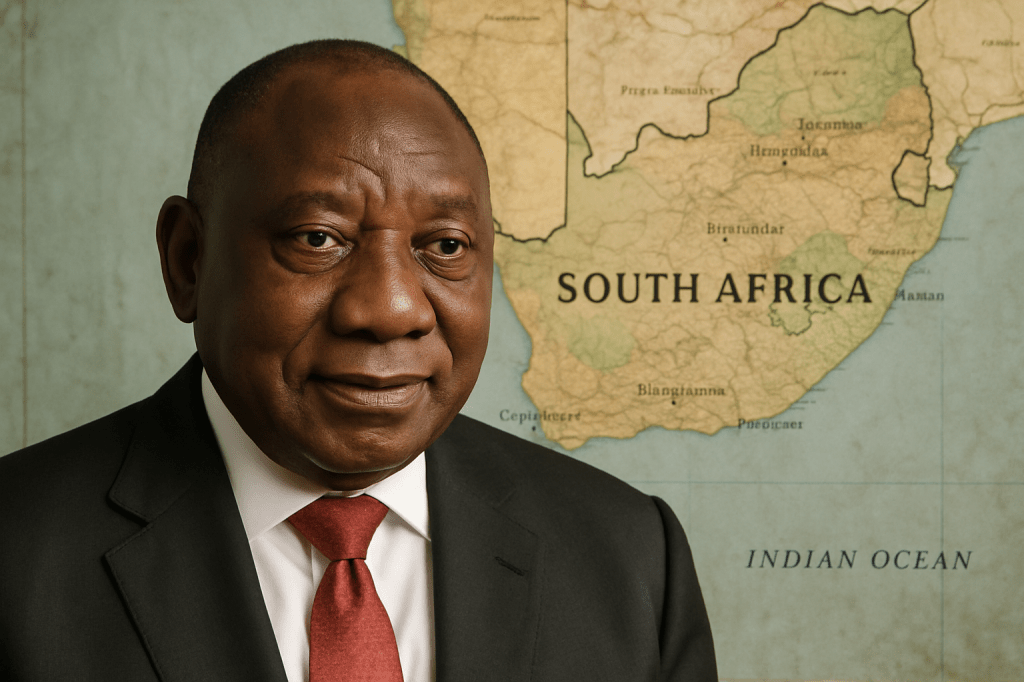
    President Donald Trump has shown a recurring tendency to promote narratives that are either misleading or entirely false, particularly when these narratives align with his political worldview. This was most recently demonstrated in his May 2025 Oval Office meeting with South African President Cyril Ramaphosa. Trump confronted Ramaphosa with false claims that white farmers in South Africa were victims of genocide—a claim long debunked by journalists, researchers, and the South African government itself.

    The evidence Trump presented included a Reuters video taken not in South Africa, but in the Democratic Republic of Congo. President Ramaphosa clarified that while violent crime is a serious issue in South Africa, it affects all races, and there is no campaign of racial extermination against white citizens. Nonetheless, Trump’s views remained unchanged, and he even moved forward with policies offering refugee resettlement to white South African farmers based on those claims.

    This was not an isolated incident. Trump has also:

    • Repeated Kremlin-aligned narratives to Ukrainian President Volodymyr Zelenskyy, claiming Ukraine provoked Russia’s war.
    • Alleged that Japan could not handle large-scale immigration and made racially charged comments to Prime Minister Shinzo Abe.
    • Publicly contradicted U.S. intelligence assessments in front of Russian President Vladimir Putin, casting doubt on the conclusion that Russia interfered in the 2016 election.

    Why Do Leaders Believe Falsehoods?

    Several factors contribute to this pattern of misinformation at the highest levels:

    • Confirmation bias: Leaders, like anyone else, are inclined to believe what supports their views.
    • Distrust in institutions: Trump often expressed suspicion of the U.S. intelligence community, viewing it as part of a “deep state” conspiracy.
    • Political strategy: Misinformation can be a tool for mobilizing political bases.
    • Echo chambers: When advisers and media consumption reinforce a narrow viewpoint, dissenting facts are filtered out.

    Not Just Trump: Historical Echoes

    History provides numerous examples of leaders acting on false information—with devastating effects:

    • President George W. Bush launched the Iraq War on the false belief that Saddam Hussein had weapons of mass destruction.
    • British Prime Minister Neville Chamberlain trusted Hitler’s promise of peace after annexing the Sudetenland, only for WWII to erupt shortly after.
    • Vladimir Putin believed Ukraine would fall swiftly to Russian military pressure in 2022—a grave miscalculation that led to a protracted war.
    • Jair Bolsonaro, former president of Brazil, downplayed the COVID-19 pandemic as a mild flu, leading to preventable deaths.

    In each case, the causes included flawed intelligence, political calculations, or misjudgments. The effects ranged from war to global health crises, and from loss of life to long-term damage to a nation’s credibility and stability.

    A Form of Judgment

    From a biblical standpoint, when leaders believe lies or are given over to deception, it is sometimes a sign of divine judgment—not just on the leaders themselves but on the nations they lead. Scripture reveals this dynamic in stories like:

    • Ahab and the lying spirit (1 Kings 22): God allowed a deceiving spirit to speak through prophets to mislead King Ahab to his downfall.
    • Rehoboam’s pride (2 Chronicles 10): He ignored wise counsel, believing what pleased him, and the kingdom was divided.
    • Romans 1:28 speaks of people being given over to a “debased mind” when they reject God.

    When leaders reject truth and act on falsehoods, it often reflects a moral condition not just in the palace but in the people. It is a wake-up call for national repentance.

    What Can Citizens Do?

    In such times, people are not powerless. Scripture urges believers to:

    • Return to God (Zechariah 1:3): National healing begins with personal repentance.
    • Pray for leaders (1 Timothy 2:1-2): Even when they err, our prayers can influence their decisions and preserve peace.
    • Seek God’s guidance when choosing leaders (Proverbs 3:5-6): Wise governance begins with divine direction.
    • Live in peace (Romans 12:18): Christians grow through obedience, even in times of national turmoil.

    Truth, Leadership, and the Call to Wisdom

    The pattern of world leaders falling for false information is not new—but it is dangerous. Whether it results in war, oppression, or decay, the consequences ripple across generations. But God does not leave His people without a response. He calls on them to be discerning, prayerful, and faithful. Ultimately, peace and wisdom are not found in politicians but in obedience to God’s truth.

  • The Fall from AAA: Understanding America’s Credit Downgrade and the Erosion of Economic Leadership

    The Fall from AAA: Understanding America’s Credit Downgrade and the Erosion of Economic Leadership

    For the first time in history, all three major credit rating agencies—Moody’s, Fitch, and Standard & Poor’s—have downgraded the United States from their highest credit rating. This development is not merely a technical footnote for economists; it is a flashing warning light on the dashboard of American leadership.

    The downgrade comes amid growing alarm over the United States’ fiscal trajectory, but to lay the blame on a single president or political party would be simplistic and misleading. As experts and analysts agree, the country’s worsening debt burden and erosion of fiscal credibility are the cumulative result of decades of political decisions, missed opportunities, and unsustainable economic strategies across multiple administrations.

    From AAA to AA+: A Timeline of Decline

    • Standard & Poor’s led the way in 2011 by downgrading the U.S. from AAA to AA+, citing political dysfunction during the debt ceiling crisis.
    • Fitch Ratings followed in August 2023, also reducing the U.S. to AA+ due to the continued failure to address rising debt and perceived erosion of governance standards.
    • Most recently, in May 2025, Moody’s cut the U.S. rating from Aaa to Aa1, expressing concern over the unsustainable fiscal path and rising interest burdens.

    All three agencies emphasized two recurring themes: growing federal debt and the inability of political leaders to forge a coherent, long-term fiscal policy.

    Multiple Administrations, Shared Responsibility

    The Obama Administration’s Role:

    • S&P downgraded the U.S. for the first time in 2011, during Obama’s presidency.
    • The downgrade stemmed from a political standoff over the debt ceiling.
    • S&P cited dysfunctional governance and lack of a credible debt-reduction plan.
    • Obama’s administration had implemented stimulus spending after the 2008 crisis.
    • Long-term structural reforms to reduce deficits were not achieved.

    The Biden Administration’s Role:

    • Passed large spending bills: the $1.9 trillion American Rescue Plan and the Inflation Reduction Act.
    • These programs aimed to improve equity, healthcare, and climate resilience.
    • Revenue projections supporting the spending were front-loaded and uncertain.
    • Proposed partial cancellation of federal student debt, further expanding fiscal obligations.
    • Contributed to increased deficits without matching long-term offsets.

    The Trump Administration’s Role:

    • Passed the 2017 Tax Cuts and Jobs Act, reducing corporate and individual taxes.
    • The tax cuts were not offset by spending cuts, adding over $1.9 trillion to deficits.
    • Enacted bipartisan stimulus during the COVID-19 pandemic, expanding short-term spending.
    • Proposed extending tax cuts via the “One Big Beautiful Bill” and adding Medicaid work requirements.
    • The Congressional Budget Office and economists warn these plans could add up to $4 trillion to future deficits.

    In short, the recent administrations made major fiscal decisions—tax cuts, spending increases, and entitlement promises—without long-term structural corrections, worsening the outlook that led to the downgrade.

    What the Downgrades Mean

    Short-Term Effects

    • The U.S. may face higher borrowing costs as investors demand a risk premium.
    • Markets could experience short-term volatility.
    • Institutional investors may shift away from U.S. government debt, depending on their internal credit-rating rules.

    Long-Term Effects

    • Rising interest payments: The U.S. already spends more on interest than on key programs like transportation or education. By 2035, interest could become the single largest budget item.
    • Reduced fiscal flexibility: Less room for future governments to respond to crises.
    • Erosion of dollar dominance: Countries exploring alternative reserve currencies may accelerate diversification.
    • Weakened global influence: Economic instability undercuts America’s ability to lead international alliances and institutions.

    Other Erosions of U.S. Economic Leadership

    The credit downgrades are part of a broader trend of declining American economic dominance:

    • Political dysfunction and polarization, repeatedly bringing the country to the brink of default.
    • Loss of manufacturing leadership to countries like China in sectors such as electronics, clean energy, and rare earth minerals.
    • Chronic underinvestment in infrastructure, education, and workforce development.
    • Overuse of financial sanctions, prompting countries to build alternatives to the U.S.-led financial system.
    • Global retreat from multilateralism, creating a leadership vacuum increasingly filled by China, the EU, and BRICS nations.

    These developments, taken together, indicate a slow erosion of trust in the U.S. model of governance and economic stewardship.

    What the Trump Administration Is Doing Now

    In the face of the challenges, the current Trump administration is attempting a broad economic overhaul:

    • Extending 2017 tax cuts through new legislation while proposing cuts to Medicaid and other programs.
    • Imposing universal tariffs to protect U.S. industries and address trade imbalances.
    • Creating the Department of Government Efficiency (DOGE) to cut federal waste—though early results have been mixed, and some savings have been disputed.
    • Promoting AI and crypto deregulation, positioning the U.S. as a tech leader while scaling back federal oversight.

    Yet these plans face intra-party opposition, legal challenges, and skepticism from economists who fear that supply-side reforms alone won’t close the growing fiscal gap.

    Many experts recommend a more balanced approach that includes raising certain taxes, reforming entitlement programs, investing in workforce development, and enforcing strict fiscal rules to curb excessive deficits. Some also call for bipartisan budget commissions to chart long-term solutions that outlast any single administration.

    The Bigger Picture: National Blessings and Divine Accountability

    The Bible also offers practical wisdom on matters closely tied to national and economic leadership. It highlights the importance of consulting with others before making major decisions (Proverbs 15:22, Proverbs 11:14) and emphasizes planning for the long-term, not just the short-term (Proverbs 21:5, Luke 14:28–30). Jesus emphasized the importance of counting the cost before committing to large undertakings (Luke 14:28–30). Proverbs and Ecclesiastes point to the value of investing in training and education (Proverbs 22:6, Ecclesiastes 7:12, 2 Timothy 2:2). Likewise, several passages stress the need to avoid unnecessary debt and wasteful expenses (Proverbs 21:5, Proverbs 22:7, Romans 13:8).

    Behind these economic and political developments lies a deeper spiritual truth often overlooked in policy analysis: national greatness is not solely a result of policy, productivity, or power—it is a blessing from God.

    The Bible reminds us:

    • “It is He who gives you power to get wealth…” (Deuteronomy 8:18)
    • “The Most High rules in the kingdom of men, and gives it to whomever He will…” (Daniel 4:17)
    • “I will break the pride of your power…” (Leviticus 26:19)

    These downgrades, debt troubles, and geopolitical setbacks may well be a wake-up call—a divine warning to a nation that has forgotten the Source of its blessings. America’s decline is not inevitable. But repentance, righteousness, and justice must once again be woven into its national fabric if restoration is to come.

    A Spiritual Correction

    The downgrade of America’s credit rating is not just a technical correction. It is a warning—financial, political, and spiritual. It reflects the weight of choices made across multiple administrations, the failure of political courage, and the neglect of fiscal prudence. Experts call for reform, accountability, and long-term vision. But ultimately, America’s revival—economic and moral—depends on its willingness to return to God, the true Source of national strength and prosperity.

    As Proverbs 14:34 says, “Righteousness exalts a nation, but sin is a reproach to any people.”