Category: United States

  • A Scientific Exodus: A Nation at Risk of Losing Its Edge

    A Scientific Exodus: A Nation at Risk of Losing Its Edge

    In a quiet but consequential shift, some of America’s best and brightest scientists are packing their bags—not because they’ve lost faith in science, but because they’ve lost faith in the system supporting it.

    From physicists and biomedical researchers to climate scientists and engineers, highly trained professionals are now being drawn away from the United States to countries that offer a more stable, respectful, and well-funded environment for their work. The exodus isn’t dramatic, but it is undeniable—and its effects could ripple across generations.

    Why Are Scientists Leaving?

    The ongoing movement of scientists away from the United States has accelerated under policies perceived as hostile to scientific inquiry. Among the key reasons:

    • Funding Cuts: Major research institutions like the National Institutes of Health (NIH), the National Science Foundation (NSF), and the Centers for Disease Control and Prevention (CDC) have seen budgets slashed or frozen. Research grants are becoming harder to secure, especially for long-term or basic research.
    • Political Interference: Decisions that used to be grounded in peer-reviewed science are now being overridden by political agendas. Several high-profile projects were stalled or canceled due to ideological disagreements, eroding the trust scientists place in public institutions.
    • Immigration Restrictions: Many international researchers—who make up a significant portion of the U.S. scientific community—are finding it harder to enter or remain in the country due to tightened visa policies and anti-immigrant rhetoric.
    • Lack of Academic Freedom: There is growing concern over efforts to suppress or discredit science that contradicts prevailing political narratives, especially in areas like climate change, reproductive health, and pandemic preparedness.

    Where Are They Going?

    Countries such as France, Germany, Canada, Australia, and even China have recognized the opportunity. These nations are actively recruiting disillusioned American scientists through dedicated talent-attraction programs:

    • France launched its “Choose France for Science” initiative, which recently received hundreds of applications for just a few dozen positions.
    • Australia’s Global Talent Visa Program has drawn in academics from U.S. institutions who now feel more respected and supported abroad.
    • Germany continues to be a haven for physicists and chemists, especially through institutions like the Max Planck Society.
    • China, despite geopolitical tensions, has successfully attracted ethnic Chinese scientists from U.S. universities to return and lead cutting-edge research in AI, quantum computing, and biotech.

    Areas of Expertise Being Lost

    The scientists leaving are not average academics—they represent the elite of the global research community. Many are:

    • Biomedical researchers in cancer therapy and immunology
    • Artificial intelligence and machine learning experts
    • Environmental and climate scientists
    • Physicists involved in particle research and quantum technologies
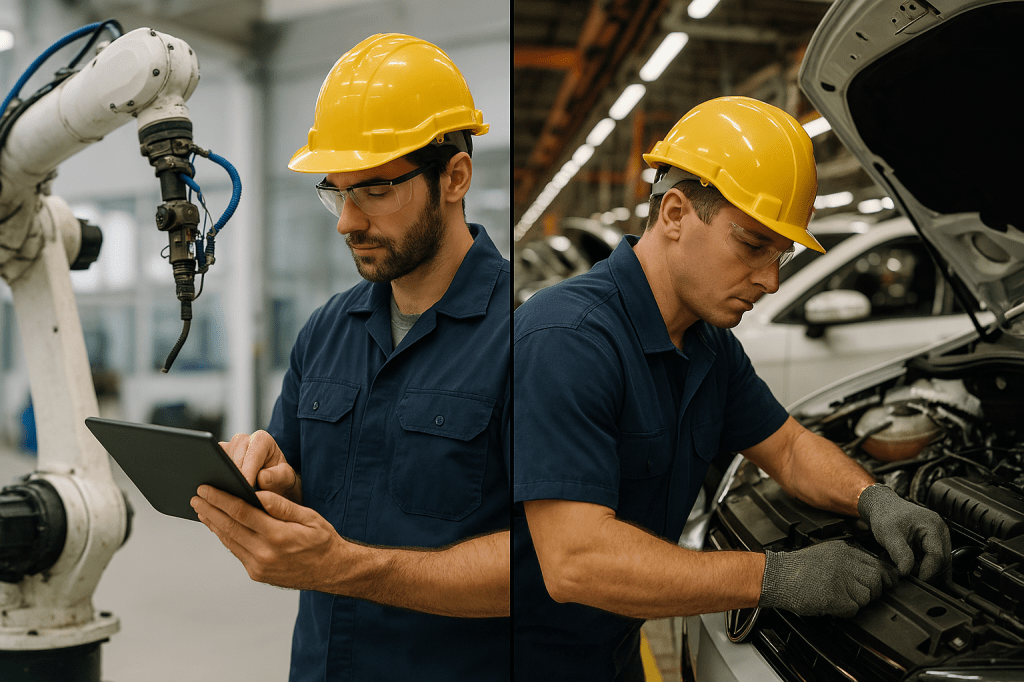
    • Engineers specializing in aerospace, robotics, and advanced manufacturing

    These aren’t just brain drains—they are bleeding-edge minds whose work directly affects national security, public health, and global competitiveness.

    Lessons from History: The WWII Parallel

    Ironically, a major reason the United States won World War II was because of the exact opposite trend: brilliant scientists migrated to America, fleeing persecution and ideological tyranny in their own countries.

    Jewish and anti-Nazi scientists from Germany and Austria—including Albert Einstein, Enrico Fermi, and Leo Szilard—brought with them unparalleled expertise. Their contributions were vital to America’s scientific rise, including the success of the Manhattan Project, which led to the development of the atomic bomb.

    America’s post-war technological dominance wasn’t just built on factories—it was built on brains that had found refuge in a country that respected their minds and valued their freedom.

    Now, the tables are turning.

    When God Withholds the Wise

    The Bible presents a sobering parallel. In Isaiah 3:1,3 (NIV), God warned Jerusalem and Judah of judgment:

     “See now, the Lord, the Lord Almighty, is about to take from Jerusalem and Judah both supply and support: all supplies of food and all supplies of water… the judge and the prophet, the diviner and the elder, the captain of fifty and the man of rank, the counselor, skilled craftsman and clever enchanter.”

    When a nation turns its back on God and His laws, He does not merely withhold rain or prosperity—He also removes its human capital: the wise, the skilled, the visionary. Without such leaders and thinkers, a society collapses from within, even if its military and economy still appear strong on the outside.

    What This Means for America

    The loss of scientific talent is not just a brain drain—it’s a judgment of capability. It hinders America’s ability to innovate, compete, and protect its own people. Technologies that could have cured diseases, predicted natural disasters, or strengthened national defense may now be developed under different flags.

    It is a warning, but also a wake-up call.

    Restoring scientific integrity is not just about increasing funding or adjusting immigration quotas. It’s about restoring the moral and spiritual foundation upon which wisdom and truth are welcomed. It’s about America humbling itself as a nation and recognizing that knowledge is a gift from God, not something to be manipulated for political convenience.

    As we watch the pillars of America’s global leadership quietly erode, one is reminded of Proverbs 29:18:

     “Where there is no revelation, the people cast off restraint; but blessed is the one who heeds wisdom’s instruction.”

    Will America once again become a refuge for wisdom and innovation—or will it become the very place from which wisdom flees?

  • A World Unraveling – The High Price of Tariffs and a Coming Global Reckoning

    A World Unraveling – The High Price of Tariffs and a Coming Global Reckoning

    When President Donald Trump announced sweeping tariffs against nearly all countries in April 2025—infamously dubbed “Liberation Day”—the move was framed as an act of economic sovereignty. Aimed at defending American workers, correcting trade imbalances, and punishing foreign nations accused of unfair practices, the 10% baseline tariff (and far higher rates for select nations) was meant to be a declaration of independence from a trade system that many believed disadvantaged the United States.

    But what began as an assertion of American self-interest is now reverberating across the globe, triggering economic tremors that few anticipated and many fear may permanently reshape the global order.

    The Intentions: Economic Nationalism Reborn

    Trump’s rationale was not new. Tariffs have historically been used to protect domestic industries, reduce reliance on foreign imports, and pressure trade partners to change their behavior. This round of tariffs was more sweeping than any the U.S. had imposed in over a century. The administration targeted over 180 countries, including allies, emerging economies, and even remote territories that barely trade with the U.S.—a precaution against tariff evasion through transshipment.

    The administration’s messaging was simple but aggressive: it’s time for America to stop being the world’s economic doormat and to rebuild its industrial might from within.

    The Reality: Economic Strain and Fragmentation

    However, history and current evidence tell a more sobering story. Tariffs are blunt instruments. While they may temporarily protect local industries, they often result in higher consumer prices, supply chain disruptions, and retaliatory measures. We’ve seen this before—during the Great Depression with the Smoot-Hawley Tariff Act and more recently during Trump’s first term trade war with China. In both cases, the long-term consequences were damaging.

    In 2025, it’s happening again—on a broader scale:

    • Stock markets have plunged, wiping out trillions in value.
    • Consumer prices are rising as import costs spike.
    • Supply chains are unraveling as companies scramble to redirect sourcing.
    • Global trade flows are shifting away from the U.S., as countries retaliate and seek new partners.

    The U.S. hoped to isolate abusive trading behaviors, but it is increasingly isolating itself.

    The Rise of Economic Blocs

    In response, the world is reorganizing into regional economic blocs. What America has stepped away from, others are now rushing to claim:

    • The European Union, increasingly united in trade and security, is moving to fill the void in global leadership.
    • China, through its Belt and Road Initiative and new trade alliances across Asia, is tightening its grip on emerging markets.
    • India, ASEAN nations, and Latin America are pursuing regional deals to shield themselves from U.S. unpredictability.
    • Africa, through the African Continental Free Trade Area (AfCFTA), is charting a course toward intra-regional trade independence.

    These blocs are forming not just out of economic logic—but out of necessity. The post–World War II era of U.S.-led globalization is ending. In its place, a fragmented, competitive, and increasingly adversarial global economy is emerging.

    The Geopolitical Risks: From Trade War to Real War

    This economic realignment carries with it grave geopolitical risks.

    As trade blocs become more inward-looking and rivalrous, the possibility of military conflict among major powers increases—especially as nuclear-armed states compete for influence, resources, and strategic positioning. The risk of conflict between the U.S. and China, or even among European powers and their neighbors, is no longer hypothetical—it is becoming increasingly likely in a world no longer bound by mutual economic interest.

    Furthermore, the economic instability triggered by tariff wars could prompt a dangerous political shift. History has shown us that during extremely difficult times, people can trade personal freedom for security. With inflation, job losses, and uncertainty mounting, charismatic strongmen often step into the void—offering order, prosperity, and national pride in exchange for civil liberties and democratic safeguards.

    A World on the Edge

    This is precisely the world that the Bible describes will exist just before the return of Jesus Christ.

    The book of Revelation speaks of a final global system—a powerful economic and military confederation—that dominates the world for a short time. This “beast” power promises security and prosperity, and the world, desperate for stability, embraces it. But this system, empowered by human pride and corrupted leadership, ultimately brings humanity to the brink of annihilation (Matthew 24:22).

    We are not there yet—but the signs are unmistakable.

    • The weakening of American influence, once a stabilizing force in the world, is accelerating.
    • The rise of rival blocs, each with its own rules and ambitions, is fracturing the global system.
    • The erosion of freedoms in favor of authoritarian efficiency is gaining traction.

    A Time to Watch and Prepare

    President Trump’s tariffs were intended to make America strong. But by pursuing economic disengagement in a globalized world, the U.S. may have instead triggered the unraveling of the very system that kept major conflicts in check.

    We do not place our hope in presidents, trade policies, or economic systems. We watch these events with a discerning eye—not in panic, but in understanding. The unraveling world system is not the end of the story. It is a prelude to Christ’s return, when the kingdoms of this world will become the kingdoms of our Lord and of His Christ (Revelation 11:15).

    While men pursue security through strength and prosperity through force, true peace will only come through the righteous rule of God’s coming Kingdom.

  • A Crisis of Confidence: America’s Waning Trust at Home and Abroad

    A Crisis of Confidence: America’s Waning Trust at Home and Abroad

    In recent months, the American public has witnessed a disturbing convergence: confidence in President Trump’s administration is slipping fast, and so too is the world’s faith in America’s leadership. What was once the most trusted economic and political power is now facing skepticism not only from its citizens but from traditional allies and partners across the globe. And while future elections may bring to office leaders with more polished diplomacy and less abrasive economic policies, the trajectory has already been set.

    America’s House Divided

    At home, President Trump’s sweeping tariffs, controversial government “efficiency” initiatives, and public messaging—often through his personal social media account—have triggered widespread concern. A recent wave of polling shows that a growing majority of Americans, particularly independent voters and moderates, now believe that his policies disproportionately benefit the ultra-wealthy at the expense of working families.

    Consumer sentiment has sharply declined. Inflation fears persist. Retirement portfolios have taken a hit due to market instability triggered by aggressive trade moves. Job insecurity looms as small businesses grapple with rising costs and an unpredictable regulatory climate.

    Even members of the President’s own party are uneasy. While Trump retains strong support from his core base, discontent is building among voters who feel increasingly alienated by policies that seem disconnected from their everyday struggles. The damage may not only cost Republican seats in the upcoming 2026 midterms—it could cast a long shadow over the political future of the party itself.

    Global Reverberations: The World Turns Away

    America’s trust problem doesn’t stop at its shores. Across Europe, Asia, and the Americas, traditional U.S. allies are quietly repositioning themselves. The trust that once undergirded decades of alliance-building is giving way to caution, skepticism, and contingency planning.

    • In Europe, nations like France and Germany are doubling down on strategic autonomy, investing in independent defense capabilities and economic blocs less reliant on Washington.
    • In Asia, countries such as Japan and South Korea are strengthening regional ties and trade networks, wary of American unpredictability.
    • In Canada and Mexico, recent U.S. trade barriers have fueled nationalist sentiment and accelerated diversification of export destinations.

    Even if American voters elect a more diplomatically-minded administration in the future, many foreign leaders will proceed with the assumption that U.S. foreign policy can shift dramatically every four years—because it already has, and likely will again.

    The world is preparing for a post-American order—one where America is just another actor in a multipolar stage, rather than the conductor of the global orchestra.

    The Long Tail of Miscalculation

    What does all this mean for ordinary Americans? It means that the consequences of current decisions will likely outlast the administration that made them.

    • Jobs: As trade relationships weaken, export-dependent industries could see layoffs and contraction.
    • Cost of Living: Higher tariffs mean higher prices for goods. Inflationary pressure could eat further into wages and savings.
    • Retirement: Market instability could continue to erode the value of retirement investments and long-term financial planning.
    • Entrepreneurship: The rising cost of doing business in an unstable trade environment will discourage innovation and risk-taking, especially among small- and medium-sized enterprises.

    This isn’t just about politics. It’s about livelihoods, futures, and the long-term credibility of the nation.

    A Spiritual Wake-Up Call

    But there is a deeper issue at play—one that cannot be solved by elections or economic adjustments. God is allowing the United States to reap what it has sown. A nation once known for upholding Judeo-Christian values is now visibly crumbling under the weight of self-interest, division, and moral confusion.

    Proverbs 14:34 (NKJV) says, “Righteousness exalts a nation, but sin is a reproach to any people.” America has forsaken sound Biblical principles in governance, economy, and culture. Now, it is beginning to experience the natural consequences: loss of respect, loss of trust, and closed doors of opportunity as global alliances take shape—without America at the table.

    Just as God warned ancient Israel through His prophets, the message for America is clear: “Return to Me.” The current economic and political upheaval is not merely the result of poor governance. It is a divine signal—a trumpet call to repentance, humility, and national course correction.

    The Decline of a Superpower

    As things stand now, the world is clearly transitioning into a post-American era. The signs are everywhere: reduced influence in multilateral forums, trade blocs forming without U.S. participation, allies hedging their bets, and voters at home feeling more uncertain about their future than ever before.

    This is not irreversible—but the window of opportunity is closing. The longer the nation delays its spiritual reckoning, the more severe the consequences may become.

    The future of America does not rest in new tariffs or clever policies. It rests in a return to truth, humility, and obedience to the God who once blessed it. Only then can the country begin to rebuild not just its economy—but its soul.

    (Note: The chart summarizing Pres. Trump’s net approval ratings were added to the post on April 26, 2025.)

  • Germany’s Bond Boom: A Glimpse into the Future of Global Finance

    Germany’s Bond Boom: A Glimpse into the Future of Global Finance

    In a stunning turn of events that highlights the growing volatility of the global economic order, massive investment capital recently flowed into German government bonds (Bunds)—not during a surge in optimism, but ironically while the markets were collapsing. As investors fled from the perceived safety of U.S. Treasury bonds, they sought refuge in what many now regard as a more reliable store of value: German Bunds.

    This development is not merely a market footnote. It is a signal—a telling indicator of where the global economy may be headed and how the world is gradually repositioning itself away from U.S. dominance.

    Where Did the Money Go When the U.S. Markets Fell?

    When the U.S. stock market tumbled and Treasury bonds were unexpectedly sold off—a rare sign of lost confidence—investors redirected their money into various safe-haven assets, including:

    • Gold – A time-tested hedge against inflation and currency instability. While it has universal value, it yields no income and lacks an economic engine like a government bond.
    • Swiss Franc and Swiss Bonds – Switzerland’s neutrality and stable banking sector make it attractive in crises. But the market is small and lacks the influence of a continental economy like the EU.
    • Japanese Government Bonds – Japan’s political stability and economic power still attract investors, though its massive debt levels and shrinking population limit long-term confidence.
    • High-Rated Corporate Bonds – Blue-chip corporate debt offers a balance of risk and return, but it still depends on company-specific performance and is no substitute for sovereign backing.

    Despite these options, the German Bund stood out. Investors were not just seeking safety—they were seeking credibility, discipline, and leadership in a changing financial landscape.

    The Rise of the German Bond

    Why did the German Bund rise above the rest?

    • Stability and Discipline: Germany maintains a low debt-to-GDP ratio and upholds strict fiscal policy. 
    • Economic Strength: It leads Europe in exports, productivity, and industrial capacity. 
    • Institutional Trust: German governance is measured, transparent, and central to the EU framework.

    German bonds provide both safety and structure, tied to real economic output and geopolitical influence.

    A Future European “Super Bond”?

    As the EU continues integrating politically and economically, a unified Eurobond seems inevitable. That bond may simply be modeled after the German Bund or even adopt its structure entirely.

    Such a development would:

    • Strengthen the euro as a global reserve currency
    • Centralize the EU’s financial system
    • Challenge, or even replace, the dominance of the U.S. dollar in world trade

    The Fall of the Anglo-Saxon Economies

    America and Britain have long been pillars of the global economic system. But the Bible warns that the modern descendants of Ephraim (Britain) and Manasseh (U.S.) would be brought low as they forsake God.

    Their decline is now underway:

    • The dollar is declining in global preference
    • U.S. bonds are losing their safe-haven status
    • Internal chaos and international isolation are rising

    As the dollar fades, Europe is rising—and with it, a system that will soon dominate the world.

    The End-Time Economic Empire

    The surge in demand for German bonds—and the push toward a centralized European financial tool—are early signs of what the Bible foretells: a final superpower in Europe that will control global commerce.

    At its heart may be a financial instrument—perhaps resembling the German Bund—that becomes the foundation of world trade. At that time, the dollar will be irrelevant, and U.S. Treasury bonds will no longer matter.

    God gave this warning to Israel through Hosea:

    “When they had pasture, they were filled; they were filled and their heart was exalted; therefore they forgot Me.” — Hosea 13:6

    And Moses had earlier said:

    “Beware that you do not forget the Lord your God… when your herds and flocks multiply, and your silver and your gold are multiplied… and your heart is lifted up, and you forget the Lord your God.” — Deuteronomy 8:11–14

    This is the story of modern Israel: economic pride followed by spiritual amnesia. And as always, pride comes before a fall.

    But God’s goal is not destruction—it is repentance. The coming collapse of the Western financial system will prepare the hearts and minds of peoples descended from ancient Israel and the rest of the world for the return of Jesus Christ, who will establish a righteous economy and government rooted in truth, equity, and lasting peace.

  • Can the U.S. Become a Manufacturing Hub Again?

    Can the U.S. Become a Manufacturing Hub Again?

    One of the core objectives behind recent U.S. tariff policies, particularly toward countries like China, is the desire to bring manufacturing back to American soil. Political leaders often frame this goal as reclaiming economic self-sufficiency, protecting jobs, and revitalizing struggling communities. But is this objective truly attainable in today’s global economy? Or has the U.S. economy evolved in such a way that its comparative advantage now lies elsewhere?

    To answer that, we must consider both economic realities and timeless biblical principles that offer valuable insights for any nation seeking prosperity and sustainability.

    The Economic Landscape

    The United States has, over the past several decades, shifted from an industrial economy to one heavily focused on services. Sectors like finance, software development, healthcare, education, and intellectual property have become its global strongholds. This transition didn’t happen by accident—it reflects the U.S.’s natural strengths in innovation, capital markets, and high-skill labor.

    As of March 2025, the U.S. manufacturing sector employed approximately 12.76 million people, a figure that has remained relatively stable over the past year. In contrast, the services sector has continued to dominate the U.S. economy, contributing significantly to GDP growth.

    Tariffs are intended to protect and encourage domestic manufacturing by making foreign goods more expensive. In theory, this should give U.S. companies the space to grow. However, high labor costs, a weakened industrial base, and global supply chain integration pose real challenges. Rebuilding large-scale manufacturing in the U.S. is not impossible, but it will take time, investment, and strategic focus—especially in high-tech or critical industries like semiconductors, defense, and clean energy.

    What Would Be a Realistic Strategy?

    Rather than aiming to become the world’s factory floor again, the U.S. may find greater success focusing on advanced manufacturing and strategic reshoring:

    • Encourage innovation in robotics, AI, and clean energy.
    • Protect national interests by reshoring production of essential goods like pharmaceuticals and microchips.
    • Invest in workforce development and industrial infrastructure.

    This strategy not only leverages America’s existing strengths but also prepares it for the future rather than returning to the past.

    Biblical Principles That Apply

    While economics sets the stage, biblical wisdom provides enduring principles to guide national policy:

    1. Wise Stewardship

    “Be diligent to know the state of your flocks…” (Proverbs 27:23–24)

    Nations, like individuals, must manage their resources wisely. The U.S. must not squander its strengths in services and technology but instead strengthen its vulnerabilities responsibly.

    2. Count the Cost

    “For which of you, intending to build a tower, does not sit down first and count the cost…?” (Luke 14:28)

    Reviving manufacturing requires more than good intentions. It demands sober evaluation, investment, and long-term planning.

    3. Value of Labor

    “The wages of the laborers… which you kept back by fraud, cry out…” (James 5:4)

    Labor must be respected and rewarded fairly. America’s higher wage standards reflect a moral commitment to worker dignity, which should not be undermined for the sake of cheaper goods.

    4. Global Interdependence

    “The eye cannot say to the hand, ‘I have no need of you.’” (1 Corinthians 12:21)

    Although the apostle Paul was primarily talking here about the interrelationship among the various members of the church, the principle applies to the global economy as well. While national resilience is important, total isolation isn’t biblical. Interdependence, when managed justly, is part of God’s design.

    5. Just Weights and Measures

    “Dishonest scales are an abomination…” (Proverbs 11:1)

    Trade policies should be fair, transparent, and just—not manipulative or self-serving.

    6. Preparing for the Future

    “Go to the ant… she prepares her food in the summer…” (Proverbs 6:6–8)

    It is wise to prepare for future economic realities. Investing in high-tech industries, education, and sustainable production aligns with this principle.

    A Balanced Approach

    The U.S. may never return to being the global hub for mass manufacturing, but it doesn’t need to. Its strength lies in services, technology, and high-value production. Tariffs can play a role in protecting national interests, but they should be part of a larger, future-oriented economic strategy.

    Ultimately, scripture reminds us that wise stewardship, fair dealings, and thoughtful planning are essential to national strength. In a world of shifting economic tides, these biblical principles remain an unshakable foundation.