Tag: Bible prophecy

  • Probing the Shield: Russia’s Airspace Tests and Europe’s Future Army

    Probing the Shield: Russia’s Airspace Tests and Europe’s Future Army

    Every few weeks, headlines surface of Russian fighter jets or drones slipping—sometimes boldly, sometimes stealthily—into NATO airspace. Recently, Estonia, Poland, and other allies have sounded the alarm as Russian aircraft flew without transponders, ignored intercept signals, or even sent swarms of drones across borders.

    To the casual observer, these events seem reckless. Why would Russia risk provoking NATO, the most powerful military alliance in the world? But there is strategy here. Moscow is probing. Each incursion is a test—an attempt to measure NATO’s reflexes, to spot weaknesses, and to learn how far it can go without triggering a serious response.

    And yet, in a twist of irony, these provocations may be preparing NATO for the very conflict Russia hopes to avoid. Every incursion forces allied radars to track, interceptors to scramble, and commanders to review their rules of engagement. Every incident adds data, sharpens coordination, and strengthens air defenses along NATO’s eastern flank. Russia may think it is playing offense, but in reality it is helping its adversaries rehearse for war.

    NATO Today, Europe Tomorrow

    But what of NATO’s future? The alliance has held since 1949, yet cracks are visible. American leadership has become uncertain, swaying between strong commitments and hints of withdrawal. If the United States wavers long enough, NATO as we know it may one day fade.

    That does not mean Europe will remain undefended. On the contrary, the pressures of Russian aggression and American inconsistency may drive European states to consolidate their own defense into a new structure—a European army. Such a force would not begin from scratch. It would inherit the muscle memory that NATO’s training and Russia’s provocations are providing right now.

    A Power Foretold

    The Bible itself points to the rise of such a force. In the book of Revelation, the Apostle John describes a European-centered power that will astonish the world with its military might: “Who is like the beast? Who is able to make war with him?” (Revelation 13:4).

    That prophecy speaks of a union, political and military, arising in Europe in the end times—an army that no earthly coalition could match. It is sobering to realize that today’s “tests” by Russia may be laying the groundwork for that very power. The lessons Europe learns under NATO’s umbrella will be reapplied in a future alliance, one described in Scripture as both formidable and unmatched.

    Rehearsals

    So the next time Russian jets slip into Baltic skies or drones drift over Poland, remember: these are not isolated provocations. They are rehearsals. Moscow is probing for weakness, but in doing so it is forcing Europe to harden its shield. And in the long arc of history, that shield may outlast NATO itself—emerging as something far stronger, and prophetically destined, on the world stage.

  • Storm Over the Shoal: The Philippines, China, and the Future of the West Philippine Sea

    Storm Over the Shoal: The Philippines, China, and the Future of the West Philippine Sea

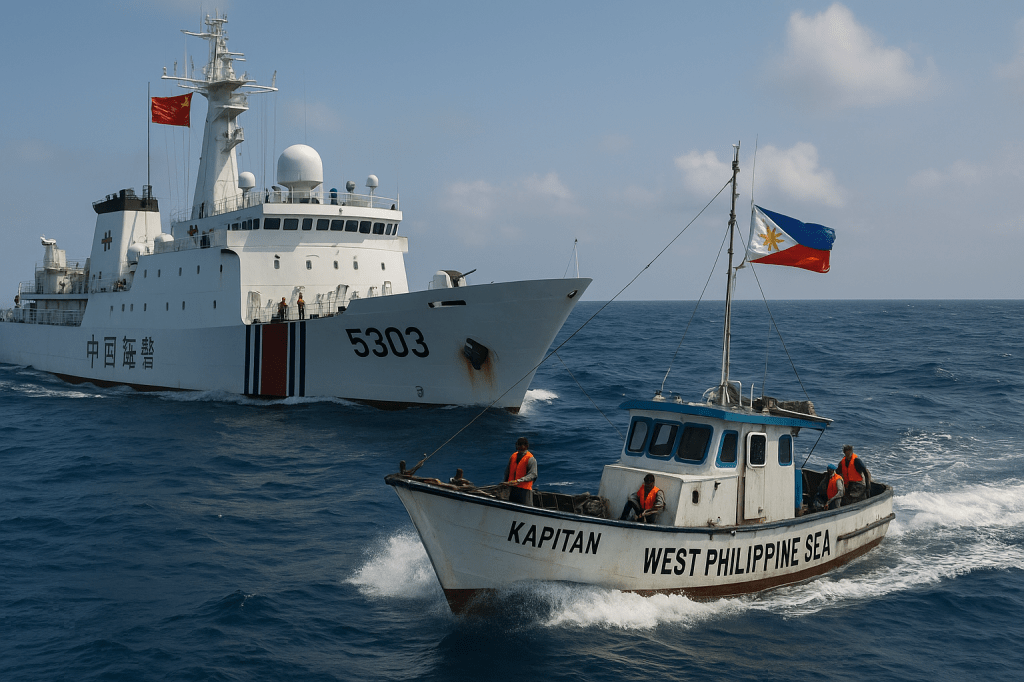
    Tensions flared again in the West Philippine Sea when Philippine and Chinese vessels collided near Scarborough Shoal on September 16, 2025. According to Manila, Chinese coast guard ships used high-powered water cannons against a Philippine resupply vessel, shattering glass on the bridge, damaging critical equipment, and injuring at least one crew member. China, for its part, accused the Philippines of “illegally” entering its waters and even claimed Manila rammed one of its ships—an allegation firmly denied by Philippine officials.

    This confrontation followed China’s unilateral declaration of a “national nature reserve” at Scarborough Shoal just days earlier. Filipino fishermen and government leaders saw this as an attempt to further tighten Beijing’s grip on a vital fishing ground that lies well within the Philippines’ Exclusive Economic Zone under international law and the 2016 Hague tribunal ruling.

    How Nations Responded

    Philippines: Manila lodged a strong diplomatic protest and ramped up patrols in contested waters. At home, protests over corruption added to the sense of urgency in defending national interests.

    China: Beijing justified its moves as “environmental” but in practice deployed coast guard and maritime militia vessels to enforce its claims, warning the Philippines against “provocations.”

    Allies & Partners:

    • The United States reiterated its defense commitments, condemning China’s actions.
    • Australia, Canada, Japan, and the UK voiced concern and pledged continued support for international law.
    • Germany and France are deepening defense ties with Manila. The UK is even exploring a Visiting Forces Agreement to allow closer military cooperation.

    What to Expect in the Next 3–5 Years

    The Philippines is investing heavily in its navy and coast guard, acquiring new frigates, offshore patrol vessels, and long-range missile systems like the BrahMos. It is also strengthening defense partnerships with allies from Asia, North America, and Europe. These steps will improve deterrence, but they cannot fully offset China’s overwhelming naval power.

    The likely trajectory is continued gray-zone conflict: water cannons, rammings, blockades, and the creation of more “facts on the ground” by China. At the same time, broader coalitions—Philippines with the U.S., Japan, Australia, the UK, and even select EU states—will increase naval patrols and exercises. Expect more incidents, more diplomatic protests, and a slow but steady militarization of the West Philippine Sea.

    The Long-Term Outlook: Prophecy and the Coming Clash

    While today the flashpoint is between the Philippines and China, the Bible shows that the stage is being set for something far greater. Prophecy in the book of Revelation describes a time when two great power blocs will dominate the world scene:

    • On one side, a resurrected Roman Empire, a powerful federation that will evolve out of today’s European Union.
    • On the other side, a vast eastern alliance led by powers like China and its allies.

    The South China Sea, a vital artery of global trade and security, could very well be one of the hot spots where these rival blocs collide. Scripture warns that this confrontation will erupt into a catastrophic war threatening the very survival of humanity (Matthew 24:21–22).

    But God has not left humanity without hope. Jesus Christ will intervene to stop world war from annihilating mankind. He will establish the Kingdom of God on earth, bringing true justice, security, and lasting peace—a peace no human power can achieve on its own.

    A Call to Repentance and Preparation

    In the meantime, God is calling individuals to repent, turn from sin, and live in obedience to His laws. The worsening conflicts, corruption, and rivalries we see today are signs of a world cut off from God. Yet for those who listen and respond, these events can serve as a wake-up call—a reminder to prepare for the soon-coming government of God, which will finally bring peace to all nations.

  • The High Price of Corruption

    The High Price of Corruption

    Corruption is more than a scandal—it is a global crisis. From Asia to the West, it is draining economies, crippling politics, and fueling public anger. Citizens are demanding answers, but efforts to curb graft often fall short.

    In the Philippines, outrage over billions lost in flood-control projects has led to calls for an independent probe. President Ferdinand Marcos Jr. has promised action, yet questions linger over whether lawmakers themselves will be scrutinized.

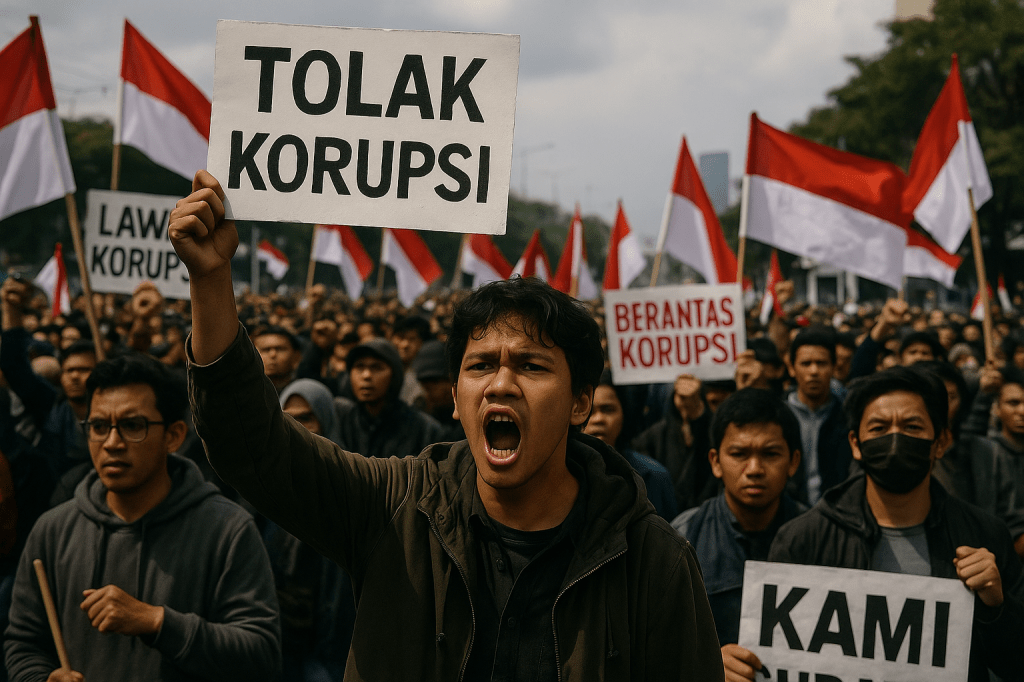
    In Indonesia, protests have engulfed more than 30 provinces after revelations of lavish perks for lawmakers while ordinary citizens endure austerity. A young delivery driver’s death during demonstrations only deepened the fury. The government has rolled back some benefits but simultaneously unleashed mass arrests and deployed tens of thousands of troops.

    In Mongolia, youth-led rallies over a luxury scandal forced the prime minister to resign. In Thailand, Prime Minister Paetongtarn Shinawatra faces suspension amid an anti-graft probe. Even in the United States, President Donald Trump faces allegations his family enriched itself through cryptocurrency ventures and overseas real estate deals tied to his political stature.

    The toll is immense. The IMF estimates over $1 trillion in bribes are paid each year, with trillions more lost to embezzlement. Money meant for schools, hospitals, and roads vanishes into private pockets. Economies stall, investors hesitate, and inequality grows. Politically, corruption skews elections, weakens the rule of law, and entrenches ruling elites. It sparks unrest, as seen in Asia’s street protests, and opens the door for populist strongmen who often build new corruption networks of their own.

    Governments are not standing still. Independent commissions, anti-graft courts, and international watchdogs have all been established. Technology, from blockchain to open procurement systems, is increasingly used to reduce graft. But progress is slow. Transparency International’s 2024 index shows two-thirds of nations still scoring below 50/100 in integrity.

    Why? Because corruption is not only a systems problem—it is a moral problem. At its heart lies greed, pride, and disregard for God’s law. Leaders who enrich themselves break the command, “You shall not steal.” When justice is twisted, truth is trampled.

    Without spiritual renewal and adherence to God’s commandments, reforms alone will not succeed. Nations may pass laws, but unless hearts change, corruption will simply find new ways to thrive.

    The Bible points to a different future. When Jesus Christ returns, He will establish a government free of graft, ruling with perfect justice and truth. As Isaiah prophesied, Christ will “judge the poor with righteousness, and decide with equity for the meek of the earth” (Isaiah 11:4). Under His reign, nations will finally be able to prosper, free from the drain of corruption, and humanity will experience the fairness and peace it has long desired.

    That is the true solution to the world’s crisis: not just better systems, but a coming Kingdom where corruption has no place.

  • Spiderweb Over Russia: A Drone Strike, a Prophecy, and Europe’s Ascendancy

    Spiderweb Over Russia: A Drone Strike, a Prophecy, and Europe’s Ascendancy

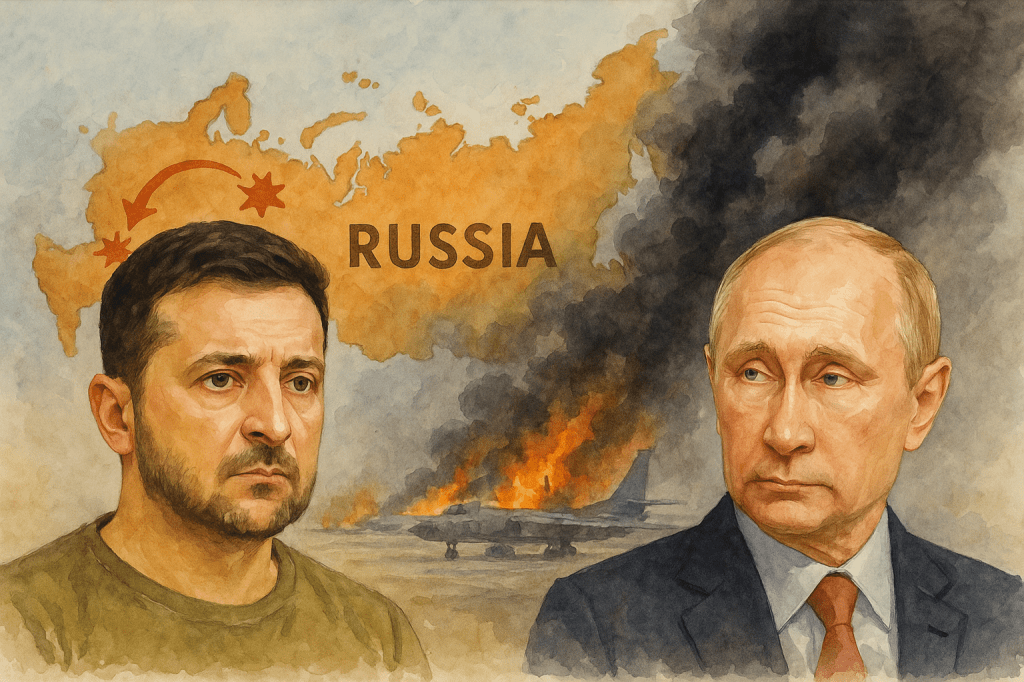
    In one of the most audacious and sophisticated operations since the Ukraine-Russia war began, a fleet of Ukrainian drones recently struck deep into Russian territory, destroying over 40 military aircraft — including strategic bombers and radar surveillance planes — parked at airbases once thought untouchable. Known as Operation Spiderweb, this strike not only dealt a blow to Russia’s military capability but shattered its assumption that the heartland of its empire was beyond reach.

    But what truly makes this operation historic is not just Ukraine’s execution. It is what it signals: the emergence of a European military that is able to cripple Russia’s military.

    Beyond Ukraine: The Rise of European Military Power

    At first glance, it appears to be a Ukrainian success story. But beneath the surface, Europe’s fingerprints are all over it.

    After the Trump administration cut off intelligence-sharing and military support to pressure Ukraine into a negotiated peace, it was France and the United Kingdom that stepped in to keep Ukraine informed. (Although the US has suspended its intelligence support to Ukraine from March 3-11, its intelligence support resumed after Ukraine agreed to the Trump administration’s 30-day ceasefire proposal. By the time Ukraine executed Operation Spider’s Web on June 1, US intelligence support has resumed for over two months. Likewise, the operation has been in planning for more than a year and it has benefitted from US intelligence provided for several years prior to its execution. The fact however remains that European military intelligence support to Ukraine has remained consistent and robust whether US support was there or not.)

    The Drone Coalition for Ukraine, spearheaded by the UK and Latvia and joined by Germany, Belgium, and Turkey, has funded over €1.8 billion in drone warfare innovations — the very capabilities that made Operation Spiderweb possible.

     European intelligence satellites, logistical frameworks, encrypted communication systems, and battlefield coordination tools filled the vacuum left by the U.S. withdrawal.

    This was not just a Ukrainian strike. It was a European-enabled blow against Russia’s strategic depth. And it was devastating.

    Russia’s False Sense of Security is Gone

    The targets included Tu-95 and Tu-160 bombers — Russia’s nuclear-capable aircraft — and A-50 early-warning planes, essential for commanding airspace and coordinating attacks. In one night, Ukraine managed to destroy approximately one-third of Russia’s long-range bomber fleet. These aren’t assets that can be easily or quickly replaced. Many were Soviet-era, and the factories that built them no longer exist.

    With the United States uninvolved, this blow was delivered largely through European intelligence, European drone design, and European coordination. The operation shattered the illusion that Russia’s vast geography offers security — and marked the first strategic-level success of a European-backed military force since World War II.

    A Glimpse into the Future: Europe Without America

    Europe’s military awakening is no accident — and it’s accelerating:

    • The Galileo satellite network, the IRIS² secure communications constellation, and nationally operated reconnaissance satellites are enabling Europe to be independent of U.S. space assets.
    • Germany’s Sky Shield Initiative, Airbus’s A400M strategic airlift, and the Multinational MRTT air-refueling fleet now give Europe global logistics reach.
    • France, with its independent nuclear arsenal, is now leading talks on a pan-European nuclear deterrence umbrella.

    What we are witnessing is the rapid formation of an autonomous European military force — one no longer under the U.S. defense umbrella, and increasingly capable of replacing it.

    In the near future, Europe may very well decimate Russia in a head-to-head war. And it wouldn’t need the United States to do it.

    This, Too, Was Prophesied

    Long before this shift, the Bible foretold of a coming superpower in the end time — a “Beast” power rising out of Europe (Revelation 17:12–13). This power would consist of “ten kings” — a coalition of nations that give their authority to a central military leader. It would wield immense force and shake the earth with its dominion.

    We are watching that prophecy unfold.

    Russia, despite its nuclear bravado, is crumbling before a resurgent Europe. And America, once the dominant force for world order, is stepping back — politically, economically, and militarily.

    These events point to a global realignment of power — exactly as the Scriptures predicted.

    Spiritual Reality

    As Europe grows in power and war looms ever larger, it is easy to marvel at the strategic brilliance or technological advances. But we must not lose sight of the spiritual reality behind these geopolitical shifts.

    Christ warned in Matthew 24:22 that unless those days were shortened, no flesh would be saved — meaning that humanity, left to its own devices, would annihilate itself. The tools of our destruction — hypersonic missiles, autonomous drones, cyber warfare, biological agents — already exist.

    The question is not if they will be used, but when.

    And yet, there is hope. Not in politics. Not in NATO or the EU or Washington. But in God.

    As the world plunges toward conflict and chaos, God is calling us to repent, to seek His truth, and to prepare spiritually for what lies ahead. Only His intervention will stop mankind from self-destruction.

  • Early Signs of Authoritarianism: What the Government and Its Citizens Reveal

    Early Signs of Authoritarianism: What the Government and Its Citizens Reveal

    Across the world, democratic institutions are showing signs of wear. Many nations—both young democracies and long-established ones—are slowly drifting toward authoritarianism or are becoming more tolerant of leaders with apparently authoritarian approaches to governance. What’s more troubling is that this drift doesn’t always start with violent coups or military takeovers. Often, it begins with subtle shifts—first in government behavior, then in the attitudes of its citizens.

    From Democracy to Autocracy: Government-Level Warning Signs

    According to studies from Freedom House, Varieties of Democracy (V-Dem), and political scientists like Steven Levitsky and Daniel Ziblatt (How Democracies Die), the early symptoms of democratic decline include:

    • Weakening of institutions: Leaders bypass courts, weaken legislatures, and centralize power.
    • Attacks on the press and opposition: Independent journalism is labeled “fake news”; critics are treated as enemies.
    • Undermining electoral integrity: Rules are bent, votes suppressed, or results questioned.
    • Inflammatory nationalism: Leaders stir up “us versus them” rhetoric to divide society.
    • Militarization of politics: Police and military are used to suppress protests or intimidate dissent.
    • Incremental constitutional changes: Term limits are eliminated, and checks and balances eroded.

    These patterns have played out in countries like Hungary, Turkey, and Russia, where democratic structures were gradually hollowed out from within—often with the legal system as a tool of control.

    The Other Side of the Coin: What Citizens Reveal

    Yet governments don’t act in a vacuum. Citizens themselves show signs of enabling authoritarianism. Research by Yascha Mounk, Pippa Norris, and surveys like the World Values Survey reveal the following trends:

    • Declining commitment to democratic norms: Fewer people, especially the youth, view democracy as essential.
    • Support for strongman rule: Citizens begin to favor “strong leaders” who can “get things done,” even at the cost of democracy.
    • Deep polarization: Society divides into tribes where compromise is seen as betrayal.
    • Indifference and apathy: Many withdraw from civic duties, feeling their voices no longer matter.
    • Tolerating violence and censorship: Some justify political violence or suppression of dissent if it favors their side.

    In short: when enough people care more about power, comfort, or ideology than fairness, truth, or accountability, democracy withers.

    A Spiritual Dimension

    God intended for humanity to live free, joyful, and safe—not under the thumb of cruel or corrupt rulers. Scripture shows that He warned nations and removed kings when they became oppressive. But He also allowed tyrants to rise when His people disobeyed.

    “I gave you a king in My anger, and took him away in My wrath.” — Hosea 13:11

    When people turn from justice, ignore the cries of the poor, and tolerate corruption or abuse, God may allow unjust rulers as a form of correction. Authoritarianism, in that sense, is not just a political shift—it can be a spiritual consequence.

    But that’s not the end of the story.

    Beyond Corrupt Human Rule

    The Bible points us to a future beyond corrupt human rule. When Christ returns, He will establish a perfect government where justice, love, and truth prevail:

     “For the Lord is our Judge, the Lord is our Lawgiver, the Lord is our King; He will save us.” — Isaiah 33:22

    Under Christ’s rule:

    • All leaders will be spiritually and morally perfected (Revelation 5:10).
    • Laws will be just and applied with gentle strength (Isaiah 11:4).
    • Every citizen—rich or poor—will be cared for (Psalm 72:4).
    • There will be no need for propaganda, police states, or manipulation (Micah 4:3-4).

    This is the kind of leadership God intended from the beginning.

    Final Word

    If mankind continues to fail to change its ways—if ordinary citizens and national leaders don’t reject selfishness, if they refuse to care for the marginalized, if they ignore the signs—we may soon find much of the world (including the most powerful nations) ruled not by servants of the people, but by strongmen who rule only for themselves. And not just in countries with authoritarian legacies, but even in places we now regard as bastions of democracy. This includes the United States and the democracies of Asia and Europe.