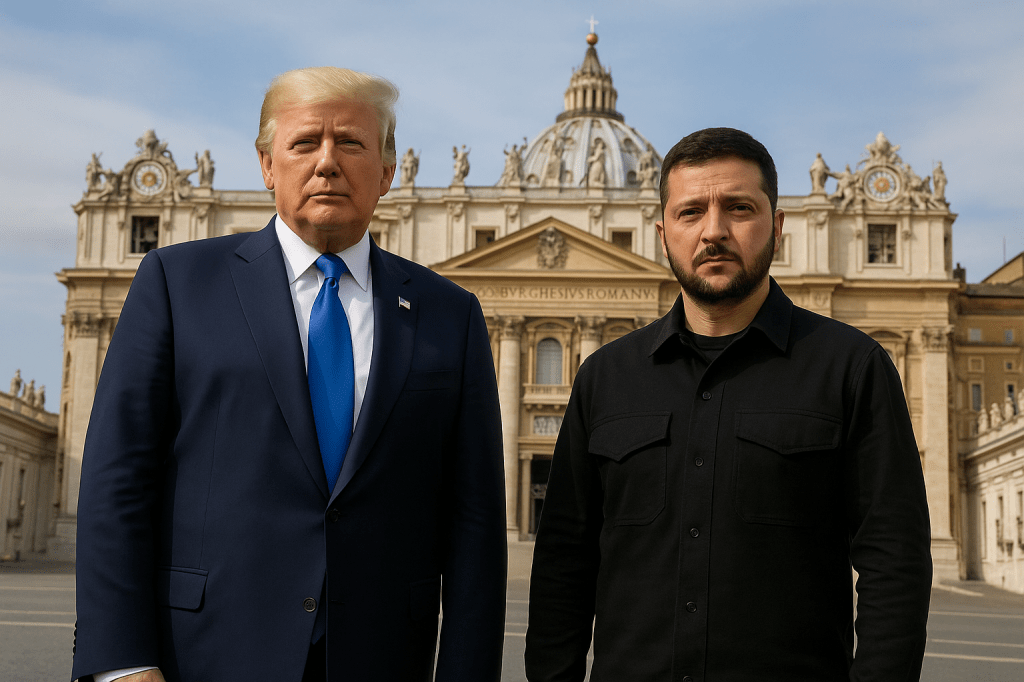
At the sidelines of the funeral of Pope Francis, held at the Vatican — a setting deeply symbolic of hope, reconciliation, and peace — a private and significant meeting took place between Ukrainian President Volodymyr Zelensky and U.S. President Donald Trump. Although their conversation lasted only around fifteen minutes, it produced key developments that, if sustained, suggest a possible shift in tone regarding the ongoing Russia-Ukraine conflict. This meeting, in its timing and tone, could have lasting implications for Ukraine, Europe, and global peace efforts.
Key Outcomes of the Meeting
The Zelensky–Trump meeting achieved several notable outcomes that signal at least a partial change from previous U.S. positions:
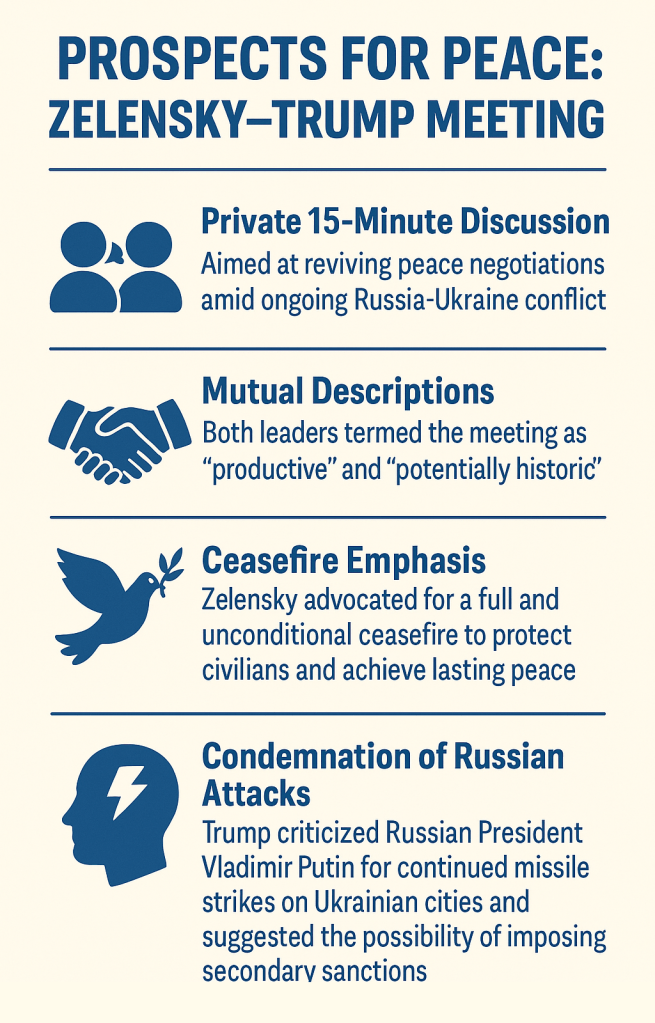
- Private 15-Minute Discussion – The two leaders engaged in a brief but focused conversation aimed at reviving the stalled peace negotiations between Ukraine and Russia. Though details remain limited, both sides characterized the exchange as serious and constructive.
- Mutual Praise of the Meeting – Afterward, both Trump and Zelensky described their discussion as “productive” and “potentially historic.” This mutual appreciation suggested a desire — at least rhetorically — to move beyond posturing and work toward real diplomatic progress.
- Emphasis on the Need for a Ceasefire – President Zelensky strongly advocated for a full and unconditional ceasefire to protect Ukrainian civilians and prevent further devastation. Trump, echoing a similar concern, called for immediate steps to reduce violence on the ground, marking a notable rhetorical shift from earlier periods when he emphasized quick deals even at Ukraine’s potential expense.
- Public Condemnation of Russia’s Attacks – For the first time in a significant international setting, Trump openly criticized Russia’s continued missile strikes on Ukrainian cities. He even hinted at the possibility of imposing secondary sanctions on Russia if hostilities escalated — a firmer line than he had taken during his previous administration.
These outcomes suggest that while Trump’s overall strategy may not have fully changed, his tone and priorities appear to have evolved — at least in how he publicly frames the conflict.
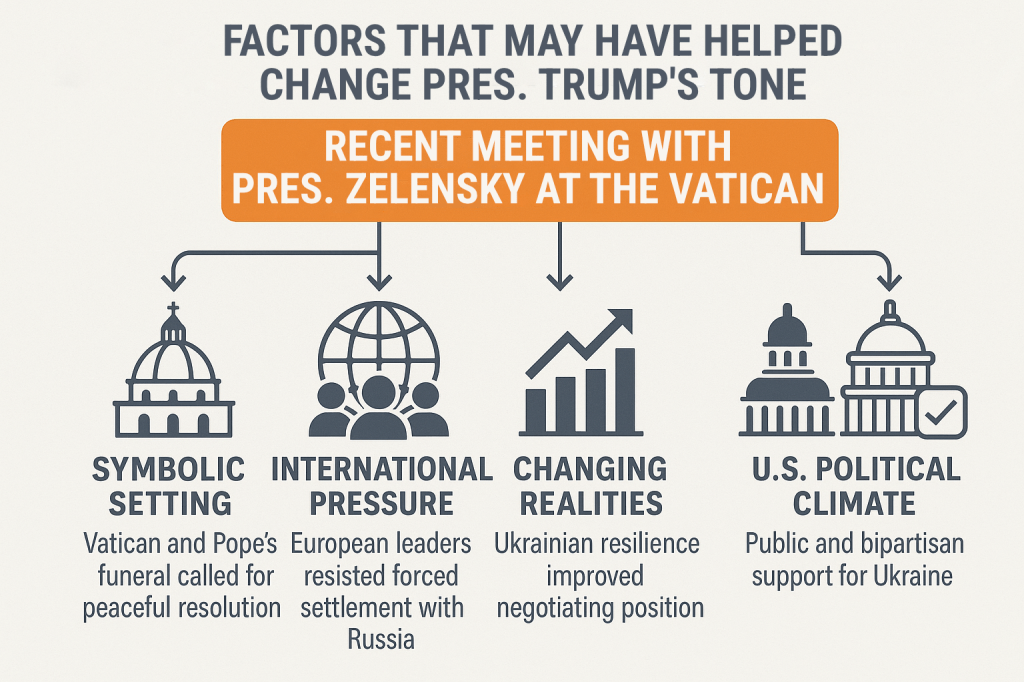
Factors That Likely Changed President Trump’s Tone
Several important forces likely contributed to this adjustment in Trump’s rhetoric and stance:
- The Symbolic Setting of the Vatican – Meeting during Pope Francis’ funeral inevitably shaped the atmosphere. In a setting dedicated to peace, compassion, and global unity, it would have appeared callous and politically risky for Trump to project a transactional or overly hardline image.
- International Diplomatic Pressure – Major European powers such as France, Germany, and the United Kingdom had already signaled strong opposition to any peace deal that legitimized Russia’s territorial gains. Trump’s administration would risk significant diplomatic isolation if it pushed for an unjust settlement.
- Ukraine’s Battlefield Resilience – Ukraine’s ability to hold its ground against Russian aggression impressed even skeptical observers. Zelensky’s ability to represent a nation that refuses to surrender easily likely demanded a more respectful and serious response from Trump.
- Growing Bipartisan U.S. Support for Ukraine – Both Democratic and Republican lawmakers have increasingly voiced support for Ukraine’s territorial integrity. With elections looming in 2026, Trump cannot afford to alienate a significant portion of the American electorate who sympathize with Ukraine’s struggle.
- Trump’s Need to Reinforce a Statesmanlike Image – As he looks toward solidifying his legacy and future leadership reputation, Trump understands the value of being seen as a “peacemaker.” This meeting provided an opportunity to bolster that image on a global stage.
Taken together, these factors likely combined to encourage Trump to moderate his tone and speak more seriously about a diplomatic path forward.
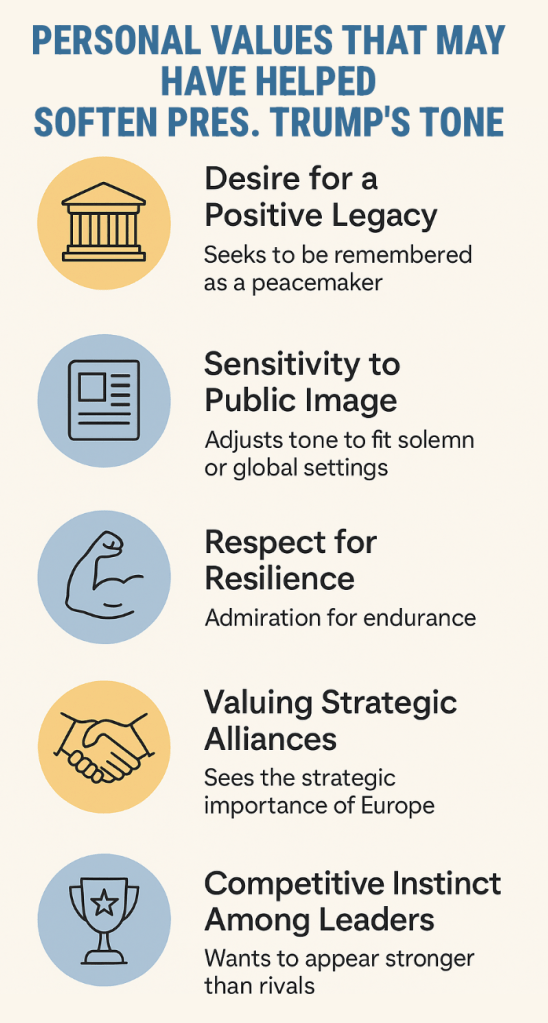
Personal Values That Helped Soften Trump’s Tone
Trump’s change in tone wasn’t merely a result of external pressures. Some of his core personal values may also have played a role:
- Desire for a Legacy of Peace – Trump is deeply concerned about how history will remember him. Securing peace between Ukraine and Russia could be a monumental achievement that cements his place among world leaders who brokered significant peace deals.
- Sensitivity to Public Image – Trump’s acute awareness of how he is portrayed in the media likely made him realize that appearing compassionate, especially at the Vatican, would play well both internationally and domestically.
- Respect for Strength and Resilience – Trump’s admiration for strength — whether in individuals, businesses, or nations — likely drew a measure of respect for Ukraine’s unwavering resistance against a much larger military power.
- Transactional View of Alliances – Trump sees international relationships through the lens of mutual benefit. He understands that maintaining strong European alliances is crucial for America’s broader strategic interests.
- Competitive Instinct Against World Leaders – Trump views global politics as a contest among strong personalities. His evolving criticism of Putin may not only reflect strategic calculation but also a desire to appear tougher and more effective than the Russian leader.
These personal values — particularly the desire for a positive legacy and respect for strength — could later motivate Trump to adjust even further on the more contentious areas of the peace negotiations.
Remaining Areas of Difference
Despite the softened tone, serious divergences remain between the U.S. and Ukraine’s vision of peace:
- Recognition of Crimea as Russian Territory – Reports indicate that Trump is still inclined to propose recognizing Russia’s annexation of Crimea — a move Ukraine and nearly all of Europe categorically reject. For Ukraine, such recognition would legitimize illegal aggression and set a dangerous precedent.
- Permanent Exclusion of Ukraine from NATO Membership – Trump has also suggested that Ukraine should be permanently barred from NATO as part of any settlement. This would leave Ukraine vulnerable to future Russian attacks and could embolden other aggressors worldwide.
If these areas are not resolved, any peace agreement would be fragile at best — and future conflicts almost inevitable.
What Could Change Trump’s Mind
Several dynamics could influence Trump to reconsider these positions:
- Continued Ukrainian Military Gains – If Ukraine demonstrates continued success on the battlefield, the political cost of asking them to surrender land will become much higher.
- Strong Legislative and Public Pressure in the U.S. – If Congress ties military aid and diplomatic support to maintaining Ukraine’s sovereignty — and if public opinion stays firmly with Ukraine — Trump will find it harder to push controversial concessions.
- European Unity and Toughness – A united European stance could make any plan involving territorial compromise diplomatically and economically costly for the U.S.
- Legacy Motivations – Trump’s desire to be remembered as a historic peacemaker could drive him to accept more principled, lasting solutions, rather than quick political victories.
Thus, personal ambition for a noble legacy could actually help steer Trump toward better, fairer peace terms.
How Putin Might React
Russian President Vladimir Putin is unlikely to ignore these developments:
- Potential Escalation – If Putin senses that the U.S. position is hardening, he may attempt to escalate militarily to force a settlement while he still holds significant ground.
- Undermining Trump’s Credibility – Russia’s information networks might try to discredit Trump if they believe he is drifting too far from their strategic goals.
- Increased Diplomatic Pressure on Ukraine – Expect Moscow to step up efforts to intimidate Ukraine into accepting unfavorable terms before U.S. policy hardens further.
In short, Russia is likely to respond aggressively, viewing a tougher Trump as a threat to their long-term objectives.
The Bigger Picture
Even if a ceasefire is achieved, true and lasting peace will not come merely through negotiations.
What is needed is a profound change in the hearts and values of leaders and nations:
- Leaders must focus on justice and dignity over power and conquest.
- Nations must seek cooperation and fairness instead of exploitation and fear.
- Alliances must be built not just on interest, but on principles of mutual respect.
The Bible points us to a future beyond the broken leadership of today.
When Christ returns, He will establish a government where “nation shall not lift up sword against nation, neither shall they learn war anymore” (Micah 4:3).
Under His perfect reign, there will be no more aggressors and no more victims.
Bigger nations will no longer oppress smaller ones. Great powers will no longer fear or threaten one another. True, lasting peace will fill the earth — a peace built on justice, love, and eternal strength.
Cautious Optimism
The Vatican meeting between Trump and Zelensky offers a rare moment of cautious optimism.
But real peace will require more than changed strategies — it will require changed values.
Until the Kingdom of God is established on earth, peace among nations will remain fragile. But every step toward justice, compassion, and respect today is a small glimpse of the greater peace that is yet to come.
