Tag: Catholic Church

  • Habemus Papam: The Election of Pope Leo XIV and What It Means for the World

    Habemus Papam: The Election of Pope Leo XIV and What It Means for the World

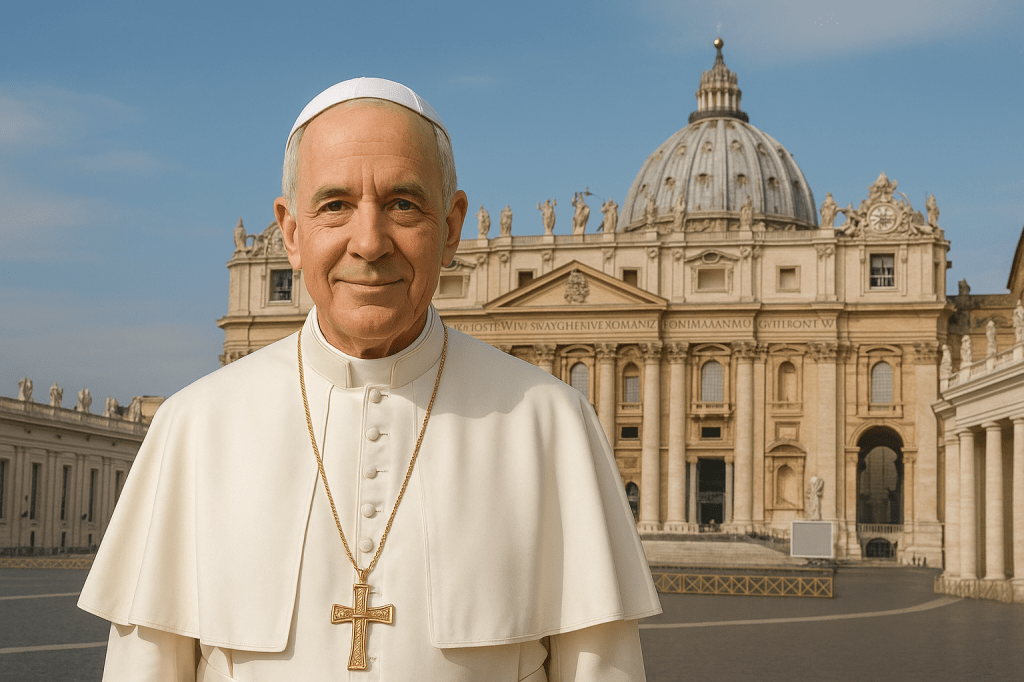
    On May 8, 2025, the white smoke billowed from the Sistine Chapel, and the world was introduced to a new leader of the Roman Catholic Church—Pope Leo XIV, formerly Cardinal Robert Francis Prevost. His election marks a series of historic firsts: the first American pope, a Peruvian citizen by naturalization, and a former missionary deeply rooted in the social struggles of Latin America. His ascension comes at a time of significant global and ecclesial uncertainty, and it sets the stage for a papacy that is likely to shape the moral conversation of the coming decade.

    A Career of Global Service and Grounded Ministry

    Robert Francis Prevost was born in Chicago in 1955. A member of the Order of Saint Augustine, he spent over two decades in Peru, where he served as seminary director, parish priest, and later as bishop of Chiclayo. His missionary experience embedded him in the lives of the poor and the working class, shaping his deeply pastoral, socially engaged worldview.

    In 2023, he was called to Rome to head the Dicastery for Bishops, where he oversaw episcopal appointments worldwide. Known for his humility, administrative competence, and theological depth, he was elevated to the rank of cardinal that same year. Despite not being among the most mentioned papabili (likely candidates), he emerged as a consensus choice among the cardinals—likely for his ability to bridge divides between progressive and traditional elements in the Church, and his clear moral compass grounded in lived experience.

    Why the Cardinals Chose Him

    Pope Leo XIV’s election most likely reflects the cardinals’ desire for a leader who could:

    • Build continuity with the reform-oriented legacy of Pope Francis;
    • Maintain doctrinal orthodoxy while remaining pastorally compassionate;
    • Strengthen the Church’s credibility in the Global South and restore trust in the West;
    • Speak with clarity on moral issues facing humanity—especially poverty, migration, and climate change.

    In a fractured world and an often polarized Church, Cardinal Prevost offered a steady, humble, and globally minded profile for the Catholic faithful.

    Immediate Challenges Facing Pope Leo XIV

    As Pope Leo XIV assumes leadership of the Church, several pressing issues await him:

    1. Restoring Trust Post-Abuse Crisis – Strengthening accountability and enforcing global safeguards against clerical abuse remain urgent.
    2. Reviving Faith in the West – The decline of church attendance and vocations, particularly in Europe and North America, requires pastoral creativity and bold evangelization.
    3. Guiding the Church Through the Synodal Path – He must balance unity and diversity as the Church explores broader participation of laity and women in Church life.
    4. Responding to Global Injustice – From migration and war to ecological degradation, the Pope’s moral voice is needed to challenge indifference and advocate for peace and dignity.

    The Papacy and the Trump Administration: Points of Tension

    Pope Leo XIV’s past criticism of Vice President J.D. Vance—especially Vance’s attempt to invoke Christian teachings to justify harsh immigration policies—suggests early signs of moral tension with the Trump administration. The Pope, then still a cardinal, publicly shared his disapproval, challenging leaders to uphold Christ’s call to love the stranger and care for the vulnerable.

    This divergence is likely to deepen as the papacy of Leo XIV progresses. The Trump administration’s transactional approach to foreign policy, its perceived alignment with corporate elites over ordinary citizens, and its often blunt rhetoric on global affairs stand in contrast to Pope Leo’s vision of inclusive solidarity, ethical leadership, and compassionate governance.

    Implications for U.S.-Vatican Relations and Global Perception

    If the Trump administration continues to sideline moral diplomacy in favor of nationalist or plutocratic policies, Pope Leo XIV’s voice may further underscore the growing moral disconnect between American leadership and the broader international community.

    Rather than isolating the Vatican, such a divergence could have the effect of spotlighting the Vatican as a counter-voice of moral credibility—especially on issues like peace, economic justice, and climate ethics. It may also further weaken America’s global soft power, especially in the developing world, where the Church remains a deeply trusted institution.

    A Sobering Biblical Parallel

    God warned ancient Israel, “I will break the pride of your power” (Leviticus 26:19), and in another place, He foretold that His disobedient people would become “the tail and not the head” (Deuteronomy 28:44). These warnings directed to Israel of ancient times and that of today, underscore a timeless principle: when nations act unjustly and pridefully—abandoning moral responsibility—God allows their influence to wane.

    If America’s policies remain at odds with ethical norms and divine principles, and if it continues to marginalize the vulnerable in pursuit of transactional gains, it risks becoming morally irrelevant on the world stage. Pope Leo XIV’s papacy may serve as a prophetic mirror reflecting that divergence—and the twilight of America as a real superpower.

  • The Passing of Pope Francis and the Path Ahead for the Catholic Church

    The Passing of Pope Francis and the Path Ahead for the Catholic Church

    On April 21, 2025, the world awoke to the news that Pope Francis, born Jorge Mario Bergoglio, had passed away at the age of 88. His death, though expected due to his recent health struggles, marks the end of a papacy that was as transformative as it was challenging.

    The Legacy of Pope Francis

    Pope Francis was the first Jesuit pope, the first from the Global South, and the first non-European to hold the papacy in over a millennium. Elected in 2013 following the resignation of Pope Benedict XVI, Francis quickly set a tone of humility and simplicity. He rejected the papal palace for modest quarters, emphasized service over status, and frequently reminded the Church to be “a field hospital for the wounded.”

    His Key Legacies:

    • A Church of the Poor: Francis sought to shift the Church’s focus toward social justice, economic inequality, and care for the marginalized.
    • Environmental Advocacy: His encyclical Laudato Si’ was a global call to action on climate change, rooted in both science and theology.
    • Synodality and Inclusion: He opened up global synods to deeper listening and greater participation, especially from laypeople and women.
    • Bridging East and West: Francis made significant efforts to reach out to the Orthodox churches, Islamic leaders, and even the atheist world, portraying the papacy as a platform for dialogue, not division.

    Yet, his papacy was not without controversy.

    The Challenges He Faced

    Pope Francis inherited a Church rocked by scandal, polarization, and a shrinking influence in secularized societies.

    • Sexual Abuse Crisis: While he took steps to address abuse and enforce accountability, critics felt he moved too slowly and hesitated in confronting entrenched institutional culture.
    • Doctrinal Tensions: His pastoral leniency—especially on issues like communion for the divorced and remarried—sparked pushback from conservative cardinals.
    • Internal Resistance: Within the Curia, efforts to reform finances and structures were met with inertia or subtle sabotage. Yet he pressed on, famously warning Vatican insiders against “spiritual Alzheimer’s” and careerism.
    • Global Fragmentation: As global Catholicism grew more diverse—demographically and theologically—Francis emphasized unity without uniformity, a challenging task in an increasingly polarized world.

    Despite this, he remained a steady voice for over a decade.

    Who Will Follow? The Frontrunners—and the Unknowns

    With Pope Francis now laid to rest, the College of Cardinals will convene in the coming days to elect the next pope. While the process is steeped in prayer, tradition, and secrecy, analysts have identified several frontrunners.

    Cardinal Pietro Parolin of Italy is widely respected for his diplomatic acumen as the Vatican’s Secretary of State. He brings deep institutional experience and a calm, steady hand in global affairs. However, he is sometimes seen as too reserved or bureaucratic, lacking the charismatic presence many seek in a modern pope.

    Cardinal Luis Antonio Tagle from the Philippines is known for his warmth, eloquence, and global popularity. Often described as “the Asian Francis,” his pastoral approach and media-friendly presence make him a compelling figure. Still, his perceived closeness to Pope Francis and prior management challenges in Caritas Internationalis may lead some cardinals to hesitate.

    Cardinal Matteo Zuppi of Italy is a bridge-builder and advocate for peace, respected for his leadership in both ecclesial and political circles. His involvement in international peace efforts and emphasis on compassion position him as a continuity candidate. Yet, his progressive image might not sit well with more conservative electors.

    Cardinal Jean-Claude Hollerich of Luxembourg is a Jesuit with sharp intellect and a deep understanding of European affairs. As president of COMECE, he brings a sophisticated grasp of EU dynamics. However, his openness to revisiting Church teachings may alienate more traditional factions.

    Cardinal Peter Turkson of Ghana has long been a prophetic voice on social justice, environment, and global inequities. He commands global respect, particularly in the Global South. Nonetheless, his advanced age and some internal controversies during his Vatican tenure may dim his prospects.

    Cardinal Robert Sarah of Guinea is revered by traditionalists for his doctrinal clarity and liturgical conservatism. A fierce defender of persecuted Christians, he could anchor the Church in orthodoxy. Yet, his strong conservative stance may polarize the conclave.

    But history reminds us: the next pope is not always the frontrunner. In 2013, very few observers predicted the election of Jorge Bergoglio. And yet, it was he who emerged from the Sistine Chapel balcony as Pope Francis.

    Geopolitical Crossroads: The Next Pope’s New World

    The pope is not just the Bishop of Rome; he is a global religious statesman. The next pontiff will inherit a world in flux—and a Church that must navigate through rapidly shifting tides.

    1. Europe’s Fragile Unity

    With the U.S. becoming increasingly isolationist, Europe is left to face rising Russian aggression on its own. The next pope will need to be a voice for moral clarity and continental unity, encouraging Europe to reclaim not just political cooperation but a shared spiritual heritage.

    2. Sharia Law and Cultural Tensions

    Across parts of Europe, the growing Muslim population has led to calls for recognition of Sharia-based parallel legal systems. The new pope will have to navigate interreligious relations with both diplomatic grace and doctrinal firmness, defending the religious freedom of all while protecting Christian identity.

    3. Global Persecution of Christians

    From the Middle East to Africa and even parts of Asia, Christians are increasingly persecuted, discriminated against, and even martyred. The next pope will need to be an unflinching advocate for the persecuted Christians (Catholics, in particular), pressing global leaders to act while strengthening the Church’s support systems on the ground.

    4. The Rise of New Empires

    China’s economic dominance, Russia’s militarism, and a fragmented West point to the emergence of competing “blocs” of influence. The Catholic Church, uniquely global and transnational, will need to be a bridge-builder and a moral compass in a divided age.

    God Is Sovereign

    While cardinals may deliberate, campaign informally, and weigh personalities and programs, the ultimate decision lies beyond their human plans.

    “For there is no authority except from God, and those that exist have been instituted by God.” — Romans 13:1 (ESV)

    Throughout history, God has raised up kings, emperors, and yes—even popes—to accomplish His divine purpose. The next pope, whoever he is, will be stepping into a role far greater than himself.

  • Eastern Europe’s Protests: A Pivot Toward the EU and Away from Russian Influence

    Eastern Europe’s Protests: A Pivot Toward the EU and Away from Russian Influence

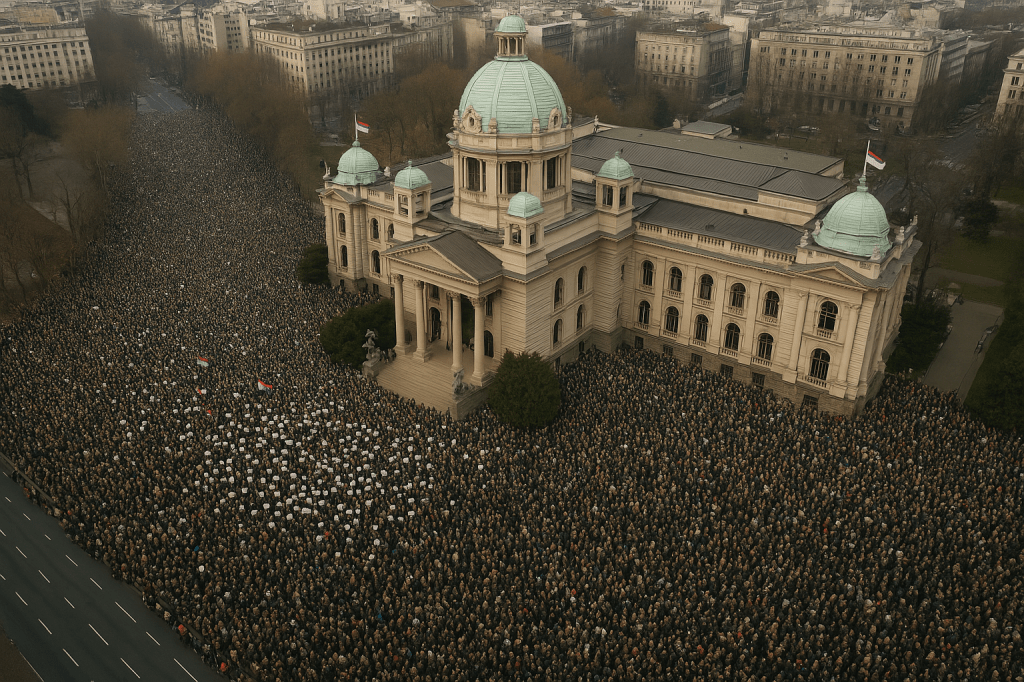
    The streets of Bratislava, Belgrade, Budapest, and Bucharest are alive with the voices of tens of thousands demanding a shift in their nations’ political trajectories. Across Slovakia, Serbia, Hungary, and Romania, citizens are rejecting the pro-Russian policies of their governments and calling for a stronger alignment with the European Union. This movement—growing in intensity—highlights a reality that runs counter to Vladimir Putin’s ambitions: rather than regaining dominance over Eastern Europe, Russia’s invasion of Ukraine has accelerated the ideological and political realignment of these nations toward Western Europe.

    The Backfiring of Putin’s Strategy

    When Russia launched its full-scale invasion of Ukraine in 2022, Putin envisioned a swift conquest that would solidify Russia’s sphere of influence and deter former Soviet and Warsaw Pact nations from deepening their ties with the EU and NATO. However, the opposite has occurred. Ukraine, once balancing between East and West, is now firmly committed to European integration. Finland and Sweden have abandoned neutrality and joined NATO, while Poland and the Baltic states have ramped up their defenses against potential Russian aggression.

    Now, the aftershocks of Russia’s aggression are manifesting in countries that were not initially on the frontlines. The recent protests in Slovakia erupted over Prime Minister Robert Fico’s overtures to Moscow. In Serbia, young demonstrators are rallying against government corruption and Russia’s influence over President Aleksandar Vučić. Romania has seen protests amid political maneuvering linked to Russian interference in its elections. Hungary, under Viktor Orbán, remains the Kremlin’s closest EU ally, yet anti-government demonstrations indicate a growing discontent with Budapest’s pro-Russian policies. These movements suggest a broader continental shift, as nations that once sat on the geopolitical fence are now tilting decisively toward Brussels and away from Moscow.

    The Historical Parallels: The Two Legs of Europe

    Interestingly, these very nations were once part of or influenced by either the Holy Roman Empire or the Byzantine Empire—two great pillars of European civilization that emerged from the division of the old Roman Empire. Slovakia and Hungary were historically connected to the Holy Roman Empire, while Serbia and Romania had ties to the Byzantine Empire.

    This historical context is striking. Europe today appears to be reconfiguring itself in ways reminiscent of its old self that is divided between the Holy Roman Empire in the west, and the Byzantine Empire in the east. These two regions have also long been shaped by the spiritual morals of the Catholic Church and Orthodox Christianity—two branches of the same faith that split centuries ago. This shared Christian heritage continues to influence their cultural and political identities, even as they navigate contemporary geopolitical shifts.

    Setting the Stage for Prophetic Fulfillment

    While these protests may not immediately result in Slovakia, Serbia, Hungary, or Romania officially pivoting toward the EU, they appear to be setting the trajectory toward a greater geopolitical realignment—one that aligns with biblical prophecy. Scripture foretells the re-emergence of a powerful entity rooted in the traditions of the Roman Empire. The Book of Daniel describes a final kingdom that will arise in the last days:

    “And the fourth kingdom shall be as strong as iron, inasmuch as iron breaks in pieces and shatters everything; and like iron that crushes, that kingdom will break in pieces and crush all the others. Whereas you saw the feet and toes, partly of potter’s clay and partly of iron, the kingdom shall be divided; yet the strength of the iron shall be in it, just as you saw the iron mixed with ceramic clay” (Daniel 2:40-41, NKJV).

    This divided kingdom, depicted in Nebuchadnezzar’s vision, symbolizes the final phase of the Roman system—comprising strong and weak elements, yet unified in a form of revived imperial authority. The protests across Eastern Europe, calling for closer ties to the EU, indicate that these nations are being pulled toward what could eventually form the prophesied final configuration of the Roman Empire.

    A Europe in Transition

    Russia’s war in Ukraine was intended to reassert Moscow’s dominance, but instead, it is accelerating Europe’s realignment along historical lines. The protests in Eastern Europe are not merely political events; they are part of a broader transformation that echoes the division of the old Roman world. Whether today’s movements will result in immediate policy shifts remains uncertain, but the trajectory is clear: countries in Eastern Europe that used to be part of, under the influence of, or had a close relationship with the old Roman Empire are moving away from Russian influence and gravitating toward a European-centered future.

    For those who understand biblical prophecy, these events provide yet another piece of the puzzle. The geopolitical restructuring we are witnessing today may well be part of the unfolding of God’s plan, leading to the re-emergence of the Roman system that will play a pivotal role in the end times.