Tag: DOGE

  • When Disruption Falls Short: Elon Musk’s Retreat from Government and the Fallout of DOGE

    When Disruption Falls Short: Elon Musk’s Retreat from Government and the Fallout of DOGE

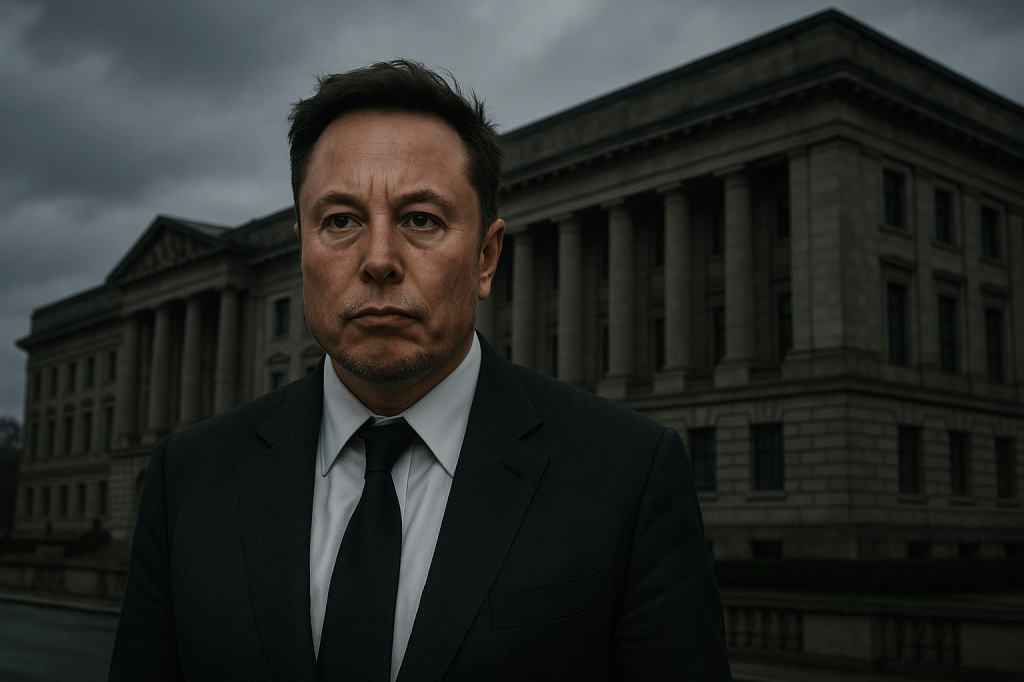
    Elon Musk, the entrepreneurial titan known for reshaping industries from aerospace to electric vehicles, is stepping back from his highly publicized role in the Trump administration’s Department of Government Efficiency (DOGE). Appointed as a special government employee with the ambitious task of slashing government waste and streamlining federal operations, Musk’s tenure began with high expectations and sweeping promises. But just over 100 days into his service, what remains is a trail of disrupted agencies, demoralized employees, and mounting public backlash—both domestic and international. Musk now plans to reduce his involvement to one or two days per week, effectively ceding ground in what was once heralded as a revolutionary approach to governance.

    The Goals of DOGE

    At its inception, DOGE was created with the audacious goal of cutting $2 trillion in federal expenditures—a figure that was quickly revised to $1 trillion, and then again to a more modest $150 billion. Musk envisioned a leaner, tech-driven bureaucracy that operated with Silicon Valley efficiency. He sought to eliminate redundancy, cancel unnecessary contracts, dismantle underperforming agencies, and reallocate resources to higher-priority areas.

    Performance and Outcomes

    While Musk’s team claims to have saved roughly $160 billion through contract eliminations and program shutdowns, these numbers are heavily contested. Critics argue that the long-term costs—ranging from severance packages and legal challenges to the collapse of critical public services—may far outweigh the reported savings. Over 250,000 federal employees were dismissed or forced into early retirement. Agencies like the Veterans Administration, Social Security Administration, and IRS saw drastic reductions in workforce and capacity, leading to service bottlenecks and citizen complaints.

    Public disapproval quickly followed. According to a Washington Post-ABC News poll, 57% of Americans disapproved of Musk’s handling of DOGE, and President Trump’s approval ratings dropped to the lowest 100-day rating in modern history. The backlash wasn’t confined to U.S. borders—global protests erupted under the banner of the “Tesla Takedown” movement, severely damaging Tesla’s brand and sales across Europe and parts of Asia.

    Why DOGE Fell Short

    One of the primary reasons Musk’s DOGE initiatives failed to achieve its objectives was his fundamental misunderstanding of the American bureaucratic system. Much like the man Christ referred to in Luke 14:28 who sought to build a tower but failed to count the cost, Musk launched into federal reform without first grasping the complexity of the system he aimed to dismantle. His private-sector instincts—cut quickly, move fast, disrupt—ran counter to the deliberate, often consensus-driven nature of government operations.

    Moreover, Musk’s top-down approach and lack of consultation with stakeholders proved costly. Programs were cut without warning, and agencies were reorganized without input from those who understood their functions best. As Proverbs 15:22 reminds us, “Without counsel, plans go awry, but in the multitude of counselors they are established.” Musk’s failure to heed this wisdom led to confusion, inefficiency, and widespread resentment.

    Possible Long-Term Effects

    The long-term effects of Musk’s DOGE leadership are still unfolding. While some supporters believe the cuts were a necessary first step toward a more sustainable government, others warn that the damage to institutional trust and public service capacity may take years to repair. Additionally, Musk’s political alignment and policy actions have left a scar on his global business image, potentially diminishing investor confidence and consumer loyalty.

    International markets, especially in Europe, have already responded. Tesla’s sales in France and Denmark have plummeted by over 50%, and the company has seen a 71% drop in profits in the first quarter of 2025. Simply stepping back from the Trump administration may not be enough to undo the reputational damage.

    Bold, Disruptive, Flawed

    Elon Musk’s foray into government reform was bold, disruptive, and ultimately flawed. Despite noble intentions and a few notable savings, his lack of preparedness, disregard for established systems, and failure to engage stakeholders have rendered the DOGE initiative more controversial than transformative. As he retreats to focus once more on his private enterprises, the experience stands as a cautionary tale: even the most brilliant innovators must count the cost—and seek counsel—before attempting to reshape something as complex as a nation’s government.
  • “Hands Off!” – A Nation Speaks, But Will Its Leaders Listen?

    “Hands Off!” – A Nation Speaks, But Will Its Leaders Listen?

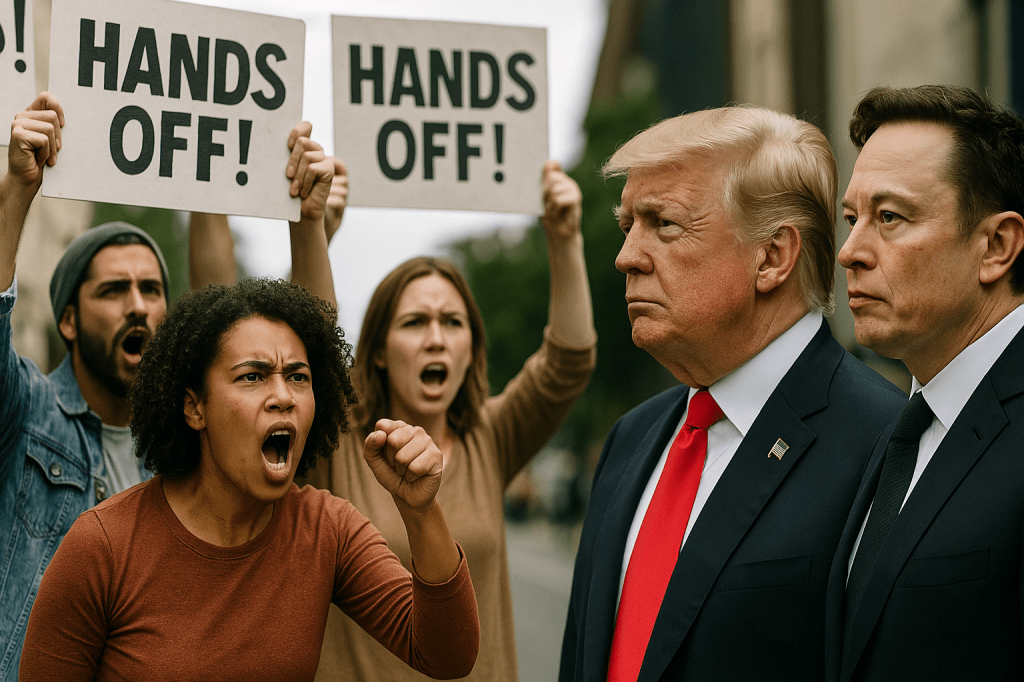
    On April 5, 2025, the United States witnessed a moment of rare unity—not in the halls of Congress, but in the streets, sidewalks, and town squares of all 50 states. From liberal coastal cities to deep-red heartland towns, Americans took part in a powerful and coordinated show of dissent under one rallying cry: “Hands Off!”

    These protests, organized by a coalition of over 150 advocacy groups, were not merely about policy disagreements. They were a response to sweeping structural changes being implemented by President Donald Trump’s administration, particularly under the guidance of Elon Musk, who now leads the Department of Government Efficiency (DOGE).

    The movement represents more than a partisan outcry; it reflects growing concern—even in Republican-dominated states—about the preservation of democracy, the shrinking role of government in people’s lives, and the threats to public institutions many Americans have long depended on.

    The Protest Movement: What’s at Stake?

    The “Hands Off!” movement emerged in response to a radical reimagining of the U.S. government:

    • Massive layoffs across federal departments, affecting millions of workers and citizens who rely on those services.
    • Closure of entire agencies focused on public health, environmental regulation, and civil rights enforcement.
    • Deep cuts to education, healthcare, and welfare, which disproportionately impact low-income and rural communities.
    • Aggressive deportations targeting political activists and immigrant communities.
    • Privatization of public services and a concentration of decision-making power under unelected billionaires.

    These sweeping changes have prompted Americans of every background to speak out—including residents of deeply Republican states such as Texas, Alabama, South Carolina, Oklahoma, and Idaho. In towns where President Trump carried over 60% of the vote in previous elections, people are now marching side-by-side with protestors from traditionally liberal enclaves, driven by shared fears: job insecurity, declining access to education and healthcare, and a growing sense of disenfranchisement.

    Who Is Behind the Movement?

    While key organizers such as MoveOn.org, Indivisible, and the ACLU are often associated with progressive politics, the “Hands Off!” movement has drawn a diverse cross-section of Americans, including:

    • Veterans’ groups concerned about cuts to VA services
    • Educators and students alarmed by attacks on academic freedom and funding
    • Healthcare workers worried about rising patient loads and shrinking support
    • Faith-based communities raising moral objections to government overreach
    • Even conservative voters who supported Trump but now question the consequences of centralized power and widespread job loss

    This diversity is significant. It shows that the unrest is not limited to the usual coastal opposition. It’s spreading across the heartland—where voters now feel that the administration’s promises of “efficiency” are coming at the expense of livelihoods and local autonomy.

    The Trump-Musk Response: Dismissal and Intimidation

    Rather than acknowledge the protesters’ concerns, President Trump doubled down. From his Florida golf resort, he denounced the demonstrations as “illegal gatherings” and issued stark threats:

    • Cuts to federal education funding for institutions that allow or endorse protest activities.
    • Warnings of imprisonment, expulsion, or even deportation for protest participants.

    Elon Musk, meanwhile, brushed off the movement as being driven by “rival billionaires,” while pressing ahead with controversial DOGE reforms aimed at automating and outsourcing government functions.

    In essence, the administration has chosen to meet peaceful protest with ridicule, threats, and silence.

    What Could Force a Policy Shift?

    Despite their current stance, there are several potential forces that could push the administration to reconsider or pause its policies:

    • Internal Republican Pressure: If GOP lawmakers begin to feel electoral heat—especially in midterm races—they may demand a policy recalibration.
    • Economic Fallout: Investor panic, falling markets, or widespread job losses could lead to a strategic freeze to stabilize the economy.
    • Legal Challenges: Federal courts may block some actions as unconstitutional or procedurally flawed.
    • Elite Pushback: Business leaders, retired generals, or influential conservative voices could break ranks and speak out.
    • Strategic Political Calculation: Trump may temporarily halt or water down policies to improve public perception ahead of the 2026 elections.

    The Cost of an Unyielding Government

    If none of these forces succeed and the administration remains unbending, the consequences could be dire:

    • Widening political polarization and deepening national divisions
    • Prolonged unrest and social instability
    • A weakened global image of American democracy
    • Greater hardship for working-class Americans, including many in red states who are now realizing the local effects of national policy shifts

    A Biblical Warning for Our Time

    Scripture provides sobering examples of what happens when leaders harden their hearts and ignore the voice of the people.

    In 1 Kings 12, King Rehoboam ignored the elders’ advice and increased the burdens on his people. His arrogant declaration—“My father chastised you with whips, but I will chastise you with scorpions”—led to the division of Israel into two kingdoms. Rehoboam’s refusal to listen shattered national unity and ushered in prolonged conflict.

    Likewise, Pharaoh’s obstinate defiance in the face of God’s warnings through Moses (Exodus 7–12) brought devastation upon Egypt: economic collapse, natural disasters, and national mourning.

    In both cases, the leaders’ unwillingness to hear the cries of their people led to national ruin. The parallels to today’s moment are striking—and sobering.

    A Moment of Decision

    The “Hands Off!” rallies are not a purely partisan stunt or a passing trend. They are a nationwide alarm bell—ringing from both blue cities and red counties. Americans from all walks of life are demanding transparency, accountability, and a reversal of policies that threaten the social fabric.

    History and Scripture urge us to take such moments seriously. Leaders who rule by force and ignore the governed seldom end well. The people are speaking—not just in Washington or New York, but in Birmingham, Boise, and Amarillo.

    The question now is: will the administration listen?