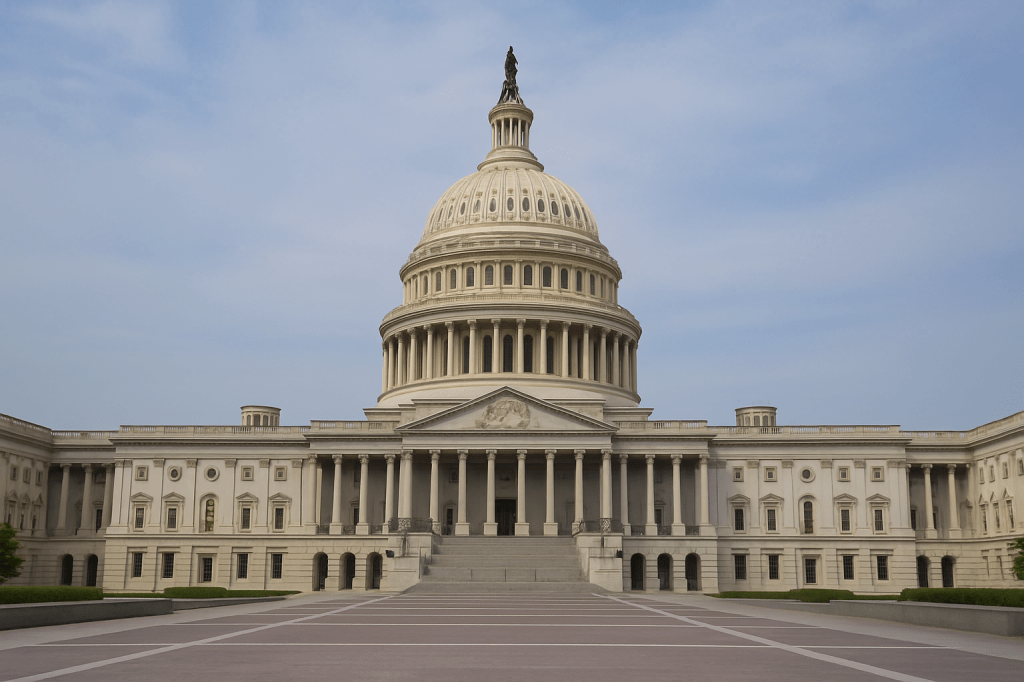
For the first time in history, all three major credit rating agencies—Moody’s, Fitch, and Standard & Poor’s—have downgraded the United States from their highest credit rating. This development is not merely a technical footnote for economists; it is a flashing warning light on the dashboard of American leadership.
The downgrade comes amid growing alarm over the United States’ fiscal trajectory, but to lay the blame on a single president or political party would be simplistic and misleading. As experts and analysts agree, the country’s worsening debt burden and erosion of fiscal credibility are the cumulative result of decades of political decisions, missed opportunities, and unsustainable economic strategies across multiple administrations.
From AAA to AA+: A Timeline of Decline
- Standard & Poor’s led the way in 2011 by downgrading the U.S. from AAA to AA+, citing political dysfunction during the debt ceiling crisis.
- Fitch Ratings followed in August 2023, also reducing the U.S. to AA+ due to the continued failure to address rising debt and perceived erosion of governance standards.
- Most recently, in May 2025, Moody’s cut the U.S. rating from Aaa to Aa1, expressing concern over the unsustainable fiscal path and rising interest burdens.
All three agencies emphasized two recurring themes: growing federal debt and the inability of political leaders to forge a coherent, long-term fiscal policy.
Multiple Administrations, Shared Responsibility
The Obama Administration’s Role:
- S&P downgraded the U.S. for the first time in 2011, during Obama’s presidency.
- The downgrade stemmed from a political standoff over the debt ceiling.
- S&P cited dysfunctional governance and lack of a credible debt-reduction plan.
- Obama’s administration had implemented stimulus spending after the 2008 crisis.
- Long-term structural reforms to reduce deficits were not achieved.
The Biden Administration’s Role:
- Passed large spending bills: the $1.9 trillion American Rescue Plan and the Inflation Reduction Act.
- These programs aimed to improve equity, healthcare, and climate resilience.
- Revenue projections supporting the spending were front-loaded and uncertain.
- Proposed partial cancellation of federal student debt, further expanding fiscal obligations.
- Contributed to increased deficits without matching long-term offsets.
The Trump Administration’s Role:
- Passed the 2017 Tax Cuts and Jobs Act, reducing corporate and individual taxes.
- The tax cuts were not offset by spending cuts, adding over $1.9 trillion to deficits.
- Enacted bipartisan stimulus during the COVID-19 pandemic, expanding short-term spending.
- Proposed extending tax cuts via the “One Big Beautiful Bill” and adding Medicaid work requirements.
- The Congressional Budget Office and economists warn these plans could add up to $4 trillion to future deficits.
In short, the recent administrations made major fiscal decisions—tax cuts, spending increases, and entitlement promises—without long-term structural corrections, worsening the outlook that led to the downgrade.
What the Downgrades Mean
Short-Term Effects
- The U.S. may face higher borrowing costs as investors demand a risk premium.
- Markets could experience short-term volatility.
- Institutional investors may shift away from U.S. government debt, depending on their internal credit-rating rules.
Long-Term Effects
- Rising interest payments: The U.S. already spends more on interest than on key programs like transportation or education. By 2035, interest could become the single largest budget item.
- Reduced fiscal flexibility: Less room for future governments to respond to crises.
- Erosion of dollar dominance: Countries exploring alternative reserve currencies may accelerate diversification.
- Weakened global influence: Economic instability undercuts America’s ability to lead international alliances and institutions.
Other Erosions of U.S. Economic Leadership
The credit downgrades are part of a broader trend of declining American economic dominance:
- Political dysfunction and polarization, repeatedly bringing the country to the brink of default.
- Loss of manufacturing leadership to countries like China in sectors such as electronics, clean energy, and rare earth minerals.
- Chronic underinvestment in infrastructure, education, and workforce development.
- Overuse of financial sanctions, prompting countries to build alternatives to the U.S.-led financial system.
- Global retreat from multilateralism, creating a leadership vacuum increasingly filled by China, the EU, and BRICS nations.
These developments, taken together, indicate a slow erosion of trust in the U.S. model of governance and economic stewardship.
What the Trump Administration Is Doing Now
In the face of the challenges, the current Trump administration is attempting a broad economic overhaul:
- Extending 2017 tax cuts through new legislation while proposing cuts to Medicaid and other programs.
- Imposing universal tariffs to protect U.S. industries and address trade imbalances.
- Creating the Department of Government Efficiency (DOGE) to cut federal waste—though early results have been mixed, and some savings have been disputed.
- Promoting AI and crypto deregulation, positioning the U.S. as a tech leader while scaling back federal oversight.
Yet these plans face intra-party opposition, legal challenges, and skepticism from economists who fear that supply-side reforms alone won’t close the growing fiscal gap.
Many experts recommend a more balanced approach that includes raising certain taxes, reforming entitlement programs, investing in workforce development, and enforcing strict fiscal rules to curb excessive deficits. Some also call for bipartisan budget commissions to chart long-term solutions that outlast any single administration.
The Bigger Picture: National Blessings and Divine Accountability
The Bible also offers practical wisdom on matters closely tied to national and economic leadership. It highlights the importance of consulting with others before making major decisions (Proverbs 15:22, Proverbs 11:14) and emphasizes planning for the long-term, not just the short-term (Proverbs 21:5, Luke 14:28–30). Jesus emphasized the importance of counting the cost before committing to large undertakings (Luke 14:28–30). Proverbs and Ecclesiastes point to the value of investing in training and education (Proverbs 22:6, Ecclesiastes 7:12, 2 Timothy 2:2). Likewise, several passages stress the need to avoid unnecessary debt and wasteful expenses (Proverbs 21:5, Proverbs 22:7, Romans 13:8).
Behind these economic and political developments lies a deeper spiritual truth often overlooked in policy analysis: national greatness is not solely a result of policy, productivity, or power—it is a blessing from God.
The Bible reminds us:
- “It is He who gives you power to get wealth…” (Deuteronomy 8:18)
- “The Most High rules in the kingdom of men, and gives it to whomever He will…” (Daniel 4:17)
- “I will break the pride of your power…” (Leviticus 26:19)
These downgrades, debt troubles, and geopolitical setbacks may well be a wake-up call—a divine warning to a nation that has forgotten the Source of its blessings. America’s decline is not inevitable. But repentance, righteousness, and justice must once again be woven into its national fabric if restoration is to come.
A Spiritual Correction
The downgrade of America’s credit rating is not just a technical correction. It is a warning—financial, political, and spiritual. It reflects the weight of choices made across multiple administrations, the failure of political courage, and the neglect of fiscal prudence. Experts call for reform, accountability, and long-term vision. But ultimately, America’s revival—economic and moral—depends on its willingness to return to God, the true Source of national strength and prosperity.
As Proverbs 14:34 says, “Righteousness exalts a nation, but sin is a reproach to any people.”