Tag: Europe

  • Trump’s Peace Proposal for Ukraine: A Deal Doomed by Diverging Values

    Trump’s Peace Proposal for Ukraine: A Deal Doomed by Diverging Values

    As the war in Ukraine grinds on, U.S. President Donald Trump has unveiled a controversial peace proposal aimed at ending the conflict. His plan includes recognition of Russia’s annexation of Crimea, acceptance of Russian control over other occupied Ukrainian territories, a permanent block on Ukraine joining NATO, and the lifting of Western sanctions on Russia. The goal, Trump argues, is to “stop the killing” and restore stability.

    But peace at this price is proving unacceptable—not just to Ukraine, but to much of Europe.

    Why Ukraine Won’t Accept It

    Ukrainian President Volodymyr Zelensky has remained firm: Crimea and the occupied territories are sovereign Ukrainian land. To accept this deal would violate Ukraine’s constitution, dishonor the memory of its fallen defenders, and reward aggression. As Zelensky bluntly put it, “This is our territory, the territory of the people of Ukraine.” No peace can be built on a foundation of surrender and injustice.

    Why Europe Is Alarmed

    European leaders are also rejecting the Trump plan. To them, it’s not peace—it’s appeasement. Recognizing territorial conquest sets a dangerous precedent in a continent scarred by war. EU officials warn that such a deal could “kill EU unity,” weaken NATO, and embolden future acts of aggression. By sidelining European voices and values, the proposal risks fracturing the Western alliance.

    A World Without Shared Values

    Trump’s plan, if implemented, will not produce peace. It will shift global dynamics. Europe is already moving toward greater strategic autonomy—asserting itself more forcefully in defense and diplomacy. The U.S., meanwhile, is at risk of forfeiting its global leadership—not due to a lack of military power, but from a growing disconnect with the moral compass of its democratic allies.

    The Bible reminds us, “Can two walk together unless they are agreed?” (Amos 3:3). True peace, like true partnership, requires shared values—not just shared interests. Trump’s peace deal fails that test. And the world is watching.

  • The “Freeloader” Fallacy and the Unraveling of the World America Built

    The “Freeloader” Fallacy and the Unraveling of the World America Built

    In recent years, voices from within the United States—most prominently in the current administration of President Donald Trump—have labeled America’s European allies as “freeloaders.” This sentiment, recently reinforced by leaked chats from senior U.S. defense officials, suggests that the U.S. is unfairly burdened by its role as the world’s security guarantor, while allies reap the benefits without paying their fair share.

    But this view, while emotionally resonant in a time of rising nationalism and budget pressures, fails to recognize a deeper historical truth: the so-called “freeloading” arrangement was designed by the United States itself after World War II.

    America’s Strategic Design After World War II

    When the dust of WWII settled, the United States stood as the dominant power in a shattered world. Europe lay in ruins. Germany, the nation that had ignited two world wars, was disarmed and divided. The Soviet Union, though an ally during the war, quickly emerged as a global ideological and military threat, expanding its grip over Eastern Europe and seeking to export communism globally.

    To prevent a third world war—and to contain the spread of Soviet communism—the U.S. devised a grand strategy. It would serve as a global security umbrella, deploying its vast military and nuclear power to deter aggression in both Europe and Asia.

    But this security guarantee came with conditions.

    Why the U.S. Took on the Burden

    In Europe, the U.S. created NATO in 1949, a collective defense alliance that essentially declared: “If the Soviets invade, America will respond.” This meant stationing tens of thousands of troops in Germany and elsewhere—not to dominate Europe, but to protect it, while also ensuring that Germany would never again re-arm on its own and potentially start another global war.

    The U.S. didn’t stop in Europe. In Asia, the United States went even further: it wrote Japan’s post-war constitution, explicitly forbidding it from maintaining offensive military forces. In exchange, the U.S. promised to defend Japan from any external threats. This kept the peace in the Pacific and ensured that Japan, once an imperial power, would remain a pacifist state under American protection.

    Aside from maintaining military presence in various points around the globe, this also meant that the U.S. Navy would patrol the world’s oceans and major trade routes, ensuring they remained open and secure for international commerce. This naval presence guaranteed that goods, products, energy supplies, and even people could travel safely across seas and continents, under the protection of a rules-based order that the U.S. enforced. In effect, the United States became the maritime guardian of global trade, allowing the modern economy to flourish.

    The Global Bargain

    What did America get in return?

    Quite a lot.

    These countries, under the U.S. defense umbrella, pledged to:

    • Side with the United States in the ideological and military contest of the Cold War. 
    • Maintain for the most part (or at least at the surface) democratic forms of governance, compatible with American values and institutions. 
    • Participate in a global economic system centered on free trade, the U.S. dollar, and open access to American markets, capital, and technology. 

    This arrangement created decades of global stability, fueled unprecedented economic growth, and cemented America’s leadership role in the world. Allies didn’t have to spend massive portions of their GDP on defense, because America did it for them—intentionally, and as a strategic choice.

    But this system also worked immensely in America’s favor:

    • It helped defeat the former Soviet Union.
    • It generated vast wealth for the United States.
    • It gave America access to the natural resources, talent, savings, and investments of allied nations.
    • It kept the U.S. economy resilient, allowing it to absorb shocks during oil crises, recessions, and financial collapses because the global economy was effectively built around it.

    This wasn’t just charity. It was a mutually beneficial arrangement that secured the U.S. economy and reinforced its global dominance across finance, technology, and military affairs.

    The Trump Doctrine and the Unraveling Order

    Enter the 21st century, and with it, growing discontent. Successive U.S. administrations urged allies to increase defense spending, but President Trump went further—publicly ridiculing NATO partners, questioning America’s commitment to mutual defense, and suggesting that the U.S. might not come to their aid.

    The recent leaks of U.S. defense officials calling allies “freeloaders” is not new rhetoric—it is the continuation of a growing American retrenchment from the very system it built. This shift is not just about burden-sharing; it’s about dismantling a world order that was held together by American security guarantees and economic leadership.

    And the consequences are enormous.

    As America pulls back:

    • Germany is rearming—a move unthinkable just a decade ago.
    • Japan is building new missile capabilities, breaking with its pacifist tradition.
    • France and others are openly discussing European “strategic autonomy,” no longer counting on U.S. support.

    The global system is fragmenting. Old alliances are fraying, and new coalitions may rise—not because of shared values, but based on shared interests, geography, or ethnicity. The future could very well be a world of competing blocs, exclusive clubs, and permanent insecurity.

    A Nation in Decline—By God’s Hand

    It is tempting to see all this purely through the lens of geopolitics. But for those who understand biblical prophecy, something deeper is taking place.

    America’s decline is not merely the result of policy decisions or shifting public opinion—it is a judgment from God.

    “My people are destroyed for lack of knowledge. Because you have rejected knowledge, I also will reject you… I will change their glory into shame.”  (Hosea 4:6–7)

    God blessed America with power, influence, and prosperity—but as the nation increasingly turns from Him, He is taking away its leadership role, allowing other powers to rise in its place. Whether those nations will be friendly or adversarial remains to be seen—but they will not uphold the same values or provide the same guarantees.

    What we are witnessing is not just the collapse of a U.S.-led global system. We are witnessing a divine reshaping of the world order, as foretold in Scripture.

  • A World on Its Own: How U.S. Isolationism Could Ignite Nuclear Proliferation

    A World on Its Own: How U.S. Isolationism Could Ignite Nuclear Proliferation

    In the decades following World War II, the United States took on the role of global guarantor—projecting power, maintaining trade routes, and most crucially, protecting smaller and less powerful democratic nations from aggression. But what happens if America turns inward, choosing isolation over engagement?

    This question is no longer hypothetical.

    In recent years, a shift in American foreign policy—highlighted most strongly during the Trump administration—has signaled to allies that the era of unconditional security guarantees may be waning. And if these trends continue, we could see a more dangerous world unfold, one where countries feel forced to go nuclear.

    And according to the Bible, this dangerous trajectory is no surprise.

    The Domino Effect: When Trust in U.S. Security Wanes

    For decades, countries like Japan, South Korea, and Germany chose not to develop nuclear weapons—not because they couldn’t, but because they didn’t need to. America’s military umbrella offered them credible protection from hostile neighbors.

    But that trust has eroded.

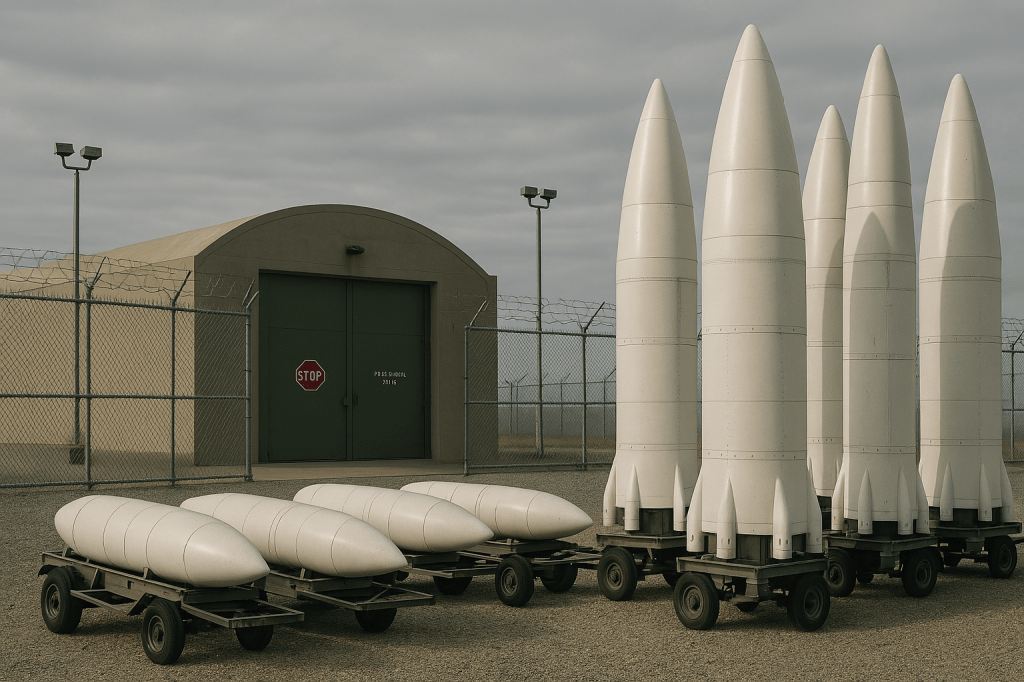
    Donald Trump’s “America First” stance—and his questioning of NATO, U.S.-Korea defense cost-sharing, and alliances in Asia—sent shockwaves through the post-war security order. In a world where nations are expected to defend themselves, nuclear weapons are seen as the ultimate equalizer: cost-effective, fearsome, and a powerful deterrent.

    Here’s a look at the nations most likely to reconsider their nuclear stance:

    Countries Most Likely to Pursue Nuclear Weapons

     South Korea:

    • Stage: Actively debating nuclear options; majority public support for it.
    • Why: North Korea already has nukes. Trust in U.S. intervention is weakening.
    • Risk: Moderate to high. A South Korean bomb could spark a Northeast Asian arms race with Japan and possibly Taiwan.

     Japan:

    • Stage: Technically capable, politically restrained.
    • Why: China’s aggression and North Korea’s missile tests. Historical trauma from Hiroshima and Nagasaki still casts a long shadow.
    • Risk: Low for now, but a shift in public sentiment could change that rapidly if U.S. protection falters.

    Saudi Arabia:

    • Stage: Publicly stated it will go nuclear if Iran does. Working on enrichment capabilities.
    • Why: Regional rivalry with Iran, and increasing skepticism about U.S. staying power in the Gulf.
    • Risk: High. A Saudi nuclear weapon could spark proliferation across the Middle East—Egypt, Turkey, and even the UAE may follow.

    Taiwan:

    • Stage: Highly sensitive; has considered it historically.
    • Why: Threatened daily by China. Lacks formal U.S. defense treaty.
    • Risk: Very high. If Taiwan were to go nuclear, China could strike preemptively.

    Germany and NATO Europe:

    • Stage: Low, but not unthinkable. Some discussion of a “Eurodeterrent.”
    • Why: Russian aggression and fading U.S. leadership in NATO.
    • Risk: Moderate in the long term, especially if U.S. military presence in Europe is significantly reduced.

     The Dangers of a Nuclear Multipolar World

    Unlike the Cold War—with its terrifying but stable balance between the U.S. and the USSR—a multipolar nuclear world is inherently unstable. Here’s why:

    • More fingers on the trigger means more room for miscalculation, miscommunication, or panic during crises.
    • New nuclear states may lack the command and control systems to prevent accidental launches or rogue actions.
    • The temptation to strike first becomes stronger if countries fear a decapitating attack on their limited nuclear arsenals.
    • No central authority or treaty structure is strong enough today to manage so many nuclear actors.

    If the U.S. fully retreats from its role as the “security balancer,” the world may rapidly become a far more volatile and unpredictable place.

    A Prophetic Warning from Scripture

    What’s even more sobering is that the Bible foresaw a world like this—filled with fear, destruction, and the looming shadow of annihilation.

    Jesus Christ Himself gave a dire warning for the last days:

    “For then there will be great tribulation, such as has not been since the beginning of the world until this time, no, nor ever shall be. 

    And unless those days were shortened, no flesh would be saved; but for the elect’s sake those days will be shortened.”  Matthew 24:21–22 (NKJV)

    “No flesh would be saved.” Before the 20th century, that verse was almost poetic. But since the dawn of the nuclear age, it has become terrifyingly literal. Only in our modern era do we have the capacity to wipe out all life on Earth—something that aligns chillingly with Christ’s words.

    Hope Beyond the Chaos

    But this prophecy is not without hope. Christ said that for the elect’s sake, those days will be shortened. That means God will intervene before humanity completely destroys itself. His intervention will usher in the Kingdom of God—a time of peace, true justice, and righteous rule.

    The current chaos we see—the rising threat of nuclear war, the unraveling of international alliances, and the collapse of man-made peace—is not the end of the story. It is the beginning of the end of this world’s broken system.

    A new world is coming. And that’s the good news of the Kingdom of God.

  • When a Signal Becomes a Siren: How a Digital Blunder Revealed a Geopolitical Rift

    When a Signal Becomes a Siren: How a Digital Blunder Revealed a Geopolitical Rift

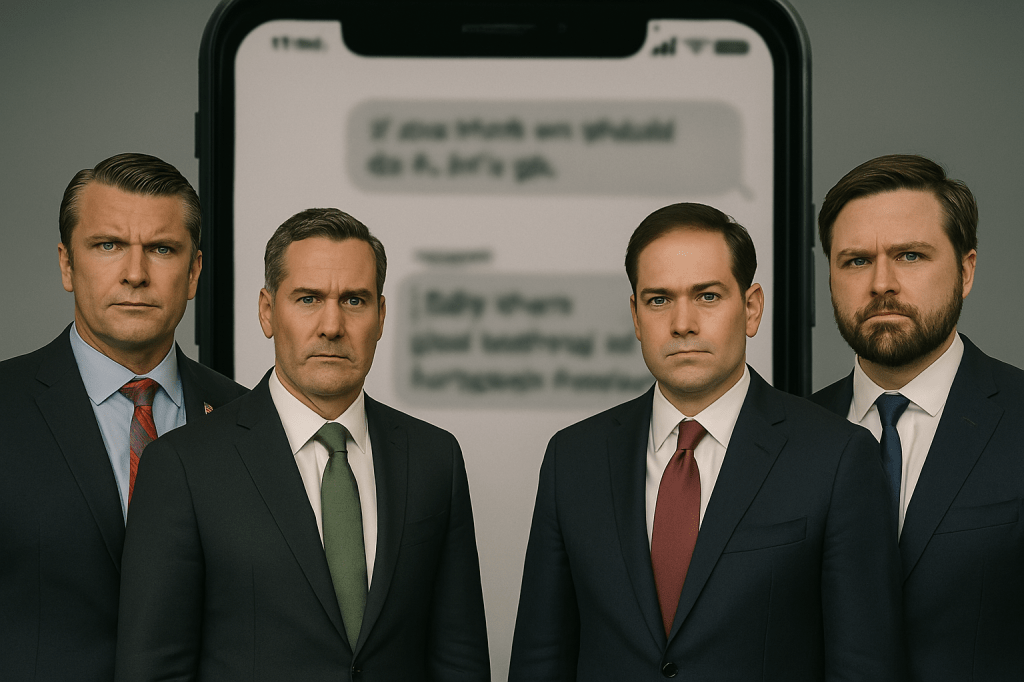
    In a moment that would be almost comedic if it weren’t so alarming, a senior U.S. official recently added The Atlantic editor-in-chief Jeffrey Goldberg to a Signal group chat intended only for top-level military and government leaders. Inside this chat, senior members of the Trump administration—including Defense Secretary Pete Hegseth, National Security Adviser Mike Waltz, Secretary of State Marco Rubio, and Vice President JD Vance—were discussing a potential military strike against Houthi rebels in Yemen. The conversation contained what most observers would consider sensitive, if not outright classified, operational information: target locations, aircraft to be deployed, weapons systems, and timelines.

    Goldberg, stunned to find himself in the virtual war room, watched silently. The officials, apparently oblivious to his presence, continued discussing military actions with astonishing candor. Later, Goldberg went public with screenshots and a narrative of the incident, sparking outrage—not just in Washington, but across Europe and the broader international community.

    This was not just a breach of digital security. It was a breach of trust. And its fallout may mark yet another turning point in the slow erosion of America’s leadership among its democratic allies.

    Europe’s Growing Frustration

    Perhaps more damaging than the operational details were the opinions shared within the chat. Vice President JD Vance was quoted saying: “If you think we should do it, let’s go. I just hate bailing Europe out again.” To which Defense Secretary Hegseth replied: “I fully share your loathing of European freeloading. It’s PATHETIC.”

    European diplomats were stunned. While allied nations often have disagreements behind closed doors, these words—blunt, dismissive, and now public—cut deep. One EU diplomat told Politico that this leak confirmed their worst fears: that these officials were not merely posturing in public, but genuinely disdainful of their European counterparts. The comment reinforced the view that the U.S., under current leadership, no longer sees NATO and other alliances as relationships of mutual respect, but as burdens it reluctantly carries.

    Former British Defense Secretary Grant Shapps and other European leaders were quick to point out that UK aircraft were directly involved in supporting U.S. operations in the region. The characterization of Europe as passive and parasitic was not only wrong—it was insulting.

    The Cracks in the Alliance Are Widening

    This diplomatic fiasco didn’t happen in a vacuum. It comes on the heels of years of shifting American foreign policy—retreats from multilateralism, trade skirmishes, and a growing isolationist sentiment among U.S. voters and officials. Allies have already begun to question whether the U.S. can still be counted on in a crisis. Now, they are wondering whether they should even try.

    The European Union has long debated the need for “strategic autonomy”—building its own defense capacities independent of the U.S. This event may give that idea a new urgency.

    The Tail and Not the Head

    From a biblical standpoint, what we are witnessing is not just a political realignment. It is a spiritual reckoning.

    In Deuteronomy 28, God outlines the blessings for obedience and the curses for disobedience directed to the descendants of Israel. Among the warnings, He said:

    “The LORD will make you the head and not the tail… if you heed the commandments of the LORD your God” (Deuteronomy 28:13).

    But if Israel disobeyed, the reverse would happen:

    “The alien who is among you shall rise higher and higher above you, and you shall come down lower and lower. He shall be the head, and you shall be the tail” (Deuteronomy 28:43–44).

    America, modern descendant of the biblical tribe of Manasseh (a son of Joseph and a branch of the house of Israel), was once clearly the “head” of the nations—a global leader, a force for order, a beacon of democratic values. But it has increasingly turned its back on God’s commandments. It celebrates what God calls sin, exalts pride over repentance, and puts national interest before divine instruction.

    This latest diplomatic debacle is a reflection of that spiritual decline. A nation that cannot keep its communications secure, that mocks its allies behind their backs, and that fails to act with humility and integrity, is not fit to lead. It is becoming the tail.

    A Warning and a Wake-Up Call

    The Signal group chat leak is more than a tech blunder or diplomatic embarrassment. It is a sign of unraveling leadership—moral, strategic, and spiritual. America’s allies are losing faith. Its adversaries are watching closely. And its citizens are left wondering how the world’s most powerful nation could stumble so carelessly.

    But Scripture shows us the way back:

    “Return to Me, and I will return to you,” says the LORD of hosts (Malachi 3:7).

    America—and indeed all modern descendants of Israel—need to humble itself, and to restore the values that once made it great.

    Until then, the head will continue to become the tail.

  • Europe’s Economic Momentum: The European Council’s Latest Agreements and the Rise of a Powerhouse

    Europe’s Economic Momentum: The European Council’s Latest Agreements and the Rise of a Powerhouse

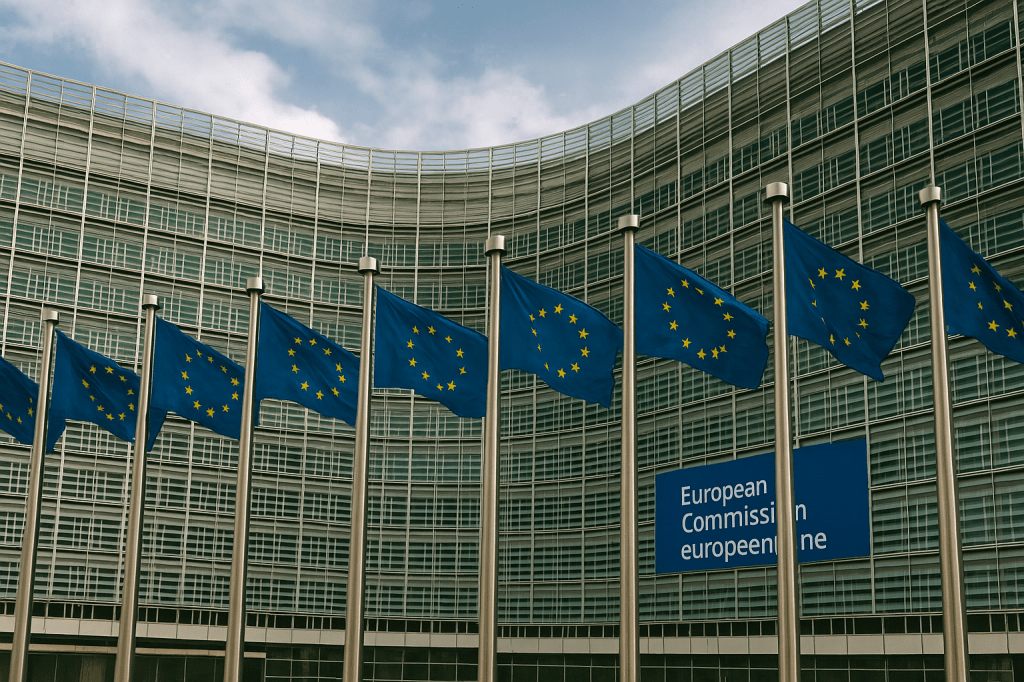
    In a rapidly shifting geopolitical landscape, the European Union (EU) is making bold moves to cement its place as an economic superpower. The recent European Council Summit in Brussels may not have made global headlines, but its economic agreements could very well mark a turning point—not just for Europe, but for the entire world order. These decisions, once fully realized, will enhance internal trade, fortify the EU against unpredictable external shocks like U.S. tariffs, and align with a prophetic trajectory long described in the Bible.

    A Strategic Shift Toward Internal Strength

    At the heart of the summit’s economic agenda was competitiveness—not merely as a buzzword, but as a detailed and actionable commitment. EU leaders emphasized the urgent need to reduce regulatory burdens, fast-track investments in innovation, and ensure that European businesses can scale and trade more freely across the Union.

    • Simplifying regulations to make compliance easier and faster
    • Cutting red tape to reduce barriers to entrepreneurship
    • Boosting strategic sectors like clean tech, digital infrastructure, and defense manufacturing
    • Mobilizing private and public investment toward a greener, more resilient economy
    • Accelerating the Capital Markets Union to unlock pan-European financing and reduce dependence on U.S. capital

    In other words, the EU is building an internal economic engine capable of powering itself—with or without favorable external trade relations.

    Shielding Europe from Unpredictable U.S. Trade Policies

    This effort to “strengthen the inside” comes at a critical time. The return of a Trump administration has revived protectionist trade policies, including new tariffs on EU steel, aluminum, and potentially automobiles and alcohol. These moves, often executed with little warning or negotiation, have left European exporters scrambling and trade diplomats frustrated.

    In contrast, the EU’s approach appears more rules-based, predictable, and business-friendly. Decision-making processes may be slow and consensus-driven, but once adopted, EU economic policies tend to provide long-term stability.

    This contrast is growing starker, especially as the United States seems to oscillate between multilateralism and nationalism with each new administration.

    By fortifying its internal market and expanding trade partnerships beyond the U.S.—toward Asia, Africa, and Latin America—the EU is buffering itself from the turbulence of American politics and global market shocks. It’s an economic strategy rooted in resilience, self-reliance, and forward-looking collaboration.

    A Biblical Powerhouse in the Making

    Revelation 17 speaks of a “beast power” rising out of the sea, forged by a union of nations and guided by a dominant political and religious force. Daniel 2 and 7 describe a succession of world empires, culminating in a final kingdom characterized by ten kings (or nations) giving their power to one system. This points to a unified European power—not necessarily the EU in its current form, but something that could easily emerge from it.

    When we see the EU laying the economic foundation for such unity—standardizing rules, integrating capital markets, and collectively responding to global threats—we are witnessing a transitional phase in prophetic fulfillment. An economic powerhouse is taking shape, not by accident, but by design—and it aligns strikingly with what the Bible foretells.

    More Than Just Economics

    The European Council’s latest agreements are not merely about economic growth—they are about sovereignty, identity, and preparation. By streamlining its internal market and lessening dependence on unpredictable allies, the EU is setting the stage for deeper integration—economically, politically, and possibly even militarily.

    Compared to the increasingly erratic trade policies of the United States, Europe’s methodical and cooperative approach looks not just appealing—but strategically superior. What we’re seeing is not just the evolution of a trading bloc. We may be witnessing the formation of a prophetic empire whose economic foundation is already being laid.