Tag: European army

  • Probing the Shield: Russia’s Airspace Tests and Europe’s Future Army

    Probing the Shield: Russia’s Airspace Tests and Europe’s Future Army

    Every few weeks, headlines surface of Russian fighter jets or drones slipping—sometimes boldly, sometimes stealthily—into NATO airspace. Recently, Estonia, Poland, and other allies have sounded the alarm as Russian aircraft flew without transponders, ignored intercept signals, or even sent swarms of drones across borders.

    To the casual observer, these events seem reckless. Why would Russia risk provoking NATO, the most powerful military alliance in the world? But there is strategy here. Moscow is probing. Each incursion is a test—an attempt to measure NATO’s reflexes, to spot weaknesses, and to learn how far it can go without triggering a serious response.

    And yet, in a twist of irony, these provocations may be preparing NATO for the very conflict Russia hopes to avoid. Every incursion forces allied radars to track, interceptors to scramble, and commanders to review their rules of engagement. Every incident adds data, sharpens coordination, and strengthens air defenses along NATO’s eastern flank. Russia may think it is playing offense, but in reality it is helping its adversaries rehearse for war.

    NATO Today, Europe Tomorrow

    But what of NATO’s future? The alliance has held since 1949, yet cracks are visible. American leadership has become uncertain, swaying between strong commitments and hints of withdrawal. If the United States wavers long enough, NATO as we know it may one day fade.

    That does not mean Europe will remain undefended. On the contrary, the pressures of Russian aggression and American inconsistency may drive European states to consolidate their own defense into a new structure—a European army. Such a force would not begin from scratch. It would inherit the muscle memory that NATO’s training and Russia’s provocations are providing right now.

    A Power Foretold

    The Bible itself points to the rise of such a force. In the book of Revelation, the Apostle John describes a European-centered power that will astonish the world with its military might: “Who is like the beast? Who is able to make war with him?” (Revelation 13:4).

    That prophecy speaks of a union, political and military, arising in Europe in the end times—an army that no earthly coalition could match. It is sobering to realize that today’s “tests” by Russia may be laying the groundwork for that very power. The lessons Europe learns under NATO’s umbrella will be reapplied in a future alliance, one described in Scripture as both formidable and unmatched.

    Rehearsals

    So the next time Russian jets slip into Baltic skies or drones drift over Poland, remember: these are not isolated provocations. They are rehearsals. Moscow is probing for weakness, but in doing so it is forcing Europe to harden its shield. And in the long arc of history, that shield may outlast NATO itself—emerging as something far stronger, and prophetically destined, on the world stage.
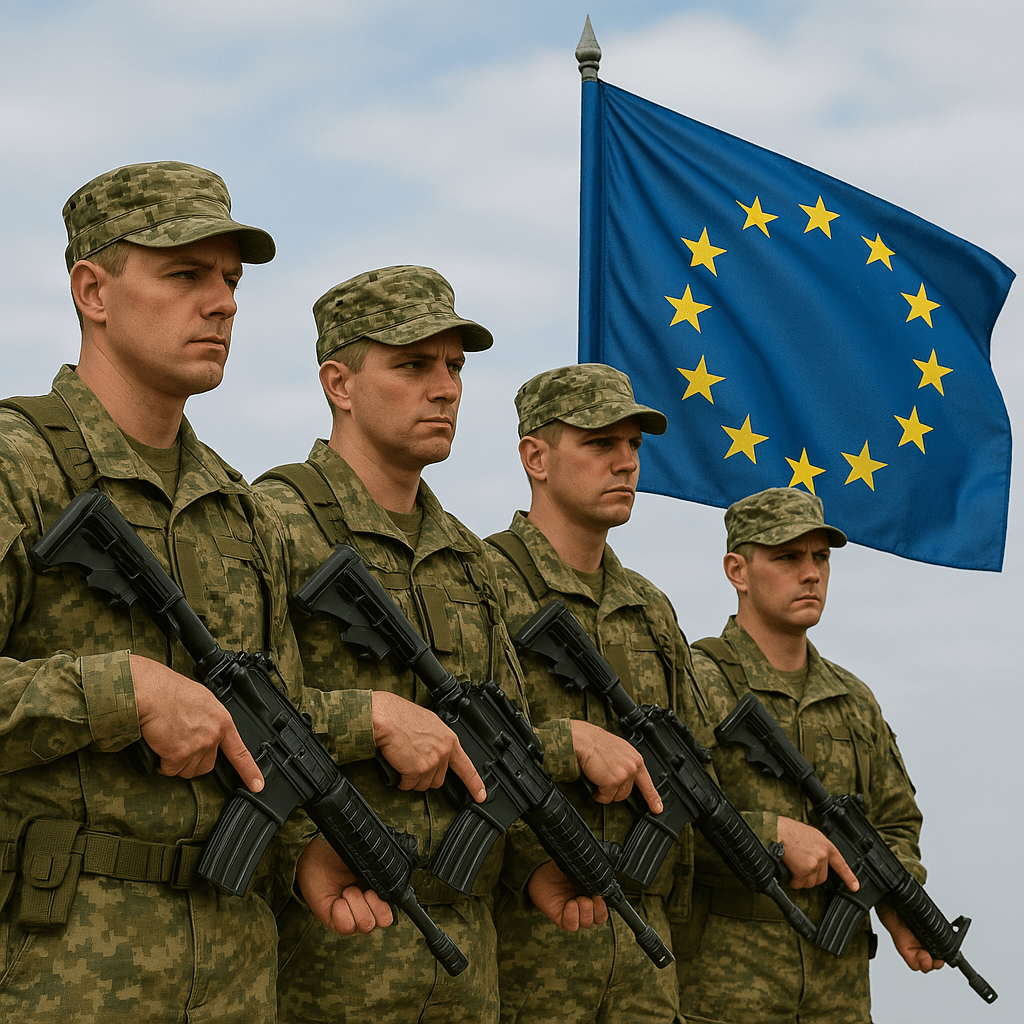
  • Europe’s March to Military Dominance: The Path to a Unified Superpower

    Europe’s March to Military Dominance: The Path to a Unified Superpower

    For decades, European security has been anchored in the transatlantic alliance with the United States through NATO. However, shifting geopolitical realities—Russia’s continued aggression, the growing uncertainty of U.S. commitment to Europe, and the increasing calls for strategic autonomy—have compelled European Union (EU) nations to take matters into their own hands. The result is a dramatic transformation of Europe’s military capabilities, with nations working together to forge an independent defense structure outside of NATO.

    While the process is still in its early stages, the momentum is undeniable. What we are witnessing is the slow but steady rise of a militarily unified Europe—one that, in time, will surpass all nations in power and might. Remarkably, this aligns with an ancient biblical prophecy that foretells the emergence of a final world superpower, a militaristic empire so dominant that no nation—not even the United States—will be able to challenge it.

    The Blueprint for European Military Autonomy

    The EU is rapidly expanding its military cooperation through a series of frameworks designed to reduce its reliance on the U.S. and NATO. Some of the most significant initiatives include:

    1. The Strategic Compass for Security and Defence

    Adopted in 2022, the Strategic Compass is a roadmap to strengthen the EU’s military capabilities, with a goal of creating a fully operational EU Rapid Deployment Capacity by 2030. This will allow Europe to swiftly mobilize 5,000 troops for crisis response without relying on NATO.

    2. Permanent Structured Cooperation (PESCO)

    PESCO is a legally binding framework that enables EU members to cooperate on military projects, including joint weapons development, intelligence sharing, and coordinated rapid response forces.

    3. The European Intervention Initiative (EI2)

    Spearheaded by France, EI2 is an elite military coalition that enhances Europe’s ability to conduct military operations independently of NATO, preparing for potential conflicts outside the EU’s borders.

    4. The Main Ground Combat System (MGCS)

    France and Germany are leading this project to develop the next-generation battle tank, replacing older models and providing European forces with superior land warfare capabilities.

    5. Military Mobility (“Military Schengen”)

    To ensure rapid deployment of forces, the EU is working on a military mobility project that removes logistical and bureaucratic barriers, making it easier for troops and equipment to move across European borders.

    6. The European Defence Fund (EDF)

    With a growing budget, the EDF is financing advanced defense research and weapons development to rival the military technology of the U.S., China, and Russia.

    The Road to European Military Superiority

    At present, Europe is still dependent on U.S. support, particularly in intelligence, nuclear deterrence, and strategic airlift capabilities. However, history has shown that necessity drives innovation. The war in Ukraine has forced European leaders to rethink their reliance on NATO and to fast-track their own military build-up.

    As European defense spending rises, and as these military initiatives become fully operational, the EU will eventually achieve self-sufficiency. What once seemed unthinkable—a Europe capable of waging war independently of the U.S.—is now becoming a reality. This military unification is not just a political shift; it is a prophecy in motion.

    Prophecy Foretells the Rise of a European Superpower

    The Bible prophesies the emergence of a final world empire—described as “the Beast” in the book of Revelation—a powerful, militaristic union that no nation will dare oppose.

    “Who is like the Beast? Who is able to make war with him?” (Revelation 13:4)

    This prophecy describes a world-dominating power, led by a strong ruler, that will command absolute military supremacy. Historically, many have understood this prophecy to point toward a revived European empire, one that will rise after a period of political and military consolidation.

    Though today’s EU is still fragmented in its military structures, the building blocks of a unified European army are already being laid. As economic, political, and military pressures increase, these disparate elements will eventually merge into a powerful, centralized force.

    A Future Where Europe Stands Unchallenged

    For now, Europe still requires U.S. support to counter Russian aggression. But this will not always be the case. Over time, the EU’s defense initiatives will evolve into a fully integrated war machine—one that surpasses Russia, China, and even the United States.

    The world is watching as history unfolds. What seems like a slow and bureaucratic process today will, in due time, lead to a new global reality—one where Europe, not America, dictates the terms of world security. And when that day comes, no nation will dare to challenge it.

  • Germany’s Election and the Rise of an Independent European Defense

    Germany’s Election and the Rise of an Independent European Defense

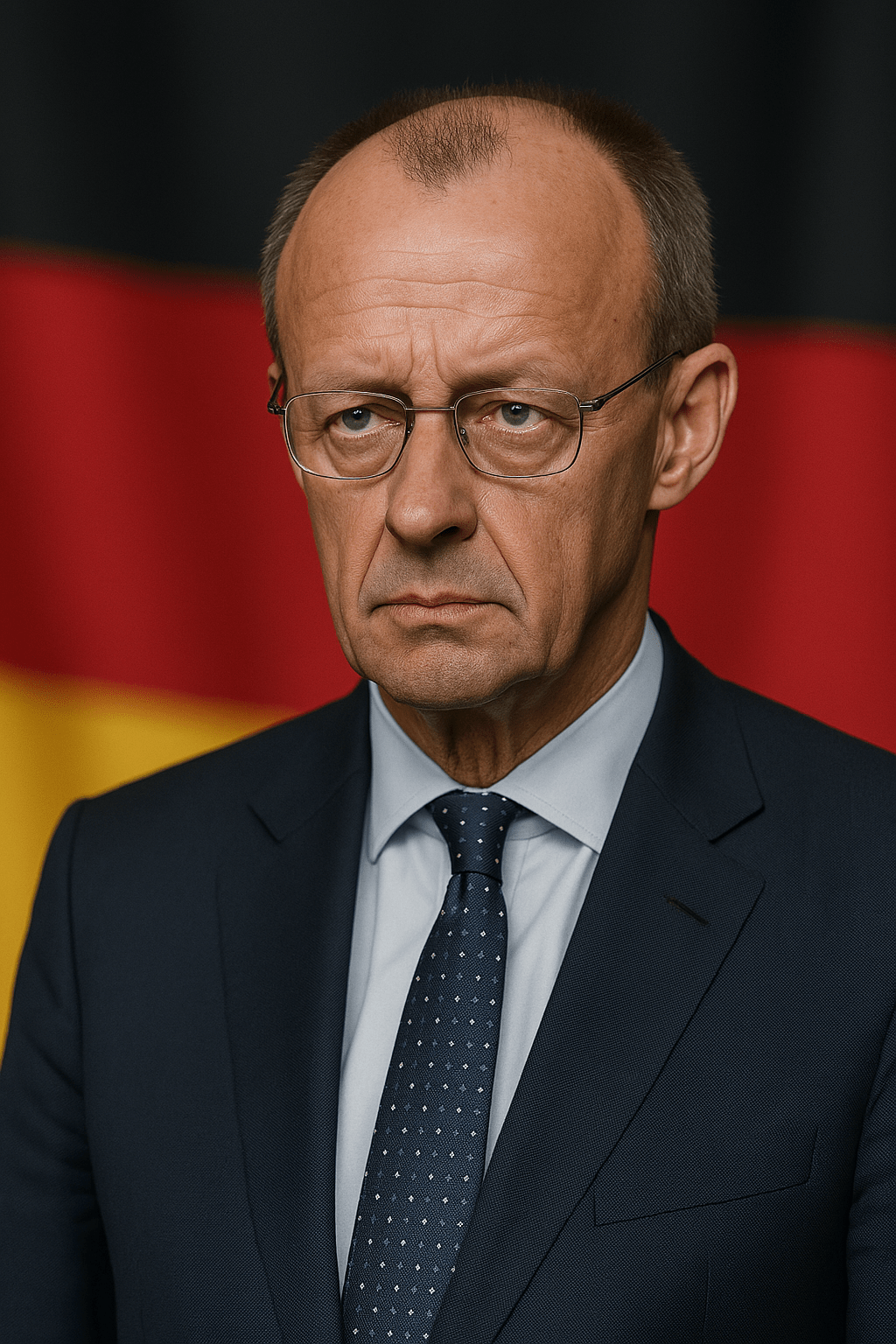
    The recent German elections have set the stage for a major geopolitical shift in Europe. With the victory of the Christian Democratic Union (CDU) and its Bavarian sister party, the Christian Social Union (CSU), under the leadership of Friedrich Merz, Germany is now on a path to a more assertive role in continental security. This election result, combined with the declining reliability of U.S. support for Ukraine, signals a turning point: the European Union may no longer depend on the United States for its defense and could even act against Washington’s wishes in shaping its security policies.

    A Shifting Political Landscape

    Germany’s CDU/CSU has consistently advocated for strong military assistance to Ukraine and has called for European nations to take more responsibility for their own defense. This comes at a time when the United States, under the Trump administration, has signaled a reduced commitment to supporting Ukraine, instead urging Europe to step up. Trump’s foreign policy approach suggests that NATO’s European members must no longer take U.S. protection for granted, a stance that has alarmed European leaders who have long relied on American military backing.

    With the rise of a more assertive German leadership, the CDU/CSU’s push for an independent European security framework aligns with the broader ambition of strategic autonomy. The party supports increasing military spending, developing European defense industries, and even exploring the possibility of European nuclear deterrence separate from U.S. oversight. If the European Union continues down this path, it may lead to the formation of a powerful military bloc capable of acting on its own interests, independent of U.S. influence.

    Europe’s Break from the U.S. and Its Strategic Implications

    The prospect of a self-sufficient Europe raises critical questions about the transatlantic alliance. If the European Union no longer relies on the United States for its defense, it could make decisions that directly contradict Washington’s foreign policy. This divergence has already begun to manifest in Germany’s and France’s discussions about strengthening European security institutions outside of NATO. Leaders such as Emmanuel Macron have repeatedly stated that Europe must prepare for a future where American military support is not guaranteed.

    Germany’s shift towards strategic independence, alongside the increasing political clout of the far-right Alternative for Germany (AfD), which has a more nationalistic stance, suggests that the EU’s security policy could soon prioritize European interests over NATO’s broader Western coalition. This is particularly relevant as tensions with Russia continue to shape the region’s defense priorities. The CDU/CSU remains committed to arming Ukraine and countering Russian aggression, but future European security decisions may be made without U.S. consultation or approval.

    The Prophetic Fulfillment of a European Superpower

    For students of Bible prophecy, this evolving geopolitical landscape is deeply significant. Scripture speaks of a final world-dominating empire that will rise in Europe just before the return of Jesus Christ. The Book of Revelation describes a powerful political and military entity led by ten kings who give their power to a central authority (Revelation 17:12-13). This entity, often referred to as the Beast power, will play a decisive role in end-time events.

    The groundwork for such a superstate is being laid before our eyes. As Europe consolidates its military power, distances itself from reliance on the United States, and takes a leading role in global affairs, we see the makings of a formidable political and economic powerhouse. This aligns with the biblical prophecy that foretells a revived Roman Empire—a united Europe that will exert dominance over world affairs.

    For decades, analysts have debated whether the European Union could emerge as a true superpower. With Germany at the helm of a strengthened European defense initiative, a future where Europe dictates its own security policies, economic strategies, and geopolitical alignments without U.S. involvement seems increasingly plausible. If this trajectory continues, we could see the formation of a military bloc that not only rivals the United States in influence but also challenges its authority on the world stage.

    What Lies Ahead?

    The recent German elections seem to mark the beginning of a Europe that is ready to stand on its own. With the United States pulling back from its traditional role as the primary security guarantor, the European Union is stepping up to fill the void. This shift will not only redefine Europe’s military and political future but also lay the foundation for the fulfillment of biblical prophecy.

    As history unfolds, we must remain vigilant and watchful. The rise of an independent European military force, capable of asserting its will globally, is a key signpost in the prophetic timeline. The world is rapidly moving toward the final chapters foretold in the Scriptures—an era that will ultimately culminate in the return of Jesus Christ, who will establish His righteous government over all nations. Until that time, we must continue to discern the signs and understand their significance in the grand plan of God. The geopolitical shifts we are witnessing today are not just political trends but pieces of a prophetic puzzle that is coming together. Germany’s election results and the growing autonomy of the European Union appears to mark the beginning of a new era—one in which Europe will assert itself as a dominant power, separate from and potentially opposed to the United States. As this European superpower takes shape, those who understand biblical prophecy will recognize that we are drawing closer to the climactic events leading to Christ’s return. Now more than ever, it is time to watch, pray, and prepare for what lies ahead.