Tag: European Union

  • Europe’s Economic Momentum: The European Council’s Latest Agreements and the Rise of a Powerhouse

    Europe’s Economic Momentum: The European Council’s Latest Agreements and the Rise of a Powerhouse

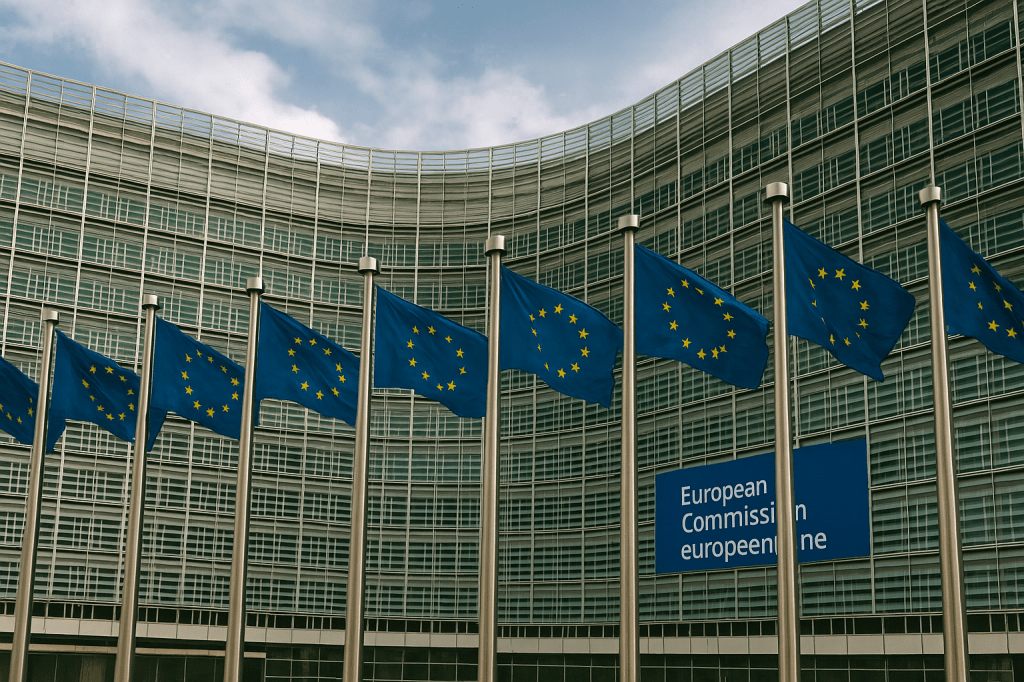
    In a rapidly shifting geopolitical landscape, the European Union (EU) is making bold moves to cement its place as an economic superpower. The recent European Council Summit in Brussels may not have made global headlines, but its economic agreements could very well mark a turning point—not just for Europe, but for the entire world order. These decisions, once fully realized, will enhance internal trade, fortify the EU against unpredictable external shocks like U.S. tariffs, and align with a prophetic trajectory long described in the Bible.

    A Strategic Shift Toward Internal Strength

    At the heart of the summit’s economic agenda was competitiveness—not merely as a buzzword, but as a detailed and actionable commitment. EU leaders emphasized the urgent need to reduce regulatory burdens, fast-track investments in innovation, and ensure that European businesses can scale and trade more freely across the Union.

    • Simplifying regulations to make compliance easier and faster
    • Cutting red tape to reduce barriers to entrepreneurship
    • Boosting strategic sectors like clean tech, digital infrastructure, and defense manufacturing
    • Mobilizing private and public investment toward a greener, more resilient economy
    • Accelerating the Capital Markets Union to unlock pan-European financing and reduce dependence on U.S. capital

    In other words, the EU is building an internal economic engine capable of powering itself—with or without favorable external trade relations.

    Shielding Europe from Unpredictable U.S. Trade Policies

    This effort to “strengthen the inside” comes at a critical time. The return of a Trump administration has revived protectionist trade policies, including new tariffs on EU steel, aluminum, and potentially automobiles and alcohol. These moves, often executed with little warning or negotiation, have left European exporters scrambling and trade diplomats frustrated.

    In contrast, the EU’s approach appears more rules-based, predictable, and business-friendly. Decision-making processes may be slow and consensus-driven, but once adopted, EU economic policies tend to provide long-term stability.

    This contrast is growing starker, especially as the United States seems to oscillate between multilateralism and nationalism with each new administration.

    By fortifying its internal market and expanding trade partnerships beyond the U.S.—toward Asia, Africa, and Latin America—the EU is buffering itself from the turbulence of American politics and global market shocks. It’s an economic strategy rooted in resilience, self-reliance, and forward-looking collaboration.

    A Biblical Powerhouse in the Making

    Revelation 17 speaks of a “beast power” rising out of the sea, forged by a union of nations and guided by a dominant political and religious force. Daniel 2 and 7 describe a succession of world empires, culminating in a final kingdom characterized by ten kings (or nations) giving their power to one system. This points to a unified European power—not necessarily the EU in its current form, but something that could easily emerge from it.

    When we see the EU laying the economic foundation for such unity—standardizing rules, integrating capital markets, and collectively responding to global threats—we are witnessing a transitional phase in prophetic fulfillment. An economic powerhouse is taking shape, not by accident, but by design—and it aligns strikingly with what the Bible foretells.

    More Than Just Economics

    The European Council’s latest agreements are not merely about economic growth—they are about sovereignty, identity, and preparation. By streamlining its internal market and lessening dependence on unpredictable allies, the EU is setting the stage for deeper integration—economically, politically, and possibly even militarily.

    Compared to the increasingly erratic trade policies of the United States, Europe’s methodical and cooperative approach looks not just appealing—but strategically superior. What we’re seeing is not just the evolution of a trading bloc. We may be witnessing the formation of a prophetic empire whose economic foundation is already being laid.

  • Eastern Europe’s Protests: A Pivot Toward the EU and Away from Russian Influence

    Eastern Europe’s Protests: A Pivot Toward the EU and Away from Russian Influence

    The streets of Bratislava, Belgrade, Budapest, and Bucharest are alive with the voices of tens of thousands demanding a shift in their nations’ political trajectories. Across Slovakia, Serbia, Hungary, and Romania, citizens are rejecting the pro-Russian policies of their governments and calling for a stronger alignment with the European Union. This movement—growing in intensity—highlights a reality that runs counter to Vladimir Putin’s ambitions: rather than regaining dominance over Eastern Europe, Russia’s invasion of Ukraine has accelerated the ideological and political realignment of these nations toward Western Europe.

    The Backfiring of Putin’s Strategy

    When Russia launched its full-scale invasion of Ukraine in 2022, Putin envisioned a swift conquest that would solidify Russia’s sphere of influence and deter former Soviet and Warsaw Pact nations from deepening their ties with the EU and NATO. However, the opposite has occurred. Ukraine, once balancing between East and West, is now firmly committed to European integration. Finland and Sweden have abandoned neutrality and joined NATO, while Poland and the Baltic states have ramped up their defenses against potential Russian aggression.

    Now, the aftershocks of Russia’s aggression are manifesting in countries that were not initially on the frontlines. The recent protests in Slovakia erupted over Prime Minister Robert Fico’s overtures to Moscow. In Serbia, young demonstrators are rallying against government corruption and Russia’s influence over President Aleksandar Vučić. Romania has seen protests amid political maneuvering linked to Russian interference in its elections. Hungary, under Viktor Orbán, remains the Kremlin’s closest EU ally, yet anti-government demonstrations indicate a growing discontent with Budapest’s pro-Russian policies. These movements suggest a broader continental shift, as nations that once sat on the geopolitical fence are now tilting decisively toward Brussels and away from Moscow.

    The Historical Parallels: The Two Legs of Europe

    Interestingly, these very nations were once part of or influenced by either the Holy Roman Empire or the Byzantine Empire—two great pillars of European civilization that emerged from the division of the old Roman Empire. Slovakia and Hungary were historically connected to the Holy Roman Empire, while Serbia and Romania had ties to the Byzantine Empire.

    This historical context is striking. Europe today appears to be reconfiguring itself in ways reminiscent of its old self that is divided between the Holy Roman Empire in the west, and the Byzantine Empire in the east. These two regions have also long been shaped by the spiritual morals of the Catholic Church and Orthodox Christianity—two branches of the same faith that split centuries ago. This shared Christian heritage continues to influence their cultural and political identities, even as they navigate contemporary geopolitical shifts.

    Setting the Stage for Prophetic Fulfillment

    While these protests may not immediately result in Slovakia, Serbia, Hungary, or Romania officially pivoting toward the EU, they appear to be setting the trajectory toward a greater geopolitical realignment—one that aligns with biblical prophecy. Scripture foretells the re-emergence of a powerful entity rooted in the traditions of the Roman Empire. The Book of Daniel describes a final kingdom that will arise in the last days:

    “And the fourth kingdom shall be as strong as iron, inasmuch as iron breaks in pieces and shatters everything; and like iron that crushes, that kingdom will break in pieces and crush all the others. Whereas you saw the feet and toes, partly of potter’s clay and partly of iron, the kingdom shall be divided; yet the strength of the iron shall be in it, just as you saw the iron mixed with ceramic clay” (Daniel 2:40-41, NKJV).

    This divided kingdom, depicted in Nebuchadnezzar’s vision, symbolizes the final phase of the Roman system—comprising strong and weak elements, yet unified in a form of revived imperial authority. The protests across Eastern Europe, calling for closer ties to the EU, indicate that these nations are being pulled toward what could eventually form the prophesied final configuration of the Roman Empire.

    A Europe in Transition

    Russia’s war in Ukraine was intended to reassert Moscow’s dominance, but instead, it is accelerating Europe’s realignment along historical lines. The protests in Eastern Europe are not merely political events; they are part of a broader transformation that echoes the division of the old Roman world. Whether today’s movements will result in immediate policy shifts remains uncertain, but the trajectory is clear: countries in Eastern Europe that used to be part of, under the influence of, or had a close relationship with the old Roman Empire are moving away from Russian influence and gravitating toward a European-centered future.

    For those who understand biblical prophecy, these events provide yet another piece of the puzzle. The geopolitical restructuring we are witnessing today may well be part of the unfolding of God’s plan, leading to the re-emergence of the Roman system that will play a pivotal role in the end times.

  • America’s Reliability Crisis: NATO and Global Security Shifts

    America’s Reliability Crisis: NATO and Global Security Shifts

    For decades, the United States has been the linchpin of global security, the backbone of NATO, the chief protector of the Pacific, and the ultimate deterrent against authoritarian expansionism. However, recent developments suggest that America’s role as the world’s guardian is eroding—an erosion driven not just by political decisions, but perhaps by a deeper spiritual message that the nation must heed.

    A Pattern of Unreliability in U.S. Commitments

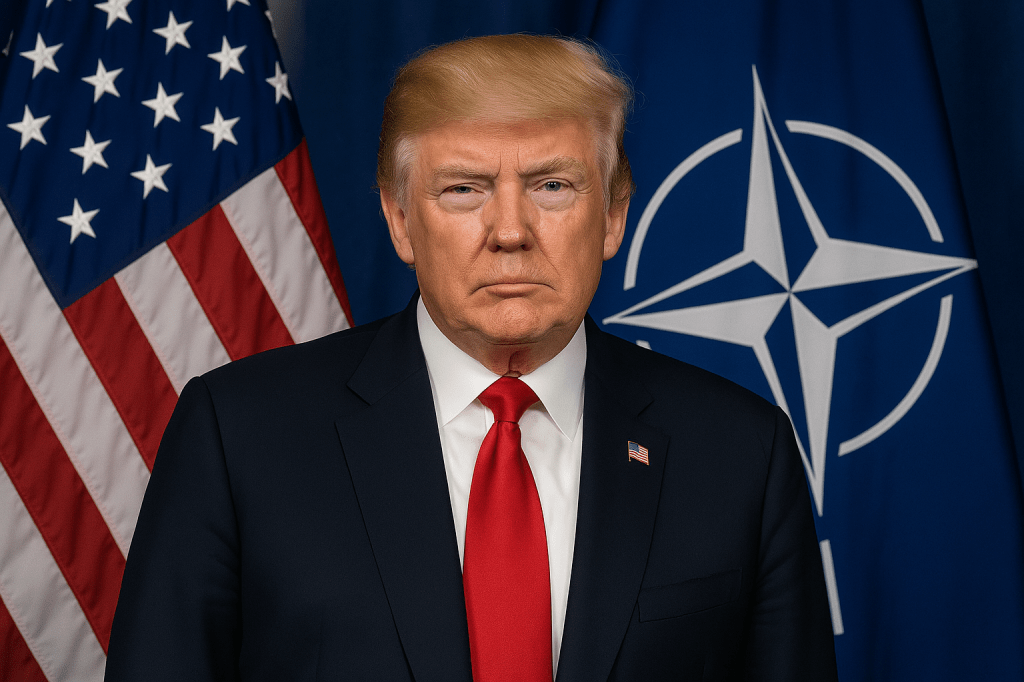
    The Trump administration’s handling of intelligence sharing with Ukraine has sent shockwaves through allied nations. The sudden suspension of intelligence support to Ukraine, followed by its conditional resumption, has raised concerns about America’s commitment to its allies. While Ukraine’s struggle against Russian aggression continues, the erratic nature of U.S. policy has left NATO nations questioning whether they could face a similar fate.

    European nations, sensing the volatility of U.S. policy, are now exploring alternative security arrangements. The European Union is considering expanding its military intelligence capabilities and reducing its reliance on U.S. intelligence. Countries such as France and Germany are leading discussions on an independent European military force—an idea that was once dismissed as politically infeasible but is now gaining momentum.

    In the Pacific, America’s key allies—South Korea, Taiwan, and the Philippines—are also recalibrating their defense strategies. South Korea is bolstering regional partnerships, particularly with Japan, in anticipation of a less reliable American presence. Taiwan is actively seeking multilateral security cooperation beyond the U.S., participating in joint military exercises with the Philippines and Japan. Meanwhile, the Philippines is modernizing its military and diversifying its defense partnerships, engaging countries like Australia and Canada in military agreements.

    The Breakdown of America’s Global Leadership

    This growing shift away from American reliance signals the waning of U.S. global leadership. Allies who once placed unwavering trust in Washington now see the need to hedge their bets. For decades, the U.S. thrived on the strength of its alliances, but as these alliances weaken, so too does America’s influence in global affairs.

    Historically, great empires did not fall solely due to external threats but because of internal decay. America’s reluctance or inability to maintain stable commitments to its allies mirrors the decline of past world powers. The erosion of trust in U.S. leadership is not just a political problem—it is symptomatic of deeper issues plaguing the nation.

    A Spiritual Message to America

    From a biblical perspective, national greatness is not simply a product of military strength or economic prowess—it is tied to moral and spiritual standing. The United States has long claimed to be a nation under God, but its increasing political instability, social divisions, and unreliable leadership may be signs that it is drifting further from divine favor.

    The Bible warns that nations that forget God will face decline. The book of Proverbs states,

    “Righteousness exalts a nation, but sin is a reproach to any people” (Proverbs 14:34).

    When a nation abandons righteousness, its foundations begin to crumble, and its power wanes.

    Could it be that God is allowing America’s global dominance to wane as a wake-up call? The moral compass of the nation has shifted dramatically, embracing ideologies and practices that directly contradict biblical values. At the same time, political turmoil and international distrust are rising. The weakening of U.S. leadership should not just be seen as a strategic challenge but also as a spiritual warning.

    The Path to Restoration

    If America wishes to maintain its standing as a world power, it must look beyond military alliances and strategic policies. The key to lasting strength is not just in political or economic reforms but in a national return to godly principles.

    Leaders must recognize that power without righteousness is fleeting. The nation must prioritize integrity, justice, and moral leadership if it hopes to remain a stabilizing force in the world. This requires not only changes in governance but also a revival of spiritual commitment among its people.

    America’s allies are preparing for a world where the U.S. is no longer the primary protector. If this trend continues, the United States will find itself increasingly isolated, no longer at the helm of world affairs. This should be a sobering reality for American leaders, but also an opportunity—a moment to turn back to God, to seek His guidance, and to reestablish itself as a force for good in the world.

  • Canada’s Trade Pivot: Preparing for the Rise of a European Economic Giant

    Canada’s Trade Pivot: Preparing for the Rise of a European Economic Giant

    In recent years, Canada has been aggressively diversifying its trade relationships, seeking to reduce its economic reliance on the United States. This shift has been prompted by the increasingly unstable and protectionist trade policies emanating from Washington, which have left even long-standing allies questioning the reliability of the U.S. as a trade partner. Amid these uncertainties, Canada has been forging deeper economic ties with countries and entities beyond the U.S.—most notably, the European Union (EU). While this strategy might seem a prudent move in the short term, there are profound prophetic implications that could reshape the global economic landscape in the not-so-distant future. According to biblical prophecy, a powerful European economic empire will rise, eventually transforming these trade partnerships into instruments of subjugation for nations like Canada, Britain, and the United States.

    The EU: A Sleeping Economic Giant Awakens

    Canada’s recent push to strengthen its economic ties with the EU is evident in the Comprehensive Economic and Trade Agreement (CETA), which has significantly boosted bilateral trade since its provisional implementation in 2017. Trade between Canada and the EU has seen robust growth, with Canadian exports to Europe rising sharply. However, this may only be the beginning of a much larger geopolitical shift.

    Prophetic Foundations: The Rise of a European Economic Powerhouse

    The Bible contains several passages that foretell the emergence of a powerful economic and political entity in Europe, often interpreted as a revived Roman Empire. This empire, described symbolically in prophetic books, is expected to dominate global trade and exert substantial influence over the nations, including those descended from ancient Israel, such as the United States, Britain, and Canada.

    Daniel 2 and Daniel 7 provide the foundational prophecies for understanding this future European superpower. In Daniel 2, King Nebuchadnezzar’s dream of a statue with different metal parts symbolizes successive world empires. The legs of iron and feet partly of iron and partly of clay represent the Roman Empire and its eventual revival in a divided form (Daniel 2:40-43). The ten toes signify a coalition of ten kings or nations.

    Similarly, Daniel 7:7-8, 23-24 describes a fourth beast, “dreadful and terrible, exceedingly strong,” with ten horns, symbolizing the same revived Roman Empire.

    Revelation 17 builds on Daniel’s vision, describing a beast with seven heads and ten horns. This beast is supported by a harlot, symbolizing a powerful religious influence allied with the political empire. The ten horns, representing ten kings, “receive authority for one hour as kings with the beast” (Revelation 17:12). This alliance suggests a temporary but powerful coalition that will dominate global trade and politics.

    Additionally, Revelation 18 depicts this future European superpower as an economic giant, a great commercial system symbolized by “Babylon the Great.” It describes a wealthy and influential trading empire whose goods are coveted by merchants worldwide (Revelation 18:11-13). The chapter highlights the immense economic power of this system and its impact on global commerce.

    Trading with the Beast: An Equal Partner Only for a Time

    In the initial stages of this emerging European superpower, Canada will likely benefit from what seems to be a mutually respectful and lucrative trade partnership. Canada’s rich resources—energy, minerals, and agricultural products—will be of great interest to the EU, and both sides will capitalize on these exchanges. This period will offer Canada an opportunity to secure new markets and hedge against U.S. trade uncertainties.

    However, biblical prophecy warns that this phase will be temporary. The Scriptures foretell that this resurrected Roman Empire, symbolically referred to as the Beast, will not remain content with equal partnerships for long. As its power grows, it will subjugate nations, including Canada, Britain, and even the United States. What begins as a promising trade relationship will gradually shift into a scenario where Canada and its allies find themselves economically and politically subdued. Trade agreements will be replaced with mandates, and sovereignty will be compromised.

    The Time of Jacob’s Trouble

    The Bible also speaks of a future period known as the “time of Jacob’s trouble,” a time of great distress and calamity for the modern descendants of ancient Israel, including the United States, Britain, and other English-speaking nations such as Canada.

    Jeremiah 30:4-7 explicitly describes this period:

     “Now these are the words that the Lord spoke concerning Israel and Judah. For thus says the Lord: ‘We have heard a voice of trembling, of fear, and not of peace. Ask now, and see, whether a man is ever in labor with child? So why do I see every man with his hands on his loins like a woman in labor, and all faces turned pale? Alas! For that day is great, so that none is like it; and it is the time of Jacob’s trouble, but he shall be saved out of it.’”

    Hosea 5:5 and Hosea 7:11 also warn of Ephraim (symbolic of Britain and its commonwealth nations, including Canada) seeking alliances with foreign powers, leading to downfall. Canada’s pursuit of new trade relationships is a rational response to current uncertainties, yet it is essential to recognize the broader prophetic context. The rise of a powerful European economic empire is not a distant possibility—it is an imminent reality foretold in biblical prophecy. For Canada, the path forward may offer short-term gains but also significant long-term risks. Understanding these prophetic truths can help us view today’s headlines with clarity and prepare for the dramatic changes that lie ahead.

  • Europe’s March to Military Dominance: The Path to a Unified Superpower

    Europe’s March to Military Dominance: The Path to a Unified Superpower

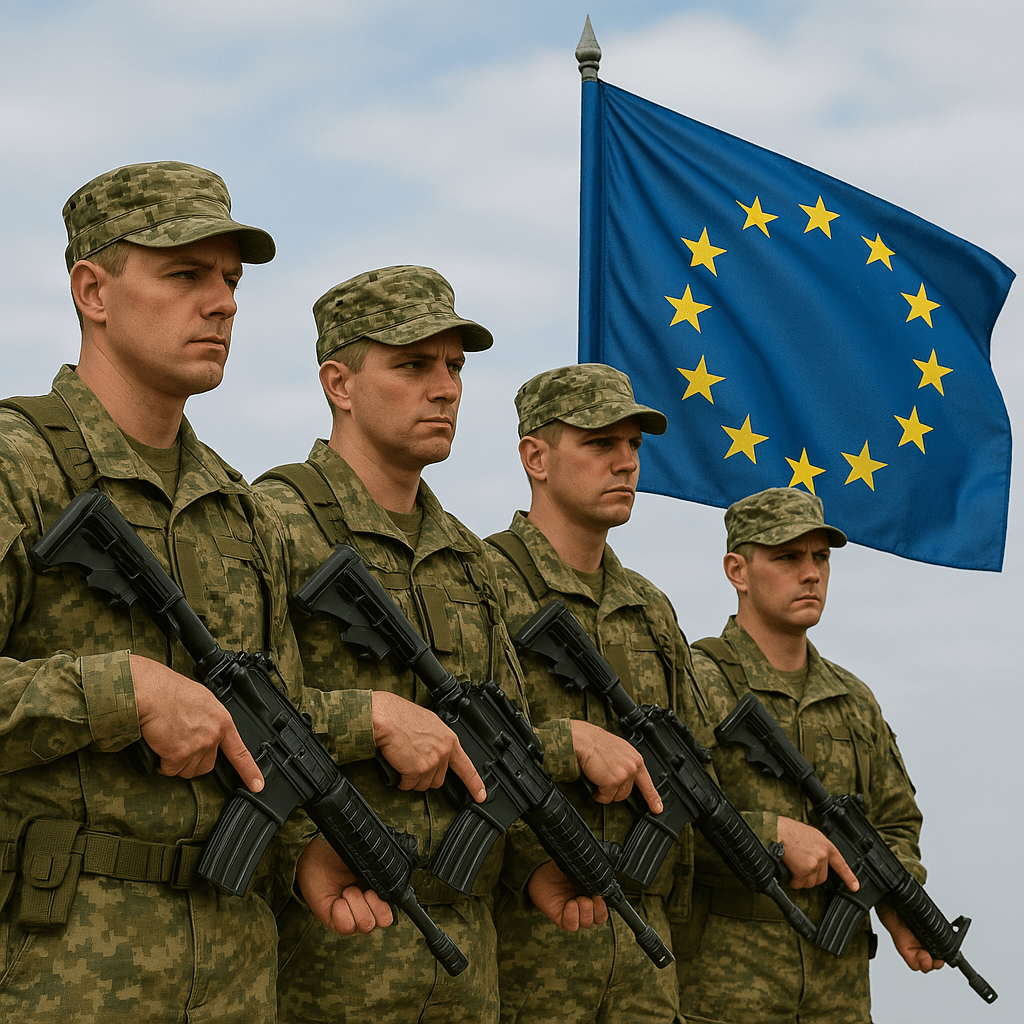
    For decades, European security has been anchored in the transatlantic alliance with the United States through NATO. However, shifting geopolitical realities—Russia’s continued aggression, the growing uncertainty of U.S. commitment to Europe, and the increasing calls for strategic autonomy—have compelled European Union (EU) nations to take matters into their own hands. The result is a dramatic transformation of Europe’s military capabilities, with nations working together to forge an independent defense structure outside of NATO.

    While the process is still in its early stages, the momentum is undeniable. What we are witnessing is the slow but steady rise of a militarily unified Europe—one that, in time, will surpass all nations in power and might. Remarkably, this aligns with an ancient biblical prophecy that foretells the emergence of a final world superpower, a militaristic empire so dominant that no nation—not even the United States—will be able to challenge it.

    The Blueprint for European Military Autonomy

    The EU is rapidly expanding its military cooperation through a series of frameworks designed to reduce its reliance on the U.S. and NATO. Some of the most significant initiatives include:

    1. The Strategic Compass for Security and Defence

    Adopted in 2022, the Strategic Compass is a roadmap to strengthen the EU’s military capabilities, with a goal of creating a fully operational EU Rapid Deployment Capacity by 2030. This will allow Europe to swiftly mobilize 5,000 troops for crisis response without relying on NATO.

    2. Permanent Structured Cooperation (PESCO)

    PESCO is a legally binding framework that enables EU members to cooperate on military projects, including joint weapons development, intelligence sharing, and coordinated rapid response forces.

    3. The European Intervention Initiative (EI2)

    Spearheaded by France, EI2 is an elite military coalition that enhances Europe’s ability to conduct military operations independently of NATO, preparing for potential conflicts outside the EU’s borders.

    4. The Main Ground Combat System (MGCS)

    France and Germany are leading this project to develop the next-generation battle tank, replacing older models and providing European forces with superior land warfare capabilities.

    5. Military Mobility (“Military Schengen”)

    To ensure rapid deployment of forces, the EU is working on a military mobility project that removes logistical and bureaucratic barriers, making it easier for troops and equipment to move across European borders.

    6. The European Defence Fund (EDF)

    With a growing budget, the EDF is financing advanced defense research and weapons development to rival the military technology of the U.S., China, and Russia.

    The Road to European Military Superiority

    At present, Europe is still dependent on U.S. support, particularly in intelligence, nuclear deterrence, and strategic airlift capabilities. However, history has shown that necessity drives innovation. The war in Ukraine has forced European leaders to rethink their reliance on NATO and to fast-track their own military build-up.

    As European defense spending rises, and as these military initiatives become fully operational, the EU will eventually achieve self-sufficiency. What once seemed unthinkable—a Europe capable of waging war independently of the U.S.—is now becoming a reality. This military unification is not just a political shift; it is a prophecy in motion.

    Prophecy Foretells the Rise of a European Superpower

    The Bible prophesies the emergence of a final world empire—described as “the Beast” in the book of Revelation—a powerful, militaristic union that no nation will dare oppose.

    “Who is like the Beast? Who is able to make war with him?” (Revelation 13:4)

    This prophecy describes a world-dominating power, led by a strong ruler, that will command absolute military supremacy. Historically, many have understood this prophecy to point toward a revived European empire, one that will rise after a period of political and military consolidation.

    Though today’s EU is still fragmented in its military structures, the building blocks of a unified European army are already being laid. As economic, political, and military pressures increase, these disparate elements will eventually merge into a powerful, centralized force.

    A Future Where Europe Stands Unchallenged

    For now, Europe still requires U.S. support to counter Russian aggression. But this will not always be the case. Over time, the EU’s defense initiatives will evolve into a fully integrated war machine—one that surpasses Russia, China, and even the United States.

    The world is watching as history unfolds. What seems like a slow and bureaucratic process today will, in due time, lead to a new global reality—one where Europe, not America, dictates the terms of world security. And when that day comes, no nation will dare to challenge it.