Tag: Global Leadership

  • Habemus Papam: The Election of Pope Leo XIV and What It Means for the World

    Habemus Papam: The Election of Pope Leo XIV and What It Means for the World

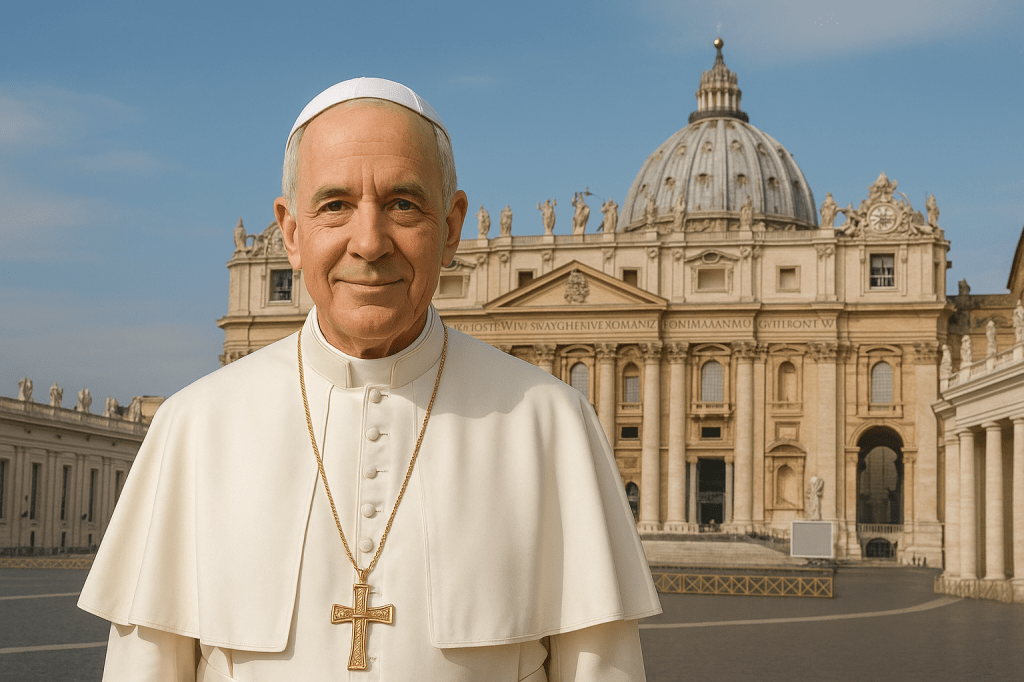
    On May 8, 2025, the white smoke billowed from the Sistine Chapel, and the world was introduced to a new leader of the Roman Catholic Church—Pope Leo XIV, formerly Cardinal Robert Francis Prevost. His election marks a series of historic firsts: the first American pope, a Peruvian citizen by naturalization, and a former missionary deeply rooted in the social struggles of Latin America. His ascension comes at a time of significant global and ecclesial uncertainty, and it sets the stage for a papacy that is likely to shape the moral conversation of the coming decade.

    A Career of Global Service and Grounded Ministry

    Robert Francis Prevost was born in Chicago in 1955. A member of the Order of Saint Augustine, he spent over two decades in Peru, where he served as seminary director, parish priest, and later as bishop of Chiclayo. His missionary experience embedded him in the lives of the poor and the working class, shaping his deeply pastoral, socially engaged worldview.

    In 2023, he was called to Rome to head the Dicastery for Bishops, where he oversaw episcopal appointments worldwide. Known for his humility, administrative competence, and theological depth, he was elevated to the rank of cardinal that same year. Despite not being among the most mentioned papabili (likely candidates), he emerged as a consensus choice among the cardinals—likely for his ability to bridge divides between progressive and traditional elements in the Church, and his clear moral compass grounded in lived experience.

    Why the Cardinals Chose Him

    Pope Leo XIV’s election most likely reflects the cardinals’ desire for a leader who could:

    • Build continuity with the reform-oriented legacy of Pope Francis;
    • Maintain doctrinal orthodoxy while remaining pastorally compassionate;
    • Strengthen the Church’s credibility in the Global South and restore trust in the West;
    • Speak with clarity on moral issues facing humanity—especially poverty, migration, and climate change.

    In a fractured world and an often polarized Church, Cardinal Prevost offered a steady, humble, and globally minded profile for the Catholic faithful.

    Immediate Challenges Facing Pope Leo XIV

    As Pope Leo XIV assumes leadership of the Church, several pressing issues await him:

    1. Restoring Trust Post-Abuse Crisis – Strengthening accountability and enforcing global safeguards against clerical abuse remain urgent.
    2. Reviving Faith in the West – The decline of church attendance and vocations, particularly in Europe and North America, requires pastoral creativity and bold evangelization.
    3. Guiding the Church Through the Synodal Path – He must balance unity and diversity as the Church explores broader participation of laity and women in Church life.
    4. Responding to Global Injustice – From migration and war to ecological degradation, the Pope’s moral voice is needed to challenge indifference and advocate for peace and dignity.

    The Papacy and the Trump Administration: Points of Tension

    Pope Leo XIV’s past criticism of Vice President J.D. Vance—especially Vance’s attempt to invoke Christian teachings to justify harsh immigration policies—suggests early signs of moral tension with the Trump administration. The Pope, then still a cardinal, publicly shared his disapproval, challenging leaders to uphold Christ’s call to love the stranger and care for the vulnerable.

    This divergence is likely to deepen as the papacy of Leo XIV progresses. The Trump administration’s transactional approach to foreign policy, its perceived alignment with corporate elites over ordinary citizens, and its often blunt rhetoric on global affairs stand in contrast to Pope Leo’s vision of inclusive solidarity, ethical leadership, and compassionate governance.

    Implications for U.S.-Vatican Relations and Global Perception

    If the Trump administration continues to sideline moral diplomacy in favor of nationalist or plutocratic policies, Pope Leo XIV’s voice may further underscore the growing moral disconnect between American leadership and the broader international community.

    Rather than isolating the Vatican, such a divergence could have the effect of spotlighting the Vatican as a counter-voice of moral credibility—especially on issues like peace, economic justice, and climate ethics. It may also further weaken America’s global soft power, especially in the developing world, where the Church remains a deeply trusted institution.

    A Sobering Biblical Parallel

    God warned ancient Israel, “I will break the pride of your power” (Leviticus 26:19), and in another place, He foretold that His disobedient people would become “the tail and not the head” (Deuteronomy 28:44). These warnings directed to Israel of ancient times and that of today, underscore a timeless principle: when nations act unjustly and pridefully—abandoning moral responsibility—God allows their influence to wane.

    If America’s policies remain at odds with ethical norms and divine principles, and if it continues to marginalize the vulnerable in pursuit of transactional gains, it risks becoming morally irrelevant on the world stage. Pope Leo XIV’s papacy may serve as a prophetic mirror reflecting that divergence—and the twilight of America as a real superpower.

  • Vacuum of Power: Who Steps in If the U.S. Walks Away from Ukraine Peace Talks?

    Vacuum of Power: Who Steps in If the U.S. Walks Away from Ukraine Peace Talks?

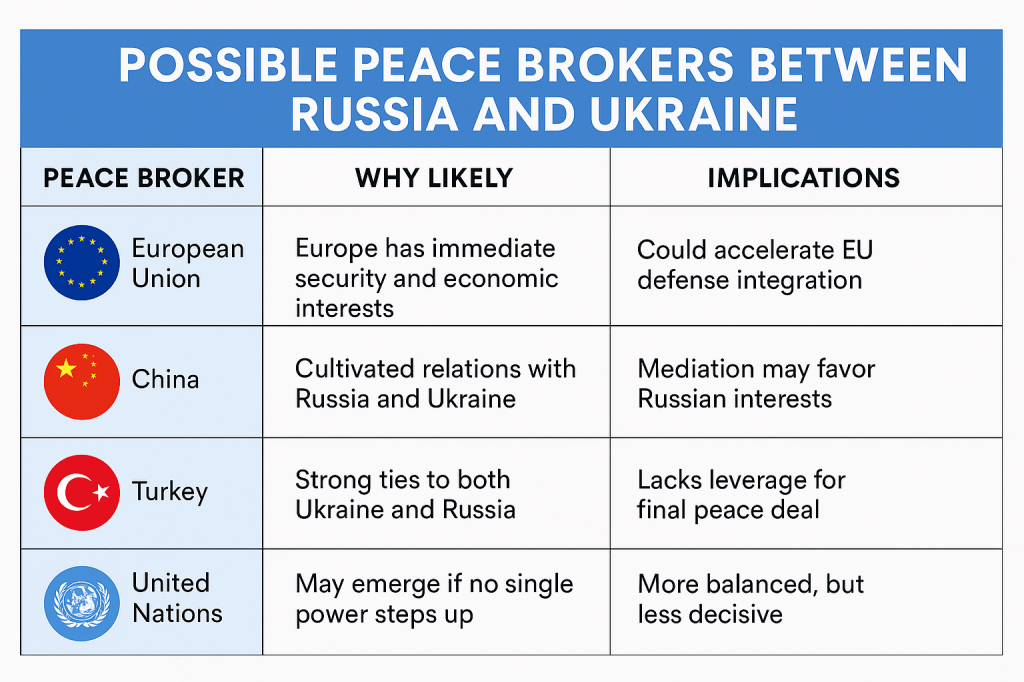
    As the Trump administration threatens to withdraw from peace negotiations between Russia and Ukraine, a dangerous vacuum is forming. If the U.S. steps back, others are ready to step in—and the one best poised to fill that role is the European Union.

    Europe, more than any other region, has direct security and economic stakes in the outcome of the war. Should the EU, led by nations like France and Germany, manage to broker peace where Washington falters, it would not only mark a diplomatic victory—it would solidify Europe’s emerging role as a global leader in world affairs.

    This shift is not just geopolitical—it aligns with Biblical prophecy. Scripture foresees a powerful union rising from the heart of Europe, more dominant than the United States, just before the return of Christ (Daniel 7:7-8; Revelation 17:12-13). The world may soon witness the rise of a superpower that reshapes global alliances—and prophecy warns that it will wield great influence, for better or worse.

    “The ten horns which you saw are ten kings… they receive authority for one hour as kings with the beast. These are of one mind, and they will give their power and authority to the beast.” – Revelation 17:12–13

    As the U.S. recedes from the center of global diplomacy, Europe’s moment may be dawning.

  • The “Freeloader” Fallacy and the Unraveling of the World America Built

    The “Freeloader” Fallacy and the Unraveling of the World America Built

    In recent years, voices from within the United States—most prominently in the current administration of President Donald Trump—have labeled America’s European allies as “freeloaders.” This sentiment, recently reinforced by leaked chats from senior U.S. defense officials, suggests that the U.S. is unfairly burdened by its role as the world’s security guarantor, while allies reap the benefits without paying their fair share.

    But this view, while emotionally resonant in a time of rising nationalism and budget pressures, fails to recognize a deeper historical truth: the so-called “freeloading” arrangement was designed by the United States itself after World War II.

    America’s Strategic Design After World War II

    When the dust of WWII settled, the United States stood as the dominant power in a shattered world. Europe lay in ruins. Germany, the nation that had ignited two world wars, was disarmed and divided. The Soviet Union, though an ally during the war, quickly emerged as a global ideological and military threat, expanding its grip over Eastern Europe and seeking to export communism globally.

    To prevent a third world war—and to contain the spread of Soviet communism—the U.S. devised a grand strategy. It would serve as a global security umbrella, deploying its vast military and nuclear power to deter aggression in both Europe and Asia.

    But this security guarantee came with conditions.

    Why the U.S. Took on the Burden

    In Europe, the U.S. created NATO in 1949, a collective defense alliance that essentially declared: “If the Soviets invade, America will respond.” This meant stationing tens of thousands of troops in Germany and elsewhere—not to dominate Europe, but to protect it, while also ensuring that Germany would never again re-arm on its own and potentially start another global war.

    The U.S. didn’t stop in Europe. In Asia, the United States went even further: it wrote Japan’s post-war constitution, explicitly forbidding it from maintaining offensive military forces. In exchange, the U.S. promised to defend Japan from any external threats. This kept the peace in the Pacific and ensured that Japan, once an imperial power, would remain a pacifist state under American protection.

    Aside from maintaining military presence in various points around the globe, this also meant that the U.S. Navy would patrol the world’s oceans and major trade routes, ensuring they remained open and secure for international commerce. This naval presence guaranteed that goods, products, energy supplies, and even people could travel safely across seas and continents, under the protection of a rules-based order that the U.S. enforced. In effect, the United States became the maritime guardian of global trade, allowing the modern economy to flourish.

    The Global Bargain

    What did America get in return?

    Quite a lot.

    These countries, under the U.S. defense umbrella, pledged to:

    • Side with the United States in the ideological and military contest of the Cold War. 
    • Maintain for the most part (or at least at the surface) democratic forms of governance, compatible with American values and institutions. 
    • Participate in a global economic system centered on free trade, the U.S. dollar, and open access to American markets, capital, and technology. 

    This arrangement created decades of global stability, fueled unprecedented economic growth, and cemented America’s leadership role in the world. Allies didn’t have to spend massive portions of their GDP on defense, because America did it for them—intentionally, and as a strategic choice.

    But this system also worked immensely in America’s favor:

    • It helped defeat the former Soviet Union.
    • It generated vast wealth for the United States.
    • It gave America access to the natural resources, talent, savings, and investments of allied nations.
    • It kept the U.S. economy resilient, allowing it to absorb shocks during oil crises, recessions, and financial collapses because the global economy was effectively built around it.

    This wasn’t just charity. It was a mutually beneficial arrangement that secured the U.S. economy and reinforced its global dominance across finance, technology, and military affairs.

    The Trump Doctrine and the Unraveling Order

    Enter the 21st century, and with it, growing discontent. Successive U.S. administrations urged allies to increase defense spending, but President Trump went further—publicly ridiculing NATO partners, questioning America’s commitment to mutual defense, and suggesting that the U.S. might not come to their aid.

    The recent leaks of U.S. defense officials calling allies “freeloaders” is not new rhetoric—it is the continuation of a growing American retrenchment from the very system it built. This shift is not just about burden-sharing; it’s about dismantling a world order that was held together by American security guarantees and economic leadership.

    And the consequences are enormous.

    As America pulls back:

    • Germany is rearming—a move unthinkable just a decade ago.
    • Japan is building new missile capabilities, breaking with its pacifist tradition.
    • France and others are openly discussing European “strategic autonomy,” no longer counting on U.S. support.

    The global system is fragmenting. Old alliances are fraying, and new coalitions may rise—not because of shared values, but based on shared interests, geography, or ethnicity. The future could very well be a world of competing blocs, exclusive clubs, and permanent insecurity.

    A Nation in Decline—By God’s Hand

    It is tempting to see all this purely through the lens of geopolitics. But for those who understand biblical prophecy, something deeper is taking place.

    America’s decline is not merely the result of policy decisions or shifting public opinion—it is a judgment from God.

    “My people are destroyed for lack of knowledge. Because you have rejected knowledge, I also will reject you… I will change their glory into shame.”  (Hosea 4:6–7)

    God blessed America with power, influence, and prosperity—but as the nation increasingly turns from Him, He is taking away its leadership role, allowing other powers to rise in its place. Whether those nations will be friendly or adversarial remains to be seen—but they will not uphold the same values or provide the same guarantees.

    What we are witnessing is not just the collapse of a U.S.-led global system. We are witnessing a divine reshaping of the world order, as foretold in Scripture.

  • Is America Losing Its Role as Democracy’s Champion?

    Is America Losing Its Role as Democracy’s Champion?

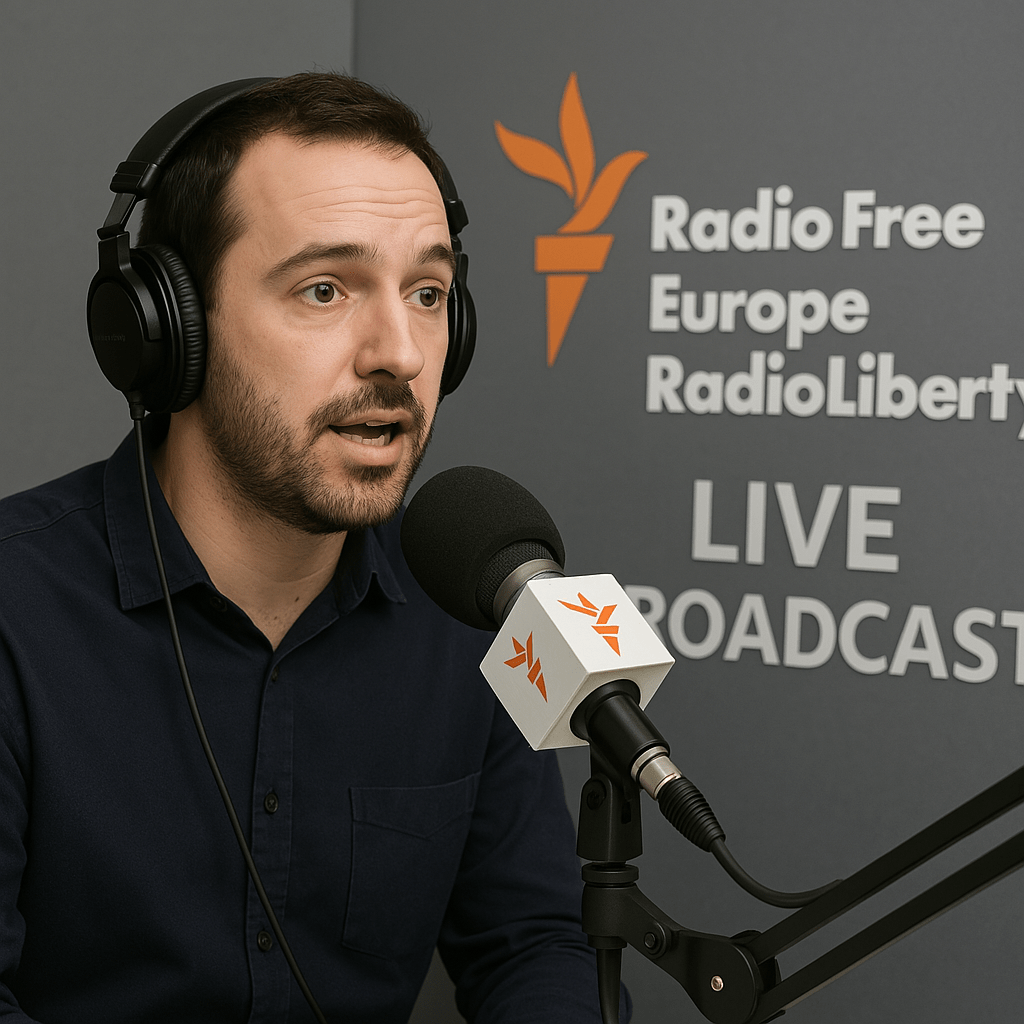
    For much of the past century, the United States has stood as the “leader of the free world”, championing democracy, human rights, and freedom for oppressed peoples. From its role in defeating fascism in World War II to its Cold War stand against communism, America positioned itself as the global defender of liberty. Through institutions like Voice of America (VOA) and Radio Free Europe/Radio Liberty (RFE/RL), it broadcast the values of democracy to nations suffering under authoritarian rule.

    But that era may now be ending. The recent defunding and dismantling of U.S.-funded media organizations, the withdrawal from international alliances, and America’s inward turn under the Trump administration signal a dramatic shift. The United States is no longer the unwavering beacon of freedom it once was. And perhaps, this decline is not merely political—but something that is coming from God.

    A Nation Turning Inward: The End of Global Leadership?

    A couple of recent decisions by the U.S. government reflect a profound change in direction:

    • The Shutdown of Voice of America and Radio Free Europe/Radio Liberty – These organizations, which once brought truth to people in authoritarian regimes, are now silent due to government defunding. Without them, America no longer counters the propaganda of China, Russia, and Iran, allowing these regimes to expand their influence unchecked.
    • Retreat from Global Institutions – The Trump administration has distanced America from international organizations such as the United Nations Human Rights Council and the World Health Organization, abandoning its role in shaping global policy.

    Many are asking: Is the United States still the champion of democracy, or is it becoming another empire in decline?

    God’s Judgment on America? The Biblical Perspective

    Throughout history, God has used oppressive governments or governments that make bad choices as a form of punishment to wake up His people from spiritual complacency. When ancient Israel and Judah turned away from God—embracing corruption, injustice, and idolatry—He allowed them to have weak or oppressive leaders which eventually led them to fall into captivity under the Assyrians and Babylonians.

    Could it be that America is following the same path?

    • The removal of America’s global influence may be God’s way of humbling a nation that has turned its back on Him.
    • The rise of authoritarian regimes across the world may be a wake-up call for God’s people to realize that America’s perceived power is nothing if not from God.

    America, like ancient Israel, has been blessed beyond measure—yet it has corrupted those blessings with moral decay, materialism, and rebellion against God’s laws. The consequences are now unfolding before our eyes.

    The Rise of a New Global Leader

    As America retreats, its enemies are scrambling to fill-up the leadership vacuum it is leaving.  Ultimately, another world power is being prepared to take its place—a power that will not defend democracy or individual freedom, but will instead dominate the world through authoritarian rule.

    • China’s expanding influence in Africa, Latin America, and the South Pacific is growing unchecked.
    • Russia’s aggressive expansion in Ukraine and beyond is being met with weak resistance.
    • The European Union, long divided, may soon unite under a strong leader who will reshape the world order.

    The world is being repositioned for a new era—an era foretold in Bible prophecy, where a global empire will rise and ultimately bring about the downfall of the United States and its influence.

    Daniel 2 and Revelation 17 speak of a final world power that will dominate in the last days. This power is coming into place now. And when it fully emerges, it will not tolerate America’s dominance.

    A Time to Seek God

    This is not a time for bitter political rivalries or misguided nationalism. This is a time to seek God.

    America is being removed from its position of global leadership, just as past empires were before it. God is allowing this so that His people will wake up and turn to Him before it is too late. Let those who have ears to hear, heed the warning.

  • The Paradox of Strength: America’s Moral Decline and Its Impact on Global Leadership

    For generations, the United States has been a beacon of global leadership, built not just on its economic and military power but also on its moral authority. Nations once looked to America as a leader because it embodied values such as justice, integrity, and human dignity. However, over the decades, the moral foundation that underpinned this leadership has been eroding.

    With the return of another Trump administration, it is essential to understand that this decline is not the product of any one administration or leader. Instead, it is the result of a long-standing cultural shift away from biblical standards. Even if a Trump administration projects strength on the surface, America’s diminishing moral authority will continue to weaken its ability to lead effectively on the global stage.

    Strength Without Moral Credibility

    During Donald Trump’s first term, his administration emphasized policies that projected American strength. Economic initiatives aimed to restore jobs to U.S. soil, trade negotiations prioritized American interests, and military budgets expanded. Many Americans celebrated these actions as efforts to “Make America Great Again.”

    However, global leadership requires more than strength. True leadership demands moral credibility—something a nation can only possess if others see it as a model worth emulating. A country that appears powerful yet lacks moral integrity is like a house built on sand: it may stand for a time, but it cannot endure.

    Decades of Moral Decline

    While Trump’s leadership style is often scrutinized, it would be shortsighted to blame him alone for America’s moral challenges. The nation’s cultural and spiritual decline has been unfolding for decades.

    The sexual revolution of the 1960s, the erosion of traditional family values, the normalization of dishonesty in public life, and the glorification of immorality in entertainment all signal a long-term drift from God’s standards. These shifts have had a cumulative effect, undermining the nation’s moral foundation and, by extension, its credibility as a global leader.

    The Bible warns of the consequences of such moral decline. Proverbs 14:34 states, “Righteousness exalts a nation, but sin is a disgrace to any people” (New International Version). When a nation chooses sin over righteousness, it becomes a reproach not only to its own citizens but also to the world it seeks to influence.

    The Loss of Moral Authority

    Scripture offers numerous examples of nations that turned away from God and suffered the consequences. Consider ancient Israel under King Solomon. At the height of his reign, Israel was a global power, renowned for its wisdom and prosperity. Yet Solomon’s compromises—embracing idolatry and turning from God’s commands—led to the eventual division and weakening of the kingdom (1 Kings 11:9-11).

    The United States faces a similar risk. Deuteronomy 28:15 warns, “But if you do not obey the Lord your God and do not carefully follow all his commands and decrees I am giving you today, all these curses will come on you and overtake you” (New International Version). Among the consequences outlined are instability, confusion, and a loss of respect from other nations.

    Global leadership requires more than economic strength or military dominance; it requires the respect and trust of other nations. Without a moral foundation rooted in truth and righteousness, a nation’s influence is hollow and unsustainable.

    Symptom, Not the Cause

    While a Trump administration may emphasize policies that reinforce America’s surface strength, it operates within the broader context of moral decline. Trump’s leadership style, often marked by pragmatism and divisive rhetoric, reflects rather than causes the cultural shift away from biblical principles.

    It would be unfair and inaccurate to attribute America’s moral and cultural decline solely to Trump or his administration. Isaiah 59:14 paints a picture of societal decay that resonates with modern America: “So justice is driven back, and righteousness stands at a distance; truth has stumbled in the streets, honesty cannot enter” (New International Version). This verse highlights a deeper, systemic problem—one that transcends any single leader or political era.

    The Way Forward

    To restore its global leadership, America must address not just its policies but its moral foundation. Micah 6:8 offers clear guidance:

    “He has shown you, O mortal, what is good. And what does the Lord require of you? To act justly and to love mercy and to walk humbly with your God” (New International Version).

    Justice, mercy, and humility are not just personal virtues; they are essential qualities for a nation seeking to lead righteously.

    Repentance and a return to biblical standards are the only paths to true greatness. This requires not just individual change but a collective effort to realign the nation’s values with God’s unchanging principles.

    A Call for Reflection

    America’s challenges did not emerge overnight. The nation’s moral decline has been decades in the making, fueled by a culture that prioritizes self-gratification over obedience to God. While a Trump administration may project strength, true leadership requires moral integrity—a quality that cannot be regained without national repentance.

    Proverbs 16:12 reminds us,

    “Kings detest wrongdoing, for a throne is established through righteousness” (New International Version).

    This timeless truth is as relevant today as it was in ancient times. Whether America chooses to heed this wisdom will determine whether it remains a global leader or becomes a cautionary tale of a nation undone by its own moral failures.

    America’s future as a global leader depends not on the strength of its policies or economy but on its commitment to God’s standards. Only by returning to righteousness can it hope to regain the respect and trust of the world and fulfill its potential as a true leader among nations.