Tag: leadership

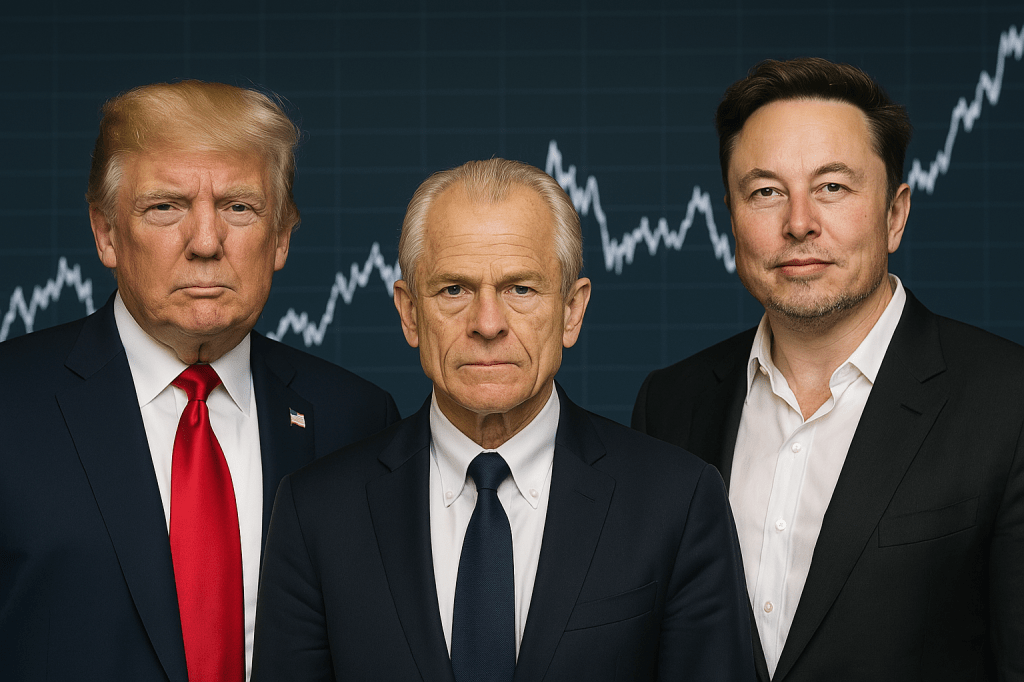
  • A Pause in the Storm: President Trump’s Tariff Reversal and the Wisdom of Many Counselors

    A Pause in the Storm: President Trump’s Tariff Reversal and the Wisdom of Many Counselors

    The global markets held their breath—and then exhaled—when President Donald Trump announced a sudden 90-day pause on the sweeping tariffs he had imposed on virtually all U.S. trading partners. Except for China, whose tariffs were raised sharply to 125%, most nations received a temporary reprieve from what many feared would become a full-scale global trade war.

    But this “pause” has analysts and world leaders wondering: is this merely a temporary detour, or the beginning of a quiet retreat?

    Why the Sudden Shift?

    The official narrative from the Trump administration is that this is a “strategic pause”—a window of time to negotiate bespoke trade arrangements with allies and economic partners. Treasury Secretary Scott Bessent noted that the 90-day halt gives space for talks with countries like Japan, Vietnam, and the European Union.

    Yet beneath this diplomatic language lies a more complex—and revealing—story.

    Internal Dissent

    While some cabinet members like Commerce Secretary Howard Lutnick and trade advisor Peter Navarro pushed aggressively for the tariffs, others sounded the alarm. Treasury Secretary Bessent and National Economic Council Director Kevin Hassett reportedly warned of the dangers of a unilateral tariff policy, urging a more measured and consultative approach.

    Their concerns proved prescient.

    Elon Musk’s Warning

    One of the loudest voices from the private sector was Elon Musk, who called for a zero-tariff environment between Europe and North America and warned that blanket tariffs would disrupt Tesla’s global supply chain. Musk’s businesses depend on internationally sourced components, and the tariffs would significantly raise production costs.

    Predictably, Navarro dismissed Musk’s position as self-serving. But the economic fallout soon made it clear that Musk and others raising red flags were not speaking out of self-interest alone—they were highlighting systemic risks to American consumers, workers, and the broader economy.

    Economic Turbulence and Market Recoil

    The markets responded with a wild swing of emotion.

    At first, optimism over the tariff pause sent the S&P 500 up 9.5% in a single day—one of the largest one-day rallies in its history. But the euphoria didn’t last. Investors quickly realized that no one knows what happens on Day 91. Will the tariffs resume in full force? Will exceptions be granted selectively? The lack of clarity caused a sharp sell-off the next day, with the Dow losing over 2,000 points.

    Businesses across the country remain in limbo. Some are delaying hiring and investments. Others are considering shifting supply chains abroad—ironically, the opposite of the tariffs’ intended effect.

    Why Call It a “Pause” Instead of a Reversal?

    Calling it a “pause” allows the President to preserve political face. It offers flexibility: he can later say he gave America’s partners a chance to negotiate—and if they didn’t, he had no choice but to proceed.

    This language also keeps pressure on foreign governments while maintaining domestic leverage. But make no mistake: if the tariffs are reinstated, the economic whiplash could be far worse the second time around. The credibility of U.S. trade policy is already in question. A re-escalation could deepen inflation, strain key industries, and damage America’s standing in global markets.

    A Lesson in Leadership: The Value of Many Counselors

    Could this turmoil have been avoided? Almost certainly yes.

    Had the administration listened early on—not only to internal critics but also to voices like Elon Musk’s—much of this volatility might have been spared. The issue wasn’t merely policy—it was isolation in decision-making, surrounded by yes-men and ideological hardliners.

    The Bible has long taught the wisdom of diverse counsel:

    “Where there is no counsel, the people fall;
    But in the multitude of counselors there is safety.”
    (Proverbs 11:14)

    “Without counsel, plans go awry,
    But in the multitude of counselors they are established.”
    (Proverbs 15:22)

    Scripture reveals that even great leaders falter when they ignore wise advice. King Rehoboam rejected the seasoned advice of elders in favor of arrogant young men, splitting the kingdom of Israel (1 Kings 12). Moses thrived by heeding Jethro’s advice to delegate (Exodus 18).

    The principle is clear: humility and wise counsel go hand in hand. National leaders who isolate themselves in echo chambers risk decisions harmful to their reputation and their people.

    Adjusting the Course

    President Trump’s tariff pause may signal rethinking—or merely a tactical maneuver. Its lessons should not be missed. Listening only to affirming voices leads to blind spots. Strong leadership isn’t about always being right, but about being wise enough to adjust course when consequences become clear.

    The Bible’s wisdom remains timeless. If only more leaders today took it to heart.

  • Donald Trump’s Inauguration: A Nation Divided and a Higher Perspective

    Donald Trump’s Inauguration: A Nation Divided and a Higher Perspective

    On January 20, 2025, Donald Trump was inaugurated as the 47th President of the United States, marking his second, non-consecutive term in office. The event was attended by political leaders, dignitaries, and supporters, while protesters and critics also made their voices heard. As America once again entrusts its highest office to Mr. Trump, one undeniable reality remains: the nation is deeply divided on a number of key issues.

    A Nation Divided

    Although President Trump secured enough votes to return to the White House, his victory did not erase the stark divisions among the American people. Political, social, and economic concerns continue to polarize citizens, each side holding firm to their perspectives. Among the most contentious issues are:

    • Immigration Policy – While some Americans support stricter border control and deportation of illegal immigrants to uphold national security and economic stability, others advocate for more compassionate immigration policies that provide pathways to citizenship for those already in the country.
    • Economic Strategies – Trump’s emphasis on tax cuts and deregulation excites free-market conservatives who believe in stimulating business growth. However, others worry that such policies disproportionately benefit the wealthy while increasing economic inequality.
    • Climate Change and Energy Policy – The debate over fossil fuels versus renewable energy remains heated. Trump’s policies favoring domestic oil and gas production appeal to industries and workers in those sectors, while environmentalists argue for stronger climate change policies to protect the planet.
    • Social Issues – Topics like abortion rights, LGBTQ+ policies, and education reforms have led to fierce cultural debates. Conservatives generally push for policies aligning with traditional values, while progressives seek greater inclusivity and personal freedoms.
    • Foreign Relations – Some Americans praise Trump’s “America First” approach, arguing that it strengthens national sovereignty. Others criticize it, asserting that it weakens global alliances and America’s standing on the world stage.

    With these divisions so deeply rooted, one may ask: Who ultimately decides the leadership of a nation?

    God’s Role in Leadership

    Scripture teaches that it is God who appoints leaders over nations. Daniel 2:21 declares, “He changes the times and the seasons; He removes kings and raises up kings.” God establishes rulers for His purposes—sometimes as a blessing and sometimes as a means of judgment.

    When a nation obeys God’s laws, He blesses it with leaders who bring peace, prosperity, and stability. This was evident in Israel’s history when righteous kings ruled with justice and wisdom, leading the people into prosperity (2 Chronicles 31:20-21).

    Conversely, when a nation turns away from God, He allows corrupt or oppressive leaders to rise, not necessarily as an endorsement of their wickedness but as a wake-up call for repentance. Israel, for example, suffered under kings who led them into idolatry and injustice, bringing divine judgment upon the land (Judges 2:11-15).

    America, like all nations, must examine itself. If its people desire good governance, they must first seek righteousness, for no election, policy, or human leader can solve the deeper moral and spiritual crises that afflict society.

    Why Christians Should Respect and Pray for Leaders

    Regardless of who sits in the highest office, Christians are called to respect and pray for their leaders. The apostle Paul wrote in Romans 13:1, “Let every soul be subject to the governing authorities. For there is no authority except from God, and the authorities that exist are appointed by God.”

    This does not mean Christians must endorse every decision or action of their leaders. However, it does mean they should:

    • Pray for their wisdom and guidance (1 Timothy 2:1-2).
    • Seek peace and live righteously under their governance (Jeremiah 29:7).
    • Uphold truth and justice while showing honor and respect (1 Peter 2:17).

    By doing so, believers demonstrate faith that God is ultimately in control, working all things for His divine purposes.

    The Perfect Leader Yet to Come

    As history has shown, no human leader—whether Democrat, Republican, or otherwise—will ever bring perfect peace, justice, and prosperity. Corruption, imperfection, and division will persist until Christ returns. The Bible promises that one day, Jesus Christ will establish His Kingdom on earth, where He will reign with righteousness and absolute justice (Isaiah 9:6-7).

    Unlike human leaders who rise and fall, Christ’s government will never end. He will rule with wisdom, compassion, and power, bringing the peace and unity that all nations long for.

    Until that day, believers must remain steadfast, seeking God’s righteousness, upholding His truth, and trusting in His sovereign will over the affairs of men. No matter who sits in the White House, the throne of Heaven remains occupied, and that is our greatest hope.