Tag: Philippines

  • Storm Over the Shoal: The Philippines, China, and the Future of the West Philippine Sea

    Storm Over the Shoal: The Philippines, China, and the Future of the West Philippine Sea

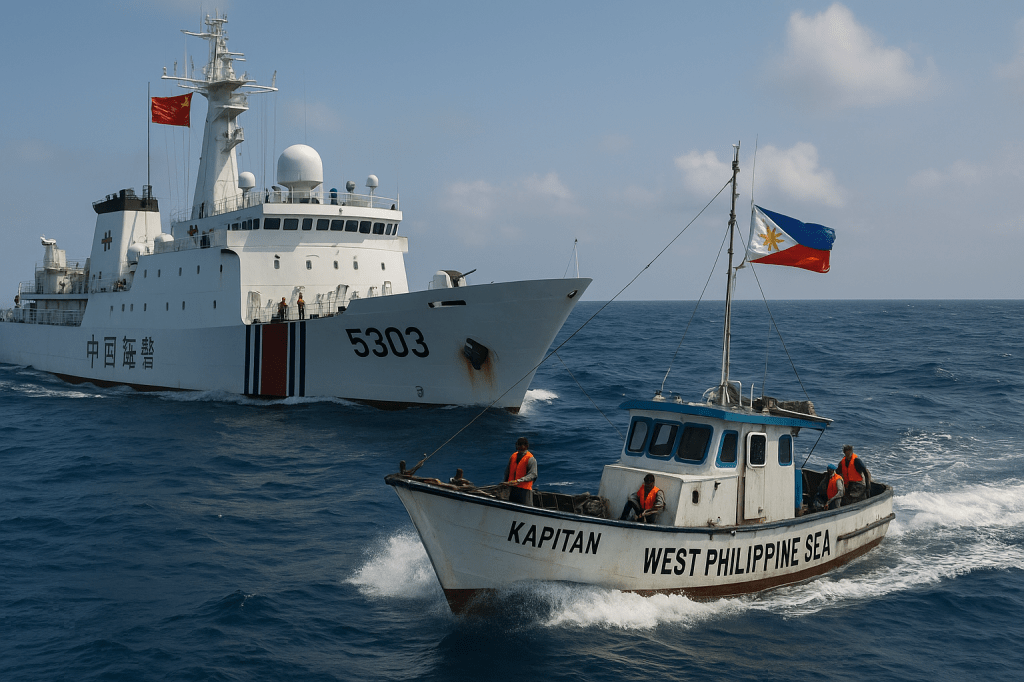
    Tensions flared again in the West Philippine Sea when Philippine and Chinese vessels collided near Scarborough Shoal on September 16, 2025. According to Manila, Chinese coast guard ships used high-powered water cannons against a Philippine resupply vessel, shattering glass on the bridge, damaging critical equipment, and injuring at least one crew member. China, for its part, accused the Philippines of “illegally” entering its waters and even claimed Manila rammed one of its ships—an allegation firmly denied by Philippine officials.

    This confrontation followed China’s unilateral declaration of a “national nature reserve” at Scarborough Shoal just days earlier. Filipino fishermen and government leaders saw this as an attempt to further tighten Beijing’s grip on a vital fishing ground that lies well within the Philippines’ Exclusive Economic Zone under international law and the 2016 Hague tribunal ruling.

    How Nations Responded

    Philippines: Manila lodged a strong diplomatic protest and ramped up patrols in contested waters. At home, protests over corruption added to the sense of urgency in defending national interests.

    China: Beijing justified its moves as “environmental” but in practice deployed coast guard and maritime militia vessels to enforce its claims, warning the Philippines against “provocations.”

    Allies & Partners:

    • The United States reiterated its defense commitments, condemning China’s actions.
    • Australia, Canada, Japan, and the UK voiced concern and pledged continued support for international law.
    • Germany and France are deepening defense ties with Manila. The UK is even exploring a Visiting Forces Agreement to allow closer military cooperation.

    What to Expect in the Next 3–5 Years

    The Philippines is investing heavily in its navy and coast guard, acquiring new frigates, offshore patrol vessels, and long-range missile systems like the BrahMos. It is also strengthening defense partnerships with allies from Asia, North America, and Europe. These steps will improve deterrence, but they cannot fully offset China’s overwhelming naval power.

    The likely trajectory is continued gray-zone conflict: water cannons, rammings, blockades, and the creation of more “facts on the ground” by China. At the same time, broader coalitions—Philippines with the U.S., Japan, Australia, the UK, and even select EU states—will increase naval patrols and exercises. Expect more incidents, more diplomatic protests, and a slow but steady militarization of the West Philippine Sea.

    The Long-Term Outlook: Prophecy and the Coming Clash

    While today the flashpoint is between the Philippines and China, the Bible shows that the stage is being set for something far greater. Prophecy in the book of Revelation describes a time when two great power blocs will dominate the world scene:

    • On one side, a resurrected Roman Empire, a powerful federation that will evolve out of today’s European Union.
    • On the other side, a vast eastern alliance led by powers like China and its allies.

    The South China Sea, a vital artery of global trade and security, could very well be one of the hot spots where these rival blocs collide. Scripture warns that this confrontation will erupt into a catastrophic war threatening the very survival of humanity (Matthew 24:21–22).

    But God has not left humanity without hope. Jesus Christ will intervene to stop world war from annihilating mankind. He will establish the Kingdom of God on earth, bringing true justice, security, and lasting peace—a peace no human power can achieve on its own.

    A Call to Repentance and Preparation

    In the meantime, God is calling individuals to repent, turn from sin, and live in obedience to His laws. The worsening conflicts, corruption, and rivalries we see today are signs of a world cut off from God. Yet for those who listen and respond, these events can serve as a wake-up call—a reminder to prepare for the soon-coming government of God, which will finally bring peace to all nations.
  • China’s West Pacific Ambitions: A Foreshadowing of Prophecy?

    China’s West Pacific Ambitions: A Foreshadowing of Prophecy?

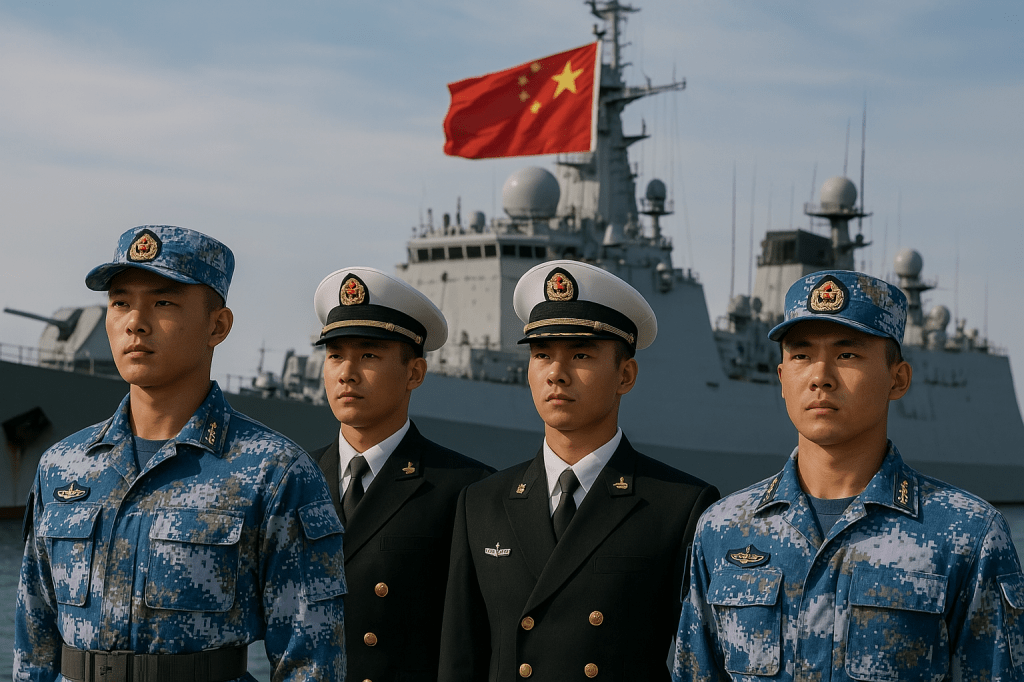
    Tensions in the Western Pacific continue to rise, with the People’s Republic of China making increasingly assertive moves to expand its political and military footprint across the region. These developments have not gone unnoticed. In a recent and widely publicized statement, General Romeo Brawner Jr., Chief of Staff of the Armed Forces of the Philippines, issued a stark warning to Philippine troops, particularly those stationed in Northern Luzon: prepare for a possible Chinese invasion of Taiwan.

    While this statement was quickly downplayed by the Marcos administration as precautionary rather than predictive, there is significant reason to believe that General Brawner’s warning is grounded in reality.

    Concrete Moves on the Ground

    China’s militarization of the South China Sea is no longer speculative. Artificial islands, equipped with runways, radar systems, and missile installations, now dot the once-empty waters of the Spratly and Paracel Islands. These installations give China not just a strategic advantage but also serve as de facto control points over a critical trade route through which about one-third of global maritime commerce passes.

    In addition to these fixed positions, China has recently conducted aggressive military exercises both near Taiwan and, surprisingly, off the coast of Australia. These drills included simulated blockade and amphibious assault operations near Taiwan, and live-fire naval exercises in the Tasman Sea. Such actions send a clear signal: Beijing is testing its ability to project power far beyond its shores, and it wants the world to take notice.

    Why Now?

    Several factors contribute to this renewed assertiveness:

    • China views Taiwan as a breakaway province and is determined to achieve reunification, a core tenet of President Xi Jinping’s long-term national vision.
    • The South China Sea remains vital to China’s energy and trade security.
    • Beijing is signaling strength amidst perceived U.S. retrenchment and the more transactional approach of current President Donald Trump, whose America-first policies have sometimes left allies questioning the reliability of U.S. support.

    Reactions from the Region

    Neighboring nations have not taken these developments lightly. The Philippines has revived and expanded its Enhanced Defense Cooperation Agreement (EDCA) with the United States, allowing for increased American troop presence and access to strategic bases. Japan, Australia, and India have strengthened security cooperation through the Quad alliance, while the AUKUS pact (Australia, the UK, and the U.S.) seeks to counterbalance Chinese naval dominance with advanced military technology sharing.

    Even smaller Pacific nations are becoming geopolitical flashpoints, with countries like the Solomon Islands engaging in military and economic partnerships with Beijing, much to the concern of Canberra and Washington.

    Yet, Limitations Remain

    Despite its aggressive posture, China’s ambitions are tempered by serious internal and external challenges:

    • Its economy is showing signs of strain due to demographic decline, real estate crises, and weakening consumer confidence.
    • Taiwan is not defenseless; it has invested heavily in asymmetric warfare capabilities and enjoys substantial, if unofficial, military backing from the United States.
    • A direct war with Taiwan could still invite U.S. intervention, along with its allies in the region, which Beijing may not yet be ready to face.

    A Prophetic Perspective

    From a biblical point of view, these rising tensions align with what the book of Revelation describes as a future global conflict involving massive armies from the east. Revelation 9:16 speaks of an army numbering 200 million. While China alone cannot field such a force, it is likely to form a future coalition with other eastern powers—most notably Russia and other countries whose current alliances may shift in the future.

    This eastern bloc, referred to in another biblical prophecy as the “kings of the east” (Revelation 16:12), will engage in a climactic war with a future European superpower, a revived Roman Empire in the end times. This prophesied war will occur after the decline of Anglo-American global dominance. By that time, the United States, Britain, and their allies will no longer be military superpowers or influential world players.

    This coming war between a European superpower and Asian nations will be so catastrophic that it would lead to the annihilation of humanity—if not for the divine intervention of Jesus Christ. As Matthew 24:22 says, “And unless those days were shortened, no flesh would be saved; but for the elect’s sake those days will be shortened.”

    The Only Source of True Peace

    The rise of Chinese militarism, the shifting of alliances, and the erosion of trust in old superpowers all point to a volatile world on the brink of unprecedented conflict. While human efforts at peace continually fall short, Bible prophecy assures us that God will intervene. Christ will return to put an end to human misrule and establish the Kingdom of God on earth—a government of true peace, justice, and righteousness (Isaiah 9:6-7).

    Until then, we must remain vigilant observers of global events, guided not by fear, but by faith in the sure word of prophecy and the hope of God’s coming Kingdom.

  • The Arrest of Former Philippine President Rodrigo Duterte and the Hope of Perfect Justice

    The Arrest of Former Philippine President Rodrigo Duterte and the Hope of Perfect Justice

    The recent arrest of former Philippine President Rodrigo Duterte under a warrant issued by the International Criminal Court (ICC) marks a historic moment in global justice. The case has sparked widespread debate over accountability, sovereignty, and the reach of international law in prosecuting crimes against humanity. Whether Duterte will ultimately face trial, be convicted, or be acquitted remains uncertain, but one thing is undeniable: during his presidency, thousands of Filipinos were killed without due process.

    Why Was Duterte Arrested?

    Duterte’s arrest stems from allegations of crimes against humanity related to his administration’s infamous “war on drugs” (2016–2022). Under this campaign, thousands of suspected drug users and pushers were killed, often in what human rights organizations and independent investigations describe as extrajudicial executions. While Duterte and his administration have long defended the campaign as necessary for national security, critics argue that it led to rampant human rights violations.

    The ICC’s case against Duterte is built on multiple factors:

    • Command Responsibility: Under the Rome Statute, a leader can be held liable if they knew or should have known that subordinates were committing crimes and failed to prevent or punish them.
    • Incitement to Violence: Duterte’s numerous public speeches encouraging law enforcers to kill drug offenders are being cited as evidence of direct incitement to violence.
    • Patterns of Systematic Killings: Reports from the United Nations, Amnesty International, and Human Rights Watch indicate that the killings followed a structured pattern, suggesting a state-sanctioned policy rather than isolated incidents.

    The Legal Process Following Duterte’s Arrest

    Once arrested, Duterte will go through a series of legal proceedings before the ICC:

    1. Transfer to The Hague – If the Philippine government cooperates, Duterte will be extradited to The Hague, Netherlands, where the ICC is based.
    2. First Appearance Before the Pre-Trial Chamber – He will be informed of the charges and given the opportunity to respond.
    3. Confirmation of Charges – The ICC prosecution will present its evidence, and judges will decide if there’s enough basis to proceed to a full trial.
    4. Trial Phase – The trial will feature witness testimonies, forensic evidence, and legal arguments from both the prosecution and defense.
    5. Judgment and Sentencing – If convicted, Duterte could face up to life imprisonment, though the ICC does not impose the death penalty.

    Will Duterte Be Convicted? Examining the ICC’s Track Record

    The ICC’s record on convicting high-profile leaders presents a mixed picture, with some cases leading to harsh sentences while others have resulted in acquittals. Among the notable convictions, Charles Taylor of Liberia was sentenced to 50 years for war crimes, and Bosco Ntaganda of the Democratic Republic of Congo received a 30-year sentence for similar crimes. These cases show that the ICC has successfully prosecuted individuals responsible for large-scale violence.

    However, there have also been significant acquittals. Jean-Pierre Bemba, also from the Democratic Republic of Congo, had his conviction overturned due to insufficient evidence, while Laurent Gbagbo of Ivory Coast was acquitted after the prosecution failed to establish strong enough arguments.

    For Duterte, the chances of conviction largely hinge on the strength of witness testimonies and evidence linking him directly to the extrajudicial killings that took place under his administration. If former police officers or government insiders come forward and testify against him, it would greatly strengthen the prosecution’s case. Additionally, if the ICC can prove that Duterte had direct knowledge and control over the anti-drug operations that led to these deaths, it would increase the likelihood of a conviction. Cooperation from the Philippine government in the trial process would also play a crucial role.

    On the other hand, if key witnesses recant their statements or refuse to testify, it could significantly weaken the case. Duterte’s legal team is expected to argue that his speeches were merely political rhetoric rather than direct orders for extrajudicial killings. If the Philippine government obstructs the legal process or refuses to extradite him, the case could face substantial delays or even collapse altogether.

    Given these factors, the probability of Duterte being convicted remains moderate, estimated between 40-60%. However, if his political allies manage to obstruct legal proceedings effectively, there remains a strong possibility that he may avoid trial entirely.

    Beyond Duterte’s Fate: The Reality of the Drug War Victims

    Regardless of whether Duterte faces trial, gets convicted, or is acquitted, the stark reality remains: thousands of people were killed without due process. Many of them were poor Filipinos, unable to defend themselves in court, denied the presumption of innocence. Families were torn apart, and many still seek justice for their loved ones. No legal outcome can bring back those who perished.

    The Hope of True Justice in the Millennium

    While human courts struggle to deliver justice, the Bible speaks of a future government where perfect justice will reign. Under the rule of Jesus Christ during the Millennium, there will be no wrongful executions, no corruption, and no impunity. Isaiah 9:7 describes this coming era:

    “Of the increase of His government and peace there shall be no end, upon the throne of David, and upon His kingdom, to order it, and to establish it with judgment and with justice from henceforth even forever.”

    Unlike in today’s world, where justice is flawed and selective, the Kingdom of God will establish true righteousness. As Zechariah 14:9 states:

    “And the Lord shall be king over all the earth: in that day shall there be one Lord, and His name one.”

    No innocent person will be unjustly killed, and every crime will be judged fairly.

    Furthermore, those who perished under Duterte’s drug war—many of whom were denied the chance to defend themselves—will not remain forgotten. The Bible promises a resurrection, where they will live again and finally experience true justice under a perfect government. As Revelation 20:12 states, the dead will be raised and judged righteously according to their deeds. In contrast to the flawed justice systems of today, God’s government will provide fairness, mercy, and the opportunity for redemption.

    As we watch the unfolding events surrounding Duterte’s arrest and potential trial, it will help for us remember that ultimate justice belongs to God’s Kingdom, and that is the justice all mankind long for.