Tag: politics

  • Tariffs and the Coming Global Crunch: What the Bible Says About the Storm Ahead

    Tariffs and the Coming Global Crunch: What the Bible Says About the Storm Ahead

    As the Trump administration pushes forward with an aggressive and persistent tariff regime—aimed especially at China and other trading partners—economists around the world are beginning to sound the alarm. What started as a trade negotiation tool is fast becoming a global economic earthquake, shaking supply chains, disturbing markets, and threatening millions of livelihoods. And if these tariffs continue or escalate through the rest of this administration, the economic outlook becomes increasingly grim.

    The Gathering Clouds of Recession

    Leading financial institutions like JPMorgan, Goldman Sachs, and the International Monetary Fund now warn of a heightened risk of a U.S. and global recession. When the world’s largest economy tightens its grip on global trade through punitive tariffs, ripple effects are inevitable. Export-heavy economies such as Germany, Japan, and South Korea are already feeling the squeeze. Developing nations reliant on trade, remittances, or raw material exports may face even more serious consequences.

    Experts agree that this downturn is largely artificial—not caused by natural market cycles, pandemics, or wars—but by deliberate government policy. In other words, this is a man-made crisis. And if the current policies persist, global growth could stall, pushing millions back into poverty.

    Poverty, Hunger, and Malnutrition: A Humanitarian Time Bomb

    A prolonged economic slowdown will hit the most vulnerable populations the hardest. Here’s what’s likely to happen:

    • Poverty rates will rise, especially in countries with weak social protection systems. As exports decline and local industries falter, millions could lose their jobs or be forced into underemployment.
    • Food prices may soar, particularly in nations that import a large share of their staples. Inflation will reduce purchasing power, leading to food insecurity even in middle-income households.
    • Malnutrition will increase, not because calories are unavailable, but because nutrient-rich food becomes unaffordable. The poorest families often replace meats, vegetables, and fruits with rice, bread, or instant noodles—foods that fill but don’t nourish.
    • Social unrest may erupt, especially in densely populated urban centers where inequality is most visible. We’ve seen this before—economic shocks have triggered uprisings, political collapses, and even wars.

    A New World Order: Re-Aligning Without America

    One likely outcome of a prolonged trade war is the realignment of global economic alliances. Countries may increasingly seek to bypass the U.S. by:

    • Strengthening regional trade pacts such as RCEP in Asia or Mercosur in South America
    • Deepening partnerships between China, the EU, and Africa
    • Conducting trade in currencies other than the U.S. dollar, weakening America’s financial dominance

    This economic decoupling may reduce global cooperation and increase geopolitical tension, making the world less stable and more prone to conflict.

    How Can Countries Respond?

    Some governments are already exploring mitigation measures, such as:

    • Boosting domestic food production and energy self-sufficiency
    • Expanding social safety nets, including cash transfer programs and food subsidies
    • Pursuing currency swaps and trade deals with alternative partners
    • Investing in local manufacturing and infrastructure to stimulate internal demand

    These are practical steps—but they will only go so far.

    A Biblical Perspective: Man’s Way vs. God’s Way

    The Bible long ago foretold these patterns of crisis. The prophet Jeremiah declared, “O Lord, I know the way of man is not in himself; it is not in man who walks to direct his own steps” (Jeremiah 10:23). This isn’t just a poetic statement—it’s a profound truth about the failure of human governance apart from God.

    As long as mankind continues to rule itself without God’s laws, the world will continue to experience bad decisions, ineffective leadership, and policies that lead to suffering. The Bible warns that in the last days, economic hardship, hunger, and widespread poverty will increase:

    “And I heard a voice in the midst of the four living creatures saying, ‘A quart of wheat for a denarius, and three quarts of barley for a denarius…’” (Revelation 6:6)

    This prophetic symbol describes a time when food becomes scarce and expensive—precisely the kind of situation a global recession could bring about.

    But God allows these events not out of cruelty—but as a wake-up call. Mankind must come to realize that we cannot govern ourselves without divine guidance. The increasing crises—economic, environmental, moral—are leading humanity to the brink, pushing us to realize how inept we are at governing ourselves.

    Coping with Crisis: God’s Way

    For us ordinary people facing these challenges, there are a few things we can do. Here are some ways we can respond—in line with God’s commandments:

    1. Live simply and wisely – Get out of or avoid debt, budget carefully, and distinguish between wants and needs (Proverbs 22:7; 21:20).
    2. Help others – God commands us to look after the poor and those in need. Share what you have, especially during times of hardship (Isaiah 58:7-10).
    3. Store a little for the future – Like Joseph did in Egypt, wise preparation can lessen the blow of lean years (Genesis 41).
    4. Seek God’s Kingdom – Focus on spiritual growth and trust in God’s provision (Matthew 6:33).
    5. Stay hopeful – Even as the world faces decline, God promises a coming Kingdom where justice, abundance, and peace will reign (Isaiah 2:4; Revelation 21:4).

    A Spiritual Issue

    The worsening global economic outlook is not just a financial issue—it is a spiritual issue, reflecting the failure of mankind’s systems and the consequences of rejecting God’s guidance. We are called not only to understand the times but to act with wisdom, compassion, and faith. A better world is coming—but until then, we must endure, prepare, and obey.

  • China’s West Pacific Ambitions: A Foreshadowing of Prophecy?

    China’s West Pacific Ambitions: A Foreshadowing of Prophecy?

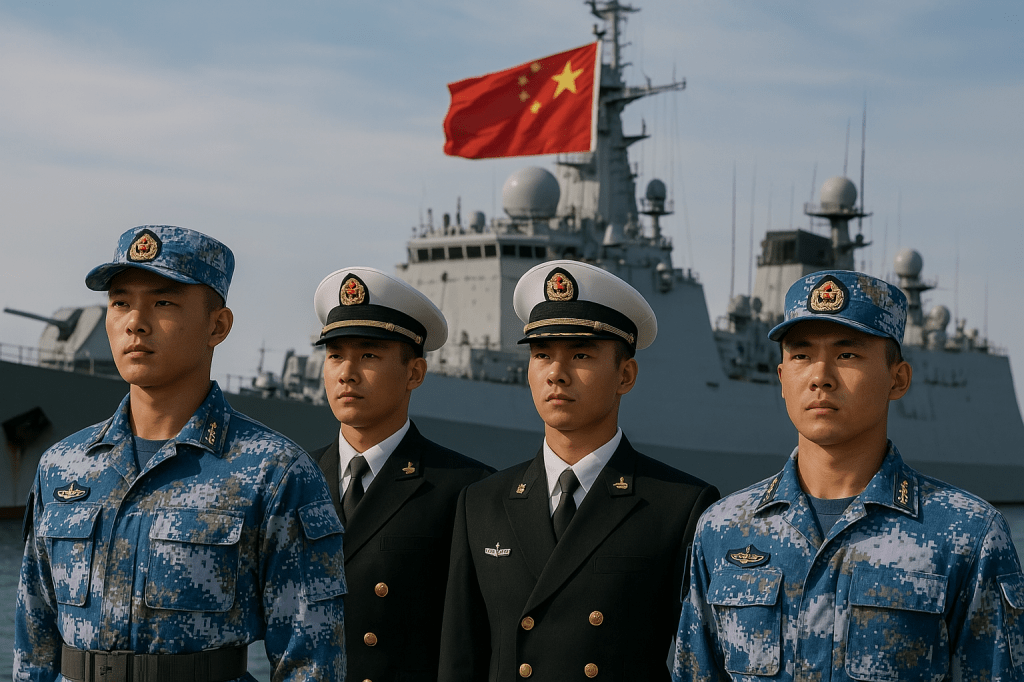
    Tensions in the Western Pacific continue to rise, with the People’s Republic of China making increasingly assertive moves to expand its political and military footprint across the region. These developments have not gone unnoticed. In a recent and widely publicized statement, General Romeo Brawner Jr., Chief of Staff of the Armed Forces of the Philippines, issued a stark warning to Philippine troops, particularly those stationed in Northern Luzon: prepare for a possible Chinese invasion of Taiwan.

    While this statement was quickly downplayed by the Marcos administration as precautionary rather than predictive, there is significant reason to believe that General Brawner’s warning is grounded in reality.

    Concrete Moves on the Ground

    China’s militarization of the South China Sea is no longer speculative. Artificial islands, equipped with runways, radar systems, and missile installations, now dot the once-empty waters of the Spratly and Paracel Islands. These installations give China not just a strategic advantage but also serve as de facto control points over a critical trade route through which about one-third of global maritime commerce passes.

    In addition to these fixed positions, China has recently conducted aggressive military exercises both near Taiwan and, surprisingly, off the coast of Australia. These drills included simulated blockade and amphibious assault operations near Taiwan, and live-fire naval exercises in the Tasman Sea. Such actions send a clear signal: Beijing is testing its ability to project power far beyond its shores, and it wants the world to take notice.

    Why Now?

    Several factors contribute to this renewed assertiveness:

    • China views Taiwan as a breakaway province and is determined to achieve reunification, a core tenet of President Xi Jinping’s long-term national vision.
    • The South China Sea remains vital to China’s energy and trade security.
    • Beijing is signaling strength amidst perceived U.S. retrenchment and the more transactional approach of current President Donald Trump, whose America-first policies have sometimes left allies questioning the reliability of U.S. support.

    Reactions from the Region

    Neighboring nations have not taken these developments lightly. The Philippines has revived and expanded its Enhanced Defense Cooperation Agreement (EDCA) with the United States, allowing for increased American troop presence and access to strategic bases. Japan, Australia, and India have strengthened security cooperation through the Quad alliance, while the AUKUS pact (Australia, the UK, and the U.S.) seeks to counterbalance Chinese naval dominance with advanced military technology sharing.

    Even smaller Pacific nations are becoming geopolitical flashpoints, with countries like the Solomon Islands engaging in military and economic partnerships with Beijing, much to the concern of Canberra and Washington.

    Yet, Limitations Remain

    Despite its aggressive posture, China’s ambitions are tempered by serious internal and external challenges:

    • Its economy is showing signs of strain due to demographic decline, real estate crises, and weakening consumer confidence.
    • Taiwan is not defenseless; it has invested heavily in asymmetric warfare capabilities and enjoys substantial, if unofficial, military backing from the United States.
    • A direct war with Taiwan could still invite U.S. intervention, along with its allies in the region, which Beijing may not yet be ready to face.

    A Prophetic Perspective

    From a biblical point of view, these rising tensions align with what the book of Revelation describes as a future global conflict involving massive armies from the east. Revelation 9:16 speaks of an army numbering 200 million. While China alone cannot field such a force, it is likely to form a future coalition with other eastern powers—most notably Russia and other countries whose current alliances may shift in the future.

    This eastern bloc, referred to in another biblical prophecy as the “kings of the east” (Revelation 16:12), will engage in a climactic war with a future European superpower, a revived Roman Empire in the end times. This prophesied war will occur after the decline of Anglo-American global dominance. By that time, the United States, Britain, and their allies will no longer be military superpowers or influential world players.

    This coming war between a European superpower and Asian nations will be so catastrophic that it would lead to the annihilation of humanity—if not for the divine intervention of Jesus Christ. As Matthew 24:22 says, “And unless those days were shortened, no flesh would be saved; but for the elect’s sake those days will be shortened.”

    The Only Source of True Peace

    The rise of Chinese militarism, the shifting of alliances, and the erosion of trust in old superpowers all point to a volatile world on the brink of unprecedented conflict. While human efforts at peace continually fall short, Bible prophecy assures us that God will intervene. Christ will return to put an end to human misrule and establish the Kingdom of God on earth—a government of true peace, justice, and righteousness (Isaiah 9:6-7).

    Until then, we must remain vigilant observers of global events, guided not by fear, but by faith in the sure word of prophecy and the hope of God’s coming Kingdom.

  • Trump’s Tariff on the EU: A Trigger for Economic Realignment with Prophetic Implications

    Trump’s Tariff on the EU: A Trigger for Economic Realignment with Prophetic Implications

    In a bold move that is already rippling through the global economy, U.S. President Donald Trump announced the imposition of a 25% tariff on certain products imported from European Union member nations, particularly targeting automobiles and auto parts. Framing the policy as a necessary act of economic defense, Trump cited several reasons: the protection of the U.S. auto industry, the need to correct trade imbalances, and to promote domestic manufacturing.

    The Reasons Behind the Tariffs

    According to the Trump administration, the United States has for too long tolerated unfair trade practices from the EU. European auto manufacturers, buoyed by state subsidies and benefiting from high U.S. market access, have allegedly disadvantaged American producers. Trump also pointed to the persistent trade deficit with Europe as proof that the playing field needs to be leveled. Lastly, in line with his “America First” agenda, Trump aims to bring jobs and factories back to the U.S. heartland.

     “For decades, we allowed foreign nations to take advantage of our workers, our industries, and our markets. Those days are over.” — President Donald Trump

    While these goals may sound patriotic, the method—tariffs—has proven to be a deeply flawed tool for addressing such systemic issues.

    The EU’s Strong but Strategic Response

    European Commission President Ursula von der Leyen responded swiftly and assertively. She called the tariffs unjustified and warned that the European Union would not submit passively.

     “Let me be clear: We did not start this. But we will respond with strength and unity. The European Union will always defend its people and its interests.” — Ursula von der Leyen

    Instead of backing down, the EU announced it would reinstate previously suspended retaliatory tariffs and introduce new duties targeting over €18 billion worth of American goods.

    But von der Leyen didn’t stop there. In a move with far-reaching implications, she declared that the EU would intensify efforts to remove internal trade barriers among member states, strengthening Europe’s economic unity and competitiveness. This is not just a tactical response—it is a strategic redirection that could reshape global economic power dynamics.

    The Problem with Tariffs: A Historical and Economic Perspective

    Historically, tariffs have not proven effective in resolving the very problems the Trump administration seeks to address. Here’s why:

    • Trade Deficits Persist: Tariffs do little to reduce overall trade deficits, which are more influenced by consumption patterns, currency values, and national savings rates than by trade policies alone.
    • Domestic Costs Rise: Tariffs often raise the price of goods for domestic consumers and businesses, resulting in job losses in downstream industries, as happened with steel tariffs in the early 2000s.

    “In an effort to help one industry, tariffs often hurt many others. For every job saved, others are lost in the supply chain.” — Peterson Institute for International Economics

    • Global Supply Chains Are Disrupted: Especially in industries like automobiles, where parts come from multiple countries, tariffs complicate logistics and increase production costs.
    • Retaliation Undermines Gains: Rather than bringing trade partners to heel, tariffs often provoke retaliation—escalating into trade wars that benefit no one.

    In short, the strategy of imposing tariffs often fails to achieve its intended outcomes. Worse, it can spark deeper divisions and strengthen the resolve of other nations to build alternative economic alliances.

    Unintended Consequences: Strengthening an Emerging Economic Giant

    By pushing the EU to become more internally unified and economically autonomous, these tariffs may ultimately accelerate the rise of a formidable economic force centered in Europe. A more integrated and efficient European single market—less dependent on the U.S.—could emerge as a dominant global player.

    In economic terms, this is more than just a response; it’s the birth of a new power structure. And in prophetic terms, it aligns with a picture the Bible has long painted.

    A Prophetic Fulfillment Unfolding

    The Book of Revelation warns of the rise of a powerful system called Babylon the Great, described as a dominant force influencing “all the nations” with its wealth, commerce, and political might:

    “For all the nations have drunk of the wine of the wrath of her fornication, and the kings of the earth have committed fornication with her, and the merchants of the earth have become rich through the abundance of her luxury.” — Revelation 18:3

    Many biblical scholars understand this as a future revival of the Roman Empire, centered in Europe—a union of nations wielding enormous economic and religious influence.

    This entity is prophesied to become the epicenter of global trade and power, even as the United States recedes into economic and geopolitical insignificance. The very actions that Trump hopes will “Make America Great Again” may instead be accelerating the transfer of influence to a new superpower arising out of Europe.

    Provoking Conflict

    The Bible gives practical wisdom on the folly of provocation:

     “As charcoal is to burning coals, and wood to fire, so is a contentious man to kindle strife.”

     — Proverbs 26:21

    Instead of resolving disputes, provoking a quarrel usually escalates the conflict, rarely resulting in the other party’s servile submission. This principle applies powerfully to international relations. Trump’s aggressive trade posture has not cowed the EU—it has galvanized it.

    An Economically Fortified Europe

    In the short term, the 25% tariff may appear to be a strong move to protect American jobs and industries. But in the long run, it may provoke the rise of a unified, economically fortified European power that is not just a rival but, prophetically, a system poised to dominate the world scene before the return of Jesus Christ.

    For those who understand the deeper forces at work—both geopolitical and spiritual—these developments are not random. They are part of a larger plan that is unfolding, exactly as foretold.

  • The “Freeloader” Fallacy and the Unraveling of the World America Built

    The “Freeloader” Fallacy and the Unraveling of the World America Built

    In recent years, voices from within the United States—most prominently in the current administration of President Donald Trump—have labeled America’s European allies as “freeloaders.” This sentiment, recently reinforced by leaked chats from senior U.S. defense officials, suggests that the U.S. is unfairly burdened by its role as the world’s security guarantor, while allies reap the benefits without paying their fair share.

    But this view, while emotionally resonant in a time of rising nationalism and budget pressures, fails to recognize a deeper historical truth: the so-called “freeloading” arrangement was designed by the United States itself after World War II.

    America’s Strategic Design After World War II

    When the dust of WWII settled, the United States stood as the dominant power in a shattered world. Europe lay in ruins. Germany, the nation that had ignited two world wars, was disarmed and divided. The Soviet Union, though an ally during the war, quickly emerged as a global ideological and military threat, expanding its grip over Eastern Europe and seeking to export communism globally.

    To prevent a third world war—and to contain the spread of Soviet communism—the U.S. devised a grand strategy. It would serve as a global security umbrella, deploying its vast military and nuclear power to deter aggression in both Europe and Asia.

    But this security guarantee came with conditions.

    Why the U.S. Took on the Burden

    In Europe, the U.S. created NATO in 1949, a collective defense alliance that essentially declared: “If the Soviets invade, America will respond.” This meant stationing tens of thousands of troops in Germany and elsewhere—not to dominate Europe, but to protect it, while also ensuring that Germany would never again re-arm on its own and potentially start another global war.

    The U.S. didn’t stop in Europe. In Asia, the United States went even further: it wrote Japan’s post-war constitution, explicitly forbidding it from maintaining offensive military forces. In exchange, the U.S. promised to defend Japan from any external threats. This kept the peace in the Pacific and ensured that Japan, once an imperial power, would remain a pacifist state under American protection.

    Aside from maintaining military presence in various points around the globe, this also meant that the U.S. Navy would patrol the world’s oceans and major trade routes, ensuring they remained open and secure for international commerce. This naval presence guaranteed that goods, products, energy supplies, and even people could travel safely across seas and continents, under the protection of a rules-based order that the U.S. enforced. In effect, the United States became the maritime guardian of global trade, allowing the modern economy to flourish.

    The Global Bargain

    What did America get in return?

    Quite a lot.

    These countries, under the U.S. defense umbrella, pledged to:

    • Side with the United States in the ideological and military contest of the Cold War. 
    • Maintain for the most part (or at least at the surface) democratic forms of governance, compatible with American values and institutions. 
    • Participate in a global economic system centered on free trade, the U.S. dollar, and open access to American markets, capital, and technology. 

    This arrangement created decades of global stability, fueled unprecedented economic growth, and cemented America’s leadership role in the world. Allies didn’t have to spend massive portions of their GDP on defense, because America did it for them—intentionally, and as a strategic choice.

    But this system also worked immensely in America’s favor:

    • It helped defeat the former Soviet Union.
    • It generated vast wealth for the United States.
    • It gave America access to the natural resources, talent, savings, and investments of allied nations.
    • It kept the U.S. economy resilient, allowing it to absorb shocks during oil crises, recessions, and financial collapses because the global economy was effectively built around it.

    This wasn’t just charity. It was a mutually beneficial arrangement that secured the U.S. economy and reinforced its global dominance across finance, technology, and military affairs.

    The Trump Doctrine and the Unraveling Order

    Enter the 21st century, and with it, growing discontent. Successive U.S. administrations urged allies to increase defense spending, but President Trump went further—publicly ridiculing NATO partners, questioning America’s commitment to mutual defense, and suggesting that the U.S. might not come to their aid.

    The recent leaks of U.S. defense officials calling allies “freeloaders” is not new rhetoric—it is the continuation of a growing American retrenchment from the very system it built. This shift is not just about burden-sharing; it’s about dismantling a world order that was held together by American security guarantees and economic leadership.

    And the consequences are enormous.

    As America pulls back:

    • Germany is rearming—a move unthinkable just a decade ago.
    • Japan is building new missile capabilities, breaking with its pacifist tradition.
    • France and others are openly discussing European “strategic autonomy,” no longer counting on U.S. support.

    The global system is fragmenting. Old alliances are fraying, and new coalitions may rise—not because of shared values, but based on shared interests, geography, or ethnicity. The future could very well be a world of competing blocs, exclusive clubs, and permanent insecurity.

    A Nation in Decline—By God’s Hand

    It is tempting to see all this purely through the lens of geopolitics. But for those who understand biblical prophecy, something deeper is taking place.

    America’s decline is not merely the result of policy decisions or shifting public opinion—it is a judgment from God.

    “My people are destroyed for lack of knowledge. Because you have rejected knowledge, I also will reject you… I will change their glory into shame.”  (Hosea 4:6–7)

    God blessed America with power, influence, and prosperity—but as the nation increasingly turns from Him, He is taking away its leadership role, allowing other powers to rise in its place. Whether those nations will be friendly or adversarial remains to be seen—but they will not uphold the same values or provide the same guarantees.

    What we are witnessing is not just the collapse of a U.S.-led global system. We are witnessing a divine reshaping of the world order, as foretold in Scripture.

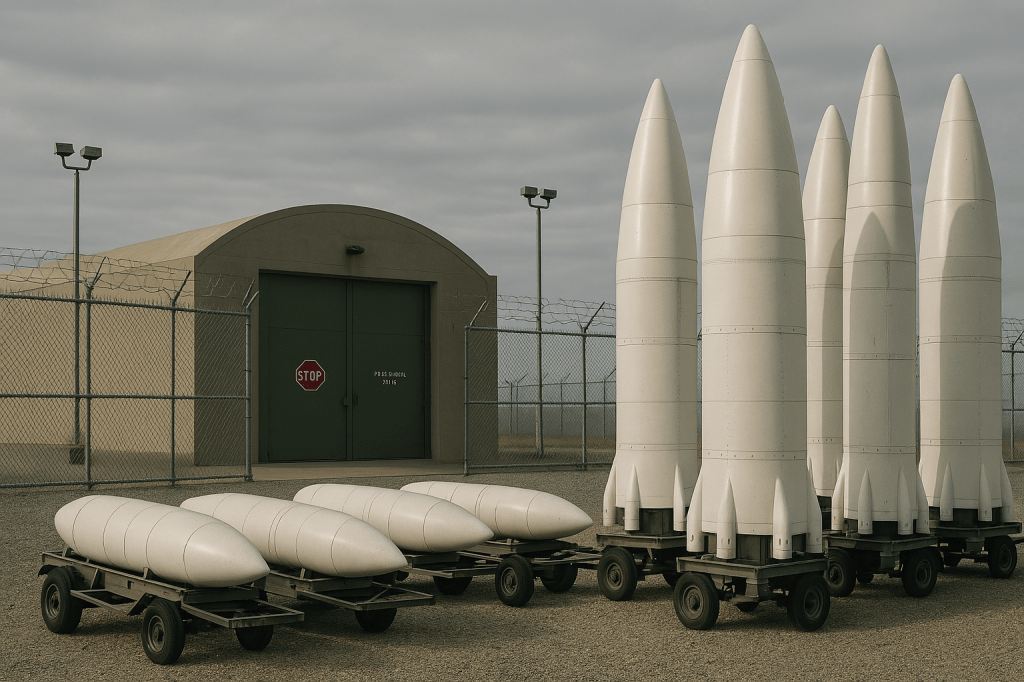
  • A World on Its Own: How U.S. Isolationism Could Ignite Nuclear Proliferation

    A World on Its Own: How U.S. Isolationism Could Ignite Nuclear Proliferation

    In the decades following World War II, the United States took on the role of global guarantor—projecting power, maintaining trade routes, and most crucially, protecting smaller and less powerful democratic nations from aggression. But what happens if America turns inward, choosing isolation over engagement?

    This question is no longer hypothetical.

    In recent years, a shift in American foreign policy—highlighted most strongly during the Trump administration—has signaled to allies that the era of unconditional security guarantees may be waning. And if these trends continue, we could see a more dangerous world unfold, one where countries feel forced to go nuclear.

    And according to the Bible, this dangerous trajectory is no surprise.

    The Domino Effect: When Trust in U.S. Security Wanes

    For decades, countries like Japan, South Korea, and Germany chose not to develop nuclear weapons—not because they couldn’t, but because they didn’t need to. America’s military umbrella offered them credible protection from hostile neighbors.

    But that trust has eroded.

    Donald Trump’s “America First” stance—and his questioning of NATO, U.S.-Korea defense cost-sharing, and alliances in Asia—sent shockwaves through the post-war security order. In a world where nations are expected to defend themselves, nuclear weapons are seen as the ultimate equalizer: cost-effective, fearsome, and a powerful deterrent.

    Here’s a look at the nations most likely to reconsider their nuclear stance:

    Countries Most Likely to Pursue Nuclear Weapons

     South Korea:

    • Stage: Actively debating nuclear options; majority public support for it.
    • Why: North Korea already has nukes. Trust in U.S. intervention is weakening.
    • Risk: Moderate to high. A South Korean bomb could spark a Northeast Asian arms race with Japan and possibly Taiwan.

     Japan:

    • Stage: Technically capable, politically restrained.
    • Why: China’s aggression and North Korea’s missile tests. Historical trauma from Hiroshima and Nagasaki still casts a long shadow.
    • Risk: Low for now, but a shift in public sentiment could change that rapidly if U.S. protection falters.

    Saudi Arabia:

    • Stage: Publicly stated it will go nuclear if Iran does. Working on enrichment capabilities.
    • Why: Regional rivalry with Iran, and increasing skepticism about U.S. staying power in the Gulf.
    • Risk: High. A Saudi nuclear weapon could spark proliferation across the Middle East—Egypt, Turkey, and even the UAE may follow.

    Taiwan:

    • Stage: Highly sensitive; has considered it historically.
    • Why: Threatened daily by China. Lacks formal U.S. defense treaty.
    • Risk: Very high. If Taiwan were to go nuclear, China could strike preemptively.

    Germany and NATO Europe:

    • Stage: Low, but not unthinkable. Some discussion of a “Eurodeterrent.”
    • Why: Russian aggression and fading U.S. leadership in NATO.
    • Risk: Moderate in the long term, especially if U.S. military presence in Europe is significantly reduced.

     The Dangers of a Nuclear Multipolar World

    Unlike the Cold War—with its terrifying but stable balance between the U.S. and the USSR—a multipolar nuclear world is inherently unstable. Here’s why:

    • More fingers on the trigger means more room for miscalculation, miscommunication, or panic during crises.
    • New nuclear states may lack the command and control systems to prevent accidental launches or rogue actions.
    • The temptation to strike first becomes stronger if countries fear a decapitating attack on their limited nuclear arsenals.
    • No central authority or treaty structure is strong enough today to manage so many nuclear actors.

    If the U.S. fully retreats from its role as the “security balancer,” the world may rapidly become a far more volatile and unpredictable place.

    A Prophetic Warning from Scripture

    What’s even more sobering is that the Bible foresaw a world like this—filled with fear, destruction, and the looming shadow of annihilation.

    Jesus Christ Himself gave a dire warning for the last days:

    “For then there will be great tribulation, such as has not been since the beginning of the world until this time, no, nor ever shall be. 

    And unless those days were shortened, no flesh would be saved; but for the elect’s sake those days will be shortened.”  Matthew 24:21–22 (NKJV)

    “No flesh would be saved.” Before the 20th century, that verse was almost poetic. But since the dawn of the nuclear age, it has become terrifyingly literal. Only in our modern era do we have the capacity to wipe out all life on Earth—something that aligns chillingly with Christ’s words.

    Hope Beyond the Chaos

    But this prophecy is not without hope. Christ said that for the elect’s sake, those days will be shortened. That means God will intervene before humanity completely destroys itself. His intervention will usher in the Kingdom of God—a time of peace, true justice, and righteous rule.

    The current chaos we see—the rising threat of nuclear war, the unraveling of international alliances, and the collapse of man-made peace—is not the end of the story. It is the beginning of the end of this world’s broken system.

    A new world is coming. And that’s the good news of the Kingdom of God.