Tag: politics

  • When a Signal Becomes a Siren: How a Digital Blunder Revealed a Geopolitical Rift

    When a Signal Becomes a Siren: How a Digital Blunder Revealed a Geopolitical Rift

    In a moment that would be almost comedic if it weren’t so alarming, a senior U.S. official recently added The Atlantic editor-in-chief Jeffrey Goldberg to a Signal group chat intended only for top-level military and government leaders. Inside this chat, senior members of the Trump administration—including Defense Secretary Pete Hegseth, National Security Adviser Mike Waltz, Secretary of State Marco Rubio, and Vice President JD Vance—were discussing a potential military strike against Houthi rebels in Yemen. The conversation contained what most observers would consider sensitive, if not outright classified, operational information: target locations, aircraft to be deployed, weapons systems, and timelines.

    Goldberg, stunned to find himself in the virtual war room, watched silently. The officials, apparently oblivious to his presence, continued discussing military actions with astonishing candor. Later, Goldberg went public with screenshots and a narrative of the incident, sparking outrage—not just in Washington, but across Europe and the broader international community.

    This was not just a breach of digital security. It was a breach of trust. And its fallout may mark yet another turning point in the slow erosion of America’s leadership among its democratic allies.

    Europe’s Growing Frustration

    Perhaps more damaging than the operational details were the opinions shared within the chat. Vice President JD Vance was quoted saying: “If you think we should do it, let’s go. I just hate bailing Europe out again.” To which Defense Secretary Hegseth replied: “I fully share your loathing of European freeloading. It’s PATHETIC.”

    European diplomats were stunned. While allied nations often have disagreements behind closed doors, these words—blunt, dismissive, and now public—cut deep. One EU diplomat told Politico that this leak confirmed their worst fears: that these officials were not merely posturing in public, but genuinely disdainful of their European counterparts. The comment reinforced the view that the U.S., under current leadership, no longer sees NATO and other alliances as relationships of mutual respect, but as burdens it reluctantly carries.

    Former British Defense Secretary Grant Shapps and other European leaders were quick to point out that UK aircraft were directly involved in supporting U.S. operations in the region. The characterization of Europe as passive and parasitic was not only wrong—it was insulting.

    The Cracks in the Alliance Are Widening

    This diplomatic fiasco didn’t happen in a vacuum. It comes on the heels of years of shifting American foreign policy—retreats from multilateralism, trade skirmishes, and a growing isolationist sentiment among U.S. voters and officials. Allies have already begun to question whether the U.S. can still be counted on in a crisis. Now, they are wondering whether they should even try.

    The European Union has long debated the need for “strategic autonomy”—building its own defense capacities independent of the U.S. This event may give that idea a new urgency.

    The Tail and Not the Head

    From a biblical standpoint, what we are witnessing is not just a political realignment. It is a spiritual reckoning.

    In Deuteronomy 28, God outlines the blessings for obedience and the curses for disobedience directed to the descendants of Israel. Among the warnings, He said:

    “The LORD will make you the head and not the tail… if you heed the commandments of the LORD your God” (Deuteronomy 28:13).

    But if Israel disobeyed, the reverse would happen:

    “The alien who is among you shall rise higher and higher above you, and you shall come down lower and lower. He shall be the head, and you shall be the tail” (Deuteronomy 28:43–44).

    America, modern descendant of the biblical tribe of Manasseh (a son of Joseph and a branch of the house of Israel), was once clearly the “head” of the nations—a global leader, a force for order, a beacon of democratic values. But it has increasingly turned its back on God’s commandments. It celebrates what God calls sin, exalts pride over repentance, and puts national interest before divine instruction.

    This latest diplomatic debacle is a reflection of that spiritual decline. A nation that cannot keep its communications secure, that mocks its allies behind their backs, and that fails to act with humility and integrity, is not fit to lead. It is becoming the tail.

    A Warning and a Wake-Up Call

    The Signal group chat leak is more than a tech blunder or diplomatic embarrassment. It is a sign of unraveling leadership—moral, strategic, and spiritual. America’s allies are losing faith. Its adversaries are watching closely. And its citizens are left wondering how the world’s most powerful nation could stumble so carelessly.

    But Scripture shows us the way back:

    “Return to Me, and I will return to you,” says the LORD of hosts (Malachi 3:7).

    America—and indeed all modern descendants of Israel—need to humble itself, and to restore the values that once made it great.

    Until then, the head will continue to become the tail.
  • Europe’s Economic Momentum: The European Council’s Latest Agreements and the Rise of a Powerhouse

    Europe’s Economic Momentum: The European Council’s Latest Agreements and the Rise of a Powerhouse

    In a rapidly shifting geopolitical landscape, the European Union (EU) is making bold moves to cement its place as an economic superpower. The recent European Council Summit in Brussels may not have made global headlines, but its economic agreements could very well mark a turning point—not just for Europe, but for the entire world order. These decisions, once fully realized, will enhance internal trade, fortify the EU against unpredictable external shocks like U.S. tariffs, and align with a prophetic trajectory long described in the Bible.

    A Strategic Shift Toward Internal Strength

    At the heart of the summit’s economic agenda was competitiveness—not merely as a buzzword, but as a detailed and actionable commitment. EU leaders emphasized the urgent need to reduce regulatory burdens, fast-track investments in innovation, and ensure that European businesses can scale and trade more freely across the Union.

    • Simplifying regulations to make compliance easier and faster
    • Cutting red tape to reduce barriers to entrepreneurship
    • Boosting strategic sectors like clean tech, digital infrastructure, and defense manufacturing
    • Mobilizing private and public investment toward a greener, more resilient economy
    • Accelerating the Capital Markets Union to unlock pan-European financing and reduce dependence on U.S. capital

    In other words, the EU is building an internal economic engine capable of powering itself—with or without favorable external trade relations.

    Shielding Europe from Unpredictable U.S. Trade Policies

    This effort to “strengthen the inside” comes at a critical time. The return of a Trump administration has revived protectionist trade policies, including new tariffs on EU steel, aluminum, and potentially automobiles and alcohol. These moves, often executed with little warning or negotiation, have left European exporters scrambling and trade diplomats frustrated.

    In contrast, the EU’s approach appears more rules-based, predictable, and business-friendly. Decision-making processes may be slow and consensus-driven, but once adopted, EU economic policies tend to provide long-term stability.

    This contrast is growing starker, especially as the United States seems to oscillate between multilateralism and nationalism with each new administration.

    By fortifying its internal market and expanding trade partnerships beyond the U.S.—toward Asia, Africa, and Latin America—the EU is buffering itself from the turbulence of American politics and global market shocks. It’s an economic strategy rooted in resilience, self-reliance, and forward-looking collaboration.

    A Biblical Powerhouse in the Making

    Revelation 17 speaks of a “beast power” rising out of the sea, forged by a union of nations and guided by a dominant political and religious force. Daniel 2 and 7 describe a succession of world empires, culminating in a final kingdom characterized by ten kings (or nations) giving their power to one system. This points to a unified European power—not necessarily the EU in its current form, but something that could easily emerge from it.

    When we see the EU laying the economic foundation for such unity—standardizing rules, integrating capital markets, and collectively responding to global threats—we are witnessing a transitional phase in prophetic fulfillment. An economic powerhouse is taking shape, not by accident, but by design—and it aligns strikingly with what the Bible foretells.

    More Than Just Economics

    The European Council’s latest agreements are not merely about economic growth—they are about sovereignty, identity, and preparation. By streamlining its internal market and lessening dependence on unpredictable allies, the EU is setting the stage for deeper integration—economically, politically, and possibly even militarily.

    Compared to the increasingly erratic trade policies of the United States, Europe’s methodical and cooperative approach looks not just appealing—but strategically superior. What we’re seeing is not just the evolution of a trading bloc. We may be witnessing the formation of a prophetic empire whose economic foundation is already being laid.

  • The Illusion of Peace: What Trump’s Ceasefire Means for Ukraine

    The Illusion of Peace: What Trump’s Ceasefire Means for Ukraine

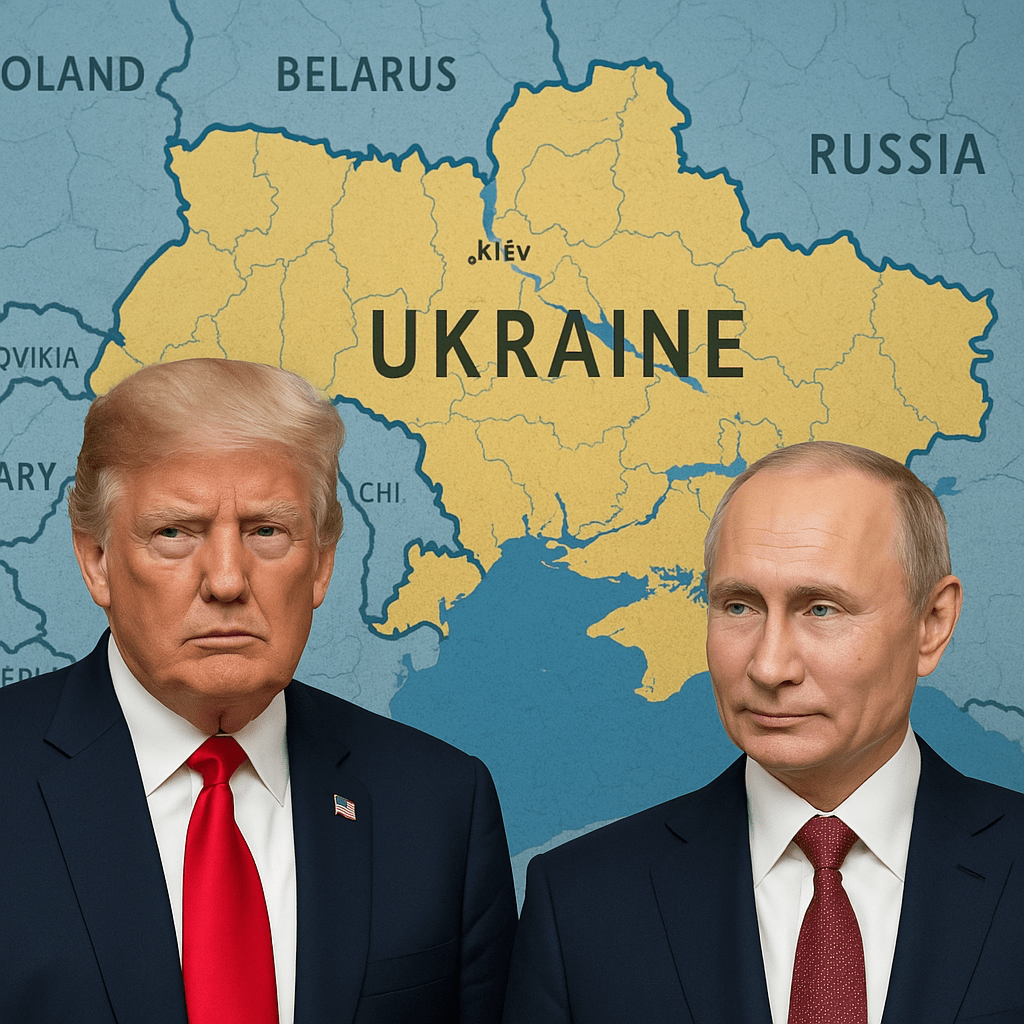
    The world watched closely as U.S. President Donald Trump and Russian President Vladimir Putin announced a series of agreements aimed at de-escalating the ongoing war in Ukraine. These agreements, however, appear to be stopgap measures rather than a genuine step toward lasting peace. While the immediate effect includes a 30-day halt to attacks on energy infrastructure and a prisoner exchange, there is little to suggest that these deals will prevent further bloodshed in the long run.

    A Ceasefire, But Not a Resolution

    Among the key points agreed upon in the Trump-Putin discussions were:

    • A 30-day ceasefire specifically focused on stopping strikes against Ukraine’s energy infrastructure.
    • A prisoner exchange, with both sides agreeing to release a set number of captives, including injured Ukrainian soldiers.
    • Technical discussions regarding a maritime ceasefire in the Black Sea and potential future negotiations to settle the broader conflict.

    Notably, Ukraine was not invited to participate in these negotiations. By excluding Ukraine from talks about its own future, Putin and Trump reinforced a troubling narrative: that Ukraine is merely a pawn in a larger ideological and geopolitical struggle between Russia and the West. This exclusion sends a dangerous message—that the future of sovereign nations can be determined by the world’s superpowers without their input or consent.

    A Temporary Reprieve Before the Next Assault?

    Russia has already demonstrated a pattern of using ceasefires to regroup and prepare for further military actions. The fact that Putin declined a broader ceasefire proposal suggests that his commitment to peace is, at best, conditional. History shows us that Russian military strategy often involves lulls in fighting to reorganize and strengthen its forces.

    For Ukraine, this means that while a brief respite from targeted infrastructure attacks may provide some relief, the fundamental threat remains unchanged. Without its direct involvement in the negotiations, Ukraine has no guarantee that the war will not intensify once this temporary agreement expires.

    Man’s Illusion of Peace

    As history has repeatedly shown, mankind is incapable of achieving real and lasting peace apart from God. The fragile agreements between Trump and Putin are a testament to this reality. The Bible warns us of this in Isaiah 59:8, which states,

    “The way of peace they do not know; there is no justice in their paths.”

    Time and again, leaders have sought to craft peace through negotiations, ceasefires, and treaties—only for those agreements to collapse under the weight of human ambition, deception, and self-interest.

    This pattern has played out throughout history:

    • The Treaty of Versailles ended World War I, only for World War II to erupt two decades later.
    • The Cold War ended with the collapse of the Soviet Union, yet conflicts between Russia and the West continue in various forms.
    • The Abraham Accords promised stability in the Middle East, yet war still persists between Israel and its adversaries.

    The so-called “peace” of this world is nothing more than a pause before the next war. Human history is a testament to the inability of man to secure true peace through diplomacy alone. The apostle Paul warned of this when he wrote in 1 Thessalonians 5:3,

    “For when they say, ‘Peace and safety!’ then sudden destruction comes upon them.”

    This verse perfectly describes the situation unfolding in Ukraine—leaders proclaiming peace while the storm clouds of war still loom on the horizon.

    The True Path to Lasting Peace

    The Bible makes it clear that genuine peace will only come with the return of Jesus Christ. Isaiah 2:4 tells us of a future time when Christ will establish true peace:

    “He shall judge between the nations, and shall rebuke many people; they shall beat their swords into plowshares, and their spears into pruning hooks; nation shall not lift up sword against nation, neither shall they learn war anymore.”

    This vision stands in stark contrast to the fleeting and fragile agreements of world leaders today. The peace of this world is temporary, riddled with compromises that fail to address the root causes of conflict. True peace will not come through human agreements but through the reign of Jesus Christ, who will establish righteousness, justice, and lasting harmony among nations.

    A World Awaiting True Peace

    The Trump-Putin agreements are yet another example of mankind’s inability to secure enduring peace. While they may provide temporary relief, they do not address the deeper issues fueling the conflict. As long as nations continue to rely on their own wisdom rather than seeking the guidance of God, wars and conflicts will persist.

    The world yearns for peace, but it will not find it through diplomatic maneuvering, fragile treaties, or political posturing. It will only come when the Prince of Peace establishes His Kingdom. Until then, mankind will continue to produce nothing more than temporary pauses before the next war.

  • Is America Losing Its Role as Democracy’s Champion?

    Is America Losing Its Role as Democracy’s Champion?

    For much of the past century, the United States has stood as the “leader of the free world”, championing democracy, human rights, and freedom for oppressed peoples. From its role in defeating fascism in World War II to its Cold War stand against communism, America positioned itself as the global defender of liberty. Through institutions like Voice of America (VOA) and Radio Free Europe/Radio Liberty (RFE/RL), it broadcast the values of democracy to nations suffering under authoritarian rule.

    But that era may now be ending. The recent defunding and dismantling of U.S.-funded media organizations, the withdrawal from international alliances, and America’s inward turn under the Trump administration signal a dramatic shift. The United States is no longer the unwavering beacon of freedom it once was. And perhaps, this decline is not merely political—but something that is coming from God.

    A Nation Turning Inward: The End of Global Leadership?

    A couple of recent decisions by the U.S. government reflect a profound change in direction:

    • The Shutdown of Voice of America and Radio Free Europe/Radio Liberty – These organizations, which once brought truth to people in authoritarian regimes, are now silent due to government defunding. Without them, America no longer counters the propaganda of China, Russia, and Iran, allowing these regimes to expand their influence unchecked.
    • Retreat from Global Institutions – The Trump administration has distanced America from international organizations such as the United Nations Human Rights Council and the World Health Organization, abandoning its role in shaping global policy.

    Many are asking: Is the United States still the champion of democracy, or is it becoming another empire in decline?

    God’s Judgment on America? The Biblical Perspective

    Throughout history, God has used oppressive governments or governments that make bad choices as a form of punishment to wake up His people from spiritual complacency. When ancient Israel and Judah turned away from God—embracing corruption, injustice, and idolatry—He allowed them to have weak or oppressive leaders which eventually led them to fall into captivity under the Assyrians and Babylonians.

    Could it be that America is following the same path?

    • The removal of America’s global influence may be God’s way of humbling a nation that has turned its back on Him.
    • The rise of authoritarian regimes across the world may be a wake-up call for God’s people to realize that America’s perceived power is nothing if not from God.

    America, like ancient Israel, has been blessed beyond measure—yet it has corrupted those blessings with moral decay, materialism, and rebellion against God’s laws. The consequences are now unfolding before our eyes.

    The Rise of a New Global Leader

    As America retreats, its enemies are scrambling to fill-up the leadership vacuum it is leaving.  Ultimately, another world power is being prepared to take its place—a power that will not defend democracy or individual freedom, but will instead dominate the world through authoritarian rule.

    • China’s expanding influence in Africa, Latin America, and the South Pacific is growing unchecked.
    • Russia’s aggressive expansion in Ukraine and beyond is being met with weak resistance.
    • The European Union, long divided, may soon unite under a strong leader who will reshape the world order.

    The world is being repositioned for a new era—an era foretold in Bible prophecy, where a global empire will rise and ultimately bring about the downfall of the United States and its influence.

    Daniel 2 and Revelation 17 speak of a final world power that will dominate in the last days. This power is coming into place now. And when it fully emerges, it will not tolerate America’s dominance.

    A Time to Seek God

    This is not a time for bitter political rivalries or misguided nationalism. This is a time to seek God.

    America is being removed from its position of global leadership, just as past empires were before it. God is allowing this so that His people will wake up and turn to Him before it is too late. Let those who have ears to hear, heed the warning.

  • Eastern Europe’s Protests: A Pivot Toward the EU and Away from Russian Influence

    Eastern Europe’s Protests: A Pivot Toward the EU and Away from Russian Influence

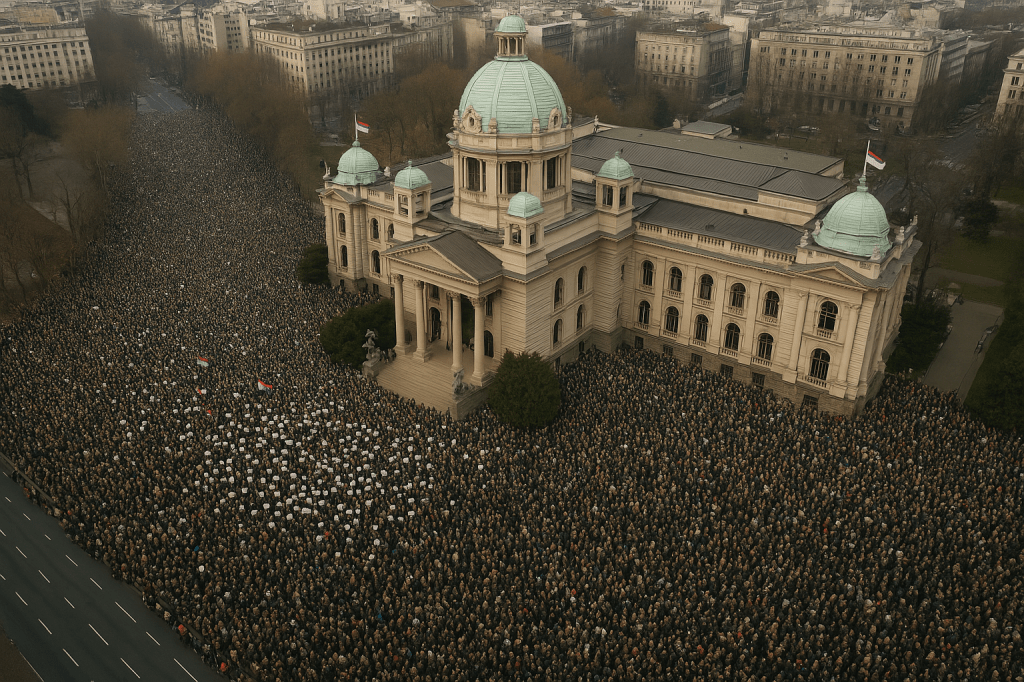
    The streets of Bratislava, Belgrade, Budapest, and Bucharest are alive with the voices of tens of thousands demanding a shift in their nations’ political trajectories. Across Slovakia, Serbia, Hungary, and Romania, citizens are rejecting the pro-Russian policies of their governments and calling for a stronger alignment with the European Union. This movement—growing in intensity—highlights a reality that runs counter to Vladimir Putin’s ambitions: rather than regaining dominance over Eastern Europe, Russia’s invasion of Ukraine has accelerated the ideological and political realignment of these nations toward Western Europe.

    The Backfiring of Putin’s Strategy

    When Russia launched its full-scale invasion of Ukraine in 2022, Putin envisioned a swift conquest that would solidify Russia’s sphere of influence and deter former Soviet and Warsaw Pact nations from deepening their ties with the EU and NATO. However, the opposite has occurred. Ukraine, once balancing between East and West, is now firmly committed to European integration. Finland and Sweden have abandoned neutrality and joined NATO, while Poland and the Baltic states have ramped up their defenses against potential Russian aggression.

    Now, the aftershocks of Russia’s aggression are manifesting in countries that were not initially on the frontlines. The recent protests in Slovakia erupted over Prime Minister Robert Fico’s overtures to Moscow. In Serbia, young demonstrators are rallying against government corruption and Russia’s influence over President Aleksandar Vučić. Romania has seen protests amid political maneuvering linked to Russian interference in its elections. Hungary, under Viktor Orbán, remains the Kremlin’s closest EU ally, yet anti-government demonstrations indicate a growing discontent with Budapest’s pro-Russian policies. These movements suggest a broader continental shift, as nations that once sat on the geopolitical fence are now tilting decisively toward Brussels and away from Moscow.

    The Historical Parallels: The Two Legs of Europe

    Interestingly, these very nations were once part of or influenced by either the Holy Roman Empire or the Byzantine Empire—two great pillars of European civilization that emerged from the division of the old Roman Empire. Slovakia and Hungary were historically connected to the Holy Roman Empire, while Serbia and Romania had ties to the Byzantine Empire.

    This historical context is striking. Europe today appears to be reconfiguring itself in ways reminiscent of its old self that is divided between the Holy Roman Empire in the west, and the Byzantine Empire in the east. These two regions have also long been shaped by the spiritual morals of the Catholic Church and Orthodox Christianity—two branches of the same faith that split centuries ago. This shared Christian heritage continues to influence their cultural and political identities, even as they navigate contemporary geopolitical shifts.

    Setting the Stage for Prophetic Fulfillment

    While these protests may not immediately result in Slovakia, Serbia, Hungary, or Romania officially pivoting toward the EU, they appear to be setting the trajectory toward a greater geopolitical realignment—one that aligns with biblical prophecy. Scripture foretells the re-emergence of a powerful entity rooted in the traditions of the Roman Empire. The Book of Daniel describes a final kingdom that will arise in the last days:

    “And the fourth kingdom shall be as strong as iron, inasmuch as iron breaks in pieces and shatters everything; and like iron that crushes, that kingdom will break in pieces and crush all the others. Whereas you saw the feet and toes, partly of potter’s clay and partly of iron, the kingdom shall be divided; yet the strength of the iron shall be in it, just as you saw the iron mixed with ceramic clay” (Daniel 2:40-41, NKJV).

    This divided kingdom, depicted in Nebuchadnezzar’s vision, symbolizes the final phase of the Roman system—comprising strong and weak elements, yet unified in a form of revived imperial authority. The protests across Eastern Europe, calling for closer ties to the EU, indicate that these nations are being pulled toward what could eventually form the prophesied final configuration of the Roman Empire.

    A Europe in Transition

    Russia’s war in Ukraine was intended to reassert Moscow’s dominance, but instead, it is accelerating Europe’s realignment along historical lines. The protests in Eastern Europe are not merely political events; they are part of a broader transformation that echoes the division of the old Roman world. Whether today’s movements will result in immediate policy shifts remains uncertain, but the trajectory is clear: countries in Eastern Europe that used to be part of, under the influence of, or had a close relationship with the old Roman Empire are moving away from Russian influence and gravitating toward a European-centered future.

    For those who understand biblical prophecy, these events provide yet another piece of the puzzle. The geopolitical restructuring we are witnessing today may well be part of the unfolding of God’s plan, leading to the re-emergence of the Roman system that will play a pivotal role in the end times.