Tag: trade wars

  • A Crisis of Confidence: America’s Waning Trust at Home and Abroad

    A Crisis of Confidence: America’s Waning Trust at Home and Abroad

    In recent months, the American public has witnessed a disturbing convergence: confidence in President Trump’s administration is slipping fast, and so too is the world’s faith in America’s leadership. What was once the most trusted economic and political power is now facing skepticism not only from its citizens but from traditional allies and partners across the globe. And while future elections may bring to office leaders with more polished diplomacy and less abrasive economic policies, the trajectory has already been set.

    America’s House Divided

    At home, President Trump’s sweeping tariffs, controversial government “efficiency” initiatives, and public messaging—often through his personal social media account—have triggered widespread concern. A recent wave of polling shows that a growing majority of Americans, particularly independent voters and moderates, now believe that his policies disproportionately benefit the ultra-wealthy at the expense of working families.

    Consumer sentiment has sharply declined. Inflation fears persist. Retirement portfolios have taken a hit due to market instability triggered by aggressive trade moves. Job insecurity looms as small businesses grapple with rising costs and an unpredictable regulatory climate.

    Even members of the President’s own party are uneasy. While Trump retains strong support from his core base, discontent is building among voters who feel increasingly alienated by policies that seem disconnected from their everyday struggles. The damage may not only cost Republican seats in the upcoming 2026 midterms—it could cast a long shadow over the political future of the party itself.

    Global Reverberations: The World Turns Away

    America’s trust problem doesn’t stop at its shores. Across Europe, Asia, and the Americas, traditional U.S. allies are quietly repositioning themselves. The trust that once undergirded decades of alliance-building is giving way to caution, skepticism, and contingency planning.

    • In Europe, nations like France and Germany are doubling down on strategic autonomy, investing in independent defense capabilities and economic blocs less reliant on Washington.
    • In Asia, countries such as Japan and South Korea are strengthening regional ties and trade networks, wary of American unpredictability.
    • In Canada and Mexico, recent U.S. trade barriers have fueled nationalist sentiment and accelerated diversification of export destinations.

    Even if American voters elect a more diplomatically-minded administration in the future, many foreign leaders will proceed with the assumption that U.S. foreign policy can shift dramatically every four years—because it already has, and likely will again.

    The world is preparing for a post-American order—one where America is just another actor in a multipolar stage, rather than the conductor of the global orchestra.

    The Long Tail of Miscalculation

    What does all this mean for ordinary Americans? It means that the consequences of current decisions will likely outlast the administration that made them.

    • Jobs: As trade relationships weaken, export-dependent industries could see layoffs and contraction.
    • Cost of Living: Higher tariffs mean higher prices for goods. Inflationary pressure could eat further into wages and savings.
    • Retirement: Market instability could continue to erode the value of retirement investments and long-term financial planning.
    • Entrepreneurship: The rising cost of doing business in an unstable trade environment will discourage innovation and risk-taking, especially among small- and medium-sized enterprises.

    This isn’t just about politics. It’s about livelihoods, futures, and the long-term credibility of the nation.

    A Spiritual Wake-Up Call

    But there is a deeper issue at play—one that cannot be solved by elections or economic adjustments. God is allowing the United States to reap what it has sown. A nation once known for upholding Judeo-Christian values is now visibly crumbling under the weight of self-interest, division, and moral confusion.

    Proverbs 14:34 (NKJV) says, “Righteousness exalts a nation, but sin is a reproach to any people.” America has forsaken sound Biblical principles in governance, economy, and culture. Now, it is beginning to experience the natural consequences: loss of respect, loss of trust, and closed doors of opportunity as global alliances take shape—without America at the table.

    Just as God warned ancient Israel through His prophets, the message for America is clear: “Return to Me.” The current economic and political upheaval is not merely the result of poor governance. It is a divine signal—a trumpet call to repentance, humility, and national course correction.

    The Decline of a Superpower

    As things stand now, the world is clearly transitioning into a post-American era. The signs are everywhere: reduced influence in multilateral forums, trade blocs forming without U.S. participation, allies hedging their bets, and voters at home feeling more uncertain about their future than ever before.

    This is not irreversible—but the window of opportunity is closing. The longer the nation delays its spiritual reckoning, the more severe the consequences may become.

    The future of America does not rest in new tariffs or clever policies. It rests in a return to truth, humility, and obedience to the God who once blessed it. Only then can the country begin to rebuild not just its economy—but its soul.

    (Note: The chart summarizing Pres. Trump’s net approval ratings were added to the post on April 26, 2025.)
  • When Giants Clash: The Escalating US-China Trade War and Its Global Fallout

    When Giants Clash: The Escalating US-China Trade War and Its Global Fallout

    “Whoever digs a pit will fall into it, and he who rolls a stone will have it roll back on him.” — Proverbs 26:27

    In recent weeks, the global economy has found itself shaken by the reverberations of an intensifying economic conflict between the world’s two largest economies: the United States and China. This escalating trade war, marked by tit-for-tat tariffs and nationalist posturing, is doing more than just strain bilateral relations—it is sending shockwaves across global markets, undermining confidence, disrupting supply chains, and threatening to plunge the world into a deeper economic downturn.

    What began as a bold attempt by the Trump administration to force fairer trade terms has spiraled into an economic quagmire that is now hurting not just China and the United States, but Europe, Asia, and beyond. And as Scripture wisely reminds us in Proverbs 26:27, those who dig pits for others may end up falling into them themselves.

    The Tariff Avalanche

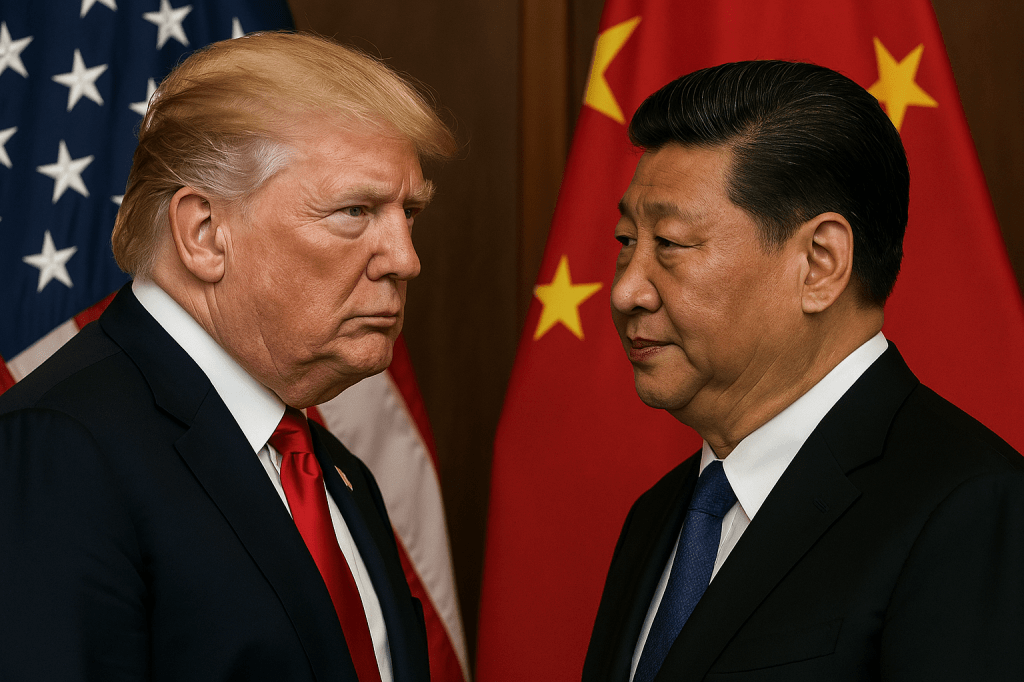
    The current phase of the trade conflict began with President Trump’s aggressive move to raise tariffs on Chinese goods to an astounding 104%. China swiftly retaliated with an 84% tariff on U.S. imports. What was once a calculated political maneuver has turned into an uncontrolled economic wildfire.

    President Trump’s justification for these tariffs—protection of American industries and the reduction of trade imbalances—may sound noble, but the fallout tells a different story. According to Mark Zandi, chief economist at Moody’s Analytics, “Tariffs are simply taxes on American businesses and consumers. They raise costs, disrupt supply chains, and reduce competitiveness—all while failing to achieve long-term economic gains.” Instead of sparking domestic revitalization, these tariffs have stoked inflation, hurt American exporters, and led to panic across the global financial system.

    Markets in Freefall

    The markets have not responded kindly to these developments.

    In the United States, the S&P 500 and Dow Jones Industrial Average plummeted by more than 10% in just two days, wiping out over \$6.4 trillion in market value. Treasury yields surged as bondholders fled in panic. Oil prices dropped by nearly 4% as fears of reduced global demand took hold. Major American corporations like Tesla, Walmart, and Apple have seen their valuations slashed, with some withdrawing earnings guidance entirely due to mounting uncertainty.

    Meanwhile, across the Atlantic, European markets echoed the turmoil. The Stoxx 600 fell by 4%, and investor confidence—already fragile due to geopolitical instability and energy concerns—was further shattered.

    In Asia, major indices tumbled as China’s retaliatory tariffs took effect. The selloff has been widespread, with both manufacturing hubs and emerging economies caught in the crossfire. The Australian Securities Exchange (ASX), heavily reliant on trade with China, experienced some of its sharpest losses in years. Similarly, the Philippine Stock Exchange Index (PSEi) plummeted by 4.3% on Monday, April 7, 2025, closing at 5,822.85—its lowest level since October 2022. This decline was part of a broader regional downturn fueled by escalating trade tensions between the U.S. and China, which intensified fears of a global recession.

    This is not simply a case of market jitters. It is a systemic reaction to misguided policies and reckless escalation.

    The Global Domino Effect

    Why does a trade war between just two countries—albeit powerful ones—affect the whole world?

    The answer lies in the interconnectedness of modern supply chains and global finance. For example, the U.S. semiconductor industry, which relies heavily on specialized manufacturing equipment and rare earth materials sourced from China, has seen project delays and increased costs due to retaliatory export controls. Likewise, the automotive sector has been disrupted as Chinese suppliers face heightened tariffs, making it harder for U.S. carmakers to obtain critical components affordably and on time. These disruptions highlight how deeply entwined international commerce has become—and how easily it can unravel when two economic giants lock horns.  China and the United States together account for more than 40% of global GDP. Countless countries rely on both for imports, exports, and manufacturing inputs. When these two giants fight, their economic pain reverberates through every port, every factory, and every market on the planet.

    Small and developing economies suffer disproportionately. Countries that supply raw materials to China or export agricultural goods to the U.S. face sudden demand shocks. International manufacturers are caught between rising costs and plummeting demand. Even sectors like tourism and education are affected as cross-border tensions rise.

    In this environment, economic nationalism is not strength—it is vulnerability.

    Bad Decisions, Bad Outcomes

    At the heart of this crisis lies a failure of leadership and a misunderstanding of economic principles. Instead of pursuing multilateral reforms or leveraging diplomatic channels, the Trump administration has chosen a unilateral and combative path. The decision to impose sweeping tariffs without an exit strategy or meaningful engagement has backfired spectacularly.

    The consequences are clear. Inflation is rising, markets are crashing, and international relationships are fraying. Even Elon Musk, controversially appointed to head the Department of Government Efficiency (DOGE), has been unable to stem the tide. His appointment has drawn mixed reactions both publicly and politically. Supporters cite his track record in private industry and believe his innovative mindset could bring efficiency to federal operations. However, critics point to his lack of government experience and raise concerns about conflicts of interest, especially given his leadership of companies that hold contracts with the U.S. government. Groups like Oxfam have called his role a sign of rising oligarchic influence in American democracy, while global protests have branded him an ‘unelected billionaire’ with undue influence over public institutions. His drastic cuts to the federal workforce may please some budget hawks, but they have done nothing to stabilize the broader economy.

    As Proverbs 26:27 wisely warns, when you roll a stone with harmful intent, you may find it rolling right back at you.

    Where Do We Go From Here?

    There is still time to change course—but it requires humility, wisdom, and the willingness to admit mistakes. De-escalation must become the priority. Strategic dialogue with China, reinvestment in multilateral institutions, and a clear plan to stabilize markets are essential steps.

    And perhaps more importantly, we must remember that economic policy is not just about numbers on a spreadsheet—it’s about people. Families are losing income. Businesses are closing. Investors are panicking. Behind every tariff is a worker, a farmer, or a retiree trying to survive.

    Self-Inflicted Crisis

    In a world groaning under the weight of wars, pandemics, and moral confusion, the last thing we need is a self-inflicted economic crisis. Yet here we are—watching as the world’s leading economies hurl stones and dig pits, forgetting that they too are standing on the edge.

  • Canada’s Trade Pivot: Preparing for the Rise of a European Economic Giant

    Canada’s Trade Pivot: Preparing for the Rise of a European Economic Giant

    In recent years, Canada has been aggressively diversifying its trade relationships, seeking to reduce its economic reliance on the United States. This shift has been prompted by the increasingly unstable and protectionist trade policies emanating from Washington, which have left even long-standing allies questioning the reliability of the U.S. as a trade partner. Amid these uncertainties, Canada has been forging deeper economic ties with countries and entities beyond the U.S.—most notably, the European Union (EU). While this strategy might seem a prudent move in the short term, there are profound prophetic implications that could reshape the global economic landscape in the not-so-distant future. According to biblical prophecy, a powerful European economic empire will rise, eventually transforming these trade partnerships into instruments of subjugation for nations like Canada, Britain, and the United States.

    The EU: A Sleeping Economic Giant Awakens

    Canada’s recent push to strengthen its economic ties with the EU is evident in the Comprehensive Economic and Trade Agreement (CETA), which has significantly boosted bilateral trade since its provisional implementation in 2017. Trade between Canada and the EU has seen robust growth, with Canadian exports to Europe rising sharply. However, this may only be the beginning of a much larger geopolitical shift.

    Prophetic Foundations: The Rise of a European Economic Powerhouse

    The Bible contains several passages that foretell the emergence of a powerful economic and political entity in Europe, often interpreted as a revived Roman Empire. This empire, described symbolically in prophetic books, is expected to dominate global trade and exert substantial influence over the nations, including those descended from ancient Israel, such as the United States, Britain, and Canada.

    Daniel 2 and Daniel 7 provide the foundational prophecies for understanding this future European superpower. In Daniel 2, King Nebuchadnezzar’s dream of a statue with different metal parts symbolizes successive world empires. The legs of iron and feet partly of iron and partly of clay represent the Roman Empire and its eventual revival in a divided form (Daniel 2:40-43). The ten toes signify a coalition of ten kings or nations.

    Similarly, Daniel 7:7-8, 23-24 describes a fourth beast, “dreadful and terrible, exceedingly strong,” with ten horns, symbolizing the same revived Roman Empire.

    Revelation 17 builds on Daniel’s vision, describing a beast with seven heads and ten horns. This beast is supported by a harlot, symbolizing a powerful religious influence allied with the political empire. The ten horns, representing ten kings, “receive authority for one hour as kings with the beast” (Revelation 17:12). This alliance suggests a temporary but powerful coalition that will dominate global trade and politics.

    Additionally, Revelation 18 depicts this future European superpower as an economic giant, a great commercial system symbolized by “Babylon the Great.” It describes a wealthy and influential trading empire whose goods are coveted by merchants worldwide (Revelation 18:11-13). The chapter highlights the immense economic power of this system and its impact on global commerce.

    Trading with the Beast: An Equal Partner Only for a Time

    In the initial stages of this emerging European superpower, Canada will likely benefit from what seems to be a mutually respectful and lucrative trade partnership. Canada’s rich resources—energy, minerals, and agricultural products—will be of great interest to the EU, and both sides will capitalize on these exchanges. This period will offer Canada an opportunity to secure new markets and hedge against U.S. trade uncertainties.

    However, biblical prophecy warns that this phase will be temporary. The Scriptures foretell that this resurrected Roman Empire, symbolically referred to as the Beast, will not remain content with equal partnerships for long. As its power grows, it will subjugate nations, including Canada, Britain, and even the United States. What begins as a promising trade relationship will gradually shift into a scenario where Canada and its allies find themselves economically and politically subdued. Trade agreements will be replaced with mandates, and sovereignty will be compromised.

    The Time of Jacob’s Trouble

    The Bible also speaks of a future period known as the “time of Jacob’s trouble,” a time of great distress and calamity for the modern descendants of ancient Israel, including the United States, Britain, and other English-speaking nations such as Canada.

    Jeremiah 30:4-7 explicitly describes this period:

     “Now these are the words that the Lord spoke concerning Israel and Judah. For thus says the Lord: ‘We have heard a voice of trembling, of fear, and not of peace. Ask now, and see, whether a man is ever in labor with child? So why do I see every man with his hands on his loins like a woman in labor, and all faces turned pale? Alas! For that day is great, so that none is like it; and it is the time of Jacob’s trouble, but he shall be saved out of it.’”

    Hosea 5:5 and Hosea 7:11 also warn of Ephraim (symbolic of Britain and its commonwealth nations, including Canada) seeking alliances with foreign powers, leading to downfall. Canada’s pursuit of new trade relationships is a rational response to current uncertainties, yet it is essential to recognize the broader prophetic context. The rise of a powerful European economic empire is not a distant possibility—it is an imminent reality foretold in biblical prophecy. For Canada, the path forward may offer short-term gains but also significant long-term risks. Understanding these prophetic truths can help us view today’s headlines with clarity and prepare for the dramatic changes that lie ahead.

  • The Intensifying Trade War Between the U.S. and Canada: A Sign of the Times?

    The Intensifying Trade War Between the U.S. and Canada: A Sign of the Times?

    For decades, the United States and Canada have enjoyed one of the most stable trade relationships in the world. As two of the largest economies in North America, their trade has been a cornerstone of economic prosperity, with goods and services flowing relatively freely across their borders. However, recent developments have shattered this harmony, plunging both nations into a trade war that is escalating by the day. This ongoing conflict is not merely an economic dispute—it is a reflection of deeper national and spiritual crises.

    U.S. Imposes High Tariffs Against Canada

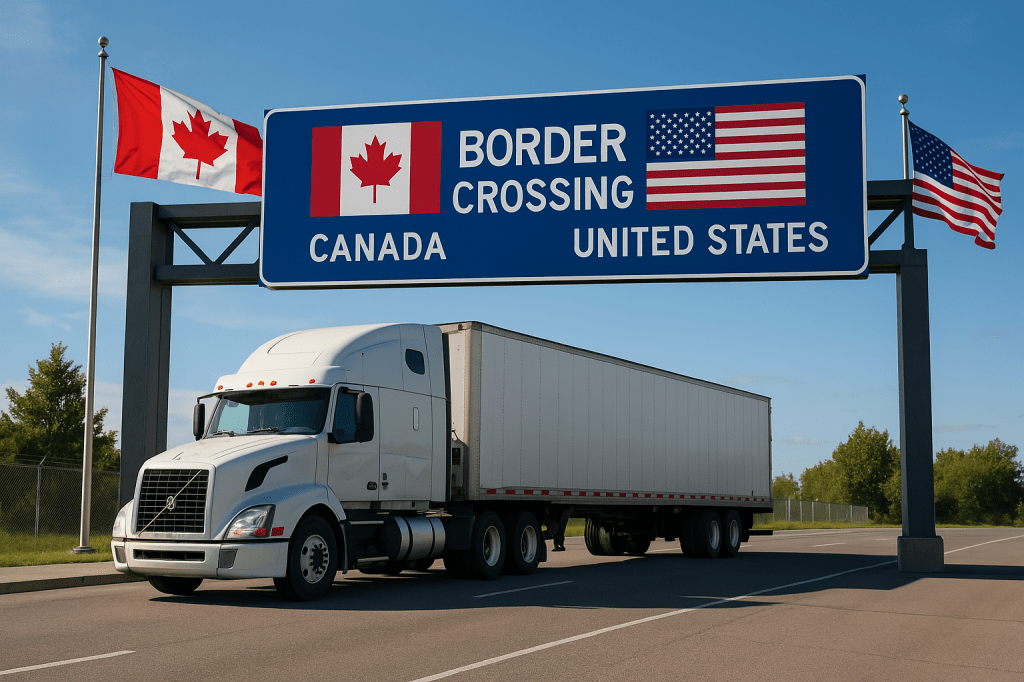
    The latest trade war between the U.S. and Canada erupted when the U.S. administration imposed a sweeping 25% tariff on most Canadian imports, citing national security concerns and unfair trade practices. This move has particularly affected industries such as steel, aluminum, energy, and agriculture. The Trump administration justified these tariffs under the premise that Canada was taking advantage of U.S. trade policies and that new restrictions were necessary to protect American jobs and manufacturing.

    However, these tariffs have had an unintended consequence: they have driven up costs for American businesses that rely on Canadian materials and have inflamed tensions between two historically close allies. Many U.S. industries, including the automotive sector, have already begun feeling the strain, and consumer prices are expected to rise as a result.

    Canada Strikes Back

    Unwilling to back down, Canada responded with retaliatory tariffs of 25% on $30 billion worth of U.S. goods, targeting industries that would hit American exporters the hardest. These tariffs include agricultural products such as dairy, pork, and wheat, as well as manufactured goods and consumer products.

    Canadian officials have called these measures a necessary defense against what they view as unjustified American economic aggression. However, these retaliatory actions have only fueled tensions, making it increasingly likely that the trade war will spiral out of control.

    A Trade War That Could Intensify

    The escalation of tariffs and countermeasures has set both nations on a dangerous economic path. If neither side relents, this trade war could intensify further, leading to:

    • Higher prices for consumers in both countries, as businesses pass on increased costs.
    • Job losses in industries affected by declining exports, particularly in agriculture and manufacturing.
    • Disruptions to supply chains, as companies look for alternative sources of materials and goods.
    • A weakened North American economy, with investment and economic growth slowing due to uncertainty and instability.
    • Geopolitical consequences, as Canada turns to other trade partners, potentially strengthening ties with the European Union and China while reducing economic dependence on the U.S.

    The Spiritual Perspective: God’s Judgment on the Nations

    The economic consequences of this trade war are significant, but there is a deeper, spiritual dimension to what is unfolding. When a nation sins against God, He allows it to have bad leaders or leaders who make bad decisions.

    Throughout the Bible, God has used poor leadership decisions and internal conflict as a form of judgment against nations that turn away from Him. The Bible repeatedly warns that when people forsake God’s commandments, He removes wise leadership and allows rulers to make choices that bring suffering upon the nation.

    Isaiah 3:1-4 warns that God removes strong and capable leaders when a nation rebels against Him, replacing them with weak and ineffective rulers.

    The intensifying trade war between the U.S. and Canada is not merely the result of poor economic policy—it is part of God’s judgment on nations that have abandoned His ways. Both the U.S. and Canada have increasingly embraced moral and spiritual decay, rejecting God’s laws and embracing secularism, materialism, and moral relativism. As a result, God has allowed leaders to make decisions that bring economic distress and division.

    A Nation Divided Against Itself

    Another form of divine judgment is internal division among a nation’s own people. The Bible speaks of times when God allowed the tribes of Israel to be at odds with each other as punishment for their disobedience.

    • Isaiah 9:21 says, “Manasseh devours Ephraim, and Ephraim devours Manasseh; together they are against Judah.” This passage describes infighting among the tribes of Israel, a symbol of how a nation that turns away from God becomes fractured.
    • Zechariah 11:14 states, “Then I cut in two my other staff, Bonds, that I might break the brotherhood between Judah and Israel.” When a people refuse to follow God, He allows them to be divided.

    The conflict between the U.S. and Canada—two nations historically linked by common heritage, trade, and culture—mirrors the divisions God allowed among the tribes of Israel. It is a modern example of how sin leads to internal strife and external consequences.

    A Warning from God

    What is happening between the U.S. and Canada is not just a political or economic event—it is part of God’s judgment. Nations that abandon righteousness and embrace sin will suffer the consequences, not only through poor leadership but also through economic hardship and internal divisions.

    As this trade war escalates, it serves as a sobering reminder that national prosperity is tied to obedience to God’s laws. If the U.S. and Canada truly want economic stability and peace, they must first return to God, repent of their sins, and seek His guidance in governance and policy.

    Until then, we can expect further economic turmoil, divisions among nations, and worsening leadership—not just between the U.S. and Canada, but throughout the world. This is not just an economic battle; it is a spiritual reckoning.

  • Trump’s New Tariffs and the Coming Economic Storm

    Trump’s New Tariffs and the Coming Economic Storm

    On February 1, 2025, U.S. President Donald Trump announced sweeping new tariffs on imports from Canada, Mexico, and China. These tariffs—25% on Canadian and Mexican goods and 10% on Chinese imports—have already set off a wave of concern about rising prices, supply chain disruptions, and potential retaliation from America’s largest trading partners.

    The official reasons for these tariffs range from protecting American jobs to addressing illegal immigration and trade imbalances. However, as Bible-believing Christians, we recognize that these economic tensions are not just political maneuvers—they are signs of the times.

    A World Moving Toward Conflict

    Bible prophecy warns that in the last days, nations will be at conflict with one another (Matthew 24:7). This includes conflict among nations that descended from the tribes of Israel such as the United States and Canada (Isaiah 9:21).  What we are witnessing now is an increase in economic warfare—where countries use trade and tariffs as weapons instead of military force.

    These new tariffs are not just about numbers on a trade balance sheet. They will affect everyday people—not just in America, but across the world.

    • Canada, Mexico, and China are some of America’s biggest trading partners. If they retaliate with their own tariffs, it could make American exports more expensive, hurting U.S. industries.
    • The cost of goods will rise. The U.S. relies on these three countries for cars, oil, electronics, food, and raw materials. Higher tariffs will increase prices for consumers and businesses alike.
    • The stock market may become volatile, leading to economic uncertainty and potential job losses.

    This is exactly what Bible prophecy describes—a world where nations struggle economically, and conflict escalates. Revelation 6:5-6 describes a time when basic necessities become extremely expensive, saying:

    “A quart of wheat for a denarius, and three quarts of barley for a denarius, and do not harm the oil and the wine.”

    This verse points to economic hardships, inflation, and scarcity—things we are beginning to experience today.

    How Should We Respond?

    If we know these things must come to pass, what should we do? How can we prepare, not just physically but spiritually?

    1. Be Thankful for What We Have

    We often take stable prices and economic security for granted. But as food, fuel, and everyday goods become more expensive, we should be reminded that every blessing we have comes from God.

    • 1 Thessalonians 5:18 says, “In everything give thanks; for this is the will of God in Christ Jesus for you.”
    • Instead of complaining about higher costs, let us cultivate a spirit of gratitude for the provisions we still enjoy.

    2. Rely on God for Our Needs

    The Bible reminds us that our true security is in God—not in the economy, governments, or world leaders.

    • Philippians 4:19 assures us: “And my God shall supply all your needs according to His riches in glory by Christ Jesus.”
    • No matter how expensive things become, God promises to care for His people.

    This does not mean we should be careless with our resources, but it does mean we should not live in fear and anxiety over economic hardships.

    3. Live Within Our Means

    As costs rise, wise financial stewardship is more important than ever.

    • Proverbs 22:7 warns us: “The rich rules over the poor, and the borrower is servant to the lender.”
    • Now is the time to cut unnecessary expenses, avoid debt, and prioritize needs over wants.
    • The principle of living simply and avoiding materialism will help us navigate these economic storms.

    4. Be More Productive in Our Work

    When economies face downturns, those who are diligent, skilled, and hardworking will fare better. The Bible encourages us to be industrious and proactive:

    • Proverbs 10:4 says, “He who has a slack hand becomes poor, but the hand of the diligent makes rich.”
    • Instead of worrying about economic shifts, we should focus on increasing our skills, working hard, and being resourceful.

    5. Help Those in Need

    Economic crises hit the most vulnerable people the hardest. As Christians, we have a duty to support those in need.

    • Proverbs 19:17 says, “He who has pity on the poor lends to the Lord, and He will pay back what he has given.”
    • If we are in a position to help others—whether by donating, offering jobs, or sharing resources—we should do so with a generous heart.

    Preparing for the Future

    The world is shifting into a period of great economic uncertainty. The escalation of trade wars and rising costs of living are just the beginning of greater global upheavals that Bible prophecy has foretold.

    But as followers of Christ, we do not need to fear. Instead, we must:

    • Be thankful for what we have
    • Trust God for our needs
    • Live wisely and within our means
    • Work hard and remain diligent
    • Help those in need

    Though the world is moving toward economic crisis and division among nations, we look forward to the Kingdom of God, where there will be true prosperity, fairness, and peace for all. Until then, let us stay faithful, be wise stewards, and continue to trust in God’s provision.