Tag: Trump Administration

  • The Fall from AAA: Understanding America’s Credit Downgrade and the Erosion of Economic Leadership

    The Fall from AAA: Understanding America’s Credit Downgrade and the Erosion of Economic Leadership

    For the first time in history, all three major credit rating agencies—Moody’s, Fitch, and Standard & Poor’s—have downgraded the United States from their highest credit rating. This development is not merely a technical footnote for economists; it is a flashing warning light on the dashboard of American leadership.

    The downgrade comes amid growing alarm over the United States’ fiscal trajectory, but to lay the blame on a single president or political party would be simplistic and misleading. As experts and analysts agree, the country’s worsening debt burden and erosion of fiscal credibility are the cumulative result of decades of political decisions, missed opportunities, and unsustainable economic strategies across multiple administrations.

    From AAA to AA+: A Timeline of Decline

    • Standard & Poor’s led the way in 2011 by downgrading the U.S. from AAA to AA+, citing political dysfunction during the debt ceiling crisis.
    • Fitch Ratings followed in August 2023, also reducing the U.S. to AA+ due to the continued failure to address rising debt and perceived erosion of governance standards.
    • Most recently, in May 2025, Moody’s cut the U.S. rating from Aaa to Aa1, expressing concern over the unsustainable fiscal path and rising interest burdens.

    All three agencies emphasized two recurring themes: growing federal debt and the inability of political leaders to forge a coherent, long-term fiscal policy.

    Multiple Administrations, Shared Responsibility

    The Obama Administration’s Role:

    • S&P downgraded the U.S. for the first time in 2011, during Obama’s presidency.
    • The downgrade stemmed from a political standoff over the debt ceiling.
    • S&P cited dysfunctional governance and lack of a credible debt-reduction plan.
    • Obama’s administration had implemented stimulus spending after the 2008 crisis.
    • Long-term structural reforms to reduce deficits were not achieved.

    The Biden Administration’s Role:

    • Passed large spending bills: the $1.9 trillion American Rescue Plan and the Inflation Reduction Act.
    • These programs aimed to improve equity, healthcare, and climate resilience.
    • Revenue projections supporting the spending were front-loaded and uncertain.
    • Proposed partial cancellation of federal student debt, further expanding fiscal obligations.
    • Contributed to increased deficits without matching long-term offsets.

    The Trump Administration’s Role:

    • Passed the 2017 Tax Cuts and Jobs Act, reducing corporate and individual taxes.
    • The tax cuts were not offset by spending cuts, adding over $1.9 trillion to deficits.
    • Enacted bipartisan stimulus during the COVID-19 pandemic, expanding short-term spending.
    • Proposed extending tax cuts via the “One Big Beautiful Bill” and adding Medicaid work requirements.
    • The Congressional Budget Office and economists warn these plans could add up to $4 trillion to future deficits.

    In short, the recent administrations made major fiscal decisions—tax cuts, spending increases, and entitlement promises—without long-term structural corrections, worsening the outlook that led to the downgrade.

    What the Downgrades Mean

    Short-Term Effects

    • The U.S. may face higher borrowing costs as investors demand a risk premium.
    • Markets could experience short-term volatility.
    • Institutional investors may shift away from U.S. government debt, depending on their internal credit-rating rules.

    Long-Term Effects

    • Rising interest payments: The U.S. already spends more on interest than on key programs like transportation or education. By 2035, interest could become the single largest budget item.
    • Reduced fiscal flexibility: Less room for future governments to respond to crises.
    • Erosion of dollar dominance: Countries exploring alternative reserve currencies may accelerate diversification.
    • Weakened global influence: Economic instability undercuts America’s ability to lead international alliances and institutions.

    Other Erosions of U.S. Economic Leadership

    The credit downgrades are part of a broader trend of declining American economic dominance:

    • Political dysfunction and polarization, repeatedly bringing the country to the brink of default.
    • Loss of manufacturing leadership to countries like China in sectors such as electronics, clean energy, and rare earth minerals.
    • Chronic underinvestment in infrastructure, education, and workforce development.
    • Overuse of financial sanctions, prompting countries to build alternatives to the U.S.-led financial system.
    • Global retreat from multilateralism, creating a leadership vacuum increasingly filled by China, the EU, and BRICS nations.

    These developments, taken together, indicate a slow erosion of trust in the U.S. model of governance and economic stewardship.

    What the Trump Administration Is Doing Now

    In the face of the challenges, the current Trump administration is attempting a broad economic overhaul:

    • Extending 2017 tax cuts through new legislation while proposing cuts to Medicaid and other programs.
    • Imposing universal tariffs to protect U.S. industries and address trade imbalances.
    • Creating the Department of Government Efficiency (DOGE) to cut federal waste—though early results have been mixed, and some savings have been disputed.
    • Promoting AI and crypto deregulation, positioning the U.S. as a tech leader while scaling back federal oversight.

    Yet these plans face intra-party opposition, legal challenges, and skepticism from economists who fear that supply-side reforms alone won’t close the growing fiscal gap.

    Many experts recommend a more balanced approach that includes raising certain taxes, reforming entitlement programs, investing in workforce development, and enforcing strict fiscal rules to curb excessive deficits. Some also call for bipartisan budget commissions to chart long-term solutions that outlast any single administration.

    The Bigger Picture: National Blessings and Divine Accountability

    The Bible also offers practical wisdom on matters closely tied to national and economic leadership. It highlights the importance of consulting with others before making major decisions (Proverbs 15:22, Proverbs 11:14) and emphasizes planning for the long-term, not just the short-term (Proverbs 21:5, Luke 14:28–30). Jesus emphasized the importance of counting the cost before committing to large undertakings (Luke 14:28–30). Proverbs and Ecclesiastes point to the value of investing in training and education (Proverbs 22:6, Ecclesiastes 7:12, 2 Timothy 2:2). Likewise, several passages stress the need to avoid unnecessary debt and wasteful expenses (Proverbs 21:5, Proverbs 22:7, Romans 13:8).

    Behind these economic and political developments lies a deeper spiritual truth often overlooked in policy analysis: national greatness is not solely a result of policy, productivity, or power—it is a blessing from God.

    The Bible reminds us:

    • “It is He who gives you power to get wealth…” (Deuteronomy 8:18)
    • “The Most High rules in the kingdom of men, and gives it to whomever He will…” (Daniel 4:17)
    • “I will break the pride of your power…” (Leviticus 26:19)

    These downgrades, debt troubles, and geopolitical setbacks may well be a wake-up call—a divine warning to a nation that has forgotten the Source of its blessings. America’s decline is not inevitable. But repentance, righteousness, and justice must once again be woven into its national fabric if restoration is to come.

    A Spiritual Correction

    The downgrade of America’s credit rating is not just a technical correction. It is a warning—financial, political, and spiritual. It reflects the weight of choices made across multiple administrations, the failure of political courage, and the neglect of fiscal prudence. Experts call for reform, accountability, and long-term vision. But ultimately, America’s revival—economic and moral—depends on its willingness to return to God, the true Source of national strength and prosperity.

    As Proverbs 14:34 says, “Righteousness exalts a nation, but sin is a reproach to any people.”

  • Habemus Papam: The Election of Pope Leo XIV and What It Means for the World

    Habemus Papam: The Election of Pope Leo XIV and What It Means for the World

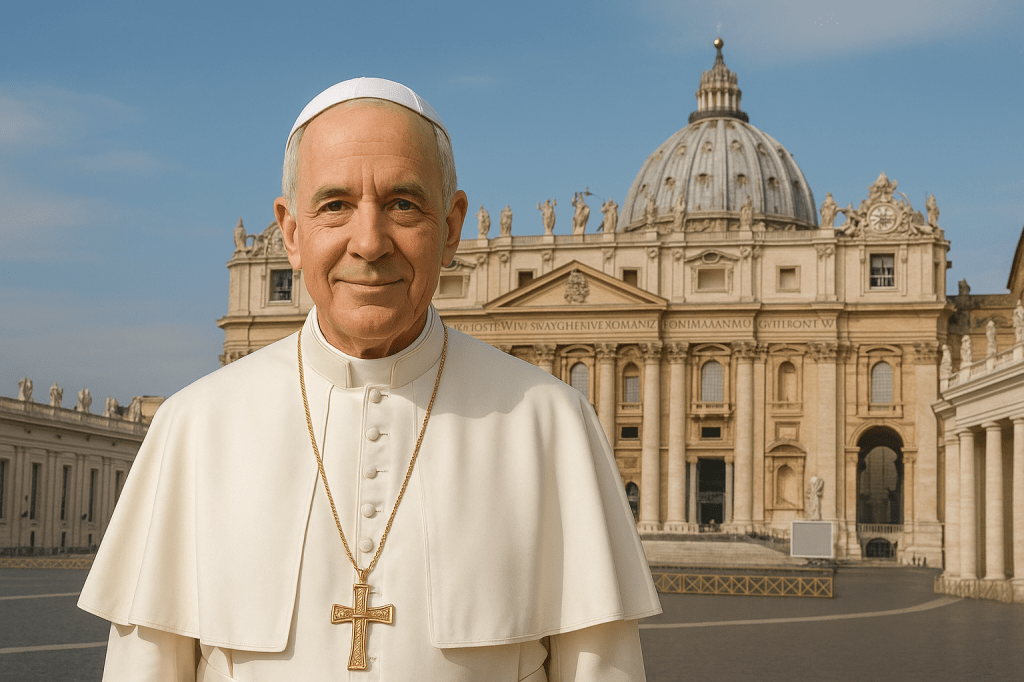
    On May 8, 2025, the white smoke billowed from the Sistine Chapel, and the world was introduced to a new leader of the Roman Catholic Church—Pope Leo XIV, formerly Cardinal Robert Francis Prevost. His election marks a series of historic firsts: the first American pope, a Peruvian citizen by naturalization, and a former missionary deeply rooted in the social struggles of Latin America. His ascension comes at a time of significant global and ecclesial uncertainty, and it sets the stage for a papacy that is likely to shape the moral conversation of the coming decade.

    A Career of Global Service and Grounded Ministry

    Robert Francis Prevost was born in Chicago in 1955. A member of the Order of Saint Augustine, he spent over two decades in Peru, where he served as seminary director, parish priest, and later as bishop of Chiclayo. His missionary experience embedded him in the lives of the poor and the working class, shaping his deeply pastoral, socially engaged worldview.

    In 2023, he was called to Rome to head the Dicastery for Bishops, where he oversaw episcopal appointments worldwide. Known for his humility, administrative competence, and theological depth, he was elevated to the rank of cardinal that same year. Despite not being among the most mentioned papabili (likely candidates), he emerged as a consensus choice among the cardinals—likely for his ability to bridge divides between progressive and traditional elements in the Church, and his clear moral compass grounded in lived experience.

    Why the Cardinals Chose Him

    Pope Leo XIV’s election most likely reflects the cardinals’ desire for a leader who could:

    • Build continuity with the reform-oriented legacy of Pope Francis;
    • Maintain doctrinal orthodoxy while remaining pastorally compassionate;
    • Strengthen the Church’s credibility in the Global South and restore trust in the West;
    • Speak with clarity on moral issues facing humanity—especially poverty, migration, and climate change.

    In a fractured world and an often polarized Church, Cardinal Prevost offered a steady, humble, and globally minded profile for the Catholic faithful.

    Immediate Challenges Facing Pope Leo XIV

    As Pope Leo XIV assumes leadership of the Church, several pressing issues await him:

    1. Restoring Trust Post-Abuse Crisis – Strengthening accountability and enforcing global safeguards against clerical abuse remain urgent.
    2. Reviving Faith in the West – The decline of church attendance and vocations, particularly in Europe and North America, requires pastoral creativity and bold evangelization.
    3. Guiding the Church Through the Synodal Path – He must balance unity and diversity as the Church explores broader participation of laity and women in Church life.
    4. Responding to Global Injustice – From migration and war to ecological degradation, the Pope’s moral voice is needed to challenge indifference and advocate for peace and dignity.

    The Papacy and the Trump Administration: Points of Tension

    Pope Leo XIV’s past criticism of Vice President J.D. Vance—especially Vance’s attempt to invoke Christian teachings to justify harsh immigration policies—suggests early signs of moral tension with the Trump administration. The Pope, then still a cardinal, publicly shared his disapproval, challenging leaders to uphold Christ’s call to love the stranger and care for the vulnerable.

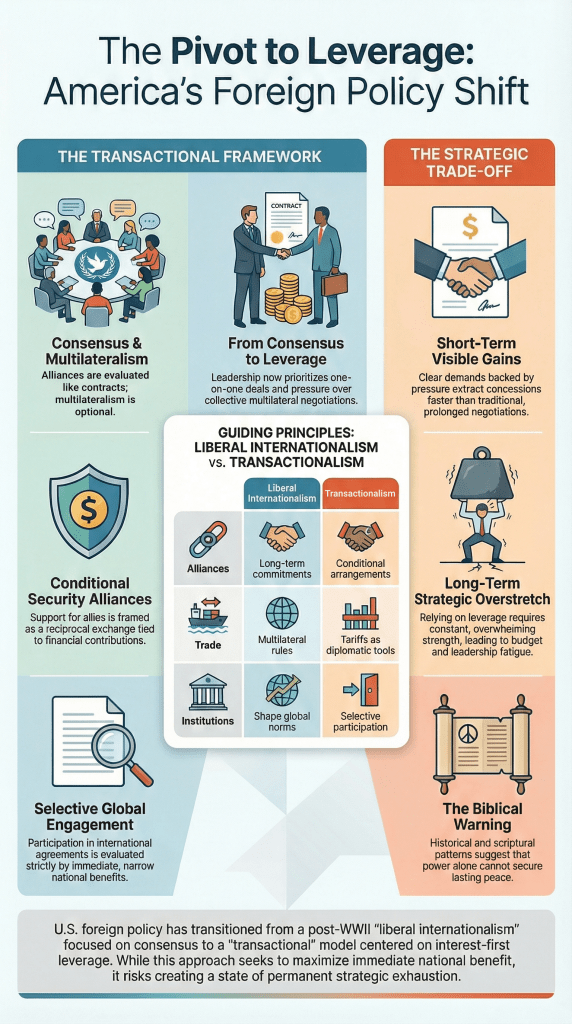
    This divergence is likely to deepen as the papacy of Leo XIV progresses. The Trump administration’s transactional approach to foreign policy, its perceived alignment with corporate elites over ordinary citizens, and its often blunt rhetoric on global affairs stand in contrast to Pope Leo’s vision of inclusive solidarity, ethical leadership, and compassionate governance.

    Implications for U.S.-Vatican Relations and Global Perception

    If the Trump administration continues to sideline moral diplomacy in favor of nationalist or plutocratic policies, Pope Leo XIV’s voice may further underscore the growing moral disconnect between American leadership and the broader international community.

    Rather than isolating the Vatican, such a divergence could have the effect of spotlighting the Vatican as a counter-voice of moral credibility—especially on issues like peace, economic justice, and climate ethics. It may also further weaken America’s global soft power, especially in the developing world, where the Church remains a deeply trusted institution.

    A Sobering Biblical Parallel

    God warned ancient Israel, “I will break the pride of your power” (Leviticus 26:19), and in another place, He foretold that His disobedient people would become “the tail and not the head” (Deuteronomy 28:44). These warnings directed to Israel of ancient times and that of today, underscore a timeless principle: when nations act unjustly and pridefully—abandoning moral responsibility—God allows their influence to wane.

    If America’s policies remain at odds with ethical norms and divine principles, and if it continues to marginalize the vulnerable in pursuit of transactional gains, it risks becoming morally irrelevant on the world stage. Pope Leo XIV’s papacy may serve as a prophetic mirror reflecting that divergence—and the twilight of America as a real superpower.

  • When Disruption Falls Short: Elon Musk’s Retreat from Government and the Fallout of DOGE

    When Disruption Falls Short: Elon Musk’s Retreat from Government and the Fallout of DOGE

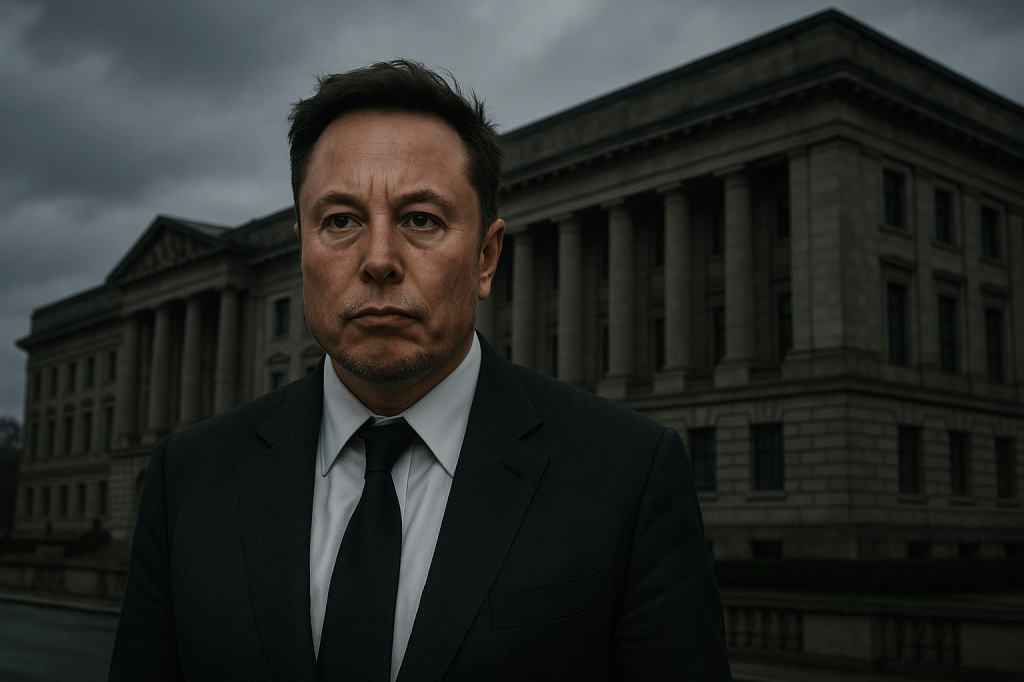
    Elon Musk, the entrepreneurial titan known for reshaping industries from aerospace to electric vehicles, is stepping back from his highly publicized role in the Trump administration’s Department of Government Efficiency (DOGE). Appointed as a special government employee with the ambitious task of slashing government waste and streamlining federal operations, Musk’s tenure began with high expectations and sweeping promises. But just over 100 days into his service, what remains is a trail of disrupted agencies, demoralized employees, and mounting public backlash—both domestic and international. Musk now plans to reduce his involvement to one or two days per week, effectively ceding ground in what was once heralded as a revolutionary approach to governance.

    The Goals of DOGE

    At its inception, DOGE was created with the audacious goal of cutting $2 trillion in federal expenditures—a figure that was quickly revised to $1 trillion, and then again to a more modest $150 billion. Musk envisioned a leaner, tech-driven bureaucracy that operated with Silicon Valley efficiency. He sought to eliminate redundancy, cancel unnecessary contracts, dismantle underperforming agencies, and reallocate resources to higher-priority areas.

    Performance and Outcomes

    While Musk’s team claims to have saved roughly $160 billion through contract eliminations and program shutdowns, these numbers are heavily contested. Critics argue that the long-term costs—ranging from severance packages and legal challenges to the collapse of critical public services—may far outweigh the reported savings. Over 250,000 federal employees were dismissed or forced into early retirement. Agencies like the Veterans Administration, Social Security Administration, and IRS saw drastic reductions in workforce and capacity, leading to service bottlenecks and citizen complaints.

    Public disapproval quickly followed. According to a Washington Post-ABC News poll, 57% of Americans disapproved of Musk’s handling of DOGE, and President Trump’s approval ratings dropped to the lowest 100-day rating in modern history. The backlash wasn’t confined to U.S. borders—global protests erupted under the banner of the “Tesla Takedown” movement, severely damaging Tesla’s brand and sales across Europe and parts of Asia.

    Why DOGE Fell Short

    One of the primary reasons Musk’s DOGE initiatives failed to achieve its objectives was his fundamental misunderstanding of the American bureaucratic system. Much like the man Christ referred to in Luke 14:28 who sought to build a tower but failed to count the cost, Musk launched into federal reform without first grasping the complexity of the system he aimed to dismantle. His private-sector instincts—cut quickly, move fast, disrupt—ran counter to the deliberate, often consensus-driven nature of government operations.

    Moreover, Musk’s top-down approach and lack of consultation with stakeholders proved costly. Programs were cut without warning, and agencies were reorganized without input from those who understood their functions best. As Proverbs 15:22 reminds us, “Without counsel, plans go awry, but in the multitude of counselors they are established.” Musk’s failure to heed this wisdom led to confusion, inefficiency, and widespread resentment.

    Possible Long-Term Effects

    The long-term effects of Musk’s DOGE leadership are still unfolding. While some supporters believe the cuts were a necessary first step toward a more sustainable government, others warn that the damage to institutional trust and public service capacity may take years to repair. Additionally, Musk’s political alignment and policy actions have left a scar on his global business image, potentially diminishing investor confidence and consumer loyalty.

    International markets, especially in Europe, have already responded. Tesla’s sales in France and Denmark have plummeted by over 50%, and the company has seen a 71% drop in profits in the first quarter of 2025. Simply stepping back from the Trump administration may not be enough to undo the reputational damage.

    Bold, Disruptive, Flawed

    Elon Musk’s foray into government reform was bold, disruptive, and ultimately flawed. Despite noble intentions and a few notable savings, his lack of preparedness, disregard for established systems, and failure to engage stakeholders have rendered the DOGE initiative more controversial than transformative. As he retreats to focus once more on his private enterprises, the experience stands as a cautionary tale: even the most brilliant innovators must count the cost—and seek counsel—before attempting to reshape something as complex as a nation’s government.

  • Vacuum of Power: Who Steps in If the U.S. Walks Away from Ukraine Peace Talks?

    Vacuum of Power: Who Steps in If the U.S. Walks Away from Ukraine Peace Talks?

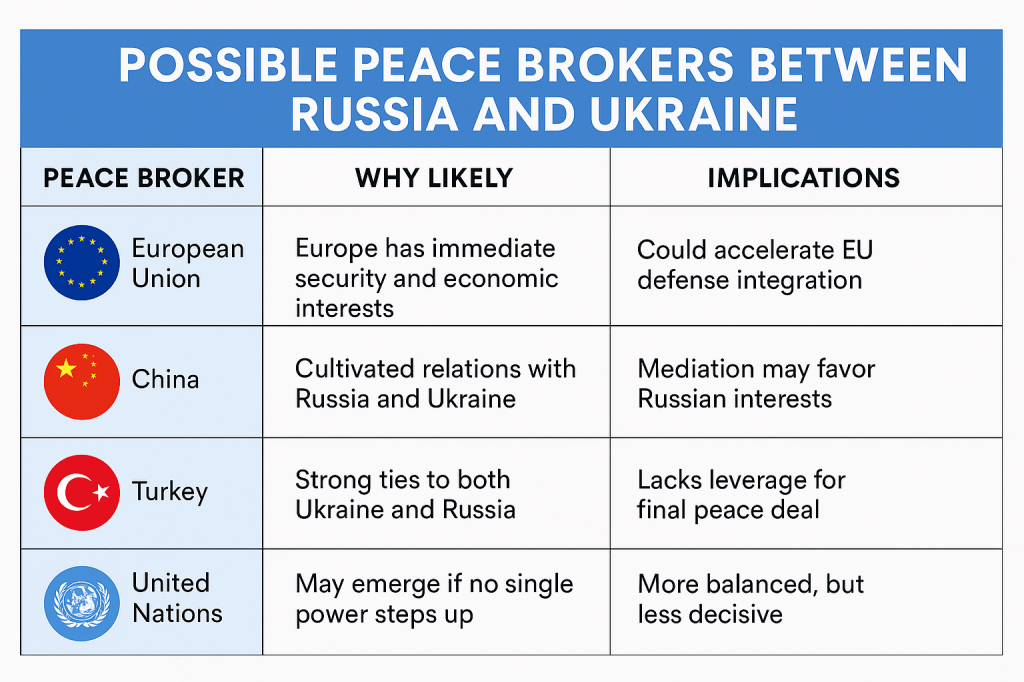
    As the Trump administration threatens to withdraw from peace negotiations between Russia and Ukraine, a dangerous vacuum is forming. If the U.S. steps back, others are ready to step in—and the one best poised to fill that role is the European Union.

    Europe, more than any other region, has direct security and economic stakes in the outcome of the war. Should the EU, led by nations like France and Germany, manage to broker peace where Washington falters, it would not only mark a diplomatic victory—it would solidify Europe’s emerging role as a global leader in world affairs.

    This shift is not just geopolitical—it aligns with Biblical prophecy. Scripture foresees a powerful union rising from the heart of Europe, more dominant than the United States, just before the return of Christ (Daniel 7:7-8; Revelation 17:12-13). The world may soon witness the rise of a superpower that reshapes global alliances—and prophecy warns that it will wield great influence, for better or worse.

    “The ten horns which you saw are ten kings… they receive authority for one hour as kings with the beast. These are of one mind, and they will give their power and authority to the beast.” – Revelation 17:12–13

    As the U.S. recedes from the center of global diplomacy, Europe’s moment may be dawning.

  • Tariffs Rolled Back: China Sees an Opening, America Risks More Than It Thinks

    Tariffs Rolled Back: China Sees an Opening, America Risks More Than It Thinks

    After months of aggressive tariffs targeting Chinese goods, the U.S. has reversed course—partially rolling back some of the very tariffs it once defended as “necessary pain.” The reason? Mounting economic pressure, international backlash, and rising consumer costs at home.

    Yet this isn’t just about tariffs. It’s about how nations perceive strength, foresight, and credibility.

    China’s Calculated Calm

    Beijing, unsurprisingly, has not celebrated loudly. Instead, it’s using this rollback to present itself—especially to Asia-Pacific nations—as a reliable, stable, and forward-looking economic partner.

    China’s quiet confidence suggests it’s playing a long game: 

    • Let America appear reactive and short-sighted 
    • Fill the vacuum left by U.S. instability 
    • Build loyalty among countries hurt by U.S. tariffs 

    Allies Are Watching—and Worrying

    To many U.S. allies, this isn’t just a course correction—it’s another example of incoherent policy-making. First came the shock tariffs. Now comes the quiet reversal. The message? 

    “America acts first, thinks later.”

    As alliances strain, countries like Japan, South Korea, Vietnam, and even the EU are increasingly looking to China—not the U.S.—for consistency.

    What the Bible Says About Leadership and Judgment

    Isaiah 3:4 is strikingly relevant here:  “I will make mere youths their officials; children will rule over them.”

    God sometimes allows national leaders to act impulsively and without wisdom as a wake-up call for His people. It’s a warning to turn back to God’s principles of justice, truth, and humility.

    Where This Is Headed

    If America continues down this path of erratic policymaking, it risks more than economic losses. It risks becoming a symbol of declining global leadership, fractured alliances, and moral confusion. Meanwhile, China continues to craft its narrative as the stabilizer in a chaotic world order.