Tag: trump

  • A Pause in the Storm: President Trump’s Tariff Reversal and the Wisdom of Many Counselors

    A Pause in the Storm: President Trump’s Tariff Reversal and the Wisdom of Many Counselors

    The global markets held their breath—and then exhaled—when President Donald Trump announced a sudden 90-day pause on the sweeping tariffs he had imposed on virtually all U.S. trading partners. Except for China, whose tariffs were raised sharply to 125%, most nations received a temporary reprieve from what many feared would become a full-scale global trade war.

    But this “pause” has analysts and world leaders wondering: is this merely a temporary detour, or the beginning of a quiet retreat?

    Why the Sudden Shift?

    The official narrative from the Trump administration is that this is a “strategic pause”—a window of time to negotiate bespoke trade arrangements with allies and economic partners. Treasury Secretary Scott Bessent noted that the 90-day halt gives space for talks with countries like Japan, Vietnam, and the European Union.

    Yet beneath this diplomatic language lies a more complex—and revealing—story.

    Internal Dissent

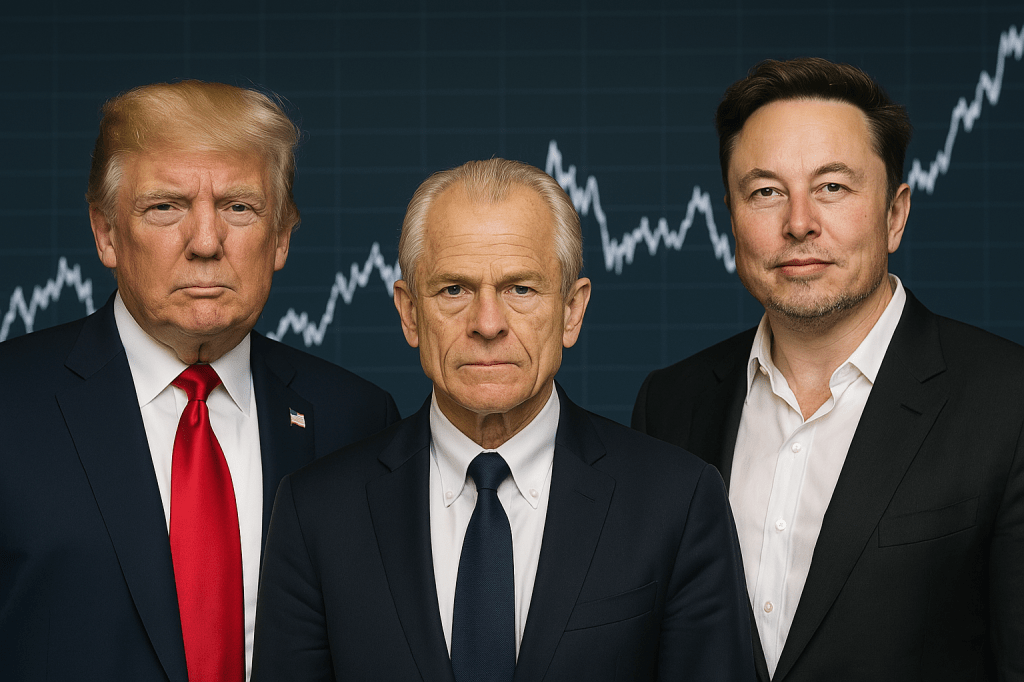
    While some cabinet members like Commerce Secretary Howard Lutnick and trade advisor Peter Navarro pushed aggressively for the tariffs, others sounded the alarm. Treasury Secretary Bessent and National Economic Council Director Kevin Hassett reportedly warned of the dangers of a unilateral tariff policy, urging a more measured and consultative approach.

    Their concerns proved prescient.

    Elon Musk’s Warning

    One of the loudest voices from the private sector was Elon Musk, who called for a zero-tariff environment between Europe and North America and warned that blanket tariffs would disrupt Tesla’s global supply chain. Musk’s businesses depend on internationally sourced components, and the tariffs would significantly raise production costs.

    Predictably, Navarro dismissed Musk’s position as self-serving. But the economic fallout soon made it clear that Musk and others raising red flags were not speaking out of self-interest alone—they were highlighting systemic risks to American consumers, workers, and the broader economy.

    Economic Turbulence and Market Recoil

    The markets responded with a wild swing of emotion.

    At first, optimism over the tariff pause sent the S&P 500 up 9.5% in a single day—one of the largest one-day rallies in its history. But the euphoria didn’t last. Investors quickly realized that no one knows what happens on Day 91. Will the tariffs resume in full force? Will exceptions be granted selectively? The lack of clarity caused a sharp sell-off the next day, with the Dow losing over 2,000 points.

    Businesses across the country remain in limbo. Some are delaying hiring and investments. Others are considering shifting supply chains abroad—ironically, the opposite of the tariffs’ intended effect.

    Why Call It a “Pause” Instead of a Reversal?

    Calling it a “pause” allows the President to preserve political face. It offers flexibility: he can later say he gave America’s partners a chance to negotiate—and if they didn’t, he had no choice but to proceed.

    This language also keeps pressure on foreign governments while maintaining domestic leverage. But make no mistake: if the tariffs are reinstated, the economic whiplash could be far worse the second time around. The credibility of U.S. trade policy is already in question. A re-escalation could deepen inflation, strain key industries, and damage America’s standing in global markets.

    A Lesson in Leadership: The Value of Many Counselors

    Could this turmoil have been avoided? Almost certainly yes.

    Had the administration listened early on—not only to internal critics but also to voices like Elon Musk’s—much of this volatility might have been spared. The issue wasn’t merely policy—it was isolation in decision-making, surrounded by yes-men and ideological hardliners.

    The Bible has long taught the wisdom of diverse counsel:

    “Where there is no counsel, the people fall;
    But in the multitude of counselors there is safety.”
    (Proverbs 11:14)

    “Without counsel, plans go awry,
    But in the multitude of counselors they are established.”
    (Proverbs 15:22)

    Scripture reveals that even great leaders falter when they ignore wise advice. King Rehoboam rejected the seasoned advice of elders in favor of arrogant young men, splitting the kingdom of Israel (1 Kings 12). Moses thrived by heeding Jethro’s advice to delegate (Exodus 18).

    The principle is clear: humility and wise counsel go hand in hand. National leaders who isolate themselves in echo chambers risk decisions harmful to their reputation and their people.

    Adjusting the Course

    President Trump’s tariff pause may signal rethinking—or merely a tactical maneuver. Its lessons should not be missed. Listening only to affirming voices leads to blind spots. Strong leadership isn’t about always being right, but about being wise enough to adjust course when consequences become clear.

    The Bible’s wisdom remains timeless. If only more leaders today took it to heart.
  • When Giants Clash: The Escalating US-China Trade War and Its Global Fallout

    When Giants Clash: The Escalating US-China Trade War and Its Global Fallout

    “Whoever digs a pit will fall into it, and he who rolls a stone will have it roll back on him.” — Proverbs 26:27

    In recent weeks, the global economy has found itself shaken by the reverberations of an intensifying economic conflict between the world’s two largest economies: the United States and China. This escalating trade war, marked by tit-for-tat tariffs and nationalist posturing, is doing more than just strain bilateral relations—it is sending shockwaves across global markets, undermining confidence, disrupting supply chains, and threatening to plunge the world into a deeper economic downturn.

    What began as a bold attempt by the Trump administration to force fairer trade terms has spiraled into an economic quagmire that is now hurting not just China and the United States, but Europe, Asia, and beyond. And as Scripture wisely reminds us in Proverbs 26:27, those who dig pits for others may end up falling into them themselves.

    The Tariff Avalanche

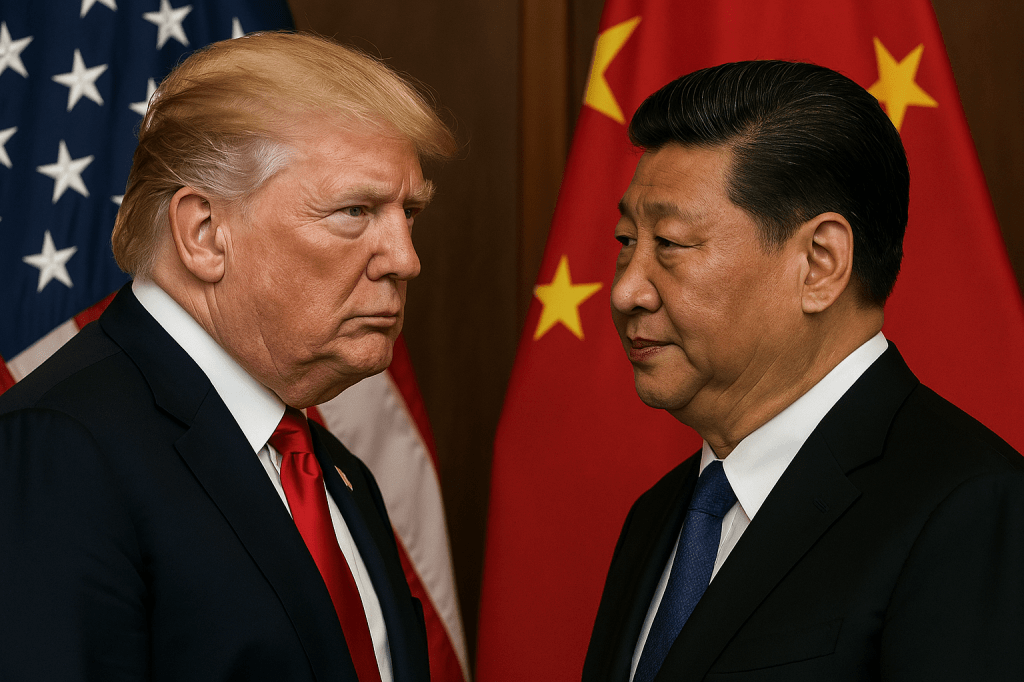
    The current phase of the trade conflict began with President Trump’s aggressive move to raise tariffs on Chinese goods to an astounding 104%. China swiftly retaliated with an 84% tariff on U.S. imports. What was once a calculated political maneuver has turned into an uncontrolled economic wildfire.

    President Trump’s justification for these tariffs—protection of American industries and the reduction of trade imbalances—may sound noble, but the fallout tells a different story. According to Mark Zandi, chief economist at Moody’s Analytics, “Tariffs are simply taxes on American businesses and consumers. They raise costs, disrupt supply chains, and reduce competitiveness—all while failing to achieve long-term economic gains.” Instead of sparking domestic revitalization, these tariffs have stoked inflation, hurt American exporters, and led to panic across the global financial system.

    Markets in Freefall

    The markets have not responded kindly to these developments.

    In the United States, the S&P 500 and Dow Jones Industrial Average plummeted by more than 10% in just two days, wiping out over \$6.4 trillion in market value. Treasury yields surged as bondholders fled in panic. Oil prices dropped by nearly 4% as fears of reduced global demand took hold. Major American corporations like Tesla, Walmart, and Apple have seen their valuations slashed, with some withdrawing earnings guidance entirely due to mounting uncertainty.

    Meanwhile, across the Atlantic, European markets echoed the turmoil. The Stoxx 600 fell by 4%, and investor confidence—already fragile due to geopolitical instability and energy concerns—was further shattered.

    In Asia, major indices tumbled as China’s retaliatory tariffs took effect. The selloff has been widespread, with both manufacturing hubs and emerging economies caught in the crossfire. The Australian Securities Exchange (ASX), heavily reliant on trade with China, experienced some of its sharpest losses in years. Similarly, the Philippine Stock Exchange Index (PSEi) plummeted by 4.3% on Monday, April 7, 2025, closing at 5,822.85—its lowest level since October 2022. This decline was part of a broader regional downturn fueled by escalating trade tensions between the U.S. and China, which intensified fears of a global recession.

    This is not simply a case of market jitters. It is a systemic reaction to misguided policies and reckless escalation.

    The Global Domino Effect

    Why does a trade war between just two countries—albeit powerful ones—affect the whole world?

    The answer lies in the interconnectedness of modern supply chains and global finance. For example, the U.S. semiconductor industry, which relies heavily on specialized manufacturing equipment and rare earth materials sourced from China, has seen project delays and increased costs due to retaliatory export controls. Likewise, the automotive sector has been disrupted as Chinese suppliers face heightened tariffs, making it harder for U.S. carmakers to obtain critical components affordably and on time. These disruptions highlight how deeply entwined international commerce has become—and how easily it can unravel when two economic giants lock horns.  China and the United States together account for more than 40% of global GDP. Countless countries rely on both for imports, exports, and manufacturing inputs. When these two giants fight, their economic pain reverberates through every port, every factory, and every market on the planet.

    Small and developing economies suffer disproportionately. Countries that supply raw materials to China or export agricultural goods to the U.S. face sudden demand shocks. International manufacturers are caught between rising costs and plummeting demand. Even sectors like tourism and education are affected as cross-border tensions rise.

    In this environment, economic nationalism is not strength—it is vulnerability.

    Bad Decisions, Bad Outcomes

    At the heart of this crisis lies a failure of leadership and a misunderstanding of economic principles. Instead of pursuing multilateral reforms or leveraging diplomatic channels, the Trump administration has chosen a unilateral and combative path. The decision to impose sweeping tariffs without an exit strategy or meaningful engagement has backfired spectacularly.

    The consequences are clear. Inflation is rising, markets are crashing, and international relationships are fraying. Even Elon Musk, controversially appointed to head the Department of Government Efficiency (DOGE), has been unable to stem the tide. His appointment has drawn mixed reactions both publicly and politically. Supporters cite his track record in private industry and believe his innovative mindset could bring efficiency to federal operations. However, critics point to his lack of government experience and raise concerns about conflicts of interest, especially given his leadership of companies that hold contracts with the U.S. government. Groups like Oxfam have called his role a sign of rising oligarchic influence in American democracy, while global protests have branded him an ‘unelected billionaire’ with undue influence over public institutions. His drastic cuts to the federal workforce may please some budget hawks, but they have done nothing to stabilize the broader economy.

    As Proverbs 26:27 wisely warns, when you roll a stone with harmful intent, you may find it rolling right back at you.

    Where Do We Go From Here?

    There is still time to change course—but it requires humility, wisdom, and the willingness to admit mistakes. De-escalation must become the priority. Strategic dialogue with China, reinvestment in multilateral institutions, and a clear plan to stabilize markets are essential steps.

    And perhaps more importantly, we must remember that economic policy is not just about numbers on a spreadsheet—it’s about people. Families are losing income. Businesses are closing. Investors are panicking. Behind every tariff is a worker, a farmer, or a retiree trying to survive.

    Self-Inflicted Crisis

    In a world groaning under the weight of wars, pandemics, and moral confusion, the last thing we need is a self-inflicted economic crisis. Yet here we are—watching as the world’s leading economies hurl stones and dig pits, forgetting that they too are standing on the edge.

  • Trump’s Tariff on the EU: A Trigger for Economic Realignment with Prophetic Implications

    Trump’s Tariff on the EU: A Trigger for Economic Realignment with Prophetic Implications

    In a bold move that is already rippling through the global economy, U.S. President Donald Trump announced the imposition of a 25% tariff on certain products imported from European Union member nations, particularly targeting automobiles and auto parts. Framing the policy as a necessary act of economic defense, Trump cited several reasons: the protection of the U.S. auto industry, the need to correct trade imbalances, and to promote domestic manufacturing.

    The Reasons Behind the Tariffs

    According to the Trump administration, the United States has for too long tolerated unfair trade practices from the EU. European auto manufacturers, buoyed by state subsidies and benefiting from high U.S. market access, have allegedly disadvantaged American producers. Trump also pointed to the persistent trade deficit with Europe as proof that the playing field needs to be leveled. Lastly, in line with his “America First” agenda, Trump aims to bring jobs and factories back to the U.S. heartland.

     “For decades, we allowed foreign nations to take advantage of our workers, our industries, and our markets. Those days are over.” — President Donald Trump

    While these goals may sound patriotic, the method—tariffs—has proven to be a deeply flawed tool for addressing such systemic issues.

    The EU’s Strong but Strategic Response

    European Commission President Ursula von der Leyen responded swiftly and assertively. She called the tariffs unjustified and warned that the European Union would not submit passively.

     “Let me be clear: We did not start this. But we will respond with strength and unity. The European Union will always defend its people and its interests.” — Ursula von der Leyen

    Instead of backing down, the EU announced it would reinstate previously suspended retaliatory tariffs and introduce new duties targeting over €18 billion worth of American goods.

    But von der Leyen didn’t stop there. In a move with far-reaching implications, she declared that the EU would intensify efforts to remove internal trade barriers among member states, strengthening Europe’s economic unity and competitiveness. This is not just a tactical response—it is a strategic redirection that could reshape global economic power dynamics.

    The Problem with Tariffs: A Historical and Economic Perspective

    Historically, tariffs have not proven effective in resolving the very problems the Trump administration seeks to address. Here’s why:

    • Trade Deficits Persist: Tariffs do little to reduce overall trade deficits, which are more influenced by consumption patterns, currency values, and national savings rates than by trade policies alone.
    • Domestic Costs Rise: Tariffs often raise the price of goods for domestic consumers and businesses, resulting in job losses in downstream industries, as happened with steel tariffs in the early 2000s.

    “In an effort to help one industry, tariffs often hurt many others. For every job saved, others are lost in the supply chain.” — Peterson Institute for International Economics

    • Global Supply Chains Are Disrupted: Especially in industries like automobiles, where parts come from multiple countries, tariffs complicate logistics and increase production costs.
    • Retaliation Undermines Gains: Rather than bringing trade partners to heel, tariffs often provoke retaliation—escalating into trade wars that benefit no one.

    In short, the strategy of imposing tariffs often fails to achieve its intended outcomes. Worse, it can spark deeper divisions and strengthen the resolve of other nations to build alternative economic alliances.

    Unintended Consequences: Strengthening an Emerging Economic Giant

    By pushing the EU to become more internally unified and economically autonomous, these tariffs may ultimately accelerate the rise of a formidable economic force centered in Europe. A more integrated and efficient European single market—less dependent on the U.S.—could emerge as a dominant global player.

    In economic terms, this is more than just a response; it’s the birth of a new power structure. And in prophetic terms, it aligns with a picture the Bible has long painted.

    A Prophetic Fulfillment Unfolding

    The Book of Revelation warns of the rise of a powerful system called Babylon the Great, described as a dominant force influencing “all the nations” with its wealth, commerce, and political might:

    “For all the nations have drunk of the wine of the wrath of her fornication, and the kings of the earth have committed fornication with her, and the merchants of the earth have become rich through the abundance of her luxury.” — Revelation 18:3

    Many biblical scholars understand this as a future revival of the Roman Empire, centered in Europe—a union of nations wielding enormous economic and religious influence.

    This entity is prophesied to become the epicenter of global trade and power, even as the United States recedes into economic and geopolitical insignificance. The very actions that Trump hopes will “Make America Great Again” may instead be accelerating the transfer of influence to a new superpower arising out of Europe.

    Provoking Conflict

    The Bible gives practical wisdom on the folly of provocation:

     “As charcoal is to burning coals, and wood to fire, so is a contentious man to kindle strife.”

     — Proverbs 26:21

    Instead of resolving disputes, provoking a quarrel usually escalates the conflict, rarely resulting in the other party’s servile submission. This principle applies powerfully to international relations. Trump’s aggressive trade posture has not cowed the EU—it has galvanized it.

    An Economically Fortified Europe

    In the short term, the 25% tariff may appear to be a strong move to protect American jobs and industries. But in the long run, it may provoke the rise of a unified, economically fortified European power that is not just a rival but, prophetically, a system poised to dominate the world scene before the return of Jesus Christ.

    For those who understand the deeper forces at work—both geopolitical and spiritual—these developments are not random. They are part of a larger plan that is unfolding, exactly as foretold.

  • Is America Losing Its Role as Democracy’s Champion?

    Is America Losing Its Role as Democracy’s Champion?

    For much of the past century, the United States has stood as the “leader of the free world”, championing democracy, human rights, and freedom for oppressed peoples. From its role in defeating fascism in World War II to its Cold War stand against communism, America positioned itself as the global defender of liberty. Through institutions like Voice of America (VOA) and Radio Free Europe/Radio Liberty (RFE/RL), it broadcast the values of democracy to nations suffering under authoritarian rule.

    But that era may now be ending. The recent defunding and dismantling of U.S.-funded media organizations, the withdrawal from international alliances, and America’s inward turn under the Trump administration signal a dramatic shift. The United States is no longer the unwavering beacon of freedom it once was. And perhaps, this decline is not merely political—but something that is coming from God.

    A Nation Turning Inward: The End of Global Leadership?

    A couple of recent decisions by the U.S. government reflect a profound change in direction:

    • The Shutdown of Voice of America and Radio Free Europe/Radio Liberty – These organizations, which once brought truth to people in authoritarian regimes, are now silent due to government defunding. Without them, America no longer counters the propaganda of China, Russia, and Iran, allowing these regimes to expand their influence unchecked.
    • Retreat from Global Institutions – The Trump administration has distanced America from international organizations such as the United Nations Human Rights Council and the World Health Organization, abandoning its role in shaping global policy.

    Many are asking: Is the United States still the champion of democracy, or is it becoming another empire in decline?

    God’s Judgment on America? The Biblical Perspective

    Throughout history, God has used oppressive governments or governments that make bad choices as a form of punishment to wake up His people from spiritual complacency. When ancient Israel and Judah turned away from God—embracing corruption, injustice, and idolatry—He allowed them to have weak or oppressive leaders which eventually led them to fall into captivity under the Assyrians and Babylonians.

    Could it be that America is following the same path?

    • The removal of America’s global influence may be God’s way of humbling a nation that has turned its back on Him.
    • The rise of authoritarian regimes across the world may be a wake-up call for God’s people to realize that America’s perceived power is nothing if not from God.

    America, like ancient Israel, has been blessed beyond measure—yet it has corrupted those blessings with moral decay, materialism, and rebellion against God’s laws. The consequences are now unfolding before our eyes.

    The Rise of a New Global Leader

    As America retreats, its enemies are scrambling to fill-up the leadership vacuum it is leaving.  Ultimately, another world power is being prepared to take its place—a power that will not defend democracy or individual freedom, but will instead dominate the world through authoritarian rule.

    • China’s expanding influence in Africa, Latin America, and the South Pacific is growing unchecked.
    • Russia’s aggressive expansion in Ukraine and beyond is being met with weak resistance.
    • The European Union, long divided, may soon unite under a strong leader who will reshape the world order.

    The world is being repositioned for a new era—an era foretold in Bible prophecy, where a global empire will rise and ultimately bring about the downfall of the United States and its influence.

    Daniel 2 and Revelation 17 speak of a final world power that will dominate in the last days. This power is coming into place now. And when it fully emerges, it will not tolerate America’s dominance.

    A Time to Seek God

    This is not a time for bitter political rivalries or misguided nationalism. This is a time to seek God.

    America is being removed from its position of global leadership, just as past empires were before it. God is allowing this so that His people will wake up and turn to Him before it is too late. Let those who have ears to hear, heed the warning.