Tag: United States

  • When Power Replaces Principle: America, Venezuela, and the Dangerous Erosion of Moral Authority

    When Power Replaces Principle: America, Venezuela, and the Dangerous Erosion of Moral Authority

    The recent U.S. invasion of Venezuela and the capture of its sitting president, Nicolás Maduro, marks a watershed moment in international affairs. Regardless of one’s view of Maduro’s character or governance, the action itself forces an uncomfortable question: What happens when the world’s most powerful nation abandons moral ascendancy in favor of brute force?

    President Donald Trump justified the operation primarily on the grounds that Maduro and elements of the Venezuelan state were allegedly complicit in drug trafficking that fuels America’s addiction crisis. On the surface, this sounds decisive. Yet even U.S. data and decades of experience show that America’s drug problem is overwhelmingly demand-driven, not supply-driven. Remove one conduit, and another quickly takes its place.

    This suggests that drugs were less the true cause than the public rationale—a moral narrative used to legitimize a far more consequential act.

    The Net Effect: A World More Dangerous, Not More Orderly

    The most serious consequences of the invasion are not confined to Venezuela. They ripple outward, weakening already-strained international norms and emboldening other powers to act with fewer restraints.

    Russia and the “Precedent Problem”

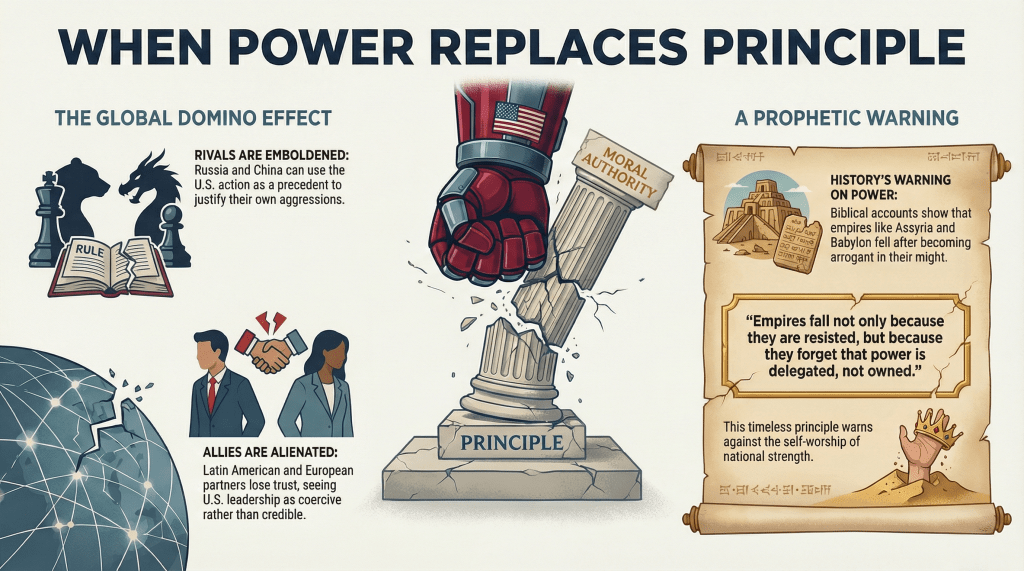
    Russia has long sought rhetorical cover for its invasion of Ukraine. The U.S. action in Venezuela now supplies it. If Washington can unilaterally invade a sovereign state, capture its leader, and claim criminality as justification, Moscow can argue that its actions against Ukraine—or even a future attempt to “arrest” or assassinate Volodymyr Zelenskyy—are merely variations of the same principle.

    Legally and morally, this argument is weak. But geopolitics is rarely governed by fine legal distinctions. What matters is precedent, and precedents lower the cost of future aggression.

    China and Taiwan

    China has been more restrained in tone, but the lesson it draws is clear. If sovereignty can be overridden by unilateral claims of security or criminality, then the barrier protecting Taiwan grows thinner. The Venezuela invasion reinforces Beijing’s long-standing claim that global rules are selectively applied and therefore disposable.

    When moral consistency disappears, restraint soon follows.
    Fractures Closer to Home

    The effects are not limited to rival powers.

    Across Latin America, resentment is growing. Governments find themselves pressured—implicitly or explicitly—to align with Washington regardless of domestic opinion or national interest. The old fear of being treated as a sphere of influence rather than a community of sovereign states is being revived.

    Meanwhile, America’s European allies are uneasy. Europe has historically been more willing to follow U.S. leadership when that leadership rested on moral credibility and respect for international norms. Power exercised through threat and force may compel short-term compliance, but it corrodes long-term trust. Allies who follow out of fear tend to drift away when alternatives appear.

    A Biblical Pattern Too Often Forgotten

    Scripture does not deny that God uses nations to judge other nations. In fact, it states this plainly.

    God used Assyria to punish the northern tribes of Israel for idolatry and injustice. Yet Assyria’s error was to believe its military success proved its own righteousness. God’s response was severe:

     “Shall the axe boast itself against him that heweth therewith?” (Isaiah 10:15)

    Likewise, God used Babylon, under King Nebuchadnezzar, to correct Judah. But Babylon too crossed the line—from instrument to idolater of power—and was judged for its arrogance, cruelty, and self-worship.

    In both cases, God made the same point: He may use power, but He does not endorse pride.

    The Warning for Our Time

    America’s action against Venezuela may yet serve a purpose in God’s sovereign plan. Scripture shows that God can and does judge nations through other nations. But Scripture also warns that nations which worship their own strength, trust in military might, and refuse to acknowledge God’s supremacy do not escape judgment themselves.

    Empires fall not only because they are resisted, but because they forget that power is delegated, not owned.

    The lesson of Assyria and Babylon is not ancient history—it is living prophecy. When moral authority is abandoned and force becomes the primary language of leadership, the world does not become safer. It becomes more lawless.

    And lawlessness, Scripture tells us, always carries a cost.
  • Greenland, Power Politics, and the Illusion of Security

    Greenland, Power Politics, and the Illusion of Security

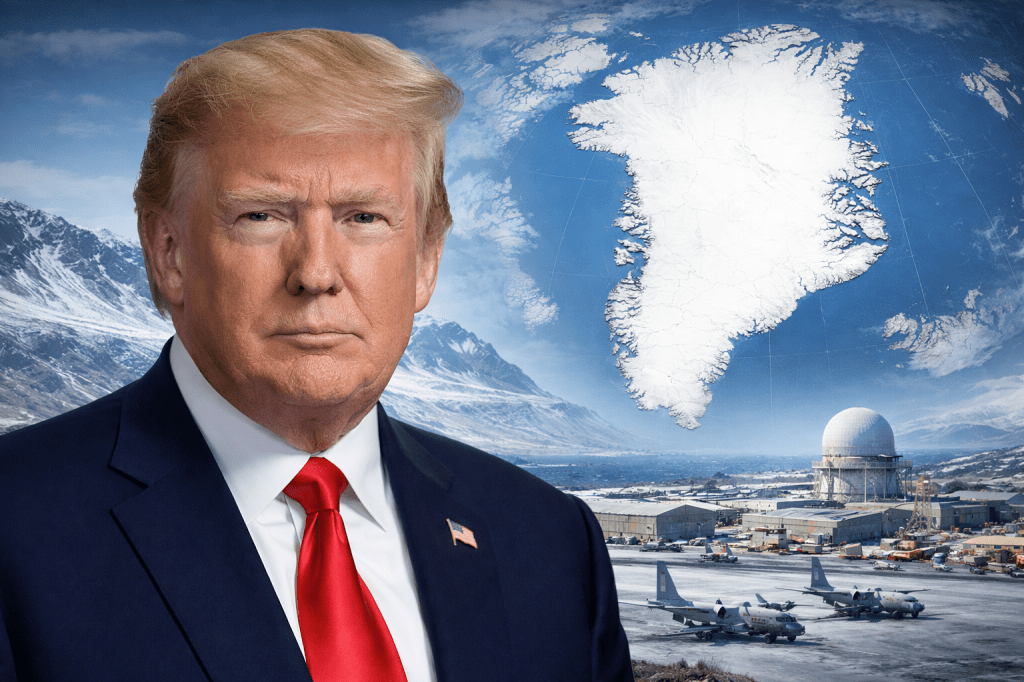
    In recent months, President Donald Trump has revived an idea that initially sounds like a relic from the 19th century: the possibility of Greenland becoming part of the United States. To modern ears—especially those shaped by post–World War II norms—this proposal sounds strange, even reckless. Yet from a purely strategic perspective, the idea is not as irrational as it first appears.

    Greenland sits astride the Arctic gateway between North America and Eurasia. As polar ice melts and great-power competition intensifies, the Arctic is no longer a frozen backwater but a developing strategic theater. Control of airspace, sea lanes, missile-warning systems, undersea cables, and critical minerals increasingly matters. From Washington’s viewpoint, Greenland is not about prestige or novelty; it is about geography.

    Why Greenland Appeals to U.S. Strategists

    If Greenland were to become a U.S. territory, America would gain several tangible advantages.

    First, it would remove political constraints on U.S. military operations there. Today, American forces operate in Greenland by agreement with Denmark and the Greenlandic government. That arrangement works—but it depends on continued consent. Sovereignty would allow the United States to expand radar systems, ports, airfields, and space-tracking infrastructure without diplomatic friction or delay.

    Second, it would permanently deny China and Russia strategic entry. China’s Arctic strategy relies not on overt military bases but on long-term economic footholds—research stations, mining investments, and infrastructure projects that later become leverage. U.S. sovereignty would close that door entirely. Russia, meanwhile, already treats the Arctic as a military frontier. Greenland would give the United States an unmatched vantage point over Russian submarine and missile activity.

    Third, it would future-proof American Arctic power. Military sufficiency today does not guarantee security tomorrow. Technology, climate, and warfare evolve, and human planners instinctively seek permanence through geography and assets.

    From a strategic planning standpoint, the logic is clear. Bases can be revoked. Treaties can be rewritten. Geography cannot be moved.

    The Difficulties and Risks

    Yet the obstacles to such a plan are immense.

    Greenland is not an empty possession waiting to be acquired. It is home to a distinct people with their own language, culture, and parliament. Most Greenlanders do not aspire to trade Danish oversight for American oversight. Their dominant political aspiration is independence—standing as Greenland, not as someone else’s territory—reflecting the biblical reality that peoples seek to dwell according to their own identity and inheritance (Acts 17:26).

    Denmark, for its part, has no appetite to sell territory in the modern era. While it once sold the Virgin Islands to the United States in 1917, today’s political environment is vastly different. Any transfer of sovereignty would require not only Danish agreement but clear Greenlandic consent, reminding us that rulers act within limits they do not always control (Daniel 2:21).

    There are also risks for the United States itself. Acquiring Greenland would strain relations with allies, complicate NATO unity, and saddle Washington with enormous long-term costs—governance, infrastructure, social services, and environmental stewardship in one of the world’s harshest climates. Strategic gain does not come free, a truth Scripture repeatedly affirms regarding the true cost of ambition (see Luke 14:28).

    But beyond these practical difficulties lies a deeper risk: the belief that security ultimately comes from geography and power.

    A Biblical Warning from the Transjordan

    Scripture offers a sobering parallel.

    When Israel conquered the lands east of the Jordan River, the tribes of Reuben, Gad, and half of Manasseh chose to settle there. The arrangement was lawful, negotiated, and strategically sensible, unwittingly serving as a buffer zone protecting the heartland west of the Jordan (Numbers 32:1–5; Deuteronomy 3:12–13).

    Yet history records a tragic outcome. Those Transjordan tribes were the first to fall when foreign empires swept through the land (2 Kings 15:29). Their frontier position—once a strength—became a vulnerability.

    That lesson should not be missed.

    If Greenland were to become a U.S. territory, it would almost certainly serve as America’s Arctic frontier—its buffer and early-warning shield. And if the United States were to grow spiritually weak, morally corrupt, and ripe for judgment, Greenland would likely be among the first places to fall, just as exposed territories often are in biblical history (Isaiah 10:5–12).

    Where Security Truly Comes From

    The Bible is unambiguous on one point: nations do not secure themselves by land acquisition alone.

    Scripture teaches that God determines the boundaries of nations, raises up kingdoms, and brings them down according to His purpose (Deuteronomy 32:8; Acts 17:26). He grants territory—and He removes it—sometimes as blessing, sometimes as judgment (Daniel 4:17).

    This does not mean strategy is meaningless. Governments are responsible to act wisely within their calling. But it does mean that territorial expansion, military presence, and geopolitical maneuvering are at best secondary causes. Ultimate security belongs to God alone (Psalm 127:1).

    A nation is secure not because it controls more land, but because it stands under God’s favor (Proverbs 14:34).

    Strategic Instinct

    President Trump’s Greenland proposal reflects an old, recognizably American strategic instinct: secure the frontier before it becomes contested. In historical terms, the idea is not radical. In modern political terms, it is extraordinarily difficult. And in biblical terms, it is insufficient.

    Even if Greenland were someday to fly the American flag, it would not save a nation under judgment. Like the Transjordan territories of ancient Israel, it could become the first warning sign—not the last line of defense.

    History, Scripture, and experience all point to the same conclusion:

    national security does not ultimately come from acquiring territory, but from the God who grants and withdraws it according to His will (Psalm 33:16–19).

  • Storm Over the Shoal: The Philippines, China, and the Future of the West Philippine Sea

    Storm Over the Shoal: The Philippines, China, and the Future of the West Philippine Sea

    Tensions flared again in the West Philippine Sea when Philippine and Chinese vessels collided near Scarborough Shoal on September 16, 2025. According to Manila, Chinese coast guard ships used high-powered water cannons against a Philippine resupply vessel, shattering glass on the bridge, damaging critical equipment, and injuring at least one crew member. China, for its part, accused the Philippines of “illegally” entering its waters and even claimed Manila rammed one of its ships—an allegation firmly denied by Philippine officials.

    This confrontation followed China’s unilateral declaration of a “national nature reserve” at Scarborough Shoal just days earlier. Filipino fishermen and government leaders saw this as an attempt to further tighten Beijing’s grip on a vital fishing ground that lies well within the Philippines’ Exclusive Economic Zone under international law and the 2016 Hague tribunal ruling.

    How Nations Responded

    Philippines: Manila lodged a strong diplomatic protest and ramped up patrols in contested waters. At home, protests over corruption added to the sense of urgency in defending national interests.

    China: Beijing justified its moves as “environmental” but in practice deployed coast guard and maritime militia vessels to enforce its claims, warning the Philippines against “provocations.”

    Allies & Partners:

    • The United States reiterated its defense commitments, condemning China’s actions.
    • Australia, Canada, Japan, and the UK voiced concern and pledged continued support for international law.
    • Germany and France are deepening defense ties with Manila. The UK is even exploring a Visiting Forces Agreement to allow closer military cooperation.

    What to Expect in the Next 3–5 Years

    The Philippines is investing heavily in its navy and coast guard, acquiring new frigates, offshore patrol vessels, and long-range missile systems like the BrahMos. It is also strengthening defense partnerships with allies from Asia, North America, and Europe. These steps will improve deterrence, but they cannot fully offset China’s overwhelming naval power.

    The likely trajectory is continued gray-zone conflict: water cannons, rammings, blockades, and the creation of more “facts on the ground” by China. At the same time, broader coalitions—Philippines with the U.S., Japan, Australia, the UK, and even select EU states—will increase naval patrols and exercises. Expect more incidents, more diplomatic protests, and a slow but steady militarization of the West Philippine Sea.

    The Long-Term Outlook: Prophecy and the Coming Clash

    While today the flashpoint is between the Philippines and China, the Bible shows that the stage is being set for something far greater. Prophecy in the book of Revelation describes a time when two great power blocs will dominate the world scene:

    • On one side, a resurrected Roman Empire, a powerful federation that will evolve out of today’s European Union.
    • On the other side, a vast eastern alliance led by powers like China and its allies.

    The South China Sea, a vital artery of global trade and security, could very well be one of the hot spots where these rival blocs collide. Scripture warns that this confrontation will erupt into a catastrophic war threatening the very survival of humanity (Matthew 24:21–22).

    But God has not left humanity without hope. Jesus Christ will intervene to stop world war from annihilating mankind. He will establish the Kingdom of God on earth, bringing true justice, security, and lasting peace—a peace no human power can achieve on its own.

    A Call to Repentance and Preparation

    In the meantime, God is calling individuals to repent, turn from sin, and live in obedience to His laws. The worsening conflicts, corruption, and rivalries we see today are signs of a world cut off from God. Yet for those who listen and respond, these events can serve as a wake-up call—a reminder to prepare for the soon-coming government of God, which will finally bring peace to all nations.

  • Echoes of Error: When World Leaders Believe Falsehoods—And What It Means for Nations Today

    Echoes of Error: When World Leaders Believe Falsehoods—And What It Means for Nations Today

    In a world flooded with information, the ability to discern truth from fiction has become one of the most critical leadership traits. Yet even the most powerful leaders, with access to the world’s top intelligence, can fall prey to misinformation—and the consequences are often felt not just in diplomatic circles but in the lives of ordinary citizens.

    One recent and striking example is U.S. President Donald Trump’s repeated engagement with false or unverified information, including during high-level meetings with other national leaders. But this phenomenon is not new, nor unique to him. Throughout history, leaders have believed—or chosen to act upon—falsehoods. Sometimes, according to Scripture, this is allowed by God as part of divine judgment on nations. In such times, the people must turn to God, seek wisdom in leadership, and commit to lives of prayer and peace.

    President Trump and the Echo Chamber of Misinformation

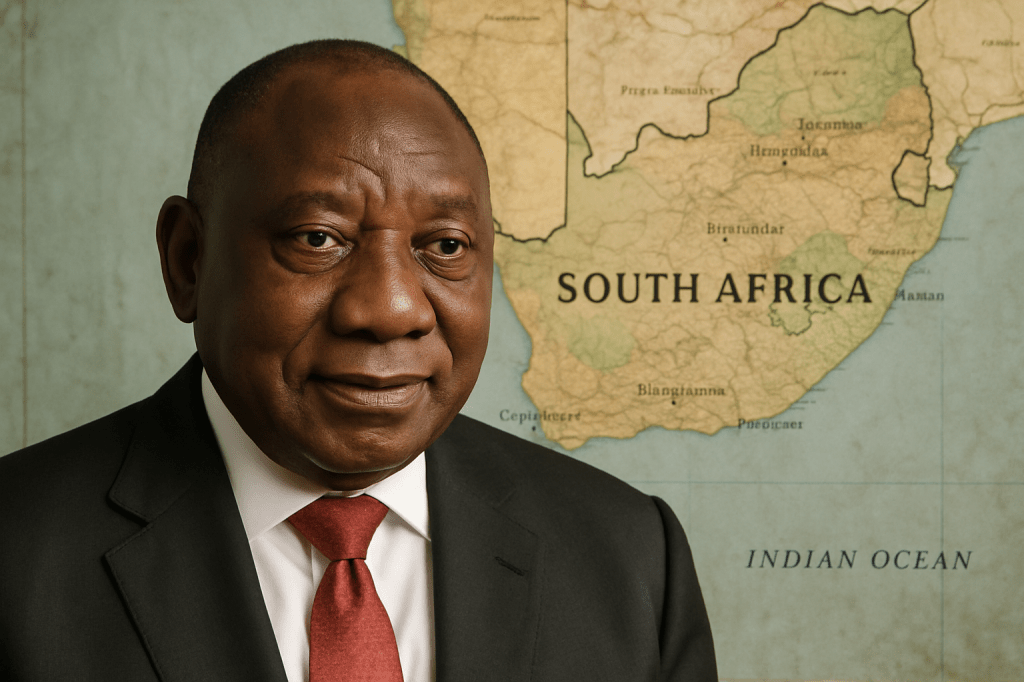
    President Donald Trump has shown a recurring tendency to promote narratives that are either misleading or entirely false, particularly when these narratives align with his political worldview. This was most recently demonstrated in his May 2025 Oval Office meeting with South African President Cyril Ramaphosa. Trump confronted Ramaphosa with false claims that white farmers in South Africa were victims of genocide—a claim long debunked by journalists, researchers, and the South African government itself.

    The evidence Trump presented included a Reuters video taken not in South Africa, but in the Democratic Republic of Congo. President Ramaphosa clarified that while violent crime is a serious issue in South Africa, it affects all races, and there is no campaign of racial extermination against white citizens. Nonetheless, Trump’s views remained unchanged, and he even moved forward with policies offering refugee resettlement to white South African farmers based on those claims.

    This was not an isolated incident. Trump has also:

    • Repeated Kremlin-aligned narratives to Ukrainian President Volodymyr Zelenskyy, claiming Ukraine provoked Russia’s war.
    • Alleged that Japan could not handle large-scale immigration and made racially charged comments to Prime Minister Shinzo Abe.
    • Publicly contradicted U.S. intelligence assessments in front of Russian President Vladimir Putin, casting doubt on the conclusion that Russia interfered in the 2016 election.

    Why Do Leaders Believe Falsehoods?

    Several factors contribute to this pattern of misinformation at the highest levels:

    • Confirmation bias: Leaders, like anyone else, are inclined to believe what supports their views.
    • Distrust in institutions: Trump often expressed suspicion of the U.S. intelligence community, viewing it as part of a “deep state” conspiracy.
    • Political strategy: Misinformation can be a tool for mobilizing political bases.
    • Echo chambers: When advisers and media consumption reinforce a narrow viewpoint, dissenting facts are filtered out.

    Not Just Trump: Historical Echoes

    History provides numerous examples of leaders acting on false information—with devastating effects:

    • President George W. Bush launched the Iraq War on the false belief that Saddam Hussein had weapons of mass destruction.
    • British Prime Minister Neville Chamberlain trusted Hitler’s promise of peace after annexing the Sudetenland, only for WWII to erupt shortly after.
    • Vladimir Putin believed Ukraine would fall swiftly to Russian military pressure in 2022—a grave miscalculation that led to a protracted war.
    • Jair Bolsonaro, former president of Brazil, downplayed the COVID-19 pandemic as a mild flu, leading to preventable deaths.

    In each case, the causes included flawed intelligence, political calculations, or misjudgments. The effects ranged from war to global health crises, and from loss of life to long-term damage to a nation’s credibility and stability.

    A Form of Judgment

    From a biblical standpoint, when leaders believe lies or are given over to deception, it is sometimes a sign of divine judgment—not just on the leaders themselves but on the nations they lead. Scripture reveals this dynamic in stories like:

    • Ahab and the lying spirit (1 Kings 22): God allowed a deceiving spirit to speak through prophets to mislead King Ahab to his downfall.
    • Rehoboam’s pride (2 Chronicles 10): He ignored wise counsel, believing what pleased him, and the kingdom was divided.
    • Romans 1:28 speaks of people being given over to a “debased mind” when they reject God.

    When leaders reject truth and act on falsehoods, it often reflects a moral condition not just in the palace but in the people. It is a wake-up call for national repentance.

    What Can Citizens Do?

    In such times, people are not powerless. Scripture urges believers to:

    • Return to God (Zechariah 1:3): National healing begins with personal repentance.
    • Pray for leaders (1 Timothy 2:1-2): Even when they err, our prayers can influence their decisions and preserve peace.
    • Seek God’s guidance when choosing leaders (Proverbs 3:5-6): Wise governance begins with divine direction.
    • Live in peace (Romans 12:18): Christians grow through obedience, even in times of national turmoil.

    Truth, Leadership, and the Call to Wisdom

    The pattern of world leaders falling for false information is not new—but it is dangerous. Whether it results in war, oppression, or decay, the consequences ripple across generations. But God does not leave His people without a response. He calls on them to be discerning, prayerful, and faithful. Ultimately, peace and wisdom are not found in politicians but in obedience to God’s truth.

  • Trump’s Peace Proposal for Ukraine: A Deal Doomed by Diverging Values

    Trump’s Peace Proposal for Ukraine: A Deal Doomed by Diverging Values

    As the war in Ukraine grinds on, U.S. President Donald Trump has unveiled a controversial peace proposal aimed at ending the conflict. His plan includes recognition of Russia’s annexation of Crimea, acceptance of Russian control over other occupied Ukrainian territories, a permanent block on Ukraine joining NATO, and the lifting of Western sanctions on Russia. The goal, Trump argues, is to “stop the killing” and restore stability.

    But peace at this price is proving unacceptable—not just to Ukraine, but to much of Europe.

    Why Ukraine Won’t Accept It

    Ukrainian President Volodymyr Zelensky has remained firm: Crimea and the occupied territories are sovereign Ukrainian land. To accept this deal would violate Ukraine’s constitution, dishonor the memory of its fallen defenders, and reward aggression. As Zelensky bluntly put it, “This is our territory, the territory of the people of Ukraine.” No peace can be built on a foundation of surrender and injustice.

    Why Europe Is Alarmed

    European leaders are also rejecting the Trump plan. To them, it’s not peace—it’s appeasement. Recognizing territorial conquest sets a dangerous precedent in a continent scarred by war. EU officials warn that such a deal could “kill EU unity,” weaken NATO, and embolden future acts of aggression. By sidelining European voices and values, the proposal risks fracturing the Western alliance.

    A World Without Shared Values

    Trump’s plan, if implemented, will not produce peace. It will shift global dynamics. Europe is already moving toward greater strategic autonomy—asserting itself more forcefully in defense and diplomacy. The U.S., meanwhile, is at risk of forfeiting its global leadership—not due to a lack of military power, but from a growing disconnect with the moral compass of its democratic allies.

    The Bible reminds us, “Can two walk together unless they are agreed?” (Amos 3:3). True peace, like true partnership, requires shared values—not just shared interests. Trump’s peace deal fails that test. And the world is watching.