Tag: United States

  • The U.S. Bypasses Ukraine: A Turning Point for Europe’s Military Independence?

    The U.S. Bypasses Ukraine: A Turning Point for Europe’s Military Independence?

    The recent decision by the Trump administration to engage in direct negotiations with Russia over the ongoing war in Ukraine—without Ukraine or its European allies at the table—has sent shockwaves across the European Union (EU). This move, seen as an unprecedented sidelining of key stakeholders, is already prompting European nations to reconsider their security dependencies and could accelerate the formation of an independent European military force. In doing so, this shift could also play into the fulfillment of biblical prophecy regarding the emergence of a dominant European superpower just before the return of Christ.

    The U.S. Sidelines Ukraine and Europe

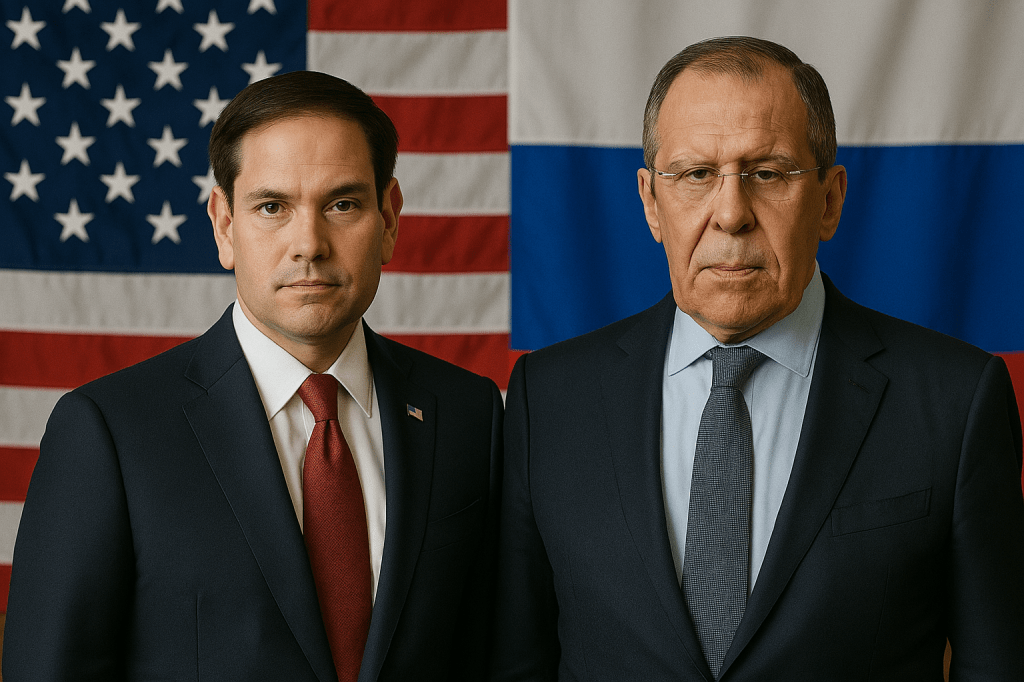
    On February 18, 2025, U.S. Secretary of State Marco Rubio and Russian Foreign Minister Sergey Lavrov met in Riyadh, Saudi Arabia, to discuss a framework for peace between Russia and Ukraine. What raised eyebrows worldwide was not just the meeting itself, but the glaring absence of Ukrainian and European representatives. This unilateral approach by the U.S. has drawn severe criticism, particularly from European leaders who see it as a betrayal of both Ukraine and the transatlantic alliance.

    President Trump’s reasoning for bypassing Ukraine appears to be rooted in three key factors:

    1. Expedited Resolution: The administration believes that direct U.S.-Russia talks might lead to a quicker settlement, without the complications of Ukrainian leadership’s insistence on full territorial restoration.
    2. Perception of Ukrainian Leadership: Trump has suggested that Ukraine mishandled previous opportunities to negotiate peace, implying that their continued presence in talks may be counterproductive.
    3. Strategic Realignment: U.S. officials have signaled a shift in priorities, seeing a return to Ukraine’s pre-2014 borders as “unrealistic” and potentially prolonging the war unnecessarily.

    This shift has been met with alarm in Europe, where leaders argue that such negotiations—if they exclude Ukraine—undermine the country’s sovereignty and the security of the entire continent.

    Europe’s Response: A Push for Military Autonomy

    For decades, Europe has relied heavily on the United States, through NATO, to provide security against Russian aggression. However, this latest move by Washington has reinforced a growing realization: Europe cannot afford to remain dependent on U.S. protection. In response, European nations are taking significant steps toward military independence.

    1. Formation of the ‘Weimar+’ Group: France, Germany, Poland, the United Kingdom, Spain, and Italy have formed a coalition to ensure that European interests are represented in global security matters. This new alliance marks a step toward a more cohesive European military strategy.
    2. Increased Defense Spending: Many European nations, including Germany and France, are ramping up their military budgets, recognizing that they must be prepared for future conflicts without relying on Washington.
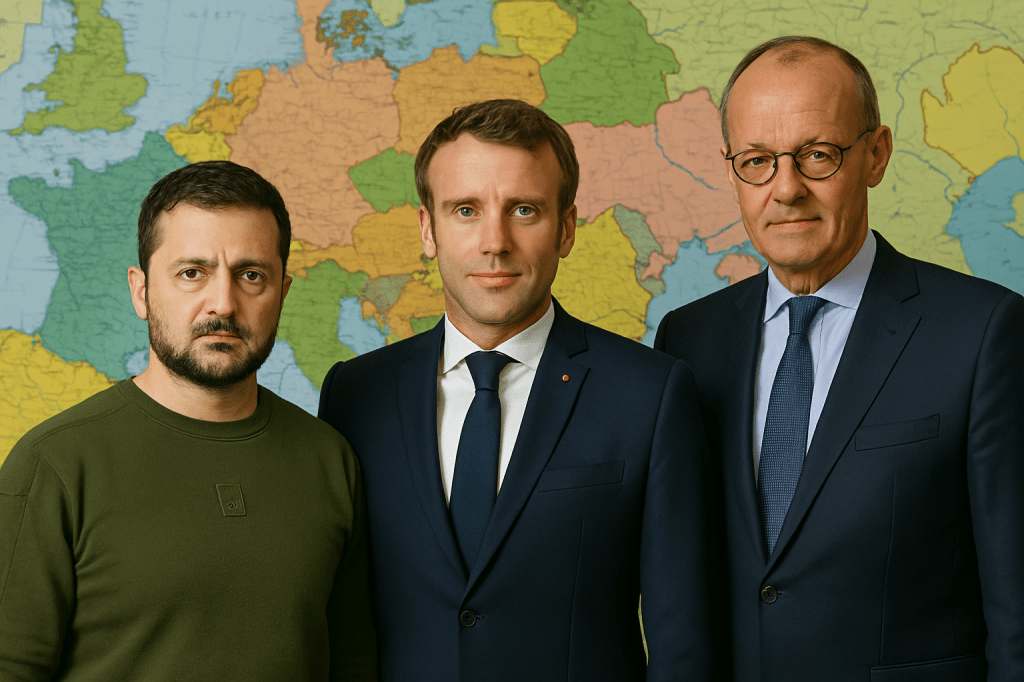
    3. Calls for a Unified EU Defense Force: French President Emmanuel Macron has called for an emergency summit to discuss forming a European military structure that is independent of U.S. oversight.

    This growing push for European military self-sufficiency aligns with what some Bible students have long anticipated—a European superpower emerging as a dominant force in world affairs.

    Biblical Prophecy and the Rise of a European Superpower

    The Bible speaks of a powerful end-time empire arising in Europe. In Daniel 2 and 7, as well as Revelation 13 and 17, we see descriptions of a final world power—often understood to be a revived Roman Empire—playing a dominant role before Christ’s return. This power is characterized by strong political, military, and economic influence.

    For decades, many analysts have speculated about how such a European entity could take shape, given the continent’s reliance on the U.S. for defense. However, recent developments suggest that the stage is being set for this prophecy to be fulfilled. If the EU becomes militarily independent, it could emerge as a dominant force in global affairs—one that no longer depends on the U.S. but instead forges its own path in world politics.

    A New Global Order?

    The sidelining of Ukraine and the EU by the Trump administration may prove to be a historic turning point. As European nations realize that they can no longer count on the U.S. for security, they are taking steps to ensure their own military future. This could lead to the formation of a powerful European bloc that asserts itself on the world stage.

    For Bible prophecy watchers, these developments are highly significant. They point to the increasing consolidation of power in Europe, paving the way for a superpower that will play a crucial role in end-time events. As we watch these shifts in geopolitics, it is crucial to remain vigilant and understand how they fit into the broader prophetic picture leading to the return of Jesus Christ.

    The world is changing rapidly, and the U.S.’s new approach to foreign policy is forcing Europe to stand on its own feet. While this may bring new challenges, it also aligns with the prophetic expectation of a European superpower rising to prominence before the Second Coming. As these events unfold, we should be paying close attention to how the balance of power is shifting and what it means for the future of world affairs—and, more importantly, for God’s ultimate plan for humanity.
  • The Rise of a Eurocentric Europe: America’s Protectionism and the Path to Biblical Prophecy

    The Rise of a Eurocentric Europe: America’s Protectionism and the Path to Biblical Prophecy

    Under the new Trump administration, the United States appears to be steadily shifting toward economic protectionism, implementing high tariffs, renegotiating trade agreements, and focusing inward under the banner of “America First.” While this policy seeks to safeguard domestic jobs and industries, its ripple effects extend far beyond America’s borders—particularly in Europe. As America prioritizes its own economic self-sufficiency, European Union (EU) member nations may increasingly turn inward as well, electing leaders who champion a Eurocentric vision over traditional transatlantic ties.

    A New Geopolitical Reality: Europe’s Shift Away from America

    With the U.S. raising tariffs, limiting global trade, and being highly selective in its military engagement abroad, European leaders are being forced to rethink their economic and security strategies. Historically, Europe has leaned heavily on American military power, particularly through NATO, and relied on access to U.S. markets. However, if America continues down a path of economic isolationism, the EU will have little choice but to strengthen its own trade networks, expand internal industrial policies, and reinforce its collective military capabilities.

    Several factors are contributing to this shift:

    1. Economic Self-Sufficiency: EU nations will seek to reduce dependence on American trade by increasing economic ties within Europe and fostering closer relationships with alternative partners like China, India, and Latin America.
    2. Political Realignment: The European electorate may favor leaders who advocate for a more self-reliant and independent Europe, reducing the influence of American foreign policy.
    3. Strategic Autonomy: With growing doubts over America’s long-term commitment to NATO, some European leaders—especially in Germany and France—are calling for a European-led defense initiative.

    This trajectory is not just about trade; it could ultimately lead to a Europe that is militarily and politically self-sufficient, capable of standing on its own without U.S. backing.

    Prophetic Implications: The Revival of a Unified European Power

    For those who study Bible prophecy, these developments are deeply significant. The Scriptures foretell the emergence of a powerful, unified European entity in the last days—a resurrection of the Holy Roman Empire, a superstate led by a strongman figure who will wield both political and military might.

    Daniel 2, Revelation 13 and 17 describe this coming empire as the final resurrection of an ancient system that has risen and fallen throughout history. It will be a union of ten kings (nations or political entities) who will give their power to a central ruler—a leader who will be guided by the moral and spiritual authority of the Roman Catholic Church.

    This prophecy aligns with the trajectory we see unfolding today:

    • A militarily independent Europe – With the U.S. stepping back from global leadership, the EU may accelerate its military integration, paving the way for a central command structure.
    • A politically dominant leader – As EU nations face crises, they may unite under a single, decisive leader who promises stability and strength.
    • The influence of Catholic Christianity – Historically, the Holy Roman Empire functioned with the backing of the Roman Catholic Church, and prophecy indicates that this will happen again in the final days.

     A Future Dominated by a New European Superpower

    With the U.S. retreating from global engagement and the EU becoming increasingly self-reliant, the foundation is being laid for the final configuration of Europe’s prophesied role in world affairs.

    • If the EU consolidates military power, it will no longer need NATO or American protection.
    • If the EU integrates its economy further, it will lessen its dependence on the U.S. dollar and globalized trade with America.
    • If a dominant leader arises, fulfilling the prophetic model, he will have the backing of a powerful religious institution that shapes European moral and social policies.

    The world is witnessing a major realignment of global power structures, and Bible prophecy suggests that this is leading toward the final rise of a dominant European empire.

    What Comes Next?

    America’s growing protectionism is setting in motion a global shift that will not be easily reversed. As the EU continues down the path of economic and military independence, we should watch closely for the emergence of a strong leader who will unite Europe in ways we have not seen before. The coming years may well see the fulfillment of prophecies written thousands of years ago, pointing to the last days before the return of Jesus Christ.

    As history unfolds before our eyes, it is more crucial than ever to understand these trends in light of God’s Word. The Bible warns of a coming global superpower—and the events of today suggest that the groundwork is being laid for that reality.

  • Trump’s Proposal for a U.S. Takeover of Gaza: A Bold Move or a Risky Gamble?

    Trump’s Proposal for a U.S. Takeover of Gaza: A Bold Move or a Risky Gamble?

    President Donald Trump has never been one to shy away from bold, unconventional proposals. His latest idea—suggesting that the United States take control of Gaza—has sparked intense debate across the international community. Framing it as a part of his broader vision for Middle East peace, Trump envisions transforming the war-torn region into a prosperous economic hub. However, the reactions from U.S. allies, Middle Eastern nations, and global organizations indicate that this proposal faces significant hurdles. Even if a modified version of the plan emerges, history has shown that true and lasting peace in the Middle East will not be achieved by human efforts but only by the return of Jesus Christ.

    The Motivation Behind the Proposal

    Trump’s rationale for proposing a U.S. takeover of Gaza seems to be rooted in both security and economic ambitions. He argues that a stable and economically vibrant Gaza would reduce regional tensions, eliminate Hamas’ control, and provide a pathway for long-term peace. He has even described the vision of a transformed Gaza as the “Riviera of the Middle East,” suggesting that with the right investments, the region could become a thriving center of commerce and tourism.

    The plan also aligns with Trump’s broader Middle East strategy of using economic incentives to drive political stability. His previous policies, including the Abraham Accords, relied on economic cooperation between Israel and Arab states as a stepping stone toward peace. By taking direct control of Gaza, Trump likely hopes to fast-track reconstruction efforts and create an environment where extremist groups can no longer operate.

    Reactions from America’s Allies and the Middle East

    Despite Trump’s ambitions, his proposal has been met with swift opposition from U.S. allies and key players in the Middle East.

    • Middle Eastern Nations: Countries like Egypt, Jordan, and Saudi Arabia have firmly rejected the idea of relocating Palestinians as part of the plan, calling it a violation of Palestinian sovereignty. These nations, which have historically played a role in mediating between Israel and the Palestinians, are wary of any initiative that could lead to long-term instability.
    • International Community: The United Nations and European Union have also raised concerns, warning that any forced relocation of Palestinians could constitute ethnic cleansing. Additionally, there are fears that a U.S. military presence in Gaza would escalate tensions with Iran and its proxies, including Hezbollah.
    • American Political Landscape: Even within the U.S., the idea of assuming direct control over Gaza is deeply controversial. Many lawmakers, including both Democrats and some Republicans, argue that such a move could entangle the U.S. in another prolonged conflict with no clear exit strategy.

    A Modified Version of the Proposal?

    Given the fierce opposition, it is possible that Trump will push for a modified version of his proposal rather than a direct U.S. takeover. Some potential adjustments might include:

    1. An International Coalition for Gaza’s Reconstruction – Instead of direct U.S. control, Trump could propose a coalition of nations, including Arab states and European allies, to oversee Gaza’s rebuilding process.
    2. Temporary UN-Led Administration – A transitional governing body under UN oversight could administer Gaza while infrastructure and economic development take place.
    3. Economic Investment Zones – Trump could shift the narrative from a political takeover to an economic revitalization plan, similar to his previous “Peace to Prosperity” initiative.
    4. Security Cooperation Without Full Control – The U.S. might establish security zones in partnership with Israel and moderate Palestinian factions to ensure that Hamas and other militant groups do not re-emerge.

    While these modifications may make the plan more feasible, deep-rooted conflicts in the region make any man-made solution inherently unstable.

    The Only True and Lasting Peace

    The Middle East has long been the focus of peace initiatives, negotiations, and diplomatic deals, yet true and lasting peace remains elusive. Whether through the Camp David Accords, the Oslo Accords, or the Abraham Accords, every effort to resolve the conflict has eventually encountered significant obstacles. Even if Trump or any other leader were to implement a successful political or economic framework, it would still be subject to the volatility of human nature and geopolitical struggles.

    The Bible makes it clear that true peace will only come when Jesus Christ returns to establish His Kingdom. Isaiah 9:6-7 speaks of Christ as the “Prince of Peace,” whose government will bring justice and righteousness that will never end. Zechariah 14 describes how Christ will return to Jerusalem and establish a reign of peace that will finally unify the nations.

    While leaders like Trump may have grand visions for peace in the Middle East, history has shown that human efforts are limited. The only perfect and permanent solution will come when Christ returns to rule from Jerusalem, bringing true justice, prosperity, and reconciliation to all people.

    President Trump’s proposal to take over Gaza is yet another ambitious attempt to reshape the Middle East, but it faces significant opposition and practical challenges. Even if a modified version emerges, history suggests that human solutions will always fall short of bringing lasting peace to this troubled region. The ultimate resolution to the Middle East conflict—and indeed, to all conflicts—will come when Jesus Christ establishes His righteous government. Until then, world leaders will continue to try and fail, proving once again that true peace is something only God can bring.

  • Trump’s New Tariffs and the Coming Economic Storm

    Trump’s New Tariffs and the Coming Economic Storm

    On February 1, 2025, U.S. President Donald Trump announced sweeping new tariffs on imports from Canada, Mexico, and China. These tariffs—25% on Canadian and Mexican goods and 10% on Chinese imports—have already set off a wave of concern about rising prices, supply chain disruptions, and potential retaliation from America’s largest trading partners.

    The official reasons for these tariffs range from protecting American jobs to addressing illegal immigration and trade imbalances. However, as Bible-believing Christians, we recognize that these economic tensions are not just political maneuvers—they are signs of the times.

    A World Moving Toward Conflict

    Bible prophecy warns that in the last days, nations will be at conflict with one another (Matthew 24:7). This includes conflict among nations that descended from the tribes of Israel such as the United States and Canada (Isaiah 9:21).  What we are witnessing now is an increase in economic warfare—where countries use trade and tariffs as weapons instead of military force.

    These new tariffs are not just about numbers on a trade balance sheet. They will affect everyday people—not just in America, but across the world.

    • Canada, Mexico, and China are some of America’s biggest trading partners. If they retaliate with their own tariffs, it could make American exports more expensive, hurting U.S. industries.
    • The cost of goods will rise. The U.S. relies on these three countries for cars, oil, electronics, food, and raw materials. Higher tariffs will increase prices for consumers and businesses alike.
    • The stock market may become volatile, leading to economic uncertainty and potential job losses.

    This is exactly what Bible prophecy describes—a world where nations struggle economically, and conflict escalates. Revelation 6:5-6 describes a time when basic necessities become extremely expensive, saying:

    “A quart of wheat for a denarius, and three quarts of barley for a denarius, and do not harm the oil and the wine.”

    This verse points to economic hardships, inflation, and scarcity—things we are beginning to experience today.

    How Should We Respond?

    If we know these things must come to pass, what should we do? How can we prepare, not just physically but spiritually?

    1. Be Thankful for What We Have

    We often take stable prices and economic security for granted. But as food, fuel, and everyday goods become more expensive, we should be reminded that every blessing we have comes from God.

    • 1 Thessalonians 5:18 says, “In everything give thanks; for this is the will of God in Christ Jesus for you.”
    • Instead of complaining about higher costs, let us cultivate a spirit of gratitude for the provisions we still enjoy.

    2. Rely on God for Our Needs

    The Bible reminds us that our true security is in God—not in the economy, governments, or world leaders.

    • Philippians 4:19 assures us: “And my God shall supply all your needs according to His riches in glory by Christ Jesus.”
    • No matter how expensive things become, God promises to care for His people.

    This does not mean we should be careless with our resources, but it does mean we should not live in fear and anxiety over economic hardships.

    3. Live Within Our Means

    As costs rise, wise financial stewardship is more important than ever.

    • Proverbs 22:7 warns us: “The rich rules over the poor, and the borrower is servant to the lender.”
    • Now is the time to cut unnecessary expenses, avoid debt, and prioritize needs over wants.
    • The principle of living simply and avoiding materialism will help us navigate these economic storms.

    4. Be More Productive in Our Work

    When economies face downturns, those who are diligent, skilled, and hardworking will fare better. The Bible encourages us to be industrious and proactive:

    • Proverbs 10:4 says, “He who has a slack hand becomes poor, but the hand of the diligent makes rich.”
    • Instead of worrying about economic shifts, we should focus on increasing our skills, working hard, and being resourceful.

    5. Help Those in Need

    Economic crises hit the most vulnerable people the hardest. As Christians, we have a duty to support those in need.

    • Proverbs 19:17 says, “He who has pity on the poor lends to the Lord, and He will pay back what he has given.”
    • If we are in a position to help others—whether by donating, offering jobs, or sharing resources—we should do so with a generous heart.

    Preparing for the Future

    The world is shifting into a period of great economic uncertainty. The escalation of trade wars and rising costs of living are just the beginning of greater global upheavals that Bible prophecy has foretold.

    But as followers of Christ, we do not need to fear. Instead, we must:

    • Be thankful for what we have
    • Trust God for our needs
    • Live wisely and within our means
    • Work hard and remain diligent
    • Help those in need

    Though the world is moving toward economic crisis and division among nations, we look forward to the Kingdom of God, where there will be true prosperity, fairness, and peace for all. Until then, let us stay faithful, be wise stewards, and continue to trust in God’s provision.

  • The Paradox of Strength: America’s Moral Decline and Its Impact on Global Leadership

    For generations, the United States has been a beacon of global leadership, built not just on its economic and military power but also on its moral authority. Nations once looked to America as a leader because it embodied values such as justice, integrity, and human dignity. However, over the decades, the moral foundation that underpinned this leadership has been eroding.

    With the return of another Trump administration, it is essential to understand that this decline is not the product of any one administration or leader. Instead, it is the result of a long-standing cultural shift away from biblical standards. Even if a Trump administration projects strength on the surface, America’s diminishing moral authority will continue to weaken its ability to lead effectively on the global stage.

    Strength Without Moral Credibility

    During Donald Trump’s first term, his administration emphasized policies that projected American strength. Economic initiatives aimed to restore jobs to U.S. soil, trade negotiations prioritized American interests, and military budgets expanded. Many Americans celebrated these actions as efforts to “Make America Great Again.”

    However, global leadership requires more than strength. True leadership demands moral credibility—something a nation can only possess if others see it as a model worth emulating. A country that appears powerful yet lacks moral integrity is like a house built on sand: it may stand for a time, but it cannot endure.

    Decades of Moral Decline

    While Trump’s leadership style is often scrutinized, it would be shortsighted to blame him alone for America’s moral challenges. The nation’s cultural and spiritual decline has been unfolding for decades.

    The sexual revolution of the 1960s, the erosion of traditional family values, the normalization of dishonesty in public life, and the glorification of immorality in entertainment all signal a long-term drift from God’s standards. These shifts have had a cumulative effect, undermining the nation’s moral foundation and, by extension, its credibility as a global leader.

    The Bible warns of the consequences of such moral decline. Proverbs 14:34 states, “Righteousness exalts a nation, but sin is a disgrace to any people” (New International Version). When a nation chooses sin over righteousness, it becomes a reproach not only to its own citizens but also to the world it seeks to influence.

    The Loss of Moral Authority

    Scripture offers numerous examples of nations that turned away from God and suffered the consequences. Consider ancient Israel under King Solomon. At the height of his reign, Israel was a global power, renowned for its wisdom and prosperity. Yet Solomon’s compromises—embracing idolatry and turning from God’s commands—led to the eventual division and weakening of the kingdom (1 Kings 11:9-11).

    The United States faces a similar risk. Deuteronomy 28:15 warns, “But if you do not obey the Lord your God and do not carefully follow all his commands and decrees I am giving you today, all these curses will come on you and overtake you” (New International Version). Among the consequences outlined are instability, confusion, and a loss of respect from other nations.

    Global leadership requires more than economic strength or military dominance; it requires the respect and trust of other nations. Without a moral foundation rooted in truth and righteousness, a nation’s influence is hollow and unsustainable.

    Symptom, Not the Cause

    While a Trump administration may emphasize policies that reinforce America’s surface strength, it operates within the broader context of moral decline. Trump’s leadership style, often marked by pragmatism and divisive rhetoric, reflects rather than causes the cultural shift away from biblical principles.

    It would be unfair and inaccurate to attribute America’s moral and cultural decline solely to Trump or his administration. Isaiah 59:14 paints a picture of societal decay that resonates with modern America: “So justice is driven back, and righteousness stands at a distance; truth has stumbled in the streets, honesty cannot enter” (New International Version). This verse highlights a deeper, systemic problem—one that transcends any single leader or political era.

    The Way Forward

    To restore its global leadership, America must address not just its policies but its moral foundation. Micah 6:8 offers clear guidance:

    “He has shown you, O mortal, what is good. And what does the Lord require of you? To act justly and to love mercy and to walk humbly with your God” (New International Version).

    Justice, mercy, and humility are not just personal virtues; they are essential qualities for a nation seeking to lead righteously.

    Repentance and a return to biblical standards are the only paths to true greatness. This requires not just individual change but a collective effort to realign the nation’s values with God’s unchanging principles.

    A Call for Reflection

    America’s challenges did not emerge overnight. The nation’s moral decline has been decades in the making, fueled by a culture that prioritizes self-gratification over obedience to God. While a Trump administration may project strength, true leadership requires moral integrity—a quality that cannot be regained without national repentance.

    Proverbs 16:12 reminds us,

    “Kings detest wrongdoing, for a throne is established through righteousness” (New International Version).

    This timeless truth is as relevant today as it was in ancient times. Whether America chooses to heed this wisdom will determine whether it remains a global leader or becomes a cautionary tale of a nation undone by its own moral failures.

    America’s future as a global leader depends not on the strength of its policies or economy but on its commitment to God’s standards. Only by returning to righteousness can it hope to regain the respect and trust of the world and fulfill its potential as a true leader among nations.