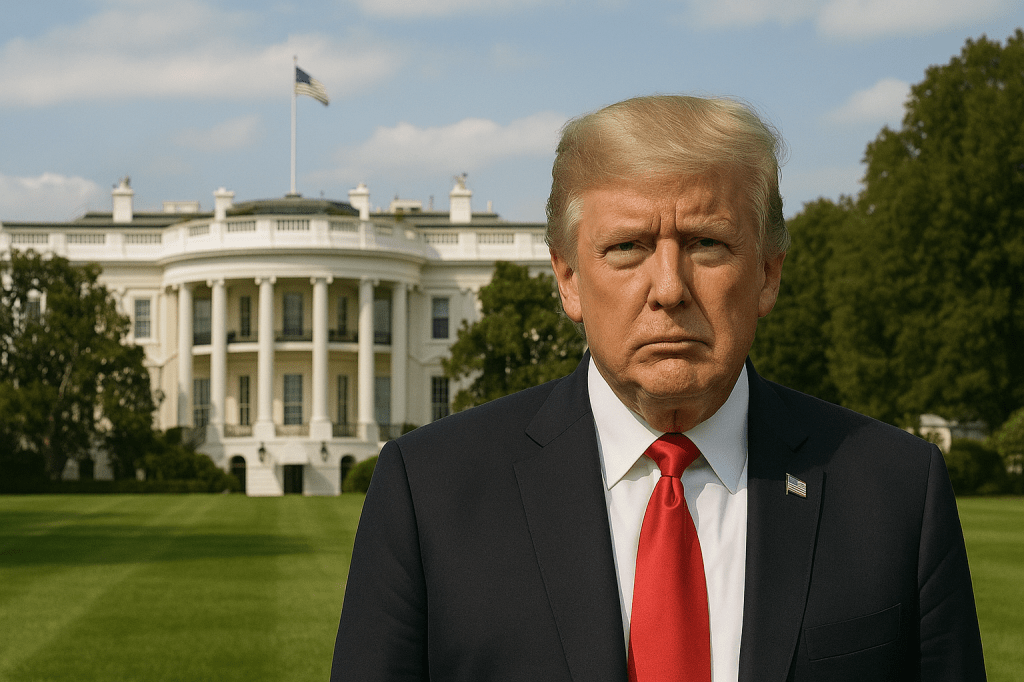
As President Donald Trump’s second administration approaches its first 100 days, it finds itself navigating a challenging landscape both at home and abroad. While bold moves were made to fulfill campaign promises, expert analyses reveal a mixture of accomplishments, non-accomplishments, and rising concerns about America’s economic and geopolitical trajectory.
Accomplishments and Non-Accomplishments
Domestically, President Trump has reinstated tough immigration policies and launched efforts to streamline federal government operations. However, the aggressive re-imposition of tariffs on China, Mexico, and Canada has triggered economic repercussions, with inflation expectations soaring to 6.5%, consumer sentiment dropping sharply, and GDP growth forecasted by the International Monetary Fund and the Congressional Budget Office to slow to between 1.8% and 2.3% this year.
Internationally, Trump’s moves to broker peace between Russia and Ukraine by proposing acceptance of Crimea’s annexation, and renewed indirect talks with Iran, have raised concerns over undermining alliances and stability.
Experts warn that if current policies persist—particularly tariff strategies, political pressure on the Federal Reserve, and isolationist tendencies—the U.S. economy risks a period of stagflation, rising inequality, and weakened global influence.

Pathways for Improvement
Policy recommendations emphasize recalibrating tariffs, encouraging multilateral trade agreements, allowing the Federal Reserve to operate independently, investing in infrastructure, and supporting domestic manufacturing.
Only by adopting a balanced, cooperative, and forward-looking approach can the Trump administration hope to fulfill its “Make America Great Again” vision.
A Deeper Lesson: Leadership in God’s Plan
The Bible teaches that God sometimes allows national leaders to make poor choices—or allows ineffective leaders to rise to power—as part of His call for His people to recognize their need for Him and return to righteousness (see Isaiah 3:4). A nation’s greatness in God’s sight is not based on military strength, wealth, or political dominance (although these are certainly results of His blessings). Rather, it depends on justice, mercy, humility, and obedience to God’s laws (Micah 6:8).
If America’s leaders and citizens sincerely seek to make their nation truly great, they must prioritize moral integrity, care for the poor and marginalized, and live by the values God esteems. Only through such a return can lasting greatness be achieved.
